






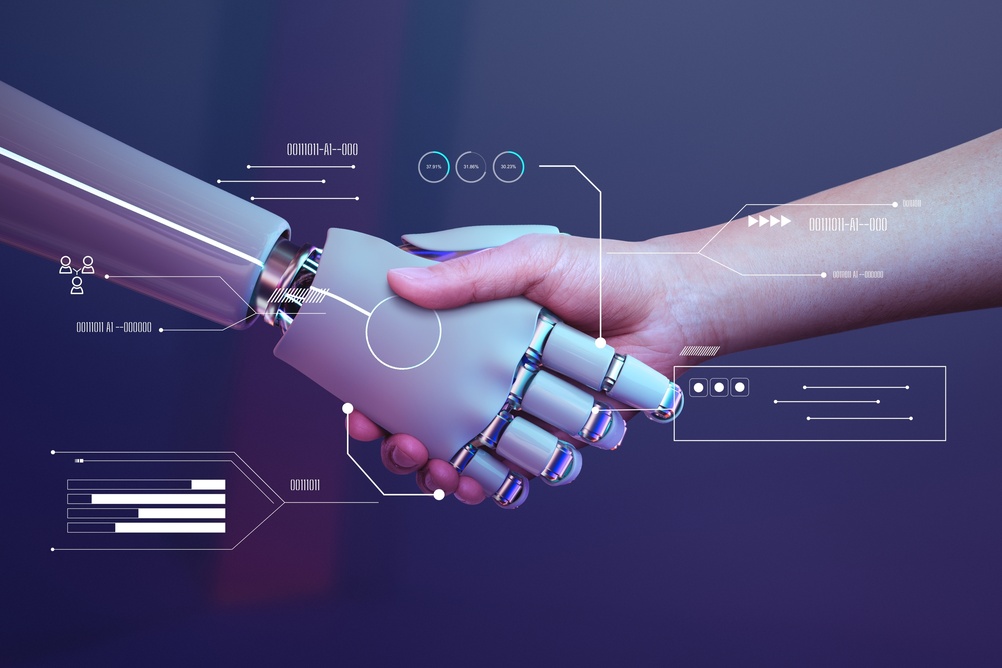
Your smartphone has already replaced your calendar, your alarm clock, your camera, your watch, your map—even your wallet. Just don’t let it replace your family.
Technology didn’t transform daily life in a single dramatic rupture. It crept in quietly — replacing paper maps, bank queues, and printed boarding passes. I remember maps. Enormous, unwieldy things, folded so many times over that creases had worn through the folds-at the exact point you needed. The print was so small we squinted. We rotated the map; we rotated ourselves. We spread it across the dashboard in mounting frustration, and remained, magnificently lost. We wanted to change our flight. So on a glorious morning in an exotic city we travelled across town, to the airlines office, waited with a numbered tokens, and waited some more, and as our turn came, a lunch break appeared that had no fixed end. Mounds of paper, notebooks, in every conceivable shape and size, filed with best intentions into neat folders, which then spawned several less neat piles that were always about to be sorted but never was creating untold frustration.
The easing of the daily grind is perhaps one of the biggest ways technology has changed our lives, making routine chores faster and easier. Internet access went from a novelty to utility, and there are now more mobile phones than people on Earth.
Work has changed just as dramatically. Video calls, shared documents, cloud platforms, and AI let people collaborate across continents. AI can draft emails, summarise reports, translate languages, and even write code in minutes—though it still can’t explain to your boss why you missed the deadline. But faster communication doesn’t always mean better communication. Our inboxes never sleep, notifications never stop, and “I’ll reply tomorrow” has become an endangered species. Constant connectivity can blur the line between work and life, leading to stress, burnout, and information overload. Technology has conquered distance only to create the problem of constant availability.
“Your smartphone has already replaced your calendar, your alarm clock, your camera, your watch, your map—even your wallet. Just don’t let it replace your family.”
In that single sentence lies one of the greatest paradoxes of our digital age. Never before have we been so connected, and yet never before have we been so distracted from the people who matter most.
Technology is woven into the fabric of our daily lives. We wake up to our phones, work through them, seek entertainment on them, and often fall asleep, holding them in our hands. Every notification, every ping, every buzz is carefully designed to capture our attention. Soon, the endless cycle of scrolling, streaming, gaming, and swiping begins to consume not just our time, but our presence.
The greatest casualty is human connection. Conversations become fragmented. Family dinners are interrupted by glowing screens. Grandparents wait patiently while grandchildren answer “just one more message.” Parents and children may sit on the same sofa yet inhabit different digital worlds. We begin to exchange emojis instead of expressions, likes instead of laughter, and texts instead of conversations.
The irony is impossible to ignore. We use technology to stay connected with people thousands of miles away while gradually drifting away from those sitting just a few feet from us. Perhaps the simplest way to reclaim those precious moments is also the most powerful: put the phone away, look up, listen with intention, and be fully present. The messages on our screens can always wait. The moments we miss with the people we love cannot.
Few inventions have transformed society as profoundly as technology and nowhere is this transformation more visible than in education. In the classrooms of today blackboards have given way to smart boards, heavy encyclopedias have been replaced by tablets, and the world’s greatest libraries now fit comfortably into a child’s backpack. With Google, YouTube, Zoom, virtual classrooms, educational games, simulations, and artificial intelligence, learning has become more interactive, immersive, and accessible than ever before.

The arrival of Generative AI marks the beginning of yet another educational revolution. As Bill Gates observed, “Generative AI has the power to create new ideas, products and services.” He suggests – imagine a tutor who knows a child is fascinated by Minecraft and uses that passion to explain geometry by calculating the area of castles or the volume of underground caverns. A history lesson becomes a journey through time. A science class becomes an expedition into space. Technology can transform learning from a boring ‘have to do’ activity into a delight.
Inspired, they write code instead of merely reading it, create animations instead of simply watching them, compose music digitally, design robots, produce films, and collaborate effortlessly with classmates across continents. The boundaries between learning and creating are disappearing,
Perhaps its greatest contribution is not merely making education more engaging but making it available and equitable. Geography no longer determines destiny. A child in a remote Himalayan village, or an under-resourced rural school can access lectures from leading universities, visit museums on another continent, explore the depths of the oceans—all with an internet connection. Knowledge is no longer the privilege of a fortunate few or confined within the walls of elite institutions.
Yet amid all this excitement lies an important truth. Information is abundant; wisdom is not. Google can answer almost any question, but it cannot teach curiosity. YouTube can explain Newton’s laws, but it cannot inspire a child to become a scientist. Artificial intelligence can personalize lessons, but it cannot replace the teacher who notices the quiet child in the last row, encourage the struggling student, or ignite a lifelong passion with a single sentence. The finest classrooms have never been built only on knowledge; they have always been built on human connection.

Technology has transformed childhood. Today’s children are the first generation to grow up in a world where a screen “is often the first window through which they discover the world.” Digital platforms introduce them to distant cultures, teach new languages, nurture creativity, and foster friendships that cross oceans and continents. Used thoughtfully, technology broadens horizons and helps children grow into global citizens.
But every great innovation casts a shadow. The same screens that educate can also isolate. Social media, excessive gaming, and endless streams of carefully curated content can quietly erode confidence, disturb sleep, fuel anxiety, encourage cyberbullying, and leave young people feeling lonelier than ever before. Childhood, once measured by scraped knees, tree climbing, and outdoor adventures, is increasingly measured in screen time, followers, and notifications.
Perhaps the greatest casualty is attention itself. In a world where every answer arrives instantly, every video begins within seconds, and every desire can be fulfilled with a single click, patience has become a rare virtue. Deep concentration and the willingness to persevere through difficulty are slowly giving way to a culture of instant gratification.
Technology belongs in education; but will we teach our children to use technology wisely, or allow technology to shape them unthinkingly? Screens should never replace books, friendships, playgrounds, curiosity, or conversation. Instead, they should complement them.
The future of education will not be built by technology alone. It will be built by great teachers, curious students, enlightened families and technology working in harmony with them all.
“In a world full of screens, remember to be the human behind the machine”.
A simple request, “Alexa, turn on the lights,” can illuminate far more than a room. For many older adults, technology is no longer a luxury, it is a companion that restores dignity, confidence, and independence. Voice-activated assistants, smart home devices, and intelligent sensors are transforming everyday living, making homes safer while allowing seniors to remain independent for longer. They bridge the gap between the desire to live independently and the reassurance of knowing that help is always close at hand.

Technology is equally revolutionising healthcare, moving from “waiting rooms to wearables”. Wearable health monitors, smart watches, remote patient monitoring, and telemedicine are making medical care more proactive. Changes in vital signs can be detected early, doctors can consult patients without the need for exhausting journeys, especially for people in remote areas or those with limited mobility. A consultation that once required hours of travel can now happen from the comfort of home. Timely interventions can prevent small concerns from becoming major crises. Artificial intelligence helps doctors interpret scans, detect diseases earlier, and digital health records reduce paperwork while improving coordination between healthcare providers. The result is not only better healthcare but also greater peace of mind—for older adults and for those who care for them.
But technology isn’t perfect. Not everyone has access to smartphones or reliable internet, and many older adults find digital healthcare confusing. When booking a simple doctor’s appointment requires three apps, two passwords, and one OTP, technology becomes a hurdle instead of a helper; technology should support and not replace the doctor-patient relationship. Algorithms can analyse data, but they can’t hold a worried patient’s hand, understand emotions, or offer genuine reassurance.
Perhaps the most remarkable gift of technology is its ability to nurture the human spirit. Virtual reality can transport a person far beyond the confines of home. Through initiatives such as Durlabh Darshan, a breathtaking 360-degree immersive experience, devotees who are unable to travel can find themselves standing in the sanctum of a sacred temple, surrounded by its sights and sounds. It is a powerful reminder that while age may limit physical movement, it need not diminish wonder, faith, or joy. Chatting with friends and discussing the painting you made that you learned on a You Tube tutorial, playing online Bridge and Scrabble, watching films, learning a new language are all ways in which AI tools help to stimulate and enrich lives keeping boredom and loneliness at bay.
Yet no technological advancement can replace the warmth of human connection. Loneliness is one of the silent epidemics of ageing, affecting both emotional and physical well-being. Here too, technology offers a helping hand. A video call can brighten an ordinary afternoon, a shared family photograph can bring generations together, and a simple message can remind someone they are loved.

Many grandparents find smartphones, apps, and digital services bewildering, leaving them feeling excluded from a world that seems to move faster each day. This is where families can make the greatest difference. Teaching a grandparent how to make a video call, send a message, or pay a bill online is about much more than learning new skills. It is an act of love. It restores confidence, preserves independence, and opens a window to the world.
Yuval Noah Harari, pointing to dangers of AI says “AI isn’t a tool—it’s an agent. AI is an active agent rather than a passive tool, capable of making autonomous decisions, creating ideas, and manipulating human behaviour.”
But as another thinker puts it “The number one benefit of information technology is that it empowers people to do what they want to do. It lets people be creative. It lets people be productive. It lets people learn things they didn’t think they could learn before.” But then again, the ease that comes with quick answers and less effort is a Faustian bargain we make. As we outsource our thinking, writing and decision making to technology, we lose creativity and critical thinking abilities. One of humanity’s greatest achievements, its true promise lies not in replacing humans but in enriching them; in helping us remain connected to our families, our communities and to one another. When technology is guided by human values and ethics, it brings humans closer. The true measure of progress is not how smart our devices become, but whether they help us to build a bridge between technology’s capabilities and human creativity, dreams and reality, problems and solutions and achieve the unimaginable.