






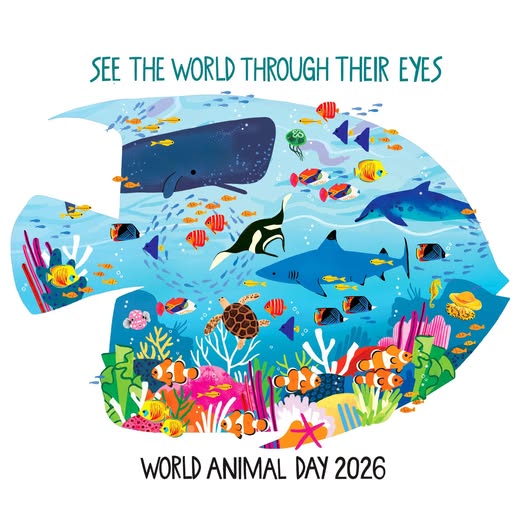
For World Animal Day on 4 October, a thought about the animals who share our homes, forests and streets—and what we teach children when we notice them.
A dog sleeps beneath a parked car. A kitten roams starving in need for a morsel. A cow picks through rubbish. Somewhere, an elephant stands where people have placed her, far from the life her body was made for. We pass animals so often that it becomes easy to see the scene rather than the individual.
World Animal Day asks us to pause. Animals can experience pain, fear and pleasure; many form lasting social bonds. Researchers also observe behaviours consistent with grief in some species, that their suffering matters.
Consider Rhea, an elephant who spent nearly five decades in a circus in India. Wildlife SOS describes years of harsh treatment and deprivation, but also the companionship she found in two other female elephants, Mia and Sita, kept beside her. Her story reminds us that captivity can take more than freedom of movement: it can control an animal’s relationships and choices.
Stories about a captive elephant grieving because she could not have children are sometimes shared as fact. We should be careful with a claim about an individual animal’s private thoughts when it cannot be verified. What we can observe is the importance of mothers, calves and herd relationships to elephants—and the distress that separation can cause. Their lives are moving enough without our adding details we cannot know.
Then there is Chenghiz, a dog rescued by Delhi-based Friendicoes from a dog-fighting ring in Punjab. In the same account, the charity describes other dogs left tied outside its shelter, found starving on streets or given away when they were no longer wanted. These are not characters in a sad story invented to make us feel something. They are animals who lived with the consequences of human decisions.
For many of us in India, the closest opportunity to practise empathy is right outside the gate. Street dogs and cats must navigate traffic, heat, illness and hunger. Some people are frightened of dogs, and children need to be safe. Those concerns deserve care too. Kindness can mean arranging help for an injured animal, supporting vaccination and sterilisation efforts, placing water where it will not obstruct a public path, and keeping feeding areas clean. It also means never teasing, chasing or cornering an animal. Dog vaccination and bite prevention protect people and dogs.
This is what we need to teach children: an animal is not a toy that must tolerate a hug, a stone to be thrown at, or a spectacle to be filmed when frightened. Show a child how to watch from a respectful distance, ask before approaching someone’s pet, and leave an animal alone while it eats, sleeps or cares for its young. If a child is bitten or scratched, wash the wound thoroughly with soap and running water for 15 minutes and seek medical care promptly for a rabies assessment.
Children learn as much from what we do as from what we say. When we slow the car for a dog, call for help rather than walk past an injured bird, or refuse to laugh at cruelty, we teach them that power carries responsibility.
Perhaps that is the question World Animal Day leaves with us. We have made roads, homes and industries across the spaces animals inhabit. In most cases, we have infringed on their habitat and we continue to do so, pushing them with less and less space to live. What kind of neighbours will we choose to be?