






Want healthier, smoother, more radiant skin? Your daily food choices may help. Discover 10 nutritious foods that support your skin from within—and learn what the science really says
You probably know that your skin needs protection from the sun and a good skincare routine. But have you thought about what you put on your plate?
The foods you eat provide nutrients that help your skin maintain its structure, retain moisture, and protect itself from everyday environmental stress. While no food can stop ageing or erase wrinkles overnight, a balanced diet may help you maintain healthier-looking skin as you grow older.
Research published in the Journal of Investigative Dermatology in 2026 found that eating two vitamin-C-rich SunGold kiwifruit daily for eight weeks increased skin vitamin C levels in a small group of participants. A separate systematic review and meta-analysis, indexed in PubMed in 2025, examined 61 studies of dietary interventions and skin ageing. It found promising evidence for certain dietary components, including healthy fats and polyphenols. Read the kiwifruit study and the systematic review on PubMed.
These findings are encouraging, but they do not mean that every food on a so-called anti-ageing list has been proven to reduce wrinkles.
Here are 10 foods you can include in your diet to support your skin’s health.
- Almonds: Give your skin vitamin E
If you enjoy a handful of almonds as a snack, you are giving your body a useful source of vitamin E, an antioxidant that helps protect cells from oxidative damage.
Your skin is exposed to sunlight and environmental pollutants every day. Vitamin E contributes to the body’s antioxidant defences, while the healthy unsaturated fats in almonds help make them part of a balanced diet.
A randomised controlled trial involving postmenopausal women found that daily almond consumption was associated with improvements in facial wrinkle severity and pigmentation over 24 weeks. However, the study was relatively small, and its results should not be assumed to apply equally to everyone. Read the almond study.
How you can eat them: Enjoy a small handful of unsalted almonds as a snack, or add chopped almonds to porridge, yoghurt, or a fruit bowl.
Your skin tip: Almonds are nutritious, but eating more is not necessarily better. They are energy-dense, so keep portions appropriate for your needs.
- Avocado: Support your skin’s natural moisture barrier
Does your skin often feel dry or tight? Avocado provides monounsaturated fats that can contribute to a healthy diet and support normal skin function.
Your skin has a natural barrier that helps retain moisture and protect against external irritants. Dietary fats are important for overall health, and research into lipids and fatty acids suggests that certain interventions may benefit skin hydration and elasticity.
Avocado contains vitamin E and other nutrients, too. However, eating avocado has not been proven to remove existing wrinkles or replace a moisturiser.
How you can eat it: Add sliced avocado to whole-grain toast, salads, or sandwiches. You can also mash it with lemon juice and herbs for a simple spread.
Your skin tip: Think of avocado as one useful source of healthy fats rather than a special anti-wrinkle treatment.
- Kiwifruit: Help your body build collagen
If you want to support your skin’s natural structure, pay attention to vitamin C.
Your body needs vitamin C to make collagen, a protein that helps give skin its structure and strength. Kiwifruit is an excellent source of this vitamin, making it a practical addition to your daily fruit intake.
A 2026 human dietary intervention study provides particularly interesting evidence. Participants with lower vitamin C levels at the beginning of the study ate two SunGold kiwifruit daily for eight weeks. Researchers observed increases in vitamin C levels in the blood and skin, alongside changes in some measures of skin function.
The study was small, and not every skin outcome improved. It also did not establish that kiwifruit eliminates wrinkles or reverses skin ageing.
How you can eat it: Enjoy one or two kiwifruit as part of your daily fruit intake, depending on your needs and tolerance. You can add sliced kiwi to yoghurt or combine it with other fresh fruit.
Your skin tip: If kiwifruit is unavailable, guava, oranges, strawberries, and other vitamin-C-rich fruits are useful alternatives.
- Sweet potatoes: Add skin-supporting beta-carotene
The orange colour of sweet potatoes comes partly from beta-carotene, a plant pigment that your body can convert into vitamin A.
Vitamin A is essential for normal cell growth and the maintenance of healthy skin. Sweet potatoes also provide fibre and other nutrients that contribute to a balanced diet.
Some research on carotenoids suggests that these plant compounds may influence certain skin responses to environmental stress. However, evidence about carotenoids as a group does not prove that sweet potatoes alone can prevent wrinkles or protect you fully from ultraviolet radiation.
How you can eat them: Bake, steam, or roast sweet potatoes. Pair them with a little olive oil to make a satisfying side dish.
Your skin tip: Eat a variety of colourful vegetables rather than relying on a single orange vegetable for all your skin-supporting nutrients.
- Cooked tomatoes: Get more from lycopene
Tomatoes contain lycopene, a red carotenoid with antioxidant properties. Cooking tomatoes can make lycopene easier for your body to access, particularly when the tomatoes are prepared with a little oil.
Human research offers some encouraging evidence. In a randomised controlled trial, researchers studied tomato paste rich in lycopene in healthy women over 12 weeks. The results suggested some protection against aspects of ultraviolet-related skin damage. The study was small, and tomato paste did not provide complete protection from the sun.
How you can eat them: Prepare tomato soup, homemade tomato sauce, or cooked tomatoes with a small amount of olive oil. Tomato paste can also be added to vegetable dishes.
Your skin tip: Lycopene-rich foods may complement a healthy lifestyle, but they do not replace sunscreen, protective clothing, or shade.
- Extra-virgin olive oil: Choose a source of healthy fats and polyphenols
Extra-virgin olive oil contains monounsaturated fats and plant compounds called polyphenols.
Polyphenols are being studied for their antioxidant and anti-inflammatory properties. A systematic review of dietary interventions found that polyphenol-based interventions were associated with improvements in certain measures of wrinkles and skin-barrier function.
That is promising, but the studies included different foods, extracts, and formulations. The results cannot be attributed specifically to extra-virgin olive oil or used to claim that it reverses skin ageing.
How you can use it: Drizzle a little extra-virgin olive oil over salads or cooked vegetables, or use it in place of some butter or other saturated-fat sources.
Your skin tip: Choose olive oil as part of an overall balanced eating pattern. You do not need to drink it by the spoonful or apply it to your face to benefit from a nutritious diet.
- Ground flaxseed: Add plant-based omega-3 fats
Flaxseed is a useful source of alpha-linolenic acid, a plant-based omega-3 fatty acid. It also provides fibre and other plant compounds.
Your body uses dietary fats for many functions, including maintaining normal cell membranes. Research into dietary lipids and fatty acids suggests potential benefits for some aspects of skin ageing, although the evidence varies according to the specific nutrient and intervention studied.
Flaxseed is therefore a sensible addition to a varied diet, but it has not been definitively shown that a particular daily amount will smooth wrinkles.
How you can eat it: Add one or two teaspoons of ground flaxseed to porridge, yoghurt, or a smoothie. Increase your intake gradually and drink adequate fluids.
Your skin tip: Choose ground flaxseed rather than relying on whole seeds alone, as grinding makes their nutrients easier to access.
- Dark chocolate: Enjoy cocoa polyphenols in moderation
If you enjoy dark chocolate, there may be a nutritional reason to choose a cocoa-rich variety over a very sugary confection.
Cocoa contains flavanols, a group of polyphenols that researchers have investigated for their effects on blood flow and skin responses to ultraviolet exposure. Studies of dietary polyphenols have also reported promising findings for certain skin-ageing measures.
However, research involving concentrated cocoa flavanols or specific study products does not establish that every dark chocolate bar provides the same benefits. Nor does it prove that chocolate prevents wrinkles.
How you can eat it: Enjoy a small portion of dark chocolate as an occasional treat. Choose a variety you like, and check the label for added sugar and overall nutritional content.
Your skin tip: You do not need to eat chocolate every day for healthy skin. Unsweetened cocoa and other polyphenol-rich foods can also be part of a varied diet.
- Brazil nuts: Get selenium without overdoing it
Brazil nuts contain selenium, a mineral your body needs for normal antioxidant defence and thyroid function.
Getting enough selenium is important for overall health, including normal skin and hair function. However, selenium is a nutrient for which excessive intake can be harmful.
The selenium content of Brazil nuts varies considerably. According to the US National Institutes of Health, one Brazil nut may contain approximately 68–91 micrograms of selenium. Eating several every day, particularly alongside selenium-containing supplements, can push your intake too high. Read the NIH selenium fact sheet.
How you can eat them: If you enjoy Brazil nuts, keep portions small and avoid treating them as a supplement you must take daily. You can obtain selenium from other foods, too.
Your skin tip: More selenium does not mean younger skin. Avoid high-dose selenium supplements unless a healthcare professional recommends them.
- Greek yoghurt: Support your skin with protein
Greek yoghurt provides protein, which your body needs to maintain and repair tissues. Depending on the product, it can also supply calcium, vitamin B12, and beneficial live cultures.
Your skin continually renews itself, and adequate protein intake helps support normal tissue maintenance. Fermented foods and probiotics are also being investigated for their possible effects on the gut-skin connection.
A review of dietary interventions found promising evidence for some prebiotic and probiotic interventions, particularly for skin hydration. However, these findings do not prove that eating Greek yoghurt will reduce wrinkles. Effects can depend on the specific bacterial strains, product, and study design.
How you can eat it: Choose plain, unsweetened Greek yoghurt and combine it with kiwi, berries, or a sprinkle of ground flaxseed.
Your skin tip: If you cannot tolerate dairy, consider an appropriate alternative that provides enough protein and suits your nutritional needs.
What matters more than any single food?
You do not need to buy all 10 foods or eat them every day to support healthy skin. What matters is your overall eating pattern and lifestyle.
For a practical approach, you can:
- Eat a variety of colourful fruits and vegetables.
- Include adequate protein from foods that suit your diet.
- Choose healthy fats from nuts, seeds, olive oil, and other suitable sources.
- Drink enough fluids to avoid dehydration.
- Protect your skin from excessive sun exposure with shade, clothing, and broad-spectrum sunscreen.
- Avoid smoking, which contributes to premature skin ageing.
- Follow a gentle skincare routine suited to your skin.
Remember that genetics, hormones, age, sleep, medical conditions, and sun exposure also influence how your skin looks and feels.
The key is not to search for or expect a miracle
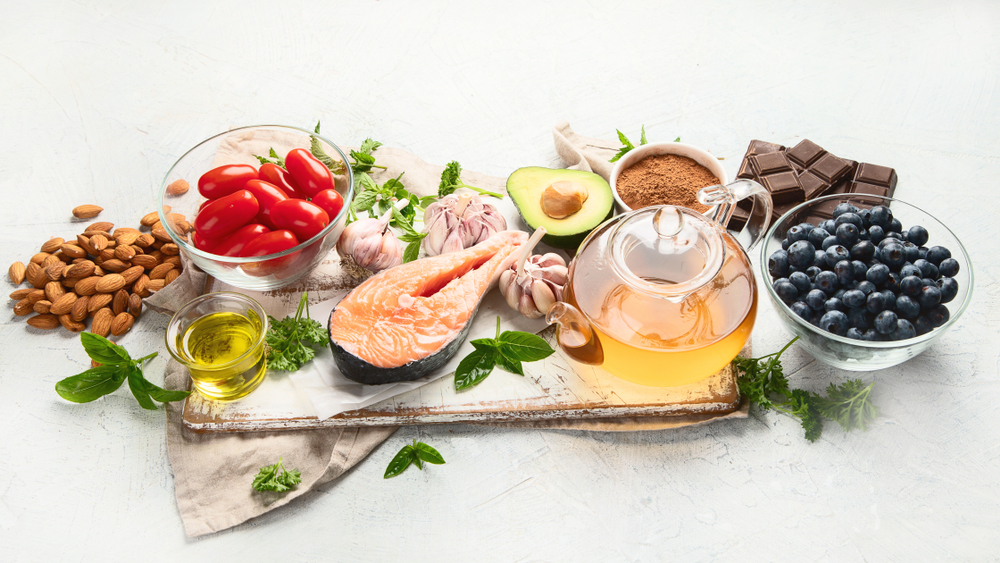
If you want healthier-looking skin, start with a varied diet rather than searching for a miracle food. Keep in mind that this is not an exhaustive list and there are plenty more foods that boost skin health. They may include but not limit – salmon, pomegranate, oranges, green tea, blueberries and much more. Almonds, avocado, kiwifruit, sweet potatoes, cooked tomatoes, extra-virgin olive oil, ground flaxseed, dark chocolate, Brazil nuts, and Greek yoghurt can all fit into a balanced eating pattern.
Some of their nutrients have promising research behind them, but the evidence is stronger for certain dietary components and specific study interventions than for this exact list of 10 foods.
Your most useful goal is to nourish your body consistently, protect your skin from the sun, and choose habits you can maintain over time. You may not be able to stop your skin from ageing, but you can take practical steps to support its health at every age.