






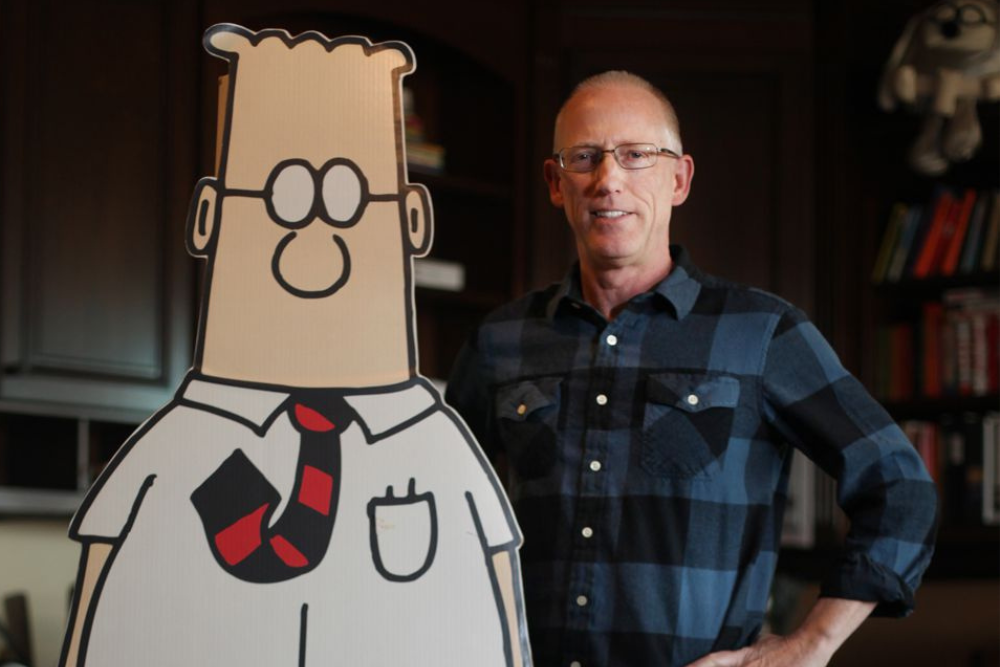
Scott Adams, the creator of the iconic comic strip Dilbert, passed away on January 13, 2026, at the age of 68.
For millions of readers worldwide, Adams gave voice to a shared experience—the daily rituals, frustrations, and small ironies of working life that most people quietly carry with them.
At a time when corporate offices were becoming more complex, impersonal and rule-bound, Dilbert arrived with a knowing smile. It did not shout or exaggerate; it simply observed. And in those observations, readers saw themselves.
Born in Windham, New York, in 1957, Adams followed a path familiar to many professionals of his generation. A bright student and later an MBA graduate, he spent years working in banks and telecommunications companies before finding his true calling. Those years behind a desk and inside meeting rooms would eventually shape one of the most recognisable comic strips of modern times.
A Mirror to the Modern Workplace
Adams began drawing Dilbert in 1989, long before emails and video calls took over office life. He continued working full-time even as the strip slowly gained popularity, drawing in the early hours of the morning. By the mid-1990s, Dilbert had become a global success, appearing in thousands of newspapers and translated into many languages.
What made Dilbert special was its familiarity. The well-meaning engineer, the confused boss, the endless meetings—these were not caricatures, but reflections. Adams captured the humour of everyday working life with empathy and restraint, allowing readers to laugh without feeling mocked.
For many professionals, especially those who spent decades in offices and organisations, Dilbert felt less like comedy and more like recognition.
Beyond the Comic Strip
Adams was also a prolific writer. His book The Dilbert Principle became a popular read among managers and employees alike, offering wry insights into how organisations function—or fail to. Later books explored themes of success, personal discipline, belief systems and happiness, often drawing from his own experiences.
In God’s Debris, a short philosophical work, Adams revealed a quieter, reflective side. He often spoke about systems, habits and perspective, ideas that resonated with readers who had seen life’s patterns unfold over many years.
The Man Behind the Pen
Those who worked with Adams often spoke of his discipline and curiosity. He believed in routine, lifelong learning and honest self-examination. Even as technology changed the way comics were drawn and shared, he adapted—continuing to write and think long after physical challenges made drawing difficult.
In his later years, Adams spoke openly about illness and mortality. His reflections during this period were marked by candour and introspection, offering a reminder that creativity and thought need not fade with physical decline.
Remembering Scott Adams
Scott Adams belonged to a generation that witnessed enormous changes in work, from paper files to digital screens, from corner offices to open plans. Through Dilbert, he documented those changes with humour and humanity.
His work remains a quiet companion to anyone who has navigated office corridors, filled out forms, or wondered if meetings truly needed to happen at all. More than laughs, he offered understanding.
For readers of Seniors Today, Scott Adams will be remembered as a storyteller of everyday life—one who found meaning and humour in the ordinary, and reminded us that shared experiences, when gently observed, can bring people together.
Scott Adams’ Best 10 Works
A landmark comic strip that became a cultural mirror for office workers across the world.
A humorous yet insightful look at how organisations function—and often malfunction.
Adams’ observations on technology, management and the changing workplace, written with foresight.
A short, philosophical novella exploring belief, curiosity and the nature of existence.
A witty guide to recognising manipulation and corporate doublespeak.
A reflective book on habits, resilience and redefining success over a lifetime.
A retrospective celebrating two decades of sharp observation and enduring relevance.
An examination of how unexamined thinking shapes behaviour and decision-making.
A personal and practical look at creativity, discipline and self-development.
A later-life work focused on perspective, happiness and mental habits.