






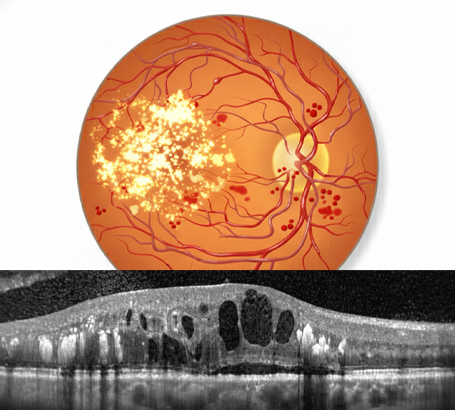
As we grow older, sensory decline begins to affect our independence. With our eyesight and hearing affected, it becomes challenging to do many activities independently, such as reading medicine labels, driving especially at night, cooking safely and moving around confidently. One of the reasons for this slow deterioration is age-related macular degeneration (AMD), which can quietly take away the sharp, straight-ahead vision. This then affects our perception of the centre of our world – faces, words, and fine detail.
The Macula & AMD
Inside the eye, the retina works like the sensor in a camera. In the centre is the macula, a small central area of the retina. The macula provides sharp, detailed, straight-ahead vision. You can call it the “high-definition” zone. When the macula is affected, side vision may remain, but details straight ahead become blurry or distorted.
AMD has two main forms – dry and wet. In dry AMD, the macula gradually thins with age. “Drusen”, which are small, yellow, lipid-rich deposits of extracellular debris build up beneath the retina. Dry AMD often progresses slowly over years, and early stages may have no symptoms. In intermediate stages, the signs can be mild: slight central blurriness, needing brighter light for reading, difficulty in driving at night, or more trouble in dim settings.
This slow progress is a trap we fall into. We compensate without realising it. We increase the font size on the computer screen, we blame dim lighting, or we assume it is “normal for our age”. If only one eye is affected, the other eye can mask the change for a long time. But there are also other clues we must be aware of. We may start seeing straight lines as wavy, distorted or crooked. We may notice a blurry patch near the centre of vision or colours that look less bright.
With AMD, a delay in diagnosis and beginning treatment can result in losing precious central vision. You should not wait for vision to “get bad enough” before getting checked. When central vision fades, people often start avoiding tasks, leaning more on family, and losing confidence. Protecting the macula is therefore not just about eyesight. It is about staying in control and staying independent!
Diagnosis & Treatment of AMD
The good news is that early detection and timely care can slow progression and help you stay independent even as you advance in age. Because early AMD can be symptom-free, regular comprehensive eye check-ups, including a dilated eye exam, are crucial, especially for people over 55 and those with risk factors such as family history and smoking.
Simple home monitoring can help between visits. Use the Amsler grid, a square grid you view one eye at a time to notice new distortion or missing areas in central vision. If lines suddenly look wavy, blurred, or broken, promptly visit your eye doctor.
Adoption of healthy habits also matter. Quit smoking, stay physically active, keep blood pressure and cholesterol under control, and eat a balanced diet. For some people with intermediate AMD, specific nutritional supplements may help slow progression and reduce the risk of progression from intermediate to advanced AMD by about 25%, though they do not prevent AMD from starting.
If dry AMD progresses to wet AMD, timely treatment can be sight-saving. Wet AMD can cause faster vision loss, and anti-VEGF medicines given as eye injections are a key treatment option to slow further damage.
Ageing may change many things, but it does not have to take away the driver’s seat of your life. Protecting central vision starts with being vigilant and aware. Take care of your eyes. Regular eye exams, quick action on warning signs, and healthy choices give you the best chance to stay independent tomorrow!
Dr Kamal Babu, COO, Vasan Eye Care, is a distinguished cataract and refractive surgeon with 19 years of clinical experience.