






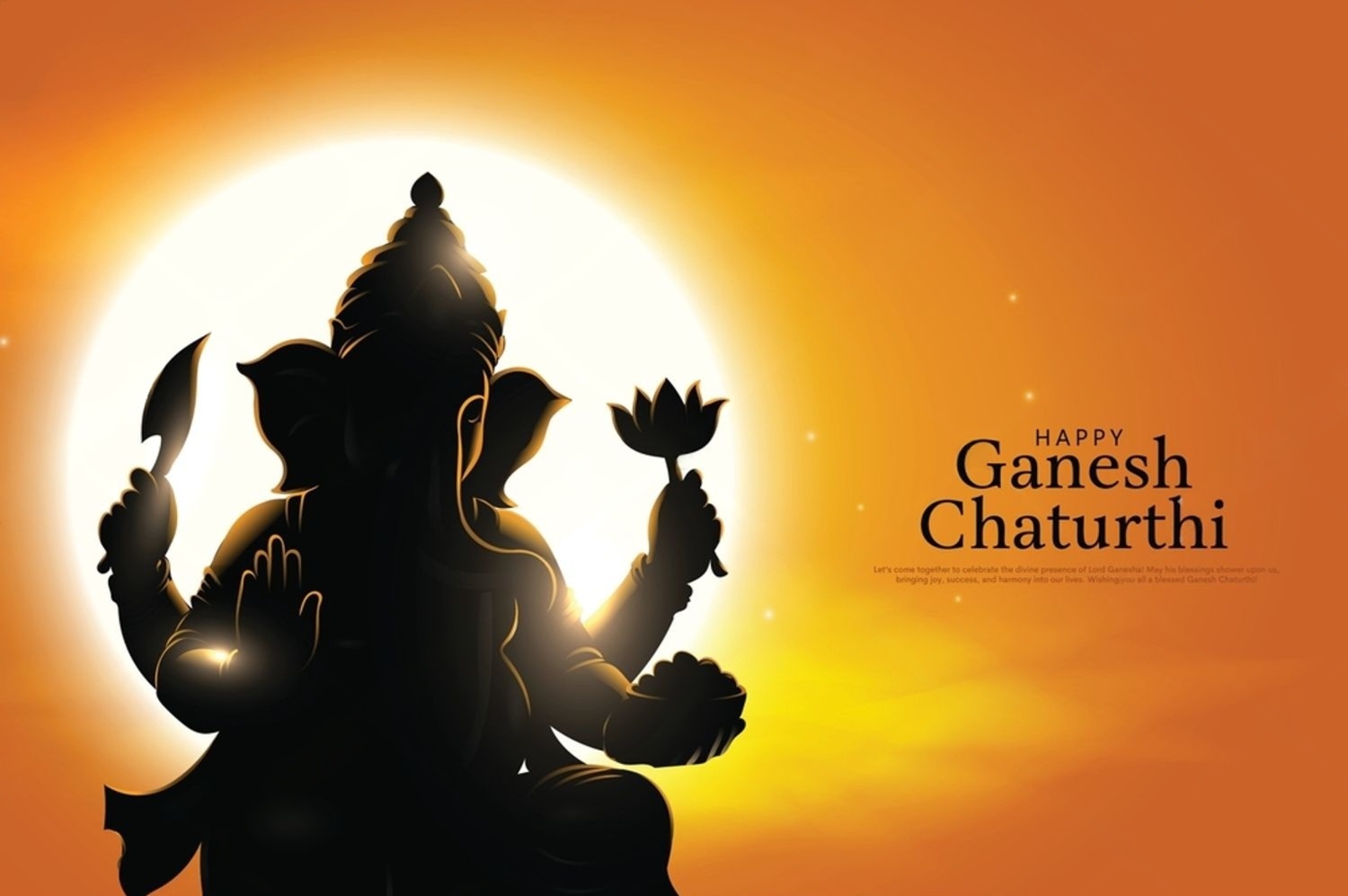
A deity beloved by all, graces the next ten days
Across India, he is known by many beloved names — Ganesha, Ganapati, Vinayaka, Pillaiyar, Vighnaharta and, affectionately, Bappa. He is the elephant-headed God of wisdom, new beginnings and the removal of obstacles, and few Indian festivals combine devotion, family, food, music and community quite like Ganesh Chaturthi.
Celebrated on Chaturthi, the fourth day of the waxing moon in the Hindu month of Bhadrapada, the festival falls on 14 September in 2026.
How did Ganesha get his elephant head?
There are several stories about Ganesha’s birth in Hindu tradition. The most familiar tells us that Goddess Parvati created a boy and instructed him to guard her door.
When Shiva returned, the boy, not knowing who he was, refused to let him enter. In the confrontation that followed, Shiva severed the child’s head. Seeing Parvati’s anguish, he restored the boy to life with the head of an elephant and granted him an honoured position among the gods.
Ganesha consequently came to be invoked at the beginning of journeys, ceremonies and new ventures — a tradition that continues across India today.
An ancient deity, a changing festival
The worship of Ganesha is far older than the modern Ganesh festival. Over centuries, temples, royal courts and households across different parts of India developed their own traditions of worship.
The festival is particularly prominent in Maharashtra, Karnataka, Goa, Telangana and Andhra Pradesh, while Ganesha — often known as Vinayaka or Pillaiyar in southern India — is worshipped widely throughout the country.
The modern public celebration, however, has an interesting history.
Lokmanya Bal Gangadhar Tilak is widely credited with popularising the sarvajanik, or community, Ganesh festival in the 1890s. Public celebrations existed before his initiative, but Tilak recognised their potential to bring large numbers of Indians together during British rule.
Ganeshotsav gatherings became spaces for worship as well as music, theatre, speeches and public discussion. What had largely been celebrated within homes and local communities acquired a powerful new public dimension.
Today’s mandals, neighbourhood celebrations and enormous public pandals owe much to that transformation.
How India welcomes Ganesha
Traditions vary beautifully from region to region and family to family.
Clay idols are brought into homes and public spaces and ceremonially welcomed. Flowers, lamps and durva grass are offered, prayers are recited and special foods prepared.
And naturally, there are sweets.
The modak is famously associated with Ganesha, particularly in western India, while different regions prepare their own offerings — including kudumulu, undrallu, kozhukattai and other rice, coconut and jaggery delicacies.
The details may change, but the sentiment remains remarkably similar: welcome Ganesha with love and begin again with hope.
The important days
In 2026, Ganesh Chaturthi begins on Monday, 14 September with the installation and worship of Ganesha.
The length of the celebration varies. Some families perform visarjan after one-and-a-half days, while others keep Ganesha for three, five, seven or more days.
The major culmination is Anant Chaturdashi on Friday, 25 September 2026, when many of the final idols are taken for immersion.
Increasingly, families and communities are also choosing natural clay idols, artificial immersion tanks and other environmentally conscious practices to reduce the impact on rivers, lakes and the sea.
The wisdom in the farewell
Perhaps the most beautiful part of Ganesh Chaturthi is also the most poignant.
We bring Ganesha home. We decorate his space, prepare his favourite foods, pray, sing and gather together.
And then we let him go.
The idol returns to the elements from which it came, while the faith and memories remain with us.
It is an ancient ritual with a remarkably contemporary lesson: nothing needs to last forever to have meaning.
And so, as another Ganesh Chaturthi draws to its close, millions of voices express the same hope in different languages and traditions across India:
“वक्रतुण्ड महाकाय सूर्यकोटि समप्रभ।
निर्विघ्नं कुरु मे देव सर्वकार्येषु सर्वदा॥”
Vakratunda Mahakaya, Suryakoti Samaprabha,
Nirvighnam Kuru Me Deva, Sarva-Kaaryeshu Sarvada.
O Lord with the curved trunk and mighty form, radiant like millions of suns, remove the obstacles from all my endeavours, always.
Come again next year, Ganesha. Remove the obstacles before us — and give us the wisdom to recognise those within ourselves.