






Steinem’s career stands as a testament to the power of belief and movement-building
In 2007, the Mumbai-based women’s group, Vacha, invited Gloria Steinem to their office-cum library in a suburban municipal school. The meeting was overrun by admirers, whose idea of feminism had at least partly been shaped by her writings.
Dressed in a simple printed kurta, her hair that she used to wear long and centre-parted, was shorter and tied in a ponytail, she was warm and friendly, considering she was a star of the feminist movement of the 1960s and 70s, among other worthy luminaries like Simone de Beauvoir, Germaine Greer, Kate Millet, Betty Freidan, Naomi Woolf, Susan Faludi, to name just a few.
For one who could be called a living legend and influential mover and shaker, happily spent a whole day talking to women’s groups and the media, with just large mugs of lemon tea to keep her going. She laughed a lot, made elegant gestures and said the most profound things with an easy charm.
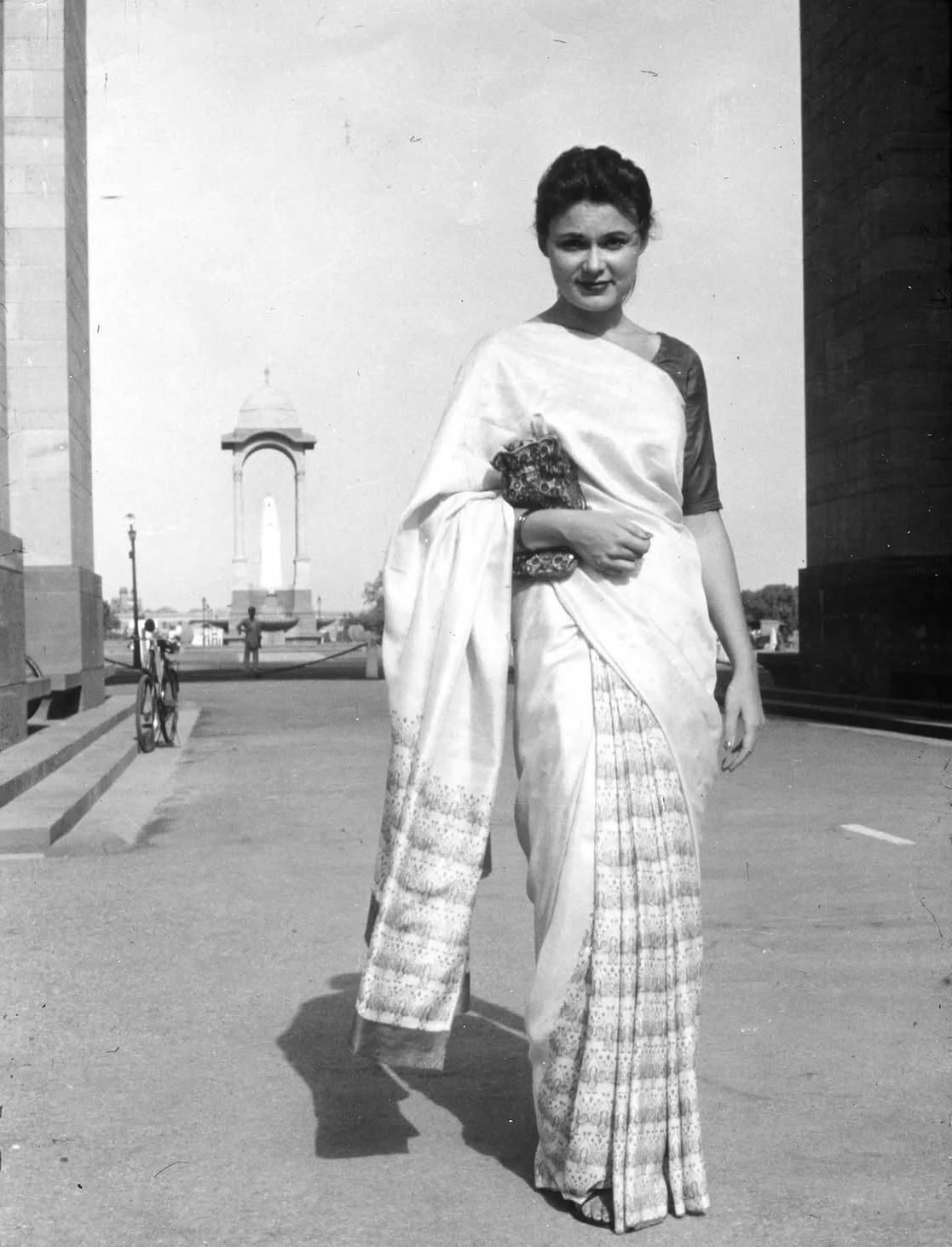
After her death, on September 2, a photo of her in a sari has surfaced on social media, of her time as a student on a fellowship to study at Delhi’s Miranda House, a time that seems to have broadened her mind and influenced her activism. For that adventure she had a then illegal abortion, and never regretted remaining childless. She travelled in second class coaches, going to villages in bullock carts, sleeping on the mud floors and, through meetings with Dalit women, understanding how patriarchy is tougher on them, as it is for black, native American and Asian women in the US.
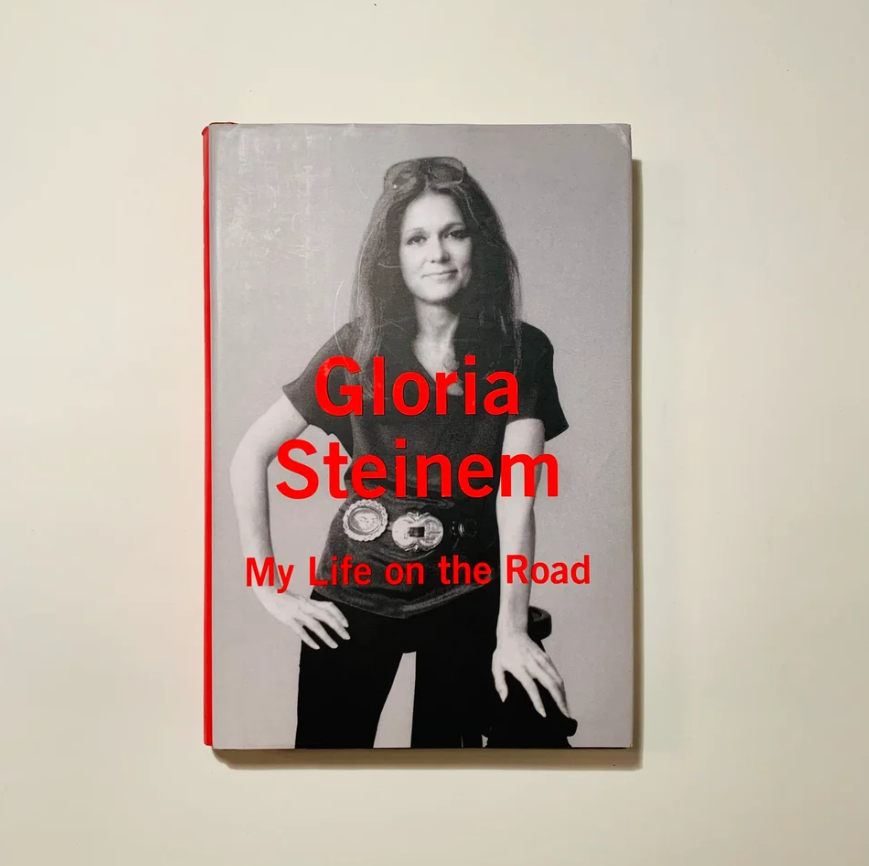
Whenever a film, book, or show comes up about the women’s liberation movement, Gloria Steinem invariably makes an appearance, either as herself, or an actress playing her. Her exciting and trail-blazing life was turned into a film, The Glorias directed by Julie Taymor, based on Steinem’s 2015 memoir, My Life On The Road.
The daughter of an itinerant antiques dealing father and an anxious but supportive mother, her early life was tough. Her family spent months traveling in a trailer for her father’s business, instilling a lifelong habit of seeing the world from the road. Beneath the transient adventure lay deep instability: her mother, Ruth Nester Steinem, a former newspaper journalist, suffered from severe chronic depression and mental illness, leaving a young Gloria as her primary caregiver. Her mother was forced to write journalistic pieces under a male pseudonym, because in her time, no paper or magazine would publish women’s writings. These experiences shaped Steinem’s understanding of how a woman’s identity could be erased by institutional neglect, economic dependence, and social isolation.
Steinem was never an ivory tower feminist, she marched alongside civil rights and women’s groups that had erupted into the streets in sixties and seventies America, to demand justice for all. That was the time when marriage and workplace laws were skewed against women, so it took a tough battle for social and legal reform; Steinem was right at the forefront, along with other leaders of the women’s movement, as well as those fighting against racial discrimination. She had to bat away comments about her good looks making her the face of the women’s movement, but the mostly male dominated media of the time was horribly condescending towards their idea, and if her beauty meant that the movement made it to the cover of magazines, it served a purpose. She dressed mostly in severe black and cowboy boots, wore large aviator glasses that covered half her face, but sneering male interviewers on TV and in print would always comment on her sexiness and ask her if she planned on getting married. Esquire rather flippantly called her “the intellectual’s pin-up.”
Steinem is quoted –erroneously as it happens—to have said that a woman needs a man like a fish needs a bicycle, and the words actually uttered by Australian activist Irina Dunn, were bandied about to make her sound anti-male and anti-family. Then, as now, the matter of reproductive rights for women was a subject of much aggression from conservatives and Steinem’s pro-abortion views made her a hate figure for the religious right.
When Steinem completed her college education and started working in New York as a journalist, she was given silly assignments about women’s clothing or dating rules, and made to prepare coffee for the males, when she was keen on covering the civil rights movements raging outside. She quit her first job when the editor casually made a pass at her. Unfortunately for her, the two-part exposé, she wrote, I Was a Playboy Bunny, for Show magazine exposing the deplorable working conditions of Bunny Girls in Hugh Hefner’s Playboy Clubs, brought her fame, but it also took a while for her to play down that image. When women’s issues were not taken seriously or given any coverage in mainstream publications, it was easy to dismiss as fluff even the scathing piece she wrote highlighting the low wages, sexual harassment, and strict physical demands forced upon young women behind the illusion of glamour. While the media fixated on her appearance, the piece established her talent for investigative journalism rooted in empathy for the underprivileged.
A major shift in her thought process occurred in 1969 while covering an abortion speak-out organized by the radical feminist group Redstockings in a basement church in Greenwich Village. Hearing women share their illegal, dangerous abortion experiences shattered her role as an objective reporter. Having undergone a secret abortion herself in London at age 22, Steinem recognized that her personal shame was actually a shared political reality. She realized that real power didn’t lie in reporting on the political system—it lay in organisSing to transform it, that lasting change required institutional infrastructure. In 1971, she joined forces with leaders like Shirley Chisholm, Bella Abzug, and Betty Friedan to form the National Women’s Political Caucus, pushing for equitable female representation in public office.
She said in her speech, “This is no simple reform. It really is a revolution. Sex and race because they are easy and visible differences have been the primary ways of organizing human beings into superior and inferior groups and into the cheap labour on which this system still depends. We are talking about a society in which there will be no roles other than those chosen or those earned. We are really talking about humanism.”
That same year, Steinem co-founded Ms. Magazine, along with her activist teammates like the flamboyant Florynce ‘Flo’ Kennedy and Dorothy Pitman Hughes—the first cover was a multi-armed Kali-like figure of a woman juggling many roles. Premiering as an insert in New York magazine, Ms. was designed as a commercial publication controlled entirely by women. It tackled topics ignored by mainstream media: domestic violence, equal pay, workplace harassment, and reproductive freedom. When the standalone preview issue sold out all 300,000 copies in eight days, it proved that women were hungry for honest, politically engaged media. Male detractors predicted the magazine would not last, and were proven wrong.
Her life was turned into a road show—endless travel, speaking assignments, participation in rallies, along with her thoughtful and provocative writing that influenced the nascent feminist movement, and continues to do so when the third wave is up and running.
Awarded the Presidential Medal of Freedom in 2013, Steinem’s career stands as a testament to the power of belief and movement-building. Whether writing books like Outrageous Acts and Everyday Rebellions or advocating for the Equal Rights Amendment, she lived by the principles she fought for in her long and richly meaningful life.