






When the impossible becomes possible, is it divine intervention, extraordinary coincidence, or simply something science has yet to explain? Perhaps the answer lies somewhere between faith, evidence and the wonderful mystery of being alive
Have you ever experienced something so extraordinary that you found yourself saying, “It was nothing short of a miracle”? I know I have. Several times, I’ve been astounded by certain happenings whose outcomes seemed impossible.
Perhaps someone you loved survived an illness against overwhelming odds. A stranger appeared at precisely the moment you needed help. Or something happened that seemed to defy every reasonable explanation.
We have all heard such stories. Some make us smile, others bring tears to our eyes, and a few leave even the most sceptical among us wondering: Could there be more to life than what we can see, measure and understand?
Interestingly, this is a question that historians, scientists, doctors and philosophers have been exploring for centuries.
A historian who dared to question the impossible
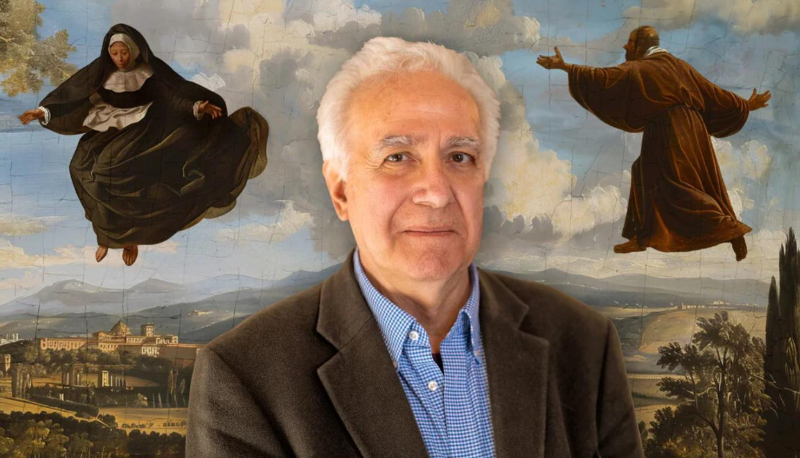
Professor Carlos Eire, a distinguished historian at Yale University, has spent years investigating accounts of events that supposedly defied the laws of nature.
In his fascinating 2023 book, They Flew: A History of the Impossible, Eire examines historical testimonies of saints who reportedly levitated, people who appeared in two places simultaneously, and other seemingly supernatural occurrences.
What makes his research particularly interesting is that he does not simply ask us to believe these stories.
Instead, he challenges us to question why we dismiss them so readily.
In a 2024 interview with Yale News, Eire argued that historians routinely evaluate eyewitness accounts of extraordinary events. Why, then, should accounts of miracles be rejected automatically, without examining the credibility of the witnesses?
His argument is not that every miraculous claim must be true, but that disbelief should be examined as critically as belief.
Of course, historical testimony is not scientific proof. Eyewitnesses can be mistaken, memories can change, and cultural expectations can influence what people believe they have seen.
Yet Eire raises a fascinating possibility: perhaps our understanding of reality is not as complete as we imagine.
A miracle in India: The girl who survived the tsunami
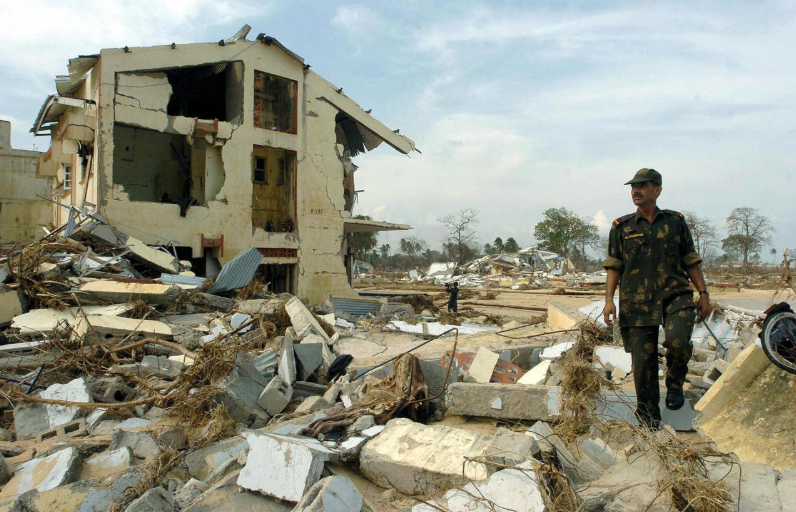
On 26 December 2004, one of the deadliest natural disasters in modern history struck the Indian Ocean.
When the tsunami swept across Car Nicobar Island, 13-year-old Meghna Rajshekhar was carried out to sea.
Her parents were lost in the disaster. Meghna herself disappeared, and there seemed little hope of finding her alive.
But something extraordinary happened.
According to contemporary news reports, the young girl survived for approximately two days in the open sea, clinging to a wooden door.
Rescue helicopters reportedly passed overhead, but her cries went unheard. Bruised, exhausted and surrounded by danger, she somehow remained afloat and eventually made her way back to land.
She was found alive on the beach.
The survival of a young girl against such overwhelming odds astonished rescuers. The airbase commander described it as a miracle amid the devastation.
Was it divine intervention? Extraordinary resilience? A remarkable combination of buoyancy, currents, endurance and chance?
We cannot know.
What we do know is that Meghna survived an event that claimed thousands of lives.
Her story reminds us that the human capacity to endure can sometimes exceed our expectations.
An international miracle: The nun who walked again
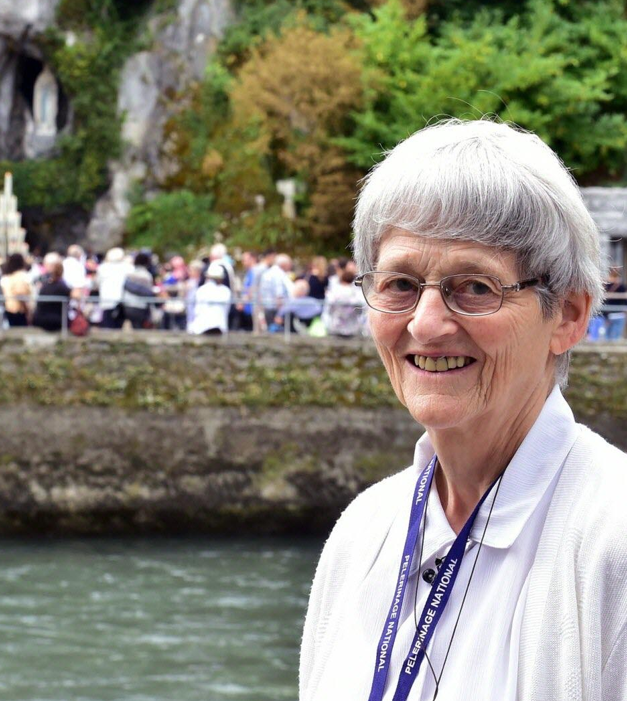
In France, the story of Sister Bernadette Moriau presents a different kind of mystery.
For decades, the Franciscan nun lived with a debilitating spinal and neurological condition. Despite several operations, she experienced chronic pain, difficulty walking and dependence on medical supports.
In 2008, aged 69, she travelled to the Catholic pilgrimage site of Lourdes, a place long associated with accounts of extraordinary healing.
Interestingly, she later said she had not specifically prayed to be cured.
A few days after returning home, she reported experiencing a sensation of warmth and an inner prompting to remove her medical supports.
To her astonishment, she found she could walk without them.
What makes this case especially noteworthy is that her recovery was subsequently examined by medical committees over several years.
In 2016, the International Medical Committee of Lourdes concluded that her healing was unexplained according to the medical knowledge available at the time. In February 2018, the Catholic Church formally recognised it as a miracle.
There is an important distinction here. The doctors assessed the recovery as medically unexplained; the Church made the religious determination that it was miraculous. Neither finding scientifically establishes supernatural intervention.
Nevertheless, the story raises a compelling question: when medicine cannot adequately explain an extraordinary recovery, should we simply call it coincidence, or remain open to possibilities we do not yet understand?
What does science say about miracles?
Science approaches extraordinary claims with a different set of questions.
Was the original diagnosis accurate? Could the condition have improved spontaneously? Was the event independently documented? Could an overlooked natural explanation account for what happened?
An unexplained event is not necessarily a supernatural event.
Medicine recognises rare spontaneous remissions, while psychology has demonstrated that expectation, belief and the placebo effect can influence symptoms such as pain. These effects are real, although they do not establish that faith can reverse every illness.
Equally, an absence of explanation today does not guarantee that an explanation will never emerge.
This is where scientific curiosity and spiritual belief can coexist without necessarily contradicting one another.
Science seeks to understand how something happened. Faith may offer an interpretation of why it happened.
And sometimes, the most intellectually responsible answer is simply: We do not know.
Perhaps miracles are not always dramatic
In India, where faith and spirituality are woven into everyday life, the idea of miracles crosses religious and cultural boundaries.
A Hindu may speak of divine kripa, a Muslim of Allah’s mercy, a Christian of grace, while someone without religious beliefs may simply call an extraordinary event a remarkable coincidence.
The interpretation differs, but the human experience of wonder is universal.
And perhaps we need not reserve the word miracle only for the supernatural.
Consider the person who survives a devastating accident and finds the courage to rebuild a life. The estranged siblings who reconcile after decades. The kindness of a complete stranger that changes someone’s future.
None of these requires the laws of nature to be suspended. Yet each can feel miraculous to the person experiencing it.
As we grow older, we accumulate enough experiences to appreciate that life does not always unfold according to logic, expectation or probability.
We also learn that hope is not the same as certainty, and that believing in possibilities need not mean abandoning reason.
We do not have to accept every extraordinary story as fact. Nor must we dismiss every mystery simply because it makes us uncomfortable.
We can remain questioning, curious and open-minded.
So, do miracles really happen?
Extraordinary events certainly do. Whether some are truly supernatural remains a matter of faith, interpretation and debate.
But perhaps the greatest gift is retaining our capacity for wonder — the ability to look at life, even after all these years, and acknowledge that we may not have seen or understood everything.
After all, a world in which there is still room for mystery is a world in which there is still room for hope.
If you or someone you know have experienced a miraculous happening, please share your story with us and our readers, at – editor@seniorstoday.in