






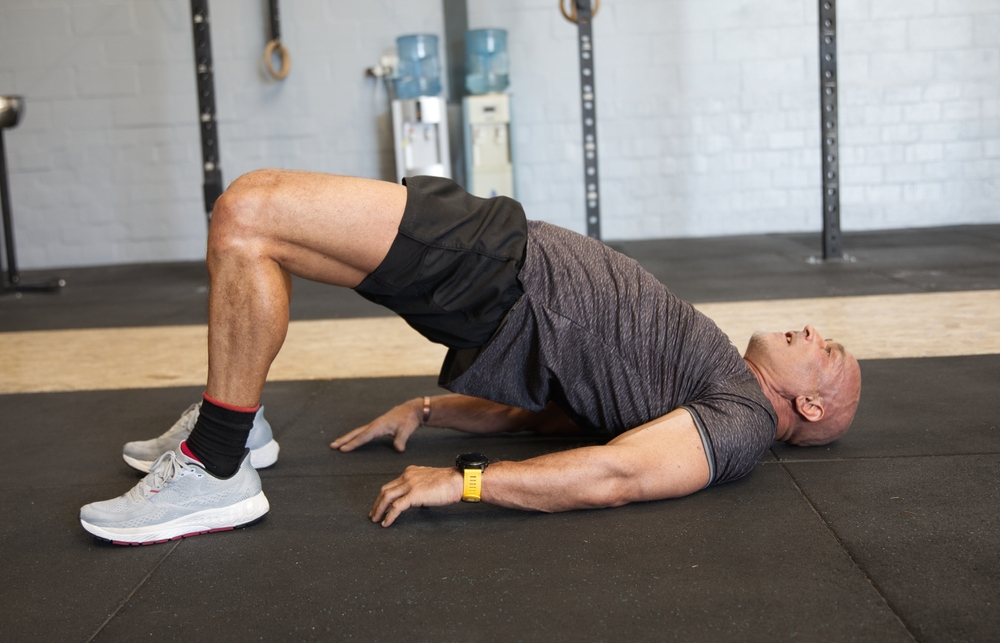
Your back supports you through almost everything you do. Give it a little attention each day, and it may reward you with better posture, easier movement and greater confidence.
Think about how much you ask of your back every day. Getting out of bed, bending to tie your shoelaces, lifting a shopping bag, reaching for something on a shelf or simply sitting comfortably through a long conversation.
Your back is quietly working through it all.
Yet, as we grow older, we often begin to accept stiffness, aching and reduced flexibility as an inevitable part of ageing. The good news? They don’t always have to be.
Research shows that appropriately prescribed strengthening and movement exercises can improve physical function and help manage many forms of persistent, non-specific lower back pain. And you don’t necessarily need a gym, expensive equipment or complicated routines.
Just four simple movements, performed correctly and consistently, can be a useful starting point.
- Bird Dog – Strengthen Your Back and Improve Balance
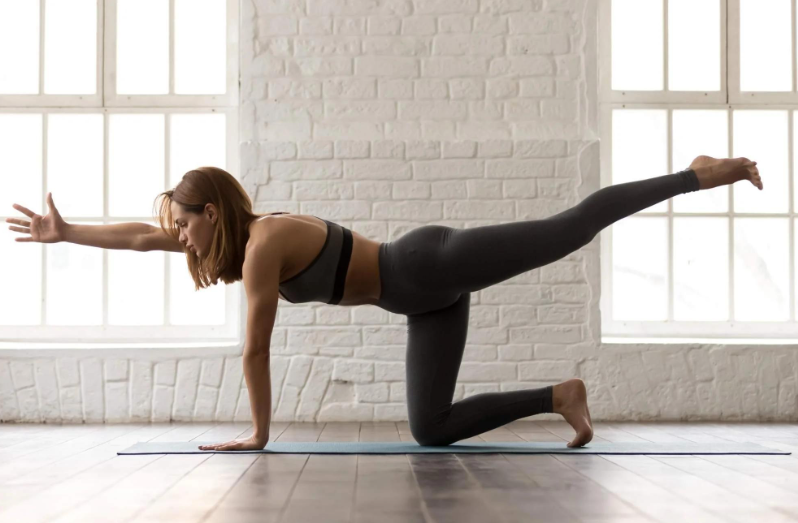
The bird dog is a wonderfully effective exercise for developing spinal stability. It works the muscles along your spine, your abdominal muscles and your glutes, teaching them to work together.
How to do it
- Get onto your hands and knees on a comfortable exercise mat, with your hands beneath your shoulders and knees beneath your hips.
- Gently tighten your abdominal muscles without holding your breath.
- Slowly extend your right arm forwards and your left leg backwards.
- Keep your back level and avoid twisting your hips.
- Hold for 3–5 seconds, then return to the starting position.
- Repeat on the opposite side.
Start with: 5 repetitions on each side.
Make it easier: Extend only one arm or one leg at a time. If kneeling is uncomfortable, try a standing version with your hands resting on a sturdy kitchen counter.
Why it works: The bird dog trains the muscles that stabilise your spine while your arms and legs move — a useful skill for walking, reaching and other everyday activities.
- Glute Bridge – Support Your Lower Back
Your lower back doesn’t work alone. It relies on strong hips and buttock muscles to help support movement and distribute loads.
When your gluteal muscles are weak, everyday tasks such as standing up, climbing stairs and lifting objects can become more difficult.
How to do it
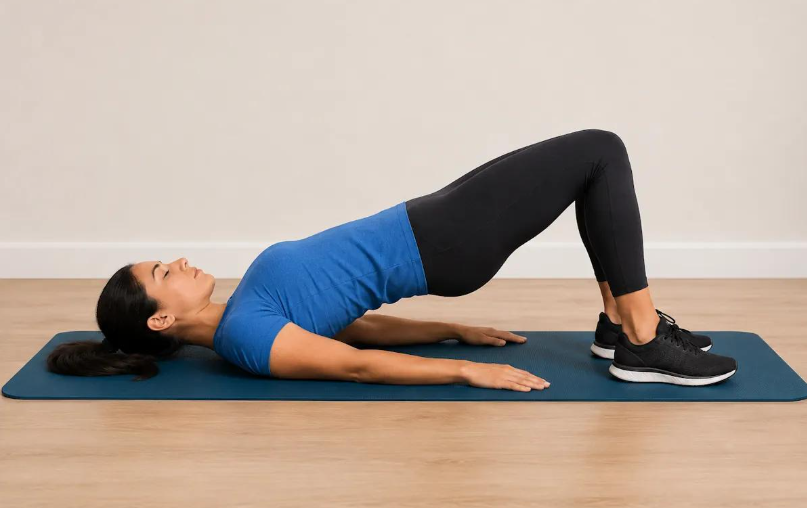
- Lie on your back with your knees bent and feet flat on the floor, hip-width apart.
- Rest your arms comfortably beside you.
- Gently tighten your abdominal and buttock muscles.
- Slowly lift your hips until your shoulders, hips and knees form a gentle diagonal line.
- Hold for 3 seconds, then lower slowly.
Start with: 8–10 repetitions.
Make it easier: Lift your hips only a few centimetres. A small, controlled movement is better than forcing your back into an uncomfortable arch.
Why it works: Bridges strengthen the glutes and hip extensors, which help support standing, walking and getting out of a chair.
- Standing Wall Push-Up – Strengthen Your Upper Back’s Supporting Muscles
A strong back is not just about your lower spine. The muscles around your shoulder blades and upper body also contribute to comfortable posture and everyday function.
Wall push-ups are a gentle way to begin strengthening your upper body while practising shoulder-blade control.
How to do it
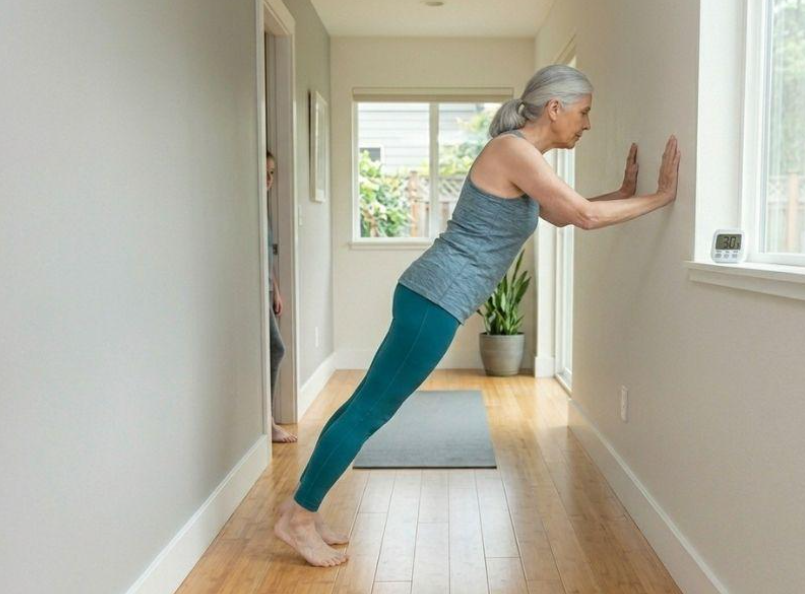
- Stand facing a sturdy wall, approximately an arm’s length away.
- Place your palms against the wall at shoulder height, slightly wider than your shoulders.
- Keep your body in a straight line from head to heels.
- Bend your elbows slowly, bringing your chest towards the wall.
- Push yourself gently back to the starting position.
Start with: 8–12 repetitions.
Make it easier: Stand closer to the wall.
Why it works: Wall push-ups primarily strengthen the chest, shoulders and triceps, while the muscles that stabilise your shoulder blades and trunk also work. They are useful for upper-body function, although they are not a substitute for exercises that directly strengthen the upper back.
- Standing Hip Hinge – Teach Your Back to Move Safely
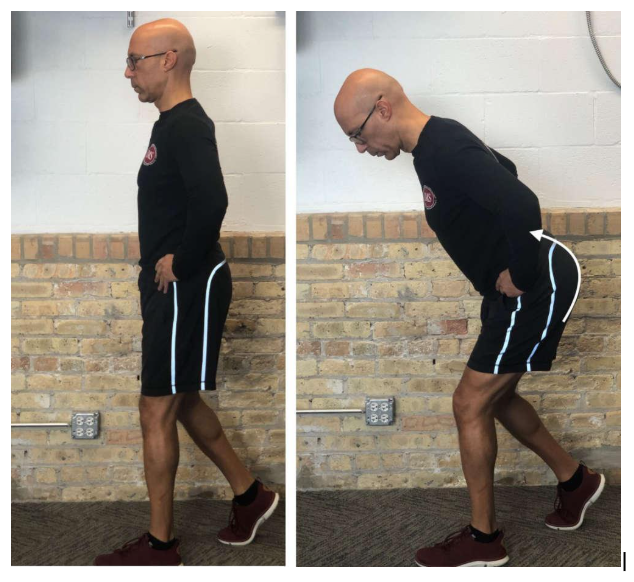
Ever noticed how bending to pick up something from the floor can sometimes feel harder than it should?
The hip hinge teaches you to bend primarily from your hips while maintaining a comfortable, controlled spinal position.
It is a valuable movement pattern for everyday tasks, from reaching into a cupboard to lifting a light shopping bag.
How to do it
- Stand with your feet hip-width apart and knees slightly bent.
- Place your hands on your hips.
- Gently move your hips backwards, allowing your torso to lean forwards.
- Keep your spine comfortably aligned without forcing it rigid.
- Stop when you feel a gentle stretch through the backs of your thighs.
- Press through your feet and return to standing, using your hips and legs.
Start with: 8–10 repetitions.
Make it easier: Practise in front of a sturdy kitchen counter, with your hands resting lightly on it for support.
Why it works: The hip hinge trains your glutes, hamstrings and trunk muscles to work together. With practice, it can improve your confidence and control when bending and lifting.
How Often Should You Exercise?
Begin with two or three sessions per week on non-consecutive days, particularly if you haven’t exercised regularly.
Start with one set of each movement and progress gradually to two sets as your strength and confidence improve.
You should feel your muscles working, but not experience sharp pain, shooting sensations or increasing discomfort.
Remember, consistency matters far more than intensity.
Five Golden Rules for a Healthy Back
- Warm up first: Walk around your home or march gently on the spot for 3–5 minutes.
- Move slowly: Controlled movements are more useful than rushing through repetitions.
- Keep breathing: Exhale during the more demanding part of each movement.
- Don’t push through pain: Reduce the range or stop if a movement aggravates symptoms.
- Combine strength with walking: Regular physical activity supports mobility, endurance and overall health.
What Does Science Say?
The World Health Organization’s 2023 guideline for chronic primary low back pain recommends structured exercise programmes as one of several non-surgical treatment options. Research reviews also suggest that exercise therapy can improve pain and function in people with chronic non-specific lower back pain, although the benefits vary and no single exercise is best for everyone.
For older adults, the WHO also recommends muscle-strengthening activities involving major muscle groups at least twice weekly, alongside regular aerobic activity and balance-focused exercise.
These four movements are a practical introduction, not a complete strength-training programme or a treatment for every spinal condition.
A word of caution: If you have osteoporosis, a recent spinal fracture, spinal surgery, severe back pain or pain travelling down your leg, seek advice from your doctor or physiotherapist before starting. New bladder or bowel dysfunction, numbness around the groin, or progressive leg weakness requires urgent medical assessment.
A Strong Spine Keeps You Standing Tall and Confident
Your back doesn’t need heroic workouts. It needs regular movement, supportive muscles and a little patience.
You may not notice dramatic changes overnight. But with time, getting out of a chair, walking comfortably or bending to pick something up may begin to feel easier.
And that is what a stronger back is really about — not lifting enormous weights, but making everyday life a little more comfortable, independent and enjoyable.
Because a strong back isn’t simply about standing taller. It’s about moving through life with greater confidence.