






The Baroda Royals are remarkably down to earth, highly social and approachable without any airs, yet outstanding in humility and persona, writes Malti Gaekwad
What do you normally associate with royalty? Sophisticated, aristocratic, elegant, charismatic, revered, educated, patronising… Well, the Baroda Royals are all these and much more. For one, they are remarkably down to earth, highly social and approachable without any airs, yet outstanding in humility and persona… simple yet radiant. Almost all the members are multi-talented, multifaceted and engaged in numerous social and educational activities.
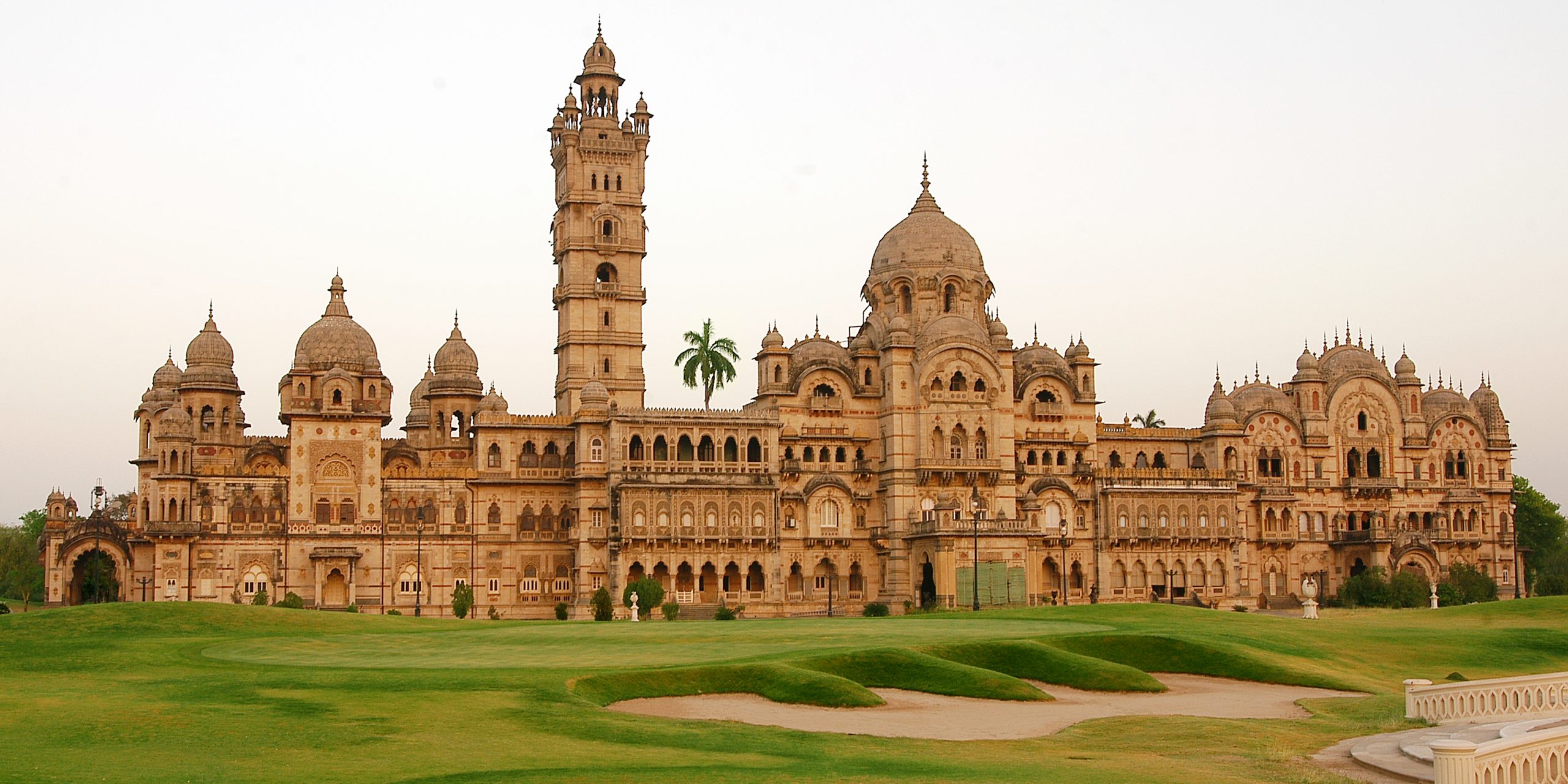
They may be living in a heritage palace said to be the largest residential building, larger even than Buckingham Palace. The Maharaja may be labelled the richest cricketer, or the Maharani the most cultured, beautiful, fashionable, talented, sensitive, popular and much more. Yet when you meet them, you do not see any of the trappings of royalty. They are celebrities in their own right, but without bodyguards or any pretensions.
To understand what they are today, we need to go a bit into history to see what makes them the way they are.
The Gaekwads of Baroda
The Gaekwads ruled Baroda in Gujarat from 1720 to 1949. The dynasty originally belonged to or rather originated in what is now the neighbouring state of Maharashtra, with Nandajirao Gaekwad. In 1721, the Gaekwads began their rule over Baroda after the brave Maratha warrior conquered the city from the Mughal emperor. The city was granted as a jagir to the Gaekwad by Chhatrapati Shahu I, the head of the Maratha Confederacy.
Subsequent rulers included Pilajirao, Khanderao and Damaji Rao, who, with the help of the Peshwa, expelled the Mughals from Gujarat. The Gaekwads, along with other Maratha rulers, fought against the British. But in 1802, the British defended Anand Rao Gaekwad under a treaty which gave the Gaekwads autonomy in return for breaking away from the Maratha Confederacy and accepting British suzerainty. Until then, and for some years after, there was instability. The true rise of Baroda began with Maharaja Sayajirao Gaekwad III.
Making of a Visionary – Sir Sayajirao Gaekwad III
Born near Nashik as Gopal Rao Gaekwad, he was not born into the Baroda royal family but was adopted by Maharani Jamanabai, the widowed consort of Maharaja Khanderao Gaekwad, ruler of Baroda, for want of a male heir. It is reported that the Maharani called upon various branches of the dynasty to present themselves and their sons in order to decide upon a successor. When asked the purpose of his visit, the 11-year-old Gopal Rao is believed to have replied, “I have come here to rule.” And rule he did.
Adopted in May 1875 and renamed Sayajirao III, he acceded to the throne as a minor and was extensively tutored in administration by Sir T. Madhav Rao, who guided and groomed the young prince with foresight and integrity.
In December 1881, at the age of 18, he was invested with full ruling powers. He reigned as Maharaja of Baroda between 1875 and 1939. Sayajirao III soon launched path-breaking reforms: uplifting the weaker sections, educating his subjects, developing agriculture and industry (especially textiles), modernising the judicial system, banning child marriage, removing untouchability, advancing Sanskrit and religious studies, and encouraging fine and performing arts. He was the first Indian ruler to introduce free and compulsory primary education in a state.
During his reign, Baroda saw immense progress: schools, libraries, hospitals, public buildings, parks, gardens, museums, markets, and much more. He established the Bank of Baroda, created the first narrow-gauge railway line in India, and initiated water conservation, sewage and sanitation works.
He travelled the world to study and invited experts to bring the best to Baroda. It was under his patronage that Babasaheb Ambedkar, Dadabhai Naoroji (a Diwan in 1874), painter Raja Ravi Varma, and Sri Aurobindo flourished. In 1895, S B Talpade, with his support, flew an unmanned aircraft, eight years before the Wright brothers.
On his Diamond Jubilee, he set apart a large fund for establishing a university, a task ultimately fulfilled by his grandson, Sir Pratapsinhrao Gaekwad, who founded The Maharaja Sayajirao University of Baroda in 1949.
When India attained independence in 1947, the last ruling Maharaja, Pratapsinhrao, acceded the Baroda throne to the Indian Union and merged the state with Bombay Province until 1960, when Maharashtra and Gujarat became separate states. Baroda had been one of the largest and wealthiest princely states of British India.
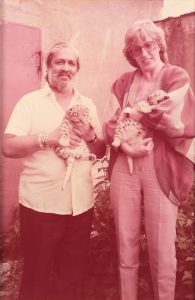
Maharaja Fatehsinhrao Gaekwad
A staunch conservationist, Fatehsinhrao had a distinguished and multifaceted career. He was Chancellor of the Maharaja Sayajirao University, a respected politician, and Member of Parliament (he contested four Lok Sabha elections and won all of them). He also served as Chairman of the Board of Governors at the National Institute of Sports, was an avid cricketer who played Ranji Trophy, and managed the Indian cricket team’s tours of England and Pakistan. He served as President of the BCCI from 1963 to 1966 and was awarded honorary life membership of the MCC.
A devoted animal lover, he promoted wildlife protection, played a key role in Project Tiger, and helped establish the Indian Society of Naturalists, the Wildlife Institute of India and WWF India. He contributed to saving Silent Valley, was involved in establishing Delhi Zoo, chaired the Indian Board of Wildlife Experts Committee on Zoos, and oversaw the Wildlife Protection Act of 1972 and the Forest Conservation Act of 1980.
Passionate about heritage, he authored The Palaces of India in 1980. Today, the Palace compound houses the Maharaja Fatehsinh Museum in his honour.
Dr Mrunalini Devi Pawar
She was the Maharani of Dhar, one of Maharaja Fatehsinhrao’s five sisters. A renowned educator and nutritionist, with a PhD in food and nutrition, she continued the family’s tradition of service through education.
She was a member and head of various committees of the Food and Nutrition Board, including international forums in Switzerland and France. She taught at the university before becoming its Chancellor in 1988, serving until her demise, probably the first Indian woman to be a Chancellor of a large university.
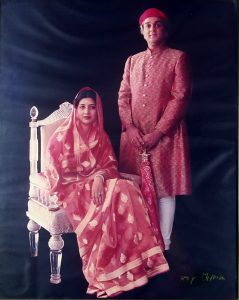
Maharaja Ranjitsinh Gaekwad
Unlike many royals for whom art was a pastime, Maharaja Ranjitsinh Gaekwad pursued it with academic rigour. He earned a Bachelor’s and later a Master’s degree from the Maharaja Sayajirao University, and studied at the Royal Academy of Arts, London, on a scholarship, earning a diploma in landscape painting.
He was an excellent portrait artist and vocalist. Though his royal duties and political career
(he was MP for 10 years), took him away from art, he returned with renewed passion, holding exhibitions and experimenting with various media: watercolour, oil, ink, pastels, charcoal and printmaking. He was also a self-taught sculptor, commissioned in 2009 to create a metal sculpture titled ‘Vessels of Life’, during his fellowship at the Institute of Advanced Studies, Durham University.
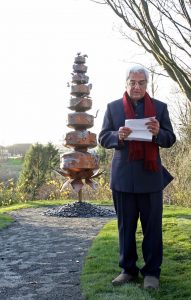 His passion for cricket was equally strong; he represented both the Baroda University and Baroda Cricket Association in first-class cricket for many years. For the people of Baroda, it was a delight to see their beloved “Baba” — as he was fondly known, playing cricket, painting or singing. Highly approachable, he was truly a people’s Raja. He often engaged with students at the Faculty of Fine Arts, giving lectures and demonstrations. After his passing in 2012, the university established the Maharaja Ranjitsinh Institute of Design (MRID) in his memory.


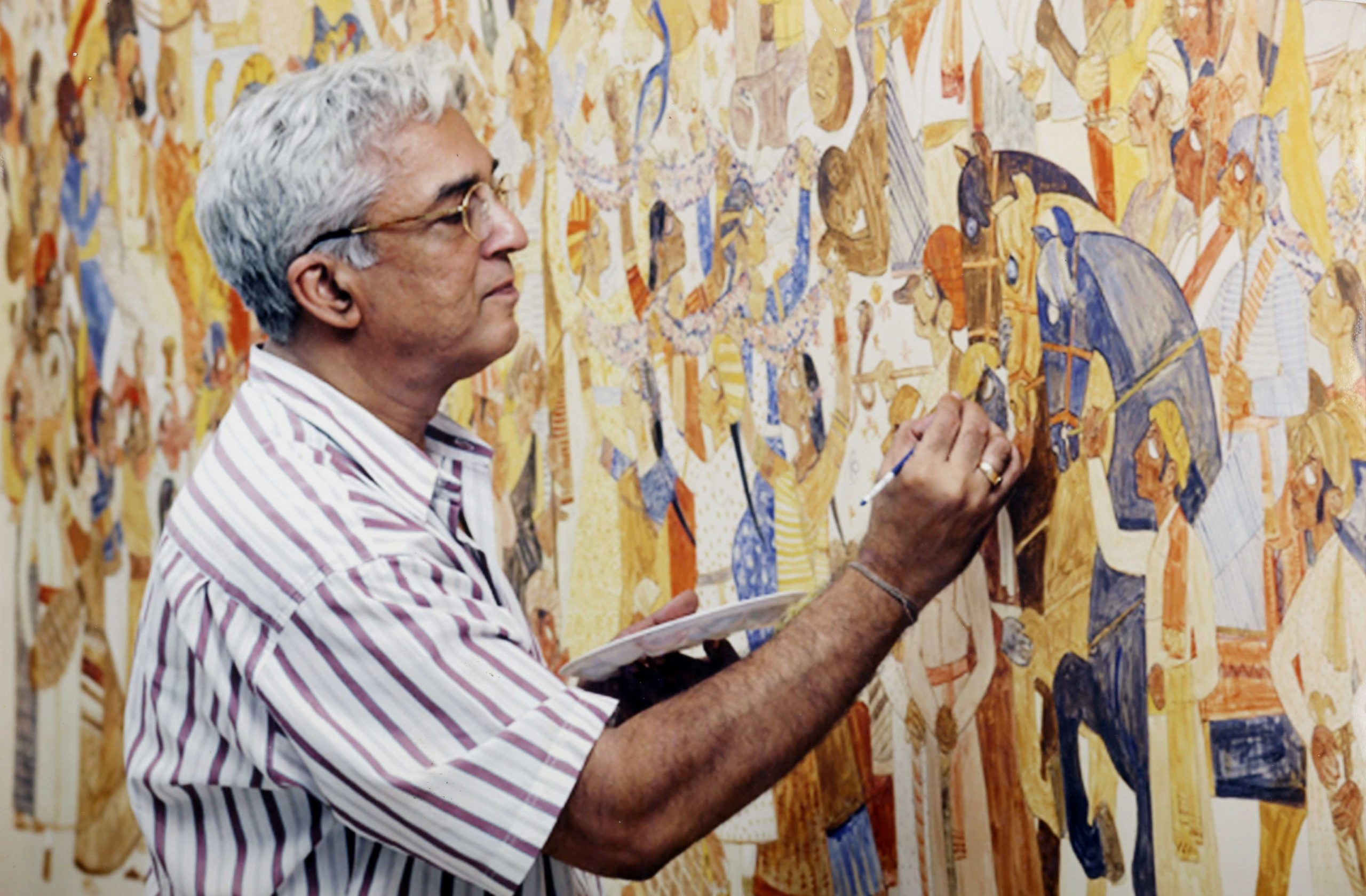
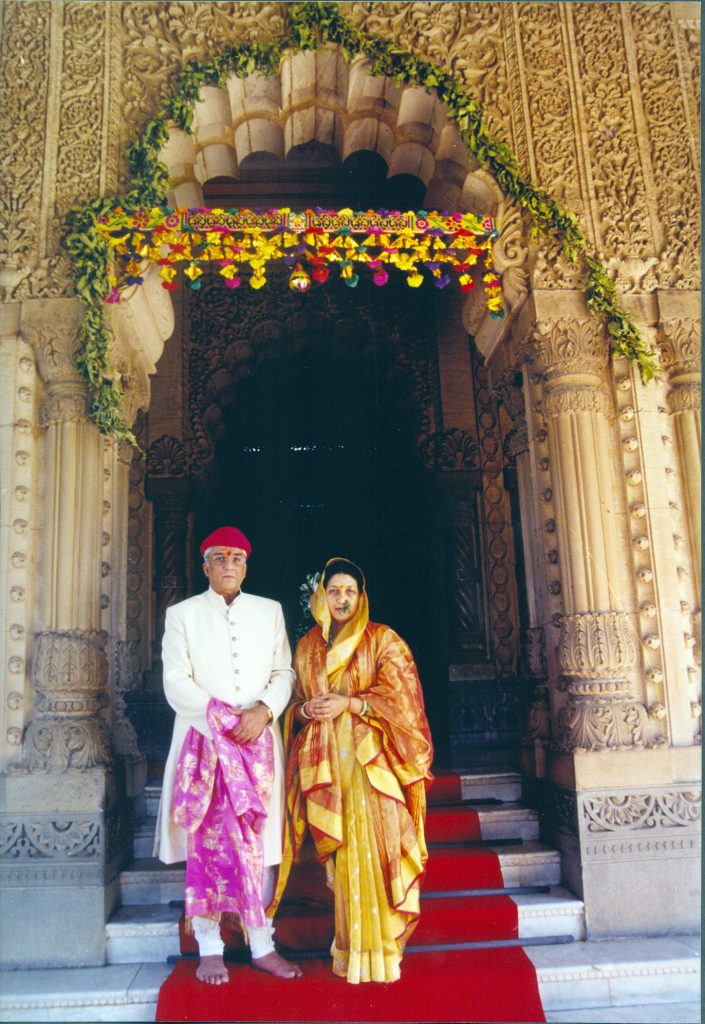
The royal family also hosts an annual festival of music and art in his honour, featuring national and international artists, and recognising outstanding local talent. The festival has grown each year in scale and popularity.
His younger brother, Sangramsinh Gaekwad, lives in Mumbai with his family.
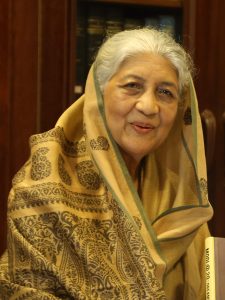
Raajmata Shubhanginiraje
Graceful and soft-spoken, the Raajmata has a strong presence in Vadodara’s public life. She was brought up in a traditional Maratha family in Gwalior with a sound education and training in horse riding and shooting along with her studies. She loved to drive around herself in Delhi and Baroda in her green Fiat, once her husband taught her to drive. The then Maharani of Baroda, despite living in a joint family and looking after her household duties of the elderly in-laws and own three children, enjoyed the freedom to drive to ‘work’ every day. She was the Secretary of the Trust that managed the family run 100 bed hospital “ The Maharani Shantadevi Hospital” started by her mother-in-law, Maharani Shantadevi Bai Saheb to provide good maternal and child care facilities to people of Baroda. Shubhanginiraje nurtured and looked after the hospital for almost 25 years, working with doctors, staff, counselling patients and their families and ensuring good healthy home like food was provided from the hospital in consultation with nutrition experts. Under her guidance awareness camps were also conducted in nearby villages.
‘Maa Saheb’ as she is now fondly called, is Chancellor of the Maharaja Sayajirao University and takes a close personal interest in the welfare of students. She also serves as President of the Society for Clean Environment, an NGO working on issues of pollution, clean and green surroundings, water management and public awareness, with a strong focus on engaging school children.
As President and chief patron of the Maharani Chimnabai Trust, she remains active in planning and executing the skill development certificate courses for women and empowering them with livelihood opportunities in different areas. The beneficiaries even make and sell their products. Events which bring together artisans and craftspeople to showcase their work are organised. Her special interest lies in reviving the Chandari sari weaving tradition and supporting the weavers’ welfare. She also oversees the Maharaja Fatehsinh Museum and, with her keen eye for arts and artefacts, contributes greatly to its preservation. An octogenarian, she continues to carry forward the family’s legacy enthusiastically.
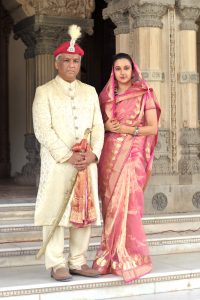
Maharaja Samarjitsinh Gaekwad
Maharaja Samarjitsinh Gaekwad is a cricket administrator and former cricketer who represented Baroda in the Ranji Trophy. He succeeded his father, Maharaja Ranjitsinh Pratapsinh Gaekwad, and was officially crowned in 2012. In 2013, after settling a long legal battle with his uncle Sangramsinh Gaekwad, he inherited the Lakshmi Vilas Palace, Moti Baug cricket ground, Maharaja Fatehsinh Museum, several real estate assets, and the management of 17 temple trusts in Gujarat and Banaras. He is a passionate sportsman and he has created excellent facilities for several sports in the palace compound, such as a well-planned golf course, good quality tennis courts, covered courts for badminton and nurtured the Motibaug Cricket Club too.
Married to Radhika Raje since 2002, they have two daughters, Padmajaraje and Narayaniraje.
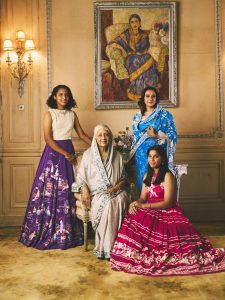
Maharani Radhika Raje Gaekwad
One of India’s most progressive Maharanis, Radhika Raje was born into the royal family of Wankaner, Gujarat. However she grew up with a deep sense of public duty and service, she developed a passion for conserving heritage, tradition and culture. Currently she is spearheading restoration of their century-old palace.
Articulate and compassionate, she has energised the Maharani Chimnabai Stree Udyogalaya, introducing new products and expanding its reach through a signature boutique, Padmanarayani, named after her two daughters. Both young princesses are actively involved in family-led social initiatives.
Significantly, Maharani Radhika Raje has been a strong champion of LGBTQI rights. She has worked tirelessly for their dignity and inclusion. Since 2020, the royal family, with her initiative, organises the Heritage Garba at the palace grounds — one of the largest Navratri festivals in Gujarat. The event also acts as a fundraiser for the Stree Udyogalaya.
Their home, the Lakshmi Vilas Palace, is much larger than Buckingham Palace. The four-storey palace spans 700 acres with 170 rooms, surrounded by exquisite gardens. Darbar Hall, with Venetian mosaic floors, Belgian stained glass, lacquered ceilings, Islamic domes, temple designs, gilded panels and Indo-Saracenic features, is spectacular. A landmark clock tower signals the Maharaja’s presence when the red light is switched on.
“The palace is an enduring symbol of Vadodara as a place open to different cultures and ideas,” says Radhika Raje.