






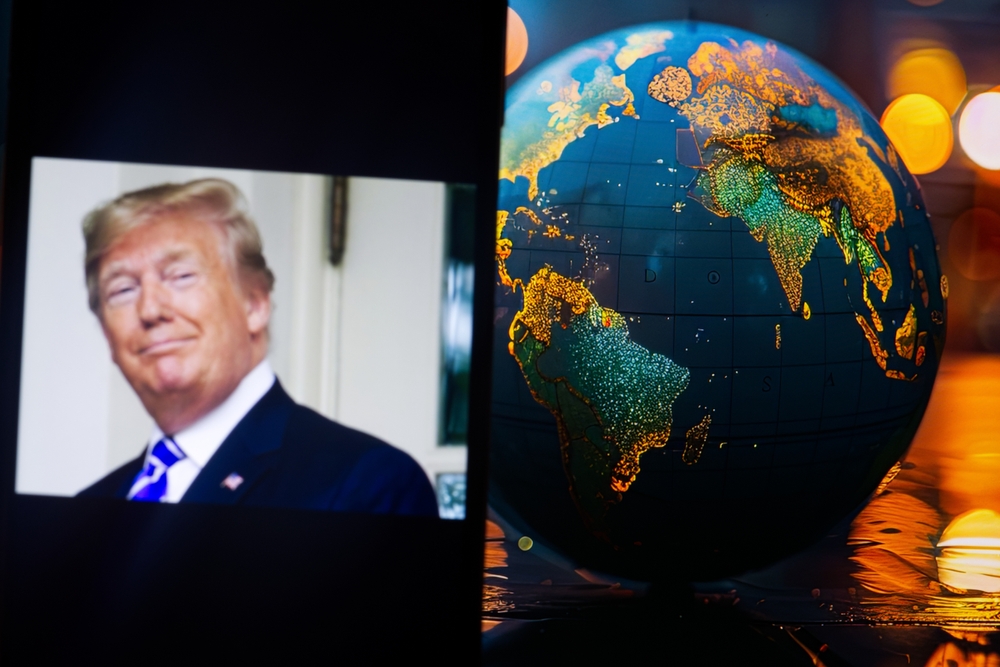
Donald Trump must know the limits of power and that deals cannot simply be imposed; they must be nurtured, writes Tina Vora
When Donald Trump first strode into the political arena, he carried with him a carefully crafted image: the master dealmaker. Decades of branding, best-selling books, and television appearances had sculpted a persona that suggested he could walk into any room, cut through the noise, and emerge with a handshake that sealed victory. For many of his supporters, this was precisely the quality the world needed—someone who could treat politics like business, who could hammer out bargains on the spot and walk away a winner.
And yet, on the world stage, that confidence met a far more complicated reality. The theatre of international diplomacy, with its centuries of grudges, layers of culture, and delicate balances of trust, does not bend easily to the instincts of a property mogul. Where a building contract or a licensing deal can be drawn up in weeks, the ties between nations are written over decades and unravelled with astonishing speed if mismanaged.
The promise of the “art of the deal”
Trump’s claim to fame in business was that he understood leverage: find the pressure points, talk tough, and eventually the other side will yield. In the world of real estate, that sometimes works. Money changes hands, properties rise from the ground, and lawyers ensure the signatures are binding. But diplomacy is not a transaction in quite the same way. Nations are not tenants to be evicted, nor contractors waiting for a cheque. They are proud, sovereign players, each guarding their own interests.
The early expectation was that Trump, with his deal-making bravado, would break through stalemates that professional diplomats had tiptoed around for years. He promised to end endless wars, to force trading partners to play fair, to charm adversaries and intimidate allies if need be. The image was cinematic—a leader who would do on the world stage what no one else had dared.
When deals fall flat
The reality, however, was sobering. Negotiations with North Korea, for instance, began with grand gestures—handshakes across borders, historic meetings that dominated headlines. For a moment, it looked as if the old enmities might thaw. But beneath the spectacle, nothing much changed. The promises made were vague, the follow-through was absent, and both sides walked away largely where they had started. The show was dazzling, but the substance was thin.
Trade wars, too, carried the hallmarks of Trump’s style. Tariffs were slapped on, rhetoric was fiery, and the aim was clear: force rivals to concede. Yet the other side—particularly China—did not fold. Instead, they dug in, retaliated, and the global economy braced itself for the aftershocks. What was framed as a clever negotiation strategy looked, to many observers, more like a stalemate that left ordinary businesses and consumers footing the bill.
Even traditional allies found themselves unsettled. Long-standing partnerships, forged in the ashes of the Second World War, rely on quiet trust, shared sacrifice, and patient listening. Trump’s approach often felt transactional, as if decades of loyalty could be weighed against a single budget line. For nations accustomed to being treated as partners, not clients, this shift was jarring.
Power, but not control
Perhaps the most striking lesson in all this is that even the most powerful office in the world does not confer absolute control. A president can command an army, shape policies, and speak with authority, but the stage of global politics has many actors. Other nations have their own pride, their own domestic pressures, their own red lines. Deals cannot simply be imposed; they must be nurtured.
Trump’s frustration often showed in his language. He railed against unfairness, accused others of taking advantage, and repeated his mantra that only he could fix what was broken. Yet the very structure of international relations resists quick fixes. What looks like weakness is often, in truth, restraint—a recognition that patience achieves more than bluster.
The myth of the strongman
The enduring appeal of the strongman leader lies in its simplicity. It reassures us that complex problems have easy answers if only the right person is in charge. It whispers that confidence and willpower are enough to bend history. But history, as ever, is more stubborn. Nations are not chess pieces; they are living, breathing societies with wounds, memories, and aspirations that cannot be bought off or bullied into line.
Trump’s struggles on the world stage remind us that leadership is less about forcing deals and more about cultivating trust. The most enduring agreements are not those struck in a moment of drama, but those patiently negotiated in rooms far from cameras, where egos are set aside and the long view is taken.
Lessons for all of us
It would be easy to dismiss all this as a uniquely political tale, but perhaps there’s something more universal here. How often in our own lives do we believe that a single bold move will solve everything—a quick bargain, a tough stance, a grand gesture? And how often do we discover that relationships, whether personal or professional, thrive on patience, listening, and respect rather than force?
The world stage merely magnifies these truths. If even the most powerful leaders cannot bend others to their will, perhaps it is a gentle reminder that life’s most important “deals”—with family, friends, colleagues—are never really about winning. They are about understanding.
A fading image
Donald Trump’s image as the ultimate dealmaker has not vanished entirely; for his supporters, it remains part of his mystique. Yet on the broader canvas of history, the cracks are plain to see. The showmanship is remembered, yes—the summits, the slogans, the dramatic tweets. But when future generations look back, they may judge less on spectacle and more on substance. And in that light, the dealmaker seems curiously powerless.

Closing reflection
Power is not always what it seems. Titles, wealth, and influence can open doors, but they cannot force others to walk through them. Real power—quiet, enduring, human power—lies in connection, in trust built slowly, in the recognition that true progress is shared, not imposed.
Trump’s time on the world stage may be remembered as a cautionary tale: that the skills of the marketplace do not always translate to the delicate art of diplomacy. And perhaps that’s no bad thing. It reminds us that the world is too intricate, too deeply woven, to be reshaped by bluster alone.
In the end, the illusion of the all-conquering dealmaker gives way to something more human: the recognition of limits. And maybe, in our own lives, that’s a lesson worth keeping close.