






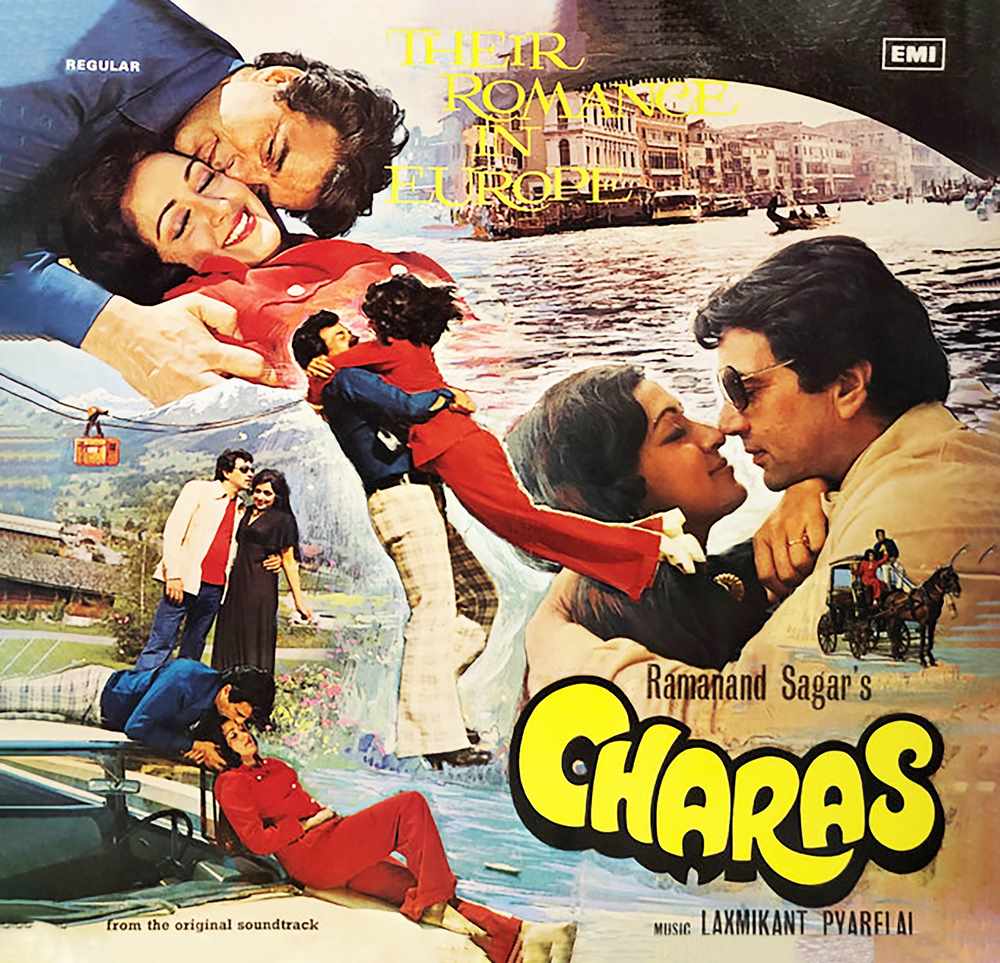
Charas sounded an alarm about what could happen to a society if people were allowed easy access to narcotics, writes Deepa Gahlot
Today the drugs business has taken on deadly proportions, but back in the 1970s, the world was just waking up to the perils of narcotics. Now marijuana is considered relatively harmless, when mind-altering, life- endangering drugs have flooded the market.
In 1971, Dev Anand made Hare Rama Hare Krishna about a group of weed-smoking, acid-dropping drifters called Hippies. Two years later, Ramanand Sagar made Jalte Badan, about the downfall of a young man due to drug addiction.
In 1976, he made a major hit, Charas, the first that took a look at the international trade in opium or charas, the raw material for more addictive drugs.
It was an ambitious thriller that followed the trail of drugs from Mumbai to Malta and Rome
By today’s standards, it is technically primitive, but then it was daring– it had Bond level gizmos, like transmitters hidden in shoes, bras and even a watermelon.
Before the cell phone age, the characters found ways of communicating quickly, via consoles with blinking lights.
The prosperous life of Suraj (Dharmendra), in Uganda is ripped apart when his father and sister are killed in a fire set by the villainous Robert (played by a post- Sholay Amjad Khan). He is the ‘suited-booted’ and scarred (looked like scrambled eggs on his cheek) henchman of the drug kingpin, Kalicharan (Ajit).
Suraj arrives in Mumbai to find that Kalicharan has embezzled his family’s business and home.
Driven by a personal vendetta and national duty, Suraj joins forces with the Indian police to destroy Kalicharan’s network.
Always a step ahead of Mumbai cops and even Interpol– represented by Tom Alter making a Bollywood debut– Kalicharan blackmails and threatens a dancer, Sudha (Hema Malini) into smuggling a large consignment of opium in the sets of her stage show.
Sudha has already encountered Suraj when he was escaping Kalicharan’s goons, and unlike the usual coy leading ladies, quite openly flirts with Suraj, just stopping short of actual intimacy, because Indian girls wait till they are married.
What Suraj does not know is that his sister, Munni (Aruna Irani) had not perished in the fire, but taken by Robert to Malta, where he drugs her and forces her to dance in Kalicharan’s nightclub, which is a hangout of white junkies.
As Rani and Keshto Mukherjee played clowning, but surprisingly intrepid cops, who intel-gathering helps the case.
Kalicharan has more men, better equipment and more planning proficiency– at one point, he organises a helicopter to lift his car, leaving the pursuing cops behind, looking frustrated.
Without the aid of modern VFX, the film had terrific action sequences and car chases across lovely European locations, at a time when very few films ventured abroad.
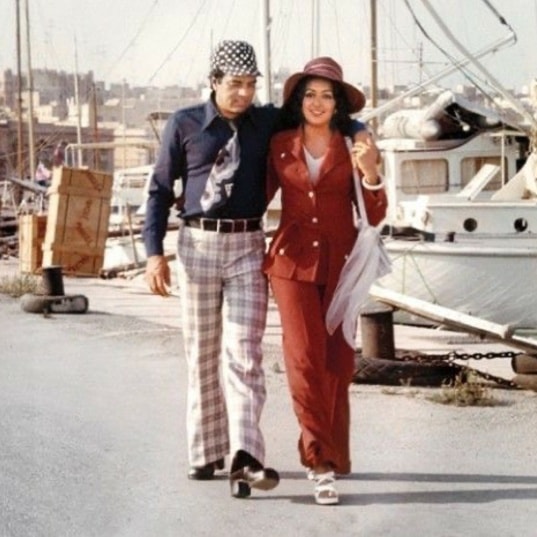
Charas was not their first film together, but the magical chemistry between Dharmendra and Hema Malini was undoubtedly a factor in the film’s success. By 1976, they were the “Golden Couple” of Indian cinema, and their romance was scorching the screen as well as gossip magazines of the time. The picturisation of the song Kal ki haseen mulaqat ke liye was almost risqué, to the extent censors would allow.
For its time, Charas was a clutter-breaker. Ramanand Sagar, who would later achieve legendary status with the television epic Ramayan, displayed a keen eye for grand scale here. The action sequences, involving helicopters, speedboats, and classic 70s car chases, are choreographed with a sense of frantic urgency that keeps the three-hour runtime moving at a brisk pace.
While Charas was primarily an action entertainer, it also served as a reflection of the hippie era. The mid-70s saw a rise in Western tourists traveling through India and Nepal in search of spiritual enlightenment and easy access to drugs. The film sounded an alarm about what could happen to a society if people were allowed easy access to narcotics. The result is evident now.