







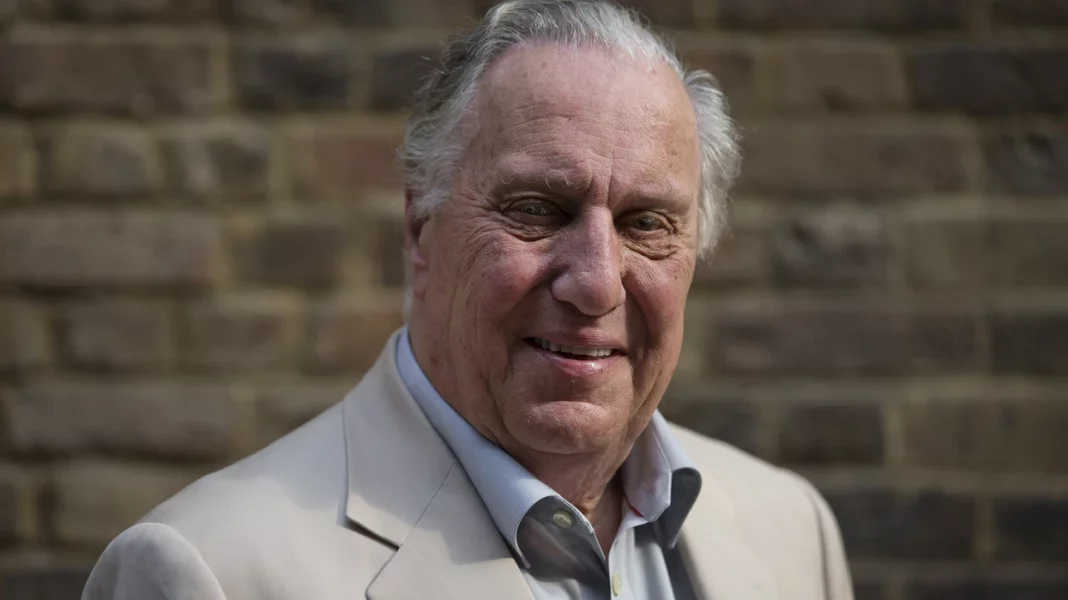
The world feels a little less precise today, a little less certain. With the news of Frederick Forsyth’s passing at 86, we have lost a writer who held a mirror to the shadowy world of global intrigue.
To simply call him a novelist doesn’t quite do him justice. Forsyth was a chronicler of the unseen, documenting the slow, grinding machinery of diplomacy and espionage. He took us inside the corridors of power where history is quietly shaped. We haven’t just lost a master of the thriller; we’ve lost a writer whose fiction felt closer to truth than comfort.
Born in Kent in 1938, Forsyth’s own life had all the makings of one of his plots. He was one of the youngest pilots to ever serve in the Royal Air Force before he became a journalist for Reuters and the BBC. His experiences covering the Biafran War left a deep impression on him, forging the unflinching realism that would become his hallmark.
His first novel, The Day of the Jackal, didn’t just tell a story; it meticulously unwrapped one. The anonymous assassin, the dogged detective, the sheer procedural detail – it was something new. The book wasn’t a race; it was a stalk, building tension through careful planning rather than cheap action. It set a new standard for the political thriller and defined Forsyth’s style: forensic, unsentimental, and utterly compelling.
From The Odessa File to The Dogs of War, his novels charted the course of contemporary history, never feeling fanciful, but always chillingly plausible. Forsyth didn’t just write spy stories; he seemed to possess an insider’s knowledge of the world’s shifting fault lines.
Years later, it turned out he was something of an insider, having worked with MI6. The revelation wasn’t a surprise; it simply confirmed what his readers already suspected. It explained the uncanny accuracy of his plots and his knack for seeming to know the headlines before they happened.
Forsyth had a healthy distrust of institutions and grand ideologies. He was committed to the truth, no matter how uncomfortable. He could be sharp, principled, and at times blunt, but he was always articulate. He never allowed his fiction to become weighed down by literary pretension; for him, the story was king.
His influence is plain to see. You can find it in the lean prose of modern thriller writers and in the public’s renewed appetite for realistic spy fiction. But more than that, you can feel it. His novels taught us to question the official story, to remember that heroes don’t always wear a uniform.
To read Forsyth was to understand that the world is often held together by quiet compromises, and that behind every headline is someone in the shadows, silently pulling the levers.
Frederick Forsyth didn’t just give us thrillers. He gave us a way of seeing the world. May he rest in peace, the dossiers finally closed.
Frederick Forsyth’s Top 10 Novels
- The Day of the Jackal (1971) The benchmark for the modern thriller. A faceless assassin, a relentless manhunt, and a climax that holds you breathless.
- The Odessa File (1972) A journalist’s dogged pursuit of a secret network of former Nazis. A story of moral courage and unbearable tension.
- The Dogs of War (1974) A clinical look at a corporate-backed coup, led by mercenaries. Forsyth at his most brutal and incisive.
- The Devil’s Alternative (1979) A high-stakes Cold War thriller centred on the terrifying brinkmanship of nuclear politics.
- The Fourth Protocol (1984) A plot to detonate a nuclear device on British soil. A classic of the genre, later a film starring Michael Caine.
- The Fist of God (1994) Set during the first Gulf War, it seamlessly blends military intelligence with heart-stopping suspense.
- Icon (1996) Part political prophecy, part detective story, it imagines the rise of a dangerous new leader in post-Soviet Russia.
- The Avenger (2003) A former Vietnam veteran takes on the task of hunting a war criminal, blurring the lines between justice and revenge.
- The Cobra (2010) A bold and compelling what-if: what if the war on drugs was fought with absolute authority?
- The Kill List (2013) A chilling and authentic glimpse into the modern world of targeted assassinations and remote warfare.