






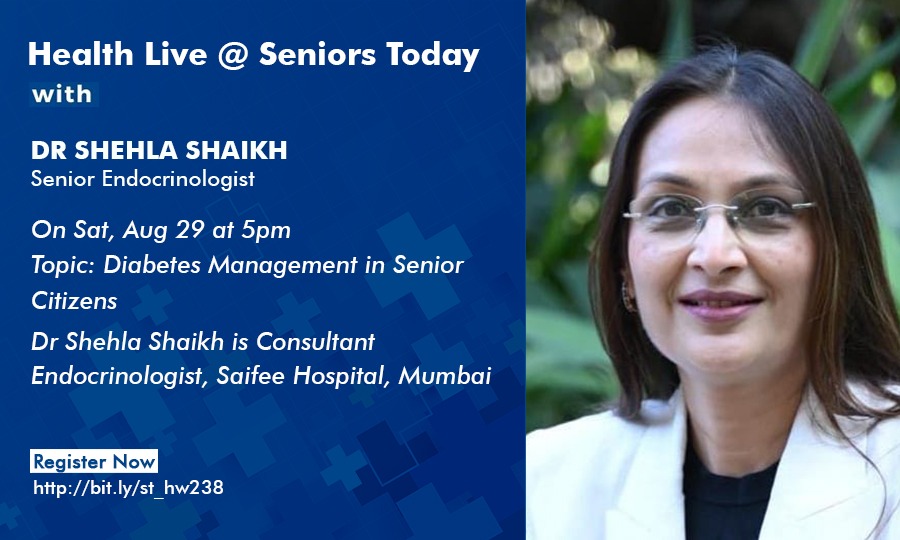
This audio recording is from a “Health Live at Seniors Today” session featuring Dr. Shehla Shaikh, a senior endocrinologist, discussing practical diabetes management for senior citizens.
On Saturday, August 29, 2026 at 5pm, Health Live@ Seniors Today’s weekly webinar hosted Consultant Endocrinologist, Saifee Hospital, Mumbai, Dr Shehla Shaikh.
Dr Shehla Shaikh, Consultant Endocrinologist at Saifee Hospital, has over 25 years of experience in endocrinology and metabolic health. She completed her MBBS from TN Medical College and Nair Hospital, followed by an MD in General Medicine and a DM in Endocrinology. She has a special interest in diabetes, thyroid disorders, obesity, PCOS, osteoporosis, and other endocrine conditions, focusing strongly on personalised and patient-centred care.
Along with her clinical practice, Dr Shaikh has been actively involved in research, medical education, and patient awareness. She has served as Principal Investigator for national and international clinical trials and received recognition for her research on diabetes and Ramadan fasting, including the prestigious Hamdan Bin Rashid Al Maktoum Foundation award. She is also a life member of the Endocrine Society of India, Research Society for the Study of Diabetes in India and American Diabetes Association.
You can watch the full interactive broadcast on the Seniors Today Diabetes Management in Senior Citizens to listen to the extensive clinical insights shared by the doctors during this session.
Here is a detailed summary of the session: Understanding Diabetes in Seniors
- Definition: Diabetes is primarily caused by either insufficient insulin production or the body’s resistance to insulin.
- Type 2 vs. Type 1: Type 2 diabetes diagnosed at age 60+ is often mild and manageable. However, seniors should remain alert for Type 1 diabetes symptoms, such as rapid weight loss, extreme thirst, and frequent infections, even if they have no prior history.
Management and Lifestyle Recommendations
- The “Diabetes-Friendly Plate”: To manage glucose levels, fill half your plate with non-starchy vegetables, one-quarter with lean protein, and one-quarter with whole grains/starch. Eat in that specific order (veggies first) to prevent sugar spikes.
- Physical Activity: Consistent activity is more important than intensity. Strength training is essential to maintain muscle mass and mobility, which many seniors neglect. Simple exercises using water bottles or resistance bands are recommended.
- Medication Adherence: Never stop medications without consulting your doctor, especially if you have a history of heart issues (like stents). Keep an updated list of all medications and share it with every doctor you visit to avoid dangerous interactions.
Key Insights from the Q&A session:
- Diabetes “Reversal”: True reversal is achieved through a consistent lifestyle (regular meals, no sugar, daily walking/exercise, and adequate sleep), not through “diabetes reversal” powders or products.
- Post-Meal Spikes: If fasting sugar is normal but HbA1c is high, it indicates post-meal spikes. You should monitor your post-meal glucose to identify which meals are causing the increase.
- CGM Usage: Continuous Glucose Monitors (CGMs) are useful for data, but they should be used in tandem with glucometer pricks. Avoid letting the data create paranoia; use it to understand how food affects your specific body.
- Low Blood Sugar (Hypoglycaemia): This is an emergency. If a senior is confused or unresponsive, do not give water. Provide 2 teaspoons of sugar immediately, and if they do not recover in 15 minutes, seek medical help. If they cannot swallow, rub sugar into the space between their teeth and cheek (buccal cavity).