






In a medical landscape where non-communicable, lifestyle-driven disorders have swiftly eclipsed infectious illnesses, a growing number of older adults are finding that the most potent prescription does not come in a pill bottle, but through scientifically structured physical movement.
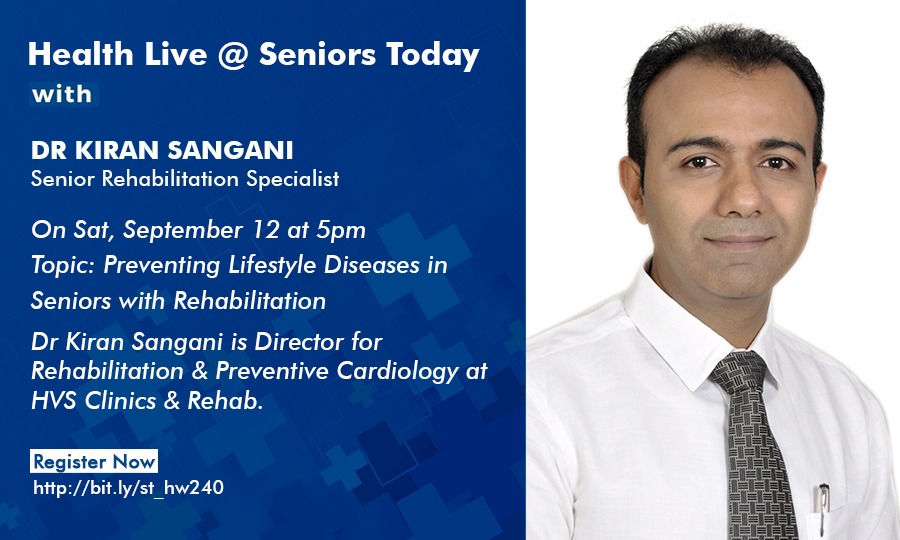
Speaking at the weekly Health Live at Seniors Today webinar hosted by Editor Pradyuman Maheshwari on Saturday, 12 September 2026, leading preventive cardiologist and rehabilitation specialist Dr Kiran Sangani delivered an empowering message to senior citizens: age is no barrier to peak physical vitality, and chronic illness does not mean a life lived in caution.
Under the theme “Preventing Lifestyle Diseases in Seniors with Rehabilitation”, the wide-ranging conversation challenged conventional assumptions around ageing, exercise, and post-operative recovery, illustrating how structured rehabilitation can guide individuals from heart surgery back to running half-marathons.
Dr Kiran Sangani is the Director for Rehabilitation & Preventive Cardiology at HVS Clinics & Rehab, bringing nearly 24 years of clinical experience in rehabilitating patients battling heart disease, vascular issues, cancer, chronic lung conditions, and metabolic disorders. Throughout his career, he has dedicated himself to the holistic management of these chronic conditions, uniting rigorous clinical acumen with preventive lifestyle interventions to optimise long-term outcomes and restore quality of life. In addition to his clinical work, Dr Sangani serves as a distinguished faculty member in Exercise Physiology for the American College of Sports Medicine (ACSM) certified Fitness and Nutrition courses, where he trains future fitness and nutrition professionals in evidence-based preventive care. He is also a respected faculty member for the Postgraduate Master’s in Sports Nutrition programme conducted jointly by SVT College of Home Science and the International Institute of Sports & Management (IISM), Mumbai, playing an instrumental role in grounding the next generation of sports nutritionists in scientific principles and practical application.
You can watch the full interactive broadcast on the Seniors Today YouTube Channel – How Can Rehabilitation Help Seniors Prevent Lifestyle Diseases to listen to the extensive clinical insights shared by the doctors during this session.
Rehabilitation vs Physiotherapy: A Crucial Distinction
Opening the discussion, Maheshwari asked Dr Sangani to delineate the boundaries between conventional physiotherapy and specialised rehabilitation—a frequent source of confusion among patients.
Dr Sangani clarified that whilst physiotherapy traditionally focuses on acute, localised musculoskeletal recovery—such as soothing arthritic joints, repairing muscle tears, or managing immediate post-stroke mobility during an initial hospital stay—rehabilitation operates on a much broader, long-term canvas.
“Rehabilitation, particularly cardiac and pulmonary rehab, is about restoring an individual to the highest attainable quality of life,” explained Dr Sangani. “Whether someone has undergone a coronary bypass, a valve replacement, or suffered heart failure, our goal is that they should never have to second-guess their physical capabilities. They should be physically capable and mentally confident enough to climb several flights of stairs, lift weights, or even train for a half-marathon. We have patients who had never stepped on a treadmill in their lives taking up half-marathons in their late seventies and eighties following bypass surgery”.
The Anatomy of Silent Conditions: Knowing the Target Numbers
Addressing the reality that India remains the diabetes capital of the world and that nearly one in three urban adults suffers from high blood pressure—half of whom remain undiagnosed—Dr Sangani stressed that the first defence is routine, objective diagnostic screening.
He advised seniors to track their physiological benchmarks rigorously rather than accepting creeping numbers as an inevitable consequence of getting older.
- Blood Pressure: Target readings should remain below 120/80 mmHg. Whilst a mild elevation up to 140/90 mmHg is often tolerated in older demographics, proactive lifestyle measures should continually aim to keep it below 130/80 mmHg.
- Cholesterol Ratios: Total cholesterol must stay under 200 mg/dL, with atherogenic LDL (“bad”) cholesterol kept strictly below 100 mg/dL. Crucially, HDL (“good”) cholesterol, which scavenges arterial deposits, should exceed 40 mg/dL. Dr Sangani highlighted that unlike LDL, which can be lowered with statins, there is no pill to elevate HDL—regular aerobic exercise is the primary driver.
- Body Composition & Visceral Fat: Body Mass Index (BMI) ought to sit between 18.5 and 25. However, Dr Sangani cautioned that weight alone is deceptive; central abdominal adiposity poses the greatest cardiovascular hazard. Waist circumference—measured precisely at the widest point across the navel rather than the trouser line—should remain below 40 inches for men and 35 inches for women.
Dietary Moderation and the Glycaemic Trap
Rather than advocating rigid, unsustainable dietary regimes, Dr Sangani counselled a sensible philosophy of conscious moderation. He pinpointed three primary culprits requiring restraint: salt, refined sugar, and saturated fats.
Beyond ordinary table salt, he warned seniors of “hidden sodium” embedded in commercial sauces, preserved delicacies, and processed snacks designed for prolonged shelf-stability.
On the subject of sugar, Dr Sangani advised curbing high-glycaemic foods—such as fruit juices, fizzy beverages, confectioneries, and sweet desserts—which trigger abrupt glucose spikes. Over time, these rapid surges force the pancreas to pump out excessive insulin, precipitating widespread insulin resistance, weight gain, and vascular plaque build-up.
Instead, plates should be filled with high-fibre complex carbohydrates (such as whole wheat, jowar, bajra, and ragi), abundant vegetables, and lean proteins—including pulses, lentils, low-fat dairy, soya, eggs, poultry, and fish.
A Structured Exercise Prescription for the Golden Years
“Physical activity is good, but exercise is medicine,” Dr Sangani underscored, drawing a vital distinction between everyday domestic chores and targeted cardiovascular conditioning.
- Aerobic Conditioning: Seniors should accumulate at least 30 minutes of moderate-intensity aerobic training five days a week. This includes brisk walking, cycling, swimming, or using indoor gym equipment like cross-trainers and rowing machines. The intensity must demand discernible exertion rather than casual strolls.
- Resistance & Strength Training: Confronting the age-related loss of muscle mass and bone density (sarcopenia and osteoporosis), Dr Sangani urged older adults not to shy away from gyms or home weights. Incorporating resistance bands or light dumbbells at least two days a week is essential to preserve musculoskeletal integrity and maintain functional independence five to ten years down the line.
- Daily Ambulation: Citing recent studies published in The Lancet, he noted that achieving roughly 7,000 steps daily yields dramatic reductions in cardiovascular and metabolic risk, representing a realistic, evidence-backed target for seniors.
- Rest and Mental Well-being: At least six to seven hours of restful sleep, dedicated breathing exercises for stress mitigation, and active participation in community or peer groups are equally critical components of comprehensive rehabilitation.