







A deeper understanding of the ‘prana’ will go a long way in being comfortable with the concept of death as of life itself, contemplates Nagesh Alai
Smita Sathe, who just turned 80, has been enduring the inexorable cancer, without knowing the cause for her ailment. Right or wrong, her care-giving stoic elder daughter had decided that as a practical approach, given the terminal nature of the disease. Besides, the daughter had decided not to subject her to invasive chemotherapy or radiation therapies, except at the initial stages to stem it. Smita was stable till recently when the ailment aggressed and manifested. The oncologist was complimentary of the daughter for having taken a practical approach to manage her mother’s ailment and keeping her largely pain free and letting her live in relative peace thus far. The fact that she was not aware of the cause of the ailment had also psychologically helped in avoiding despair and living a modicum of productive life. The recent virulence was a concern and indicative of the terminal stage. Clearly, at her age and stage, Smita cannot endure or sustain any invasive procedures. It will only prolong the agony. Smita’s daughter, a recent retiree with modest resources, was tossed between the high costs of treatment with no definitive positive outcome and letting her mother continue with a bearable living with some palliative care. She was torn and drained emotionally, but remained resolute in not subjecting her mother to any painful interventions, staring as she was at the inevitable end. Her pragmatic belief was that nature will take its course and give her mother the span of life that she can handle.
I recall the case of a relative’s mother, in her mid-seventies, ailing for some time, having a bad fall in the bathroom leading to a broken thigh bone and requiring surgery. Post operation, she developed some complications and had to be moved to the ICU. Within a few days, the relative’s mother expressed a wish to be taken home. In deference to her wishes, she was taken home to be in her comforting surroundings. A day later, she breathed her last, coincidentally on her 75th birthday. Perhaps, a cosmic serendipity or fortuity, whichever way one may see it. She must have had a premonition of her impending final moments and was preparing herself. More importantly, her kin were willing to abide by her willingness to be brought home.
More recently, there was a case of an ex-industry colleague who was in the ICU for over a month and a half, never to get out of it alive. Humans that we all are, driven more by the heart than the brain, the family clearly wished the treatment to continue with nothing but hope to guide them. But then nature can be quite decisive in matters of life and death.
Most would know about a living will which is essentially a formal document executed by a person expressing her/his wish or desire on how her/his illness should be approached or treated when she/he has lost her faculties and/or in no position to take a decision by herself/himself. It is an advance medical directive in a way and a way of ensuring that the expressed preference is followed when one cannot decide. Essentially, it is executed in favour of a trusted and emotionally strong close kith or kin, who will abide by the living will. Akin to the normally understood will which bequeath property and assets to specified heirs, a living will should be witnessed by two persons and it would be good to have it notarised too, to validate that it has been genuinely executed out of a free will. Important that life is, and given the potential for mischief and misuse, safeguards are sine qua non.
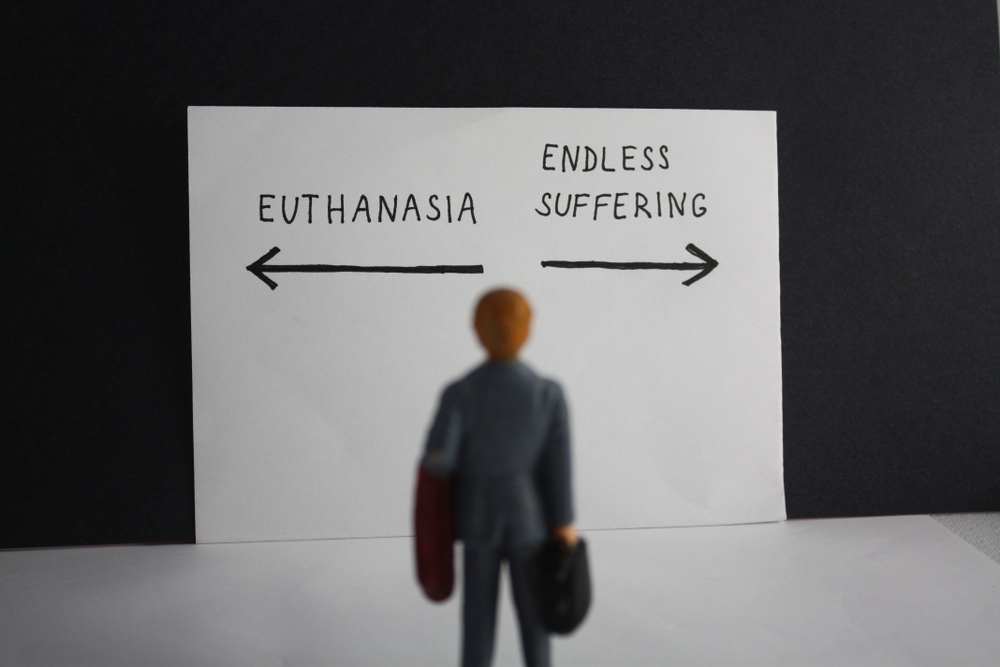
In some countries euthanasia has been legalised, with adequate guard rails, while in most, it is not permitted. Euthanasia is essentially a method of killing someone, under supervision, without pain, who wishes to die when suffering from a disease that cannot be cured. India permits passive euthanasia involving withdrawal of life support under strict SC guidelines (till such time as the parliament enacts a law), legalising the right to die with dignity and allowing living wills. As a safety measure, the approval of the high court and a panel of medical experts is required before withdrawing any life-sustaining treatment of a patient in terminal stage or having extreme permanent incapacitation. It is to be noted that active euthanasia, that is intentionally causing a person’s death through a direct act such as administering poison or injecting a lethal injection, is not allowed and is a crime.
Given the tremendous advances in medical sciences which enable curative treatments in many cases, transplants of various types and the availability of medical aids and equipment for innumerable infirmities and ailments, the possibility of living well and productively has enhanced longevity in general. In this age of techno-medical advances, the applicability of living will and euthanasia should be restricted to the rarest of rare cases and approached judiciously and with circumspection.
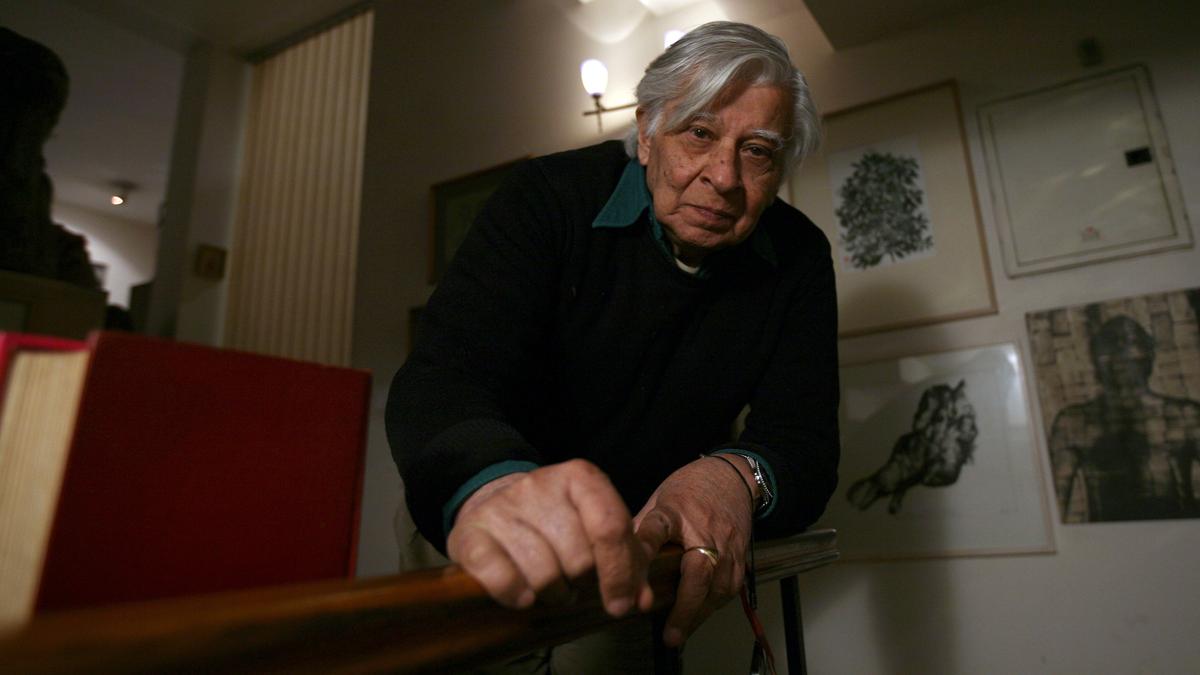
The human body, as in the case of any other living being, is nature’s engineering marvel par excellence and researches and studies over eons have not yet fully unravelled our body’s complexities or what makes it tick or not tick. How does one explain, except in accidents or mishaps or wars or other externalities, why someone dies at 10 or 30 or 50 and why someone lives to 80 or 90 or 100 or more. Take the fine example of Krishen Khanna, a progressive art group founding artist, who recently turned 100 and is having his retrospective at the NGMA. He continues to live his passion and paint with relish.
On the other side, over the eons we have heard of people taking sanyas and voluntarily giving up life when they feel it is time to exit the worldly living. They just stop imbibing any water or any food and get into a meditative trance with the life forces gradually depleting.
All of us have an innate ‘prana’ or energy which drives our life from birth to death Everyone’s prana is different and distinctive and when one dies or how long does one live is perhaps nature’s algorithm which is well-nigh impossible to decode. A friend collapsed recently whilst having his morning cup of tea. Another never woke up in the morning. In my lexicon, by far the best way to go; other than the shock of sudden exit, no one was burdened. A deeper understanding of the ‘prana’ will go a long way in being comfortable with the concept of death as of life itself. Impractically though, in cases of terminal illnesses, vegetative states and comatose patients, humans tend to be less rational and more emotional in deciding to continue medical interventions and unwittingly prolong the misery of the patients. Many of us don’t have the courage of conviction to pull the plug, when it matters the most. We owe it to our loved ones to pull the plug when their suffering is illimitable.

We tend to ‘other’ death, as we live, unwilling to accept that it may be round the corner for us too. I quite often joke that one may not see me the next day; but then it may be an expression of my subconscious willingness to let go when my time is right, instead of being an unwilling burden on anyone. Live easy, leave easy, let be, I would say!