








The joy of living in India is profound, and it shines brightest during our festivals. But what makes them truly special is when multiple celebrations fall on the same day — like a perfect thali, offering many flavours in one plate. 14th January is one such day, when the sun’s transition into Capricorn (Makar Sankranti) inspires harvest festivals across the nation. 14th Jan turns the country into a tapestry of colours and cultures.
So we bring to you the flavour of the North, Lohri/Maghi. While Lohri is celebrated on January 13th, the celebration lasts until the early hours of January 14th and turns into Maghi. Here’s how they are celebrated, along with recipes from our Seniors Today members — So-and-so — who have contributed some of the most loved traditional dishes prepared during this auspicious festival:
Lohri:
Lohri is celebrated with vibrant energy and communal warmth, especially in Punjab, Haryana, Delhi, and parts of North India. As winter reaches its final peak, communities gather around the iconic Lohri bonfire—an age-old symbol of hope, light, and the changing season. Families throw rewri, gajak, peanuts, til, popcorn, and phuliya into the flames, offering gratitude for harvests past and blessings ahead. The crackling flames, the aroma of roasted sesame and jaggery, and the warmth of the winter night fill the air with festive magic.
Folk songs like “Sundar Mundriye” come alive around the fire, while the beats of the dhol set the rhythm for Bhangra and Giddha, transforming the night into a joyous dance circle. Homes are filled with laughter, storytelling, and traditional winter delicacies. Lohri is also a time when families celebrate new beginnings, especially welcoming a newborn or honouring a newly married couple’s first Lohri—an occasion marked with enthusiasm, gifts, and special gatherings.
As the lively night of Lohri gives way to dawn, the celebrations take on a calmer, more spiritual tone — welcoming Maghi.
Maghi:
The following day marks Maghi, a quieter yet equally significant festival rooted in spirituality, reflection, and historic importance. People begin the day with an early morning holy bath in rivers or sacred sarovars, believed to purify the mind and bring blessings for the coming months.
For the Sikh community, Maghi carries special meaning as it commemorates the bravery of the Forty Mukte (Forty Liberated Ones) who fought valiantly alongside Guru Gobind Singh Ji. The town of Muktsar Sahib becomes the centre of devotion, drawing large crowds for kirtans, processions, prayers, and the famous Maghi Mela.
Food on this day is simple, comforting, and nourishing—symbolic of gratitude and renewal. The crisp winter air and the quiet stillness of early dawn set the tone for the day’s spiritual reflection. Many families, including prepare khichdi, kheer, sesame-based dishes, and jaggery sweets, align with the tradition of sattvik meals during this period. Mrs Maninder Aneja from our Seniors Today family has given us some dishes made traditionally on these two days.
Traditional Lohri/Maghi Recipes
1. Roh Di Kheer (Sugarcane Juice’s Kheer)
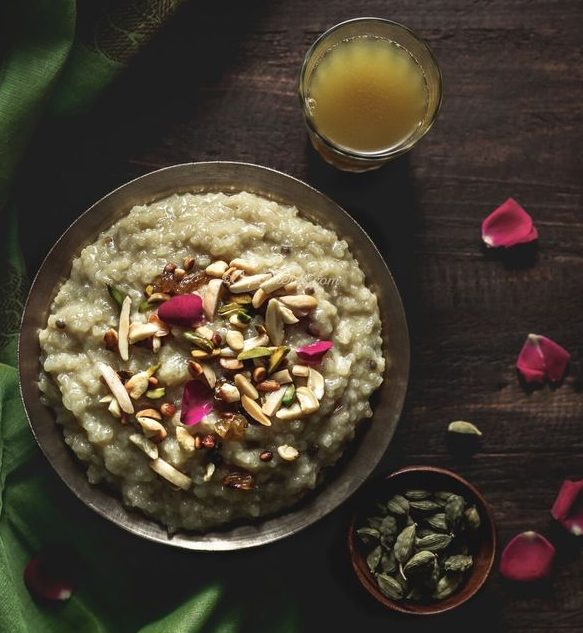
Ingredients:
- Sugarcane Juice- 10 cups
- Basmati Rice- ½ cup
- Green Cardamom Powder- 1/4th tsp.
- Almonds, lightly toasted: 1 tbsp.
- Cashew nuts, lightly toasted- 1 tbsp.
- Roasted peanuts, skinned- 1 tbsp.
- Rock Salt- a pinch
For the Straining:
- Muslin cloth for straining the sugar cane juice- ½ metre.
For the Clarification Process:
- Milk – 1 tbsp.
For the Garnish:
- Almonds, lightly toasted: 1/2 tbsp.
- Cashew nuts, lightly toasted- 1/2 tbsp.
- Dried and Edible Rose Petals- 2 tsp. (Optional)
Method:
- Prepare the base
- In the villages (Pind) of Punjab, this delicacy is traditionally prepared on Mitti Di Angithi.
- In cities, use a gas stove on a low flame.
- Strain sugarcane juice through a muslin cloth.
- Pick, wash, and drain rice. Set aside.
- Cook the kheer
- In a heavy-bottomed deep pan, add the strained sugarcane juice and bring it to a boil.
- Add milk to the boiling juice.
- After a few minutes, impurities will float on top — discard them with a ladle.
- Add rice, reduce the heat, and simmer for 1 to 1½ hours until the sugarcane juice thickens slightly and the kheer turns velvety and smooth.
- Stir occasionally to prevent sticking.
- Add green cardamom powder, almonds, cashew nuts, and peanuts.
- Sprinkle a pinch of rock salt and mix well.
- Finish and serve
- Remove the kheer from the flame and let it cool.
- Pour into traditional kulad, kasoras, or earthenware pots.
- Refrigerate for 1 hour.
- Serve chilled, garnished with almonds and jaggery.
2. Til Bugga
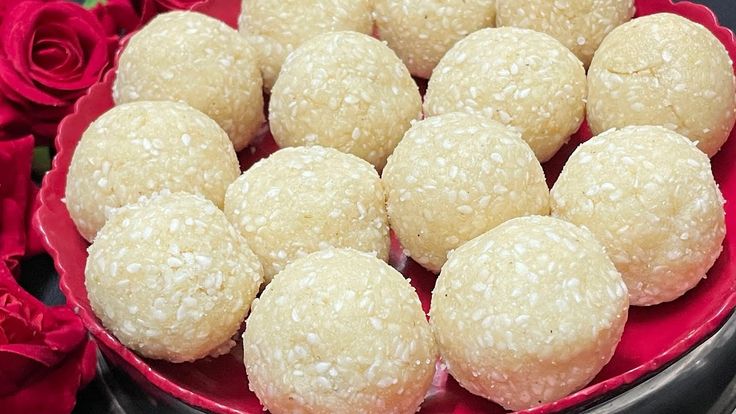
Ingredients
- White sesame seeds (safed til): 1¼ cup (175g)
- Mawa (khoya, milk solids): 400g
- Powdered sugar (boora cheeni) or jaggery: ¾ cup (150g), or to taste
- Black cardamom powder: ½ tsp
- Almonds/cashews: A handful, sliced (for garnish and mixing)
- Desi ghee (clarified butter): A little for greasing palms
Method
- Roast the sesame seeds:
- Heat a non-stick pan over medium heat.
- Add the sesame seeds and roast them while stirring constantly to prevent burning.
- Once they turn a light golden brown and start releasing their oil and aroma, remove them from the heat and let them cool completely on a plate.
- Prepare the sesame mixture:
- Grind about half of the cooled, roasted sesame seeds into a coarse powder using a mixer grinder.
- Mix this powder with the remaining whole roasted sesame seeds.
- Prepare the khoya:
- In a separate pan, lightly cook the mawa (grated or crumbled) over low heat until it becomes soft and releases a slight amount of fat.
- Be careful not to brown it.
- Combine the ingredients:
- Once the mawa has cooled slightly (it should still be warm), add the prepared sesame mixture, powdered sugar/jaggery, and black cardamom powder.
- Mix everything thoroughly with a spoon or your hands.
- Shape the Til Bugga:
- Gently grease your palms with a small amount of ghee.
- Take small portions of the mixture and shape them into round ladoos or disc-like pieces.
- Garnish each piece with sliced almonds or cashews.
- Cool and serve:
- Allow the Til Buggas to cool completely before storing in an airtight container.
3. Sarson ka Saag
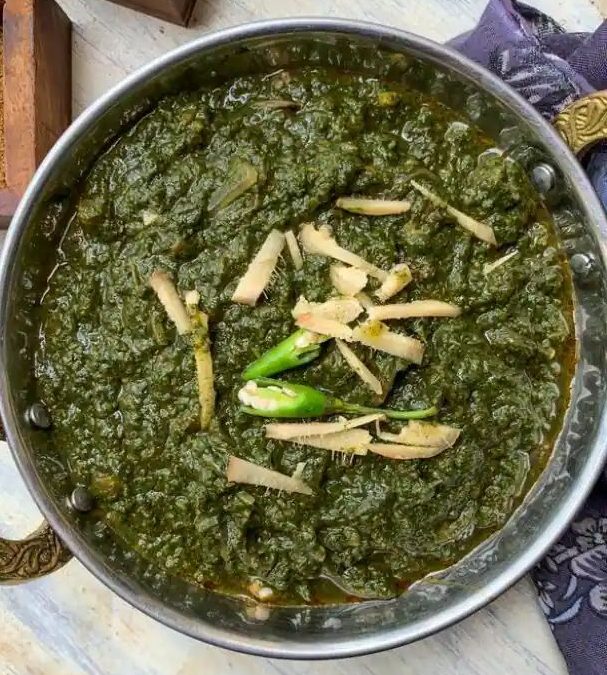
Ingredients
For the Saag Base:
- Mustard greens (Sarson): 500 grams (about 1 bunch)
- Spinach (Palak): 250 grams (about 1/2 bunch)
- Bathua (Chenopodium) leaves: 250 grams (or you can use turnip greens/fenugreek leaves if unavailable).
- Green chillies: 3-4, roughly chopped
- Ginger: 1 inch piece, roughly.
- Water: as needed for cooking (approx. 1 cup)
- Salt: to taste
- Maize flour (Makki ka atta): 2 tablespoons
For the Tempering (Tadka):
- Ghee (clarified butter): 2-3 tablespoons.
- Ginger paste: 1 tablespoon.
- Red chilli powder: a pinch
For Garnishing (Optional):
- White butter (Makkhan): a generous dollop
- Ginger: Few juliennes.
Method
Part 1: Cooking the Greens
- Prepare the greens:
- Wash all greens (mustard, spinach, bathua) thoroughly in running water to remove any dirt.
- Roughly chop the leaves and tender stems.
- Pressure cook:
- In a large pressure cooker, combine the chopped greens, green chillies, ginger, and salt. Add about 1 cup of water.
- Cook until tender:
- Close the lid and cook on medium heat for 2-3 whistles.
- Then, reduce the heat to low and simmer for another 10 minutes.
- Turn off the heat and let the pressure release naturally.
- Blend the mixture:
- Once the pressure is fully released and the contents have cooled slightly, open the cooker.
- Use an immersion blender (or transfer to a standard blender) to blend the greens into a coarse paste.
- Do not blend completely smooth; a slightly coarse texture is traditional.
- Simmer with maize flour:
- Transfer the paste to a heavy-bottomed pan (or back into the pressure cooker pot on ‘Saute’ mode).
- Dissolve the maize flour (makki ka atta) in about 1/2 cup of water to create a slurry, then add it to the saag mixture, stirring well to prevent lumps.
- Cook until thickened:
- Simmer the saag on low heat for about 15-20 minutes, stirring occasionally, until the mixture thickens and the raw flavour of the flour is gone.
Part 2: Preparing the Tempering (Tadka)
- In a separate small pan, heat 2-3 tablespoons of ghee over medium heat.
- Add the remaining finely chopped ginger, and cook for another minute until the raw smell disappears. Add red chilli powder, and cook until they are soft, mushy, and the ghee starts to separate from the mixture.
Part 3: Combining and Serving
- Combine:
- Pour the prepared tempering mixture over the simmering saag and mix everything thoroughly.
- Let it cook together for another 2-3 minutes so the flavours meld.
- Serve:
- Serve the Sarson ka Saag hot with a traditional Makki di Roti.
- Top each serving with a generous dollop of white butter or ghee and maybe a side of jaggery and chopped onions, as is the custom in Punjab.
4. Til Gud Laddoo
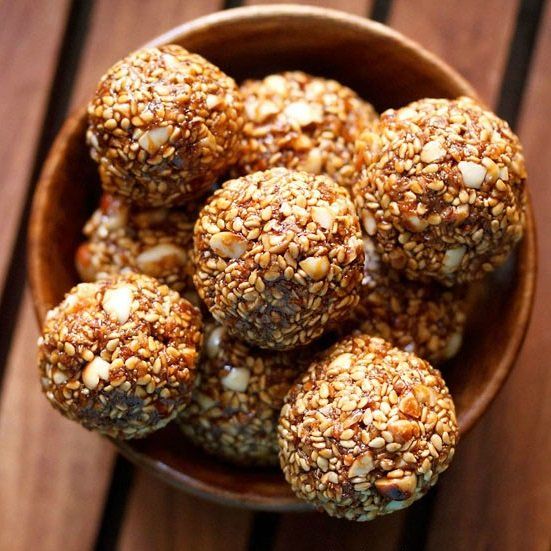
Ingredients
- 200 gms white sesame seeds (Til)
- 200 gms jaggery (Gud), roughly chopped or grated
- 3 tbsp roasted peanuts, coarsely crushed (optional, for extra crunch)
- 1 tsp cardamom powder (Elaichi)
- 2 tbsp ghee (clarified butter)
- 2-3 tbsp water (optional, helps the jaggery melt)
Method
- Roast the Sesame Seeds:
- Heat a heavy-bottomed pan or wok on a low flame.
- Add the sesame seeds and dry roast them, stirring continuously for about 3-4 minutes, until they turn slightly golden and aromatic.
- Be careful not to burn them.
- Transfer the roasted seeds to a plate and let them cool slightly.
- Roast Peanuts (if using):
- In the same pan, dry roast the peanuts until they are crunchy.
- Let them cool, then peel the skin (optional) and crush them coarsely.
- Prepare the Jaggery Syrup:
- In the same pan, add the ghee and the chopped jaggery.
- Stir continuously on a low flame until the jaggery melts completely.
- You can add 2-3 tablespoons of water to help it dissolve and continue stirring until it starts bubbling and thickens into a soft-ball consistency.
- Mix the Ingredients:
- Turn off the heat. Immediately add the roasted sesame seeds, crushed peanuts, and cardamom powder to the melted jaggery.
- Mix quickly and thoroughly until all the dry ingredients are well coated with the jaggery syrup.
- Shape the Laddoos:
- Allow the mixture to cool down slightly for a minute or two, but it must still be warm enough to handle.
- Grease your palms with a little ghee or water, take small portions of the mixture, and quickly shape them into round balls (laddoos).
- If the mixture cools completely, it will harden and be difficult to shape.
- Cool and Store:
- Let the laddoos cool completely to room temperature. Once cooled, store them in an airtight container.
- They can be stored for several days.
Enjoy your homemade Til Gud Ladoos, a delicious and traditional treat!
5. Atta Pinni
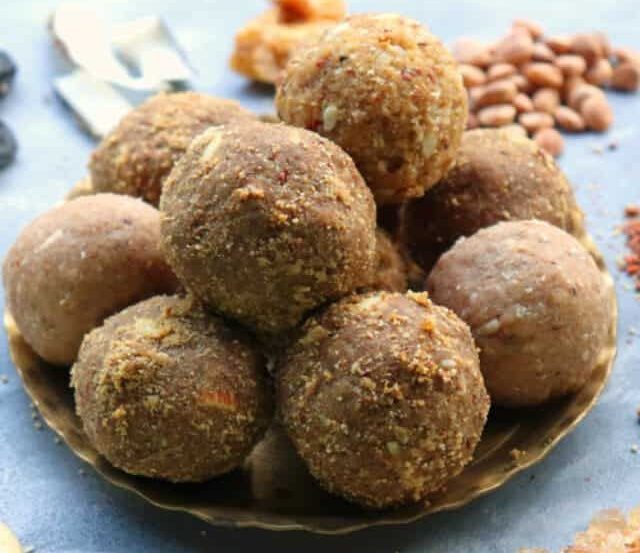
Ingredients
- Whole Wheat Flour (Atta): 2 cups (around 250g)
- Pure Ghee (Clarified Butter): 3/4 to 1 cup, plus extra for frying dry fruits and greasing hands
- Powdered Sugar (Bura/Icing Sugar) or Powdered Jaggery: 1 cup (adjust to taste)
- Dry Fruits: 1/2 to 1 cup total, roughly chopped (e.g., almonds, cashews, pistachios, raisins)
- Edible Gum (Gond): 2-4 tablespoons (optional, but traditional for health benefits)
- Cardamom Powder: 1 teaspoon
- Dried Ginger Powder (Saunth): 1/2 teaspoon (optional, for extra warmth)
- Melon Seeds: 1-2 tablespoons (optional)
Method
- Heat about a tablespoon of ghee in a heavy-bottomed pan.
- Fry the gond pieces on low heat until they puff up like popcorn and turn light and golden. Remove them from the pan and set aside to cool. Once cool, crush them into a coarse powder.
- In the remaining ghee, lightly roast the chopped almonds, cashews and melon seeds for a few minutes until they are golden and aromatic. Remove and set aside to cool.
- Roast the Flour:
- Add the remaining ghee to the same pan. Once melted, add the whole wheat flour (and semolina, if using).
- Roast the flour on a low flame, stirring continuously, for about 20-30 minutes. The key is patience; the flour will turn a deep golden brown and release a rich, nutty aroma.
- Turn off the heat and transfer the roasted flour mixture to a large bowl or plate to cool slightly.
- Combine and Shape:
- When the mixture is still warm enough to handle comfortably (lukewarm), add the powdered sugar/jaggery, crushed gond, roasted dry fruits, cardamom powder, and ginger powder (if using).
- Mix thoroughly using your hands, ensuring the sugar and dry ingredients are evenly distributed, and there are no lumps.
- Gently grease your palms with a small amount of ghee. Take small portions of the warm mixture and press firmly to shape them into traditional cylindrical pinnis or round laddoos.
- Cool and Store:
- Place the shaped pinnis on a plate to cool down completely.
- Once fully cooled, store them in an airtight container at room temperature. They have a long shelf life and can last for several weeks.
Celebrated back-to-back, Lohri and Maghi reflect two complementary sides of cultural life—festivity and reflection. Lohri celebrates togetherness, harvest, and the warmth of community, while Maghi invites quiet devotion, remembrance, and the cleansing of mind and spirit. Together, they mark the transition from winter’s peak to the promise of longer, brighter days, carrying forward traditions that unite families, communities, and generations. These cherished recipes were graciously shared by Maninder Aneja, to whom we extend our heartfelt thanks for contributing these beloved traditional delights.

Maninder Aneja