





‘SIP kiya kya’ could well be a buzz word or a tag line amongst the extant 85 million demat account holders in India who contribute to the kitty that ratchet up our Sensex. They may constitute just about 6.50% of our population, but are the movers and shakers and darlings of our stock markets, keeping our indices on a permanent high like no drug or intoxicant can. At the end of fiscal 1993, a few years after the economic liberation was set in motion in 1990, the AUM (assets under management by mutual funds) was about Rs. 47,000 crores. The SIP (systematic investment plan) AUM as of today stands at about Rs. 15 odd lakh crores and make up for about 21% of the total mutual fund industry AUM. June 2025 alone saw a SIP inflow of Rs. 27,269 crores, the highest thus far. The previous fiscal 24-25 had seen an average monthly SIP inflow of Rs. 25,000 crores. That’s indeed an exhilarating ride over 30+ years.
The Indian stock markets are now no longer controlled by the heart attack inducing exuberant inflows or erratic outflows of FIIs and other institutional investors, as was the case in the past. The spade work and ground work of the famed, but now extinct, Unit Trust of India, prior to the 1990s and later snowballed in 1993 by the pioneering Kothari Pioneer has taken deep roots indeed. Today there are about 45 asset management companies (AMC), most belonging to well reputed financial power houses, managing this humungous wealth, under the close scrutiny and oversight of SEBI, the industry watch dog. Smart and persistent messaging by the industry, harnessing a mindset of insecurity and fear about the future, as also the mission to evangelise financial prudence, has ensured increasing investors participation. The never-ending joy ride may seem surreal, yet is very real, notwithstanding the yawning social and wealth disparities and the concentration of the wealth in the hands of just a few amongst billions.

So, has this wealth creation and elevation of our economic status and higher development levels made our people happier than what they were in the past?
In 1990, unlike today, there was no formalised global happiness findings or rankings. Most studies were contoured around metrics like per capita GDP, human development index, level of poverty, etc. At that time, it would be safe to say that our per capita GDP was very low, our human development index lower, more than 50% of our population was below the poverty line and life expectancy would have been around 58 – 60 years. In 2012, when the first world happiness report was published, India ranked 144th amongst 150 countries surveyed; in 2024, it was still low at 126 amongst 143 countries and in 2025, it was placed at 118 out of 147 countries. Improved rankings somewhat, but it hides the continuing plight of the bulk of our population who are still impoverished. Higher per capita GDP or human development index could be beguiling and a convenient hiding of the reality of the stress and distress in life faced by many, impossible to count. The stark behavioural changes in people impact the social fabric and family kinship manifest in ways that are hard to digest and harder to understand, going by some cruel instances that hit the headlines recently. Not that such heart-rending news have not grabbed the headlines in the past nor are they likely to stop in the future.
An old frail woman, suffering from a skin infection, groaning in pain, was recently found dumped in a huge pile of garbage in a suburb of Mumbai. She was brought to the attention of the police who were kind enough to take her to a nearby charitable hospice to have her cleaned up and sheltered. Apparently, her son did not want the headache of looking after the person who gave him life. Up north, a father, a teacher by profession, in a fit of anger, kills his daughter because she secured poor marks in her exams. A budding life cut short by the burden of unreal expectations. Another father, in Gurugram, who had lost out in his small business, shoots dead his 25 years old daughter, who had made it to the national level in lawn tennis and was running a training academy to create future aces and chart out an independent path of herself. A youngster kills his grandmother because she refused to give him money for a new cell phone. Farmer suicides and student suicides are routine as are killings and murders and molestation by jilted lovers and are too vast in numbers to mention. Property disputes and business fall-outs leading to rancour, hate and snuffing out of lives are no less in numbers. Loneliness, depression, competition and technology led job derivations, misplaced zeal and a whole galore of other reasons have sieved the social fabric by and large and have led to brutalities at random. Even seasoned counsellors and psychiatrists will find it hard to navigate the mental web and maze of the deviants to fully understand the causative factors.
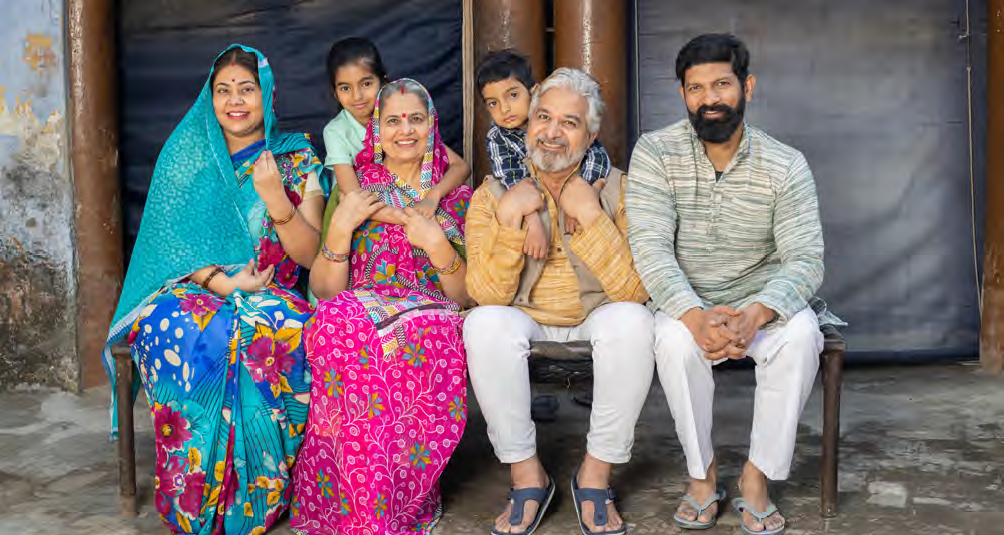
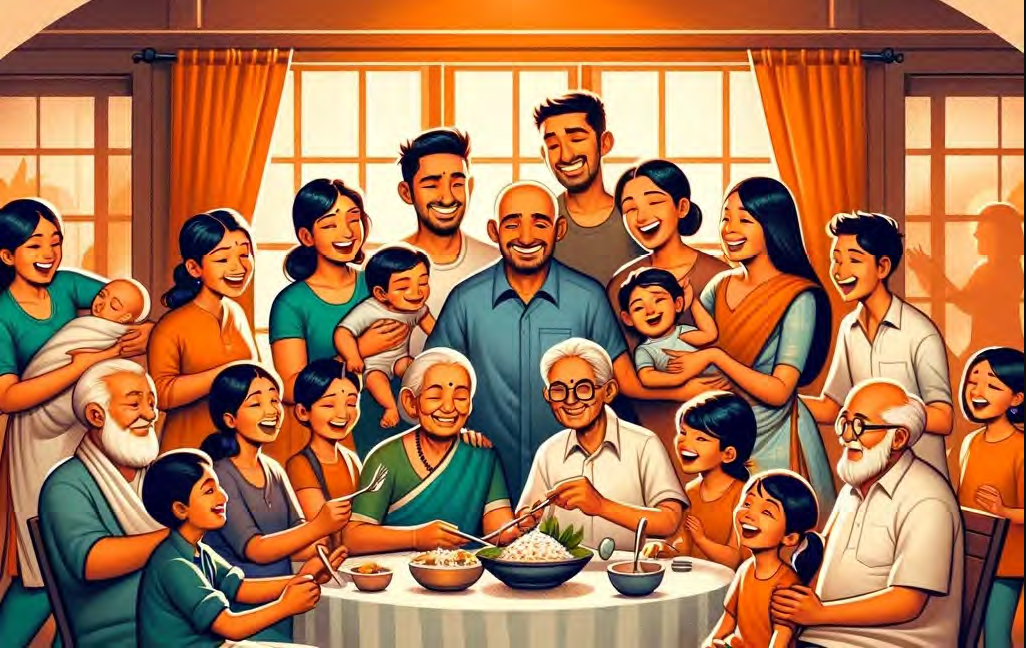
One of the key reasons could be the break down of the family structure itself which made for mutuality of support and security and a cocoon of warmth and interdependency in times of travails, turmoil and torment. The urban push towards nuclear families was just the beginning. The joint family roof was seen as too small a canopy for the multiple leaves and branches of the family leading to separation of kith and kin all left alone to face the vicissitudes and vagaries of life and living. People ignored the reality of the benefits of the family sitting together for a meal. Married children move out on the pretext of privacy and independence, but when a child arrives, they are all at sea and want their parents to support child rearing. Soon, cooking of food at home stopped. It has been outsourced to cloud kitchens and private enterprises. Cooking at home is not merely about food, but about the love that goes into its making. It is about keeping the family connected with affection and is central to our family culture. The aroma and taste of my mother’s cooking, till well into my late-twenties living under the same roof, still leaves me pining and wanting, years after her passing to cook for the divine. Importantly, home cooked food ensured our good health and satisfaction with life. A home without a kitchen soon becomes a house of walls no different than a hostel or a hotel. Visitations to family and friends, as and when one felt like, is not possible today; one needs to check on availability and convenience in advance. Over time, separations and single living have become a norm. Live-ins are increasing at the expense of marital commitments. In this ethos, it is hard to find a shoulder to cry on or a heart to unburden. We speak about our ancient civilization and enduring cultures, but the collapse of the family here is as severe as in many parts of the western world. Clearly, the foundation of a family, a home has weakened inexorably leading to reduced well-being, insecurity of mind, inability to face challenges, mental and physical abuse and other abnormalities of behaviours that become headlines in papers, but became taglines in life.
Wealth creation is good for everyone, undoubtedly. SIP is a conduit for that. But more importantly investing in systematic inner peace, which I would term as SIP 2.0, day in and day out and not just periodically, is crucial to be able to enjoy the wealth you create. If you wish to SIP the joy of life, you need to bask in the family. The return of happiness will be multi fold.