







Longevity may be modern medicine’s great triumph, but as Dr Rajiva Gupta reminds us, the real challenge lies in ensuring that the years we add are worth living.
“The person who takes medicine must recover twice — once from the disease and once from the medicine.” — William Osler
For many older adults, mornings begin not just with a cup of tea, but with a handful of pills — for blood pressure, diabetes, arthritis, heart disease, digestion, or sleep, and so on. What starts as good care can gradually become a maze of medicines, leaving one tired, confused, and overwhelmed.
This daily handful of pills reflects a growing global concern called polypharmacy — the regular use of five or more medicines. Doctors prescribe them with good intentions — to prevent strokes, ease pain, control sugar, or protect the heart — yet when combined, these medicines can bring new problems: confusion, side effects, poor balance, and harmful interactions that may do more harm than good.
How Common Is Polypharmacy?
Nearly one in three seniors takes five or more medicines daily — a figure that almost doubles by age 85. In India, a 2025 study across six cities found 33.7% of older adults affected, with regional rates as high as 57%. Experts call it a “hidden epidemic,” linked to one-third of hospital admissions and among the top five preventable causes of death in older adults.
India’s Unique Challenges
Polypharmacy in India has its own nuances:
- Fixed-dose combinations: Convenient but often confusing, with two or more drugs in one pill.
- Chemist culture: Easy over-the-counter access and add-on tablets mean doctors rarely see the complete medication list.
- Herbal remedies: Popular products such as ashwagandha may interact with prescription drugs.
- Auto-refills: E-pharmacies may keep delivering medicines even after they’re discontinued.
- Affordability: Rationalising medicines enhances both safety and affordability

Why the Elderly Are Prone to Polypharmacy ?
As people age, health issues tend to multiply — and so do prescriptions. Managing diabetes, blood pressure, heart disease, joint pain, or sleep problems often means taking several medications at once. When different specialists are involved, each may add or change drugs without knowledge of what others have prescribed. The result? Overlapping medicines, drug interactions, or even duplicate treatments. Over-the-counter pills and herbal supplements further complicate the picture.
Sometimes, a side effect from one drug is mistaken for a new illness — triggering yet another prescription. This chain reaction is called a “prescribing cascade.”
For example:
- A blood pressure pill causes leg swelling → a diuretic (water pill) is added → dehydration and dizziness follow.
- A memory-enhancing drug increases urination → a bladder medicine is added → confusion worsens.
Spotting and questioning such medication chains early can prevent unnecessary prescriptions, protect brain clarity, and maintain balance and well-being.
How Polypharmacy Silently Undermines Senior Health
The Ageing Body’s Changing Chemistry
As we age, the body handles medicines differently. A dose that worked at 50 can act unpredictably at 80. Slower organs, shifting body composition, and multiple illnesses increase the risk of side effects and drug interactions.
- Slower kidneys: By age 80, kidney function may drop by half, allowing some drugs to linger and cause toxicity.
- Reduced liver metabolism: Lower enzyme activity delays drug breakdown—sedatives, for example, can accumulate and confuse.
- Changed body composition: More fat and less muscle allow fat-soluble drugs to build up, while low protein levels amplify blood thinner effects.
- Greater sensitivity: The aging brain and nerves react more sharply—ordinary doses for blood pressure or anxiety can now trigger dizziness or falls.
A pill that once felt perfect may no longer suit today’s body.

Red Flags — When to Suspect a Drug Problem
- New confusion, agitation, or excessive sleepiness
- Frequent falls or imbalance
- Constipation, dry mouth, or trouble passing urine
- Dizziness on standing
- Unexplained bruises or bleeding
- Loss of appetite or persistent tiredness
- Low-sugar spells in diabetes
The Risk Rises with Every Pill
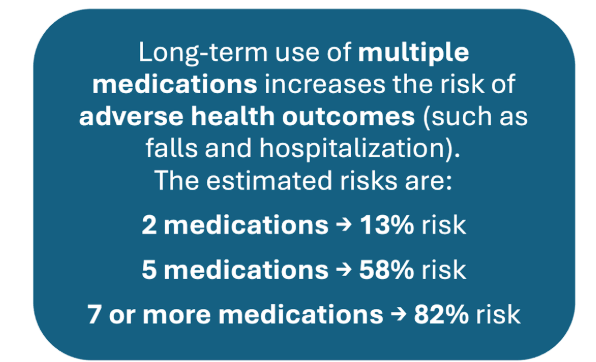
Taking five or more medicines sharply increases the risk of harm. For example, sedatives, sleeping pills, and some blood pressure drugs can cause dizziness or falls. These are called “fall-risk increasing drugs” (FRIDs).
In seniors, such medicines may cause bone fractures and loss of independence. Every additional pill raises the chance of side effects and confusion.
Nearly one in three hospitalisations in older adults is due to medication-related harm, and with eight or more drugs, the risk of severe reactions quadruples.
In the US, such preventable drug-related issues cost Medicare over $50 billion a year.
Golden Rule: In older adults, any new or unexplained symptom — especially dizziness or confusion — should be considered drug-related until proven otherwise.
When Medicines Interact
Every pill affects the body—and sometimes each other. Some combinations can quietly turn harmful: blood thinners with painkillers can increase bleeding risk, antidepressants with heart drugs may trigger irregular heartbeats, and combining sleeping pills with anti-anxiety medications can lead to dangerous drowsiness, confusion, and falls.
Neurological Effects on Memory, Alertness, and Balance
With age, some medicines can dull memory, alertness, and balance. Confusion, drowsiness, or unsteady walking often appear together, increasing the risk of falls and injuries. Drugs that block key brain chemicals intensify the problem, especially when combined. Cold or allergy syrups, certain antidepressants, bladder control medicines, and sleep or anxiety pills are common culprits. Even a routine dose labelled “may cause drowsiness” can blur focus, slow reflexes, and sap energy. Over time, these effects can disturb sleep, appetite, and mood — quietly eroding overall well-being.
Adverse Effects on Sleep
Sleep problems often grow with age — and medicines can quietly make them worse. A decongestant taken late may keep you awake, while a sedative can leave you foggy or unsteady the next morning. A few smart habits help: take stimulating medicines in the morning, calming ones in the evening, avoid caffeine after noon, and check if your insomnia began after starting a new drug.
Adverse Effects on Appetite and Energy
Loss of appetite or low energy isn’t always due to aging — medicines are often the hidden cause. Painkillers, cholesterol-lowering drugs, beta-blockers, antidepressants, antidiabetic medicines, and even some antibiotics can dull taste or cause nausea. Reviewing prescriptions and cutting down on unnecessary medicines often restores appetite, strength, and vitality.
Polypharmacy and Dementia
People with dementia are especially vulnerable — more than half in long-term care take medicines that no longer help, like statins, vitamins, or memory boosters. Stopping such non-essential drugs often improves alertness, appetite, and mood. After any hospital stay or new diagnosis, every medicine deserves a fresh look.
The “More Is Better” Myth
Families often believe more medicines mean better care. In reality, reasonable care in later life is about comfort, independence, and quality of life — not the number of pills or perfect test results.
Diabetes and the Dangers of Over-Control
Tight sugar targets suited for younger people can harm seniors. Too many diabetes medicines or insulin may trigger low blood sugar, confusion, or falls.
Better goal: Stay safe and steady, not perfect. Fewer medicines, moderate targets, and regular reviews often lead to better health and greater confidence.

Appropriate and Inappropriate Polypharmacy
Not all polypharmacy is harmful. When medicines are well-chosen, correctly dosed, and regularly reviewed, multiple drugs can be life-saving — this is appropriate polypharmacy. For instance, a person with diabetes, heart disease, and high cholesterol may need a statin, sugar-lowering drug, and blood-pressure tablets that work safely together under supervision. Problems arise with inappropriate polypharmacy — when drugs are duplicated or are unnecessary. Regular reviews ensure only what truly helps is continued.
Managing Polypharmacy: Practical Steps
Every few months, gather all your medicines — tablets, syrups, inhalers, vitamins, and herbal products— and review them with one doctor who knows your full history.
Simplify and Stay Safe
Avoid duplicate drugs, choose non-sedating or once-daily options, and stop acidity pills if not needed.
Never stop certain drugs suddenly — like beta-blockers, clonidine, steroids, or high-dose antidepressants and sleeping pills; taper only under medical supervision.
Keep a record of changes, use reminders or pill boxes, and alert your chemist about discontinued drugs.
Seek medical help right away for confusion, fainting, black stools, breathlessness, chest pain, or very low blood sugar.

Ask Open, Honest Questions
- Do I still need this medicine?
- Could a lower dose work?
- Are there safer alternatives?
- What side effects should I watch for?
These simple questions help your doctor decide which medicines truly matter—and which can be reduced or stopped. In India, where families often help manage medicines, involving them in these talks keeps treatment safer and more effective.
The Art of Deprescribing
Deprescribing is the careful, supervised process of reducing or stopping medicines that no longer help or may harm. Done gradually and with follow-up, it can cut unnecessary drug use by up to 60%, reduce hospitalisations by over a third, and restore energy.
Not Every Symptom Needs a Pill
Simple lifestyle changes can work as well — or even better:
Regular exercise strengthens bones, lowers blood pressure, and lifts mood. Eating healthy—meals rich in fruits, vegetables, whole grains, and protein—helps control sugar, cholesterol, and energy levels. Staying hydrated, sleeping well, and staying socially connected can sometimes replace the need for sedatives or painkillers.
Smart Use of Technology
Digital tools are reshaping medication safety. AI-based apps can scan medicine boxes, detect risky combinations, and flag errors before prescriptions are finalised.
Technology can’t replace human judgment — but it makes prescribing safer, communication more clearer, and reviews smarter.
The Takeaway
Polypharmacy isn’t about how many medicines you take — it’s about balance.
When every prescription has a clear purpose, treatment becomes safer and simpler. What matters most is open communication among doctors, patients, and families, supported by regular reviews and coordinated care.

Checklist: Is your medicine list safe?
- Do you take five or more regular medicines?
- Has your doctor reviewed them in the past six months
- Do you use over – the – counter or herbal remedies?
- Have you felt dizzy, drowsy, or exhausted lately?
“If you or your parents take more than five medicines, ask your doctor for a medication review — it may be the most caring check-up you do this year.”