







Since our launch in July 2019, Seniors Today has grown far beyond nostalgia and self-help. We are a monthly e-magazine, a vibrant website, a dynamic app and a hub of digital and in-person engagements. Over the past six-and-a-half years, we’ve proudly earned the distinction of being India’s #1 Destination for Senior Citizens.
Our annual listing of the 50 Most Influential Seniors has become a benchmark: highlighting individuals aged 60 and above who continue to shape society meaningfully. While many names recur, their continued presence reflects sustained impact and relevance. Each year also brings new entrants: some who’ve newly crossed the 60-year threshold and others who’s growing influence merits recognition. A few from previous editions no longer feature, and sadly, some have passed on.
Eligibility is limited to those aged 60 or above as of January 1, 2026. As always, we exclude politicians and government officials from consideration.
1. Mukesh Ambani, 68, Industrialist
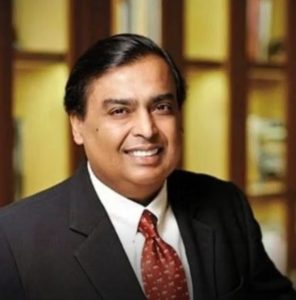
In late 2025 and early 2026, Mukesh Ambani made headlines for leading India’s billionaire wealth surge yet again and announcing plans for Jio Platforms’ IPO in the first half of 2026. Other major developments revolve around RIL’s strong financial performance, a significant pivot to Artificial Intelligence (AI), and major investments in new energy.
Already honoured as India’s No. 1 CEO and No. 2 globally in the Brand Guardianship Index 2024, Ambani’s standing has only strengthened. But let’s be honest—it’s never just been about rankings or net-worth tables. What truly sets him apart is influence: the rare ability to move markets, mindsets, and momentum at scale.
Under his leadership, Reliance Industries Limited has continued its transformation from a national powerhouse into a global force—spanning energy, retail, digital infrastructure and emerging technologies. Jio has gone far beyond telecom. Having already been named India’s Strongest Brand and ranked among the world’s 25 Strongest Brands, Jio’s expanding digital ecosystem—connectivity, platforms, AI-enabled services, and cloud—has become deeply woven into everyday Indian life, from metros to remote towns.
Mukesh Ambani remains India’s most influential business leader, not because he tops lists—but because he continues to command what comes next.
2. Gautam Adani, 64, Industrialist
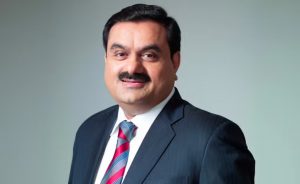
If physical infrastructure is one of the most visible changes in the country over the last decade, the name that’s associated with it is undeniably that of Gautam Adani. As we move through 2025 and look firmly towards 2026, Adani’s story remains one of scale, speed and a relentless focus on nation-building through infrastructure.
Founder and Chairman of the Adani Group, Gautam Adani has built one of India’s most diversified business empires, spanning ports, airports, power generation, renewable energy, logistics, data centres, defence manufacturing and green hydrogen. What began as a commodity trading firm in the late 1980s has evolved into a group that touches nearly every Indian life—often invisibly, but indispensably.
At the heart of the empire is Adani Ports and Special Economic Zone, now India’s largest commercial port operator and among the most efficient globally. Add to that the rapidly expanding Adani Airports, which has transformed passenger experiences across several major Indian cities, and you begin to see the scale of ambition at play.
Energy, however, is where Adani’s long-term vision becomes most evident. Through Adani Green Energy and Adani Energy Solutions, the group has positioned itself as a central player in India’s clean energy transition—investing heavily in solar, wind, transmission networks, and green hydrogen infrastructure. By early 2026, Adani’s renewable ambitions are firmly aligned with India’s net-zero goals, making the group impossible to ignore in global climate and energy conversations.
Often described as intensely private and deeply disciplined, Gautam Adani is known for his early-morning workdays, frugal personal habits, and sharp focus on execution.
Gautam Adani has reshaped India’s infrastructure landscape. As India accelerates towards becoming a global economic heavyweight, Adani’s ports, power lines, airports, and renewable parks will continue to form the backbone of that journey.
3. Noel Tata, 69, Industrialist
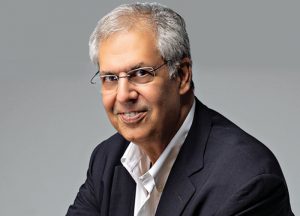
In a group known for iconic leadership, Noel Tata has long preferred influence over visibility—and that very trait has now placed him at the heart of one of India’s most respected institutions.
Noel Tata’s journey within the group began away from the limelight at Tata International, the conglomerate’s global trading arm. Rising steadily through the ranks, he became its Managing Director in 2010. Under his leadership, Tata International expanded well beyond trading—diversifying into engineering products, leather, and metals, while establishing a robust global footprint.
Unbeknownst to many, Noel Tata has been the strategist behind strengthening the Tata Group’s international presence, particularly across Africa and Southeast Asia. His approach—measured, patient, and partnership-led—helped anchor the Tata name in complex, high-growth markets.
Retail, however, is where his impact has been most visible. As Managing Director of Trent Limited—the Tata Group’s retail arm founded by his mother, Simone Tata—Noel oversaw one of Indian retail’s most compelling growth stories. With brands such as Westside, Star Bazaar, and the youth-favourite Zudio, Trent’s transformation under his stewardship was remarkable, with the company’s stock rising over 6000%, a figure that turned heads across Dalal Street.
Recognising his leadership depth, Noel Tata was appointed to the boards of Titan Company and Voltas, elevated to Vice Chairman of Titan in 2018, and later named Vice Chairman of Tata Steel in March 2022—roles that reflect the group’s confidence in his long-term vision.
Despite these responsibilities, Noel Tata has remained steadfastly low-key, balancing demanding professional commitments with a private personal life. Those who know him well describe a leader who listens carefully, builds quietly, and believes deeply in institutions over individuals.
His New Year’s reflection captured this ethos perfectly, as he spoke of progress and purpose at Tata Trusts, ongoing work across education, healthcare, WaSH(Water, Sanitation, and Hygiene) and livelihoods, and paid tribute to Ratan Tata, whose values continue to shape the path ahead.
As 2026 unfolds, Tata’s journey feels less like a sudden rise and more like a moment long in the making. After all, we did say he was the one to watch in 2025—and he’s proving that sometimes, the quietest leaders make the most lasting impact.
4. Azim Premji, 80, Industrialist, Philanthropist
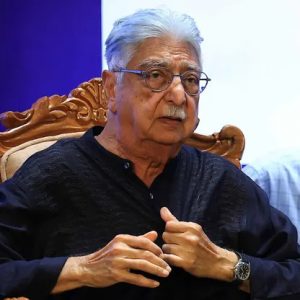
“The three ordinary things that we often don’t pay enough attention to, but which I believe are the drivers of all success, are hard work, perseverance, and basic honesty.”
— Azim Premji
Few leaders embody these words as quietly—and convincingly—as Azim Premji.
Often described as the conscience of Indian capitalism, Premji is the quintessential pioneer of India’s IT revolution and remains one of the world’s most respected philanthropists. While market watchers may note his movement on global billionaire rankings, such metrics have long been irrelevant to a man who measures success in lives impacted, not numbers accumulated.
As the founder of Wipro, Premji helped shape India’s global technology identity. Yet it is his second act—philanthropy—that has defined his legacy. As the first Indian signatory of The Giving Pledge, he committed the majority of his wealth to social good, setting a powerful precedent for India’s wealthy to give back at scale.
Azim Premji Scholarship for Girls: 2025-26 has expanded its scholarship programme for girl students from disadvantaged backgrounds who passed class 10 and 12 from government schools. The program aims to support up to 2.5 lakh girls across 18 states.
Through the Azim Premji Foundation, his vision has translated into meaningful, measurable change. The Foundation’s work across education, teacher training, public policy, healthcare, and equity has touched millions of lives, particularly in underserved communities. By 2026, it stands among India’s most impactful philanthropic institutions—rigorous, research-driven, and deeply rooted in on-ground realities.
Though Premji has stepped back from day-to-day business leadership in recent years, his influence has hardly diminished. Instead, it has evolved—into a moral compass for ethical leadership, long-term thinking, and responsibility-driven capitalism.
Soft-spoken, intensely private, and famously modest, Azim Premji reminds us that leadership need not be loud to be lasting. In a world increasingly obsessed with speed and scale, his life’s work offers a gentler, more enduring lesson: that compassion, consistency, and conscience remain the most powerful drivers of true success.
5. Natrajan Chandrasekaran, 62, Chairman, Tata Sons
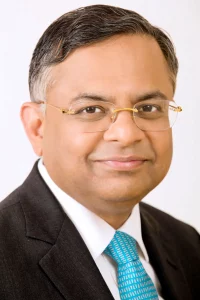
Widely respected for his calm clarity and execution-first leadership, Natarajan Chandrasekaran—or simply Chandra, as he is known across the group—stands at the helm of one of India’s most storied conglomerates at a defining moment in its history.
As Chairman of Tata Sons, Chandrasekaran oversees a portfolio that spans steel, software, automobiles, consumer brands, aviation, hospitality, energy and retail—touching millions of lives every day, in India and globally. Appointed in 2017, he was the first non-family professional to lead the Tata Group, a responsibility he has carried with quiet confidence and decisive intent.
A former CEO and Managing Director of Tata Consultancy Services, Chandrasekaran transformed TCS into one of the world’s most valuable IT services companies, setting benchmarks for scale, governance and shareholder value. That discipline has shaped his stewardship of the wider Tata universe.
Under his leadership, the group has sharpened its focus on simplification, accountability and future-ready businesses—most visibly through bold moves in aviation, electric mobility, semiconductors, digital platforms and clean energy. By early 2026, the Tata Group’s renewed momentum reflects a leader comfortable balancing legacy with reinvention.
Known for his understated style, long workdays and data-driven decision-making, Chandrasekaran is neither flamboyant nor distant. Instead, he is seen as a builder—someone who believes institutions outlast individuals, and systems matter as much as vision.
At 62, Natarajan Chandrasekaran represents a modern Tata ideal: professional, principled, and quietly ambitious—proving that steady leadership, when combined with purpose, can still move mountains.
6. Samir Jain, 71, Media Baron

The enduring success of The Times of India owes much to the distinctly unorthodox philosophy of Samir Jain. An out-of-the-box thinker by instinct, Jain has long approached publishing less like a traditional editor and more like an advertising strategist—reimagining the newspaper as a platform, a marketplace, and a mass-influence engine rolled into one.
At a time when print journalism globally is walking a tightrope, The Times of India Group has managed a rare balancing act: holding on to legacy, reach and prestige while simultaneously leaning hard into digital. Strategic partnerships, bundled offerings, and smart monetisation have helped cushion the business against the sharp declines that have battered print elsewhere.
While many newspapers merely survived the digital shift, the Times group chose to embrace it at scale—across news, entertainment, classifieds, radio and data-driven platforms. By early 2026, its digital footprint rivals its print influence, making it one of the few legacy media houses to remain firmly relevant to India’s fast-evolving, mobile-first audience.
Following an amicable business division with his brother Vineet Jain, Samir Jain has continued to be the strategic force shaping the group’s influence—particularly in how its platforms engage with public opinion, governance narratives, and state-level discourse. The reach is vast, the audience loyal, and the impact undeniable.
Never one to be nostalgic, Jain is now widely seen as thinking several steps ahead—exploring ways to stay relevant to a new generation of digitally native readers who consume news in snippets, scrolls, and streams rather than columns and pages.
In an industry defined by disruption and decline, Samir Jain’s approach remains characteristically contrarian: adapt early, monetise creatively, and never assume yesterday’s success will carry you into tomorrow.
7. Kiran & Shiv Nadar, 75 & 80, Art Collector, Philanthropist, Industrialist

Excellence has for long been the way the HCL Group conducts itself over the decades.
At the heart of the group is HCL Technologies, today one of India’s largest global software services providers. Employing over 211,000 people across 52 countries, HCL Tech is notable not just for its scale, but for its people-first philosophy.
The story began humbly in 1976, when Shiv Nadar, along with five friends, co-founded HCL in a garage to build calculators and microprocessors. Nearly five decades later, that modest experiment has evolved into a global technology powerhouse. Nadar’s personal wealth—estimated at around $37 billion—is significant, but it is what he has chosen to do with it that defines his legacy.
Philanthropy is deeply embedded in the Nadar ethos. Through the Shiv Nadar Foundation, the family has made transformative investments in education—establishing world-class institutions and expanding access to quality learning across India. The belief is simple and consistent: education is the most powerful catalyst for long-term social change.

That commitment is mirrored and expanded through Kiran Nadar, one of India’s most influential figures in the art world. Founder of the Kiran Nadar Museum of Art and a trustee of the Shiv Nadar Foundation, she has played a pivotal role in democratising access to modern and contemporary Indian art. In recognition of her contributions, she was awarded the Padma Shri in 2024.
Adding another fascinating dimension to her profile, Kiran Nadar is also an accomplished sportsperson, having won a bronze medal for India at the Asian Games 2018 in the Bridge Mixed Team event—an achievement that reflects the family’s belief in excellence across disciplines.
Together, the Nadars represent a rare blend of innovation, inclusivity and intent. From a garage start-up to a global IT leader; from boardrooms to classrooms and museums—their story is not just about building a brand, but about building a future that gives back.
8. Laxmi Niwas Mittal, 75, Industrialist
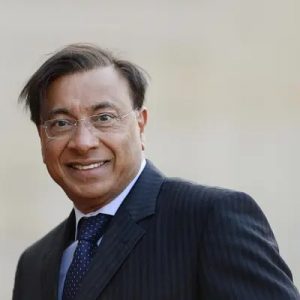
In 2026, Lakshmi Niwas Mittal remains one of the most influential figures in global industry—a business leader whose life mirrors the rise of modern steel itself. From modest beginnings in Rajasthan to building the world’s largest steelmaking enterprise, Mittal’s journey is a masterclass in vision, resilience, and long-term thinking.
As Executive Chairman of ArcelorMittal, Mittal continues to shape the future of an industry under intense pressure to decarbonise, digitise, and adapt. In recent years, his focus has sharpened on green steel, hydrogen-based production, recycling, and low-emission technologies—signalling a clear understanding that the future of heavy industry must align with climate responsibility as well as scale.
Mittal’s influence, however, extends far beyond steel. He is widely respected as a global statesman of business—someone who understands geopolitics, labour, capital cycles, and the social responsibilities of large enterprises. His philanthropic initiatives, spanning education, healthcare, and sports, reflect a belief that wealth carries an obligation to build institutions that outlast individuals.
Quiet, disciplined, and intensely private, Lakshmi Niwas Mittal has never chased attention. Yet, in 2026, his impact is unmistakable: a self-made industrialist who helped redefine global manufacturing, proved that Indian entrepreneurship could dominate world markets, and now stands focused on ensuring that industry itself evolves responsibly for the generations ahead.
9. Nita Ambani, 62, Sports, Arts

“Every generation has a responsibility to leave the world more inclusive and more hopeful than it found it,” says Nita Ambani
Few leaders embody multi-dimensional influence quite like Nita Ambani. Her contributions across arts, sports, education and social impact have not only inspired admiration but have also helped reshape how India presents itself to the world. Whether championing grassroots sport, promoting Indian culture on international platforms, or expanding access to quality education, her work consistently blends scale with sensitivity.
As the founding chairperson of institutions such as the Reliance Foundation, Nita Ambani has driven initiatives that touch millions—particularly women and children—across healthcare, education, rural development and disaster relief. Her approach is deeply hands-on, rooted in empathy, and focused on measurable impact rather than optics.
In the world of sports, she has been a powerful catalyst for change, helping elevate India’s sporting ecosystem—especially for young talent and women athletes. In culture and the arts, her efforts have ensured that Indian heritage is not only preserved but celebrated globally, with confidence and contemporary relevance.
She wears many hats—and does so with remarkable ease. Patron, philanthropist, cultural ambassador, education advocate, and global influencer—Nita Ambani doesn’t merely juggle these roles; she owns them, fully and authentically.
When she says, “This century belongs to India—and its women,” it feels less like a declaration and more like lived reality. As 2026 unfolds, one thing is certain: Nita Ambani isn’t just witnessing India’s rise—she’s actively influencing it.
10. Sudhir Mehta, 71, Industrialist
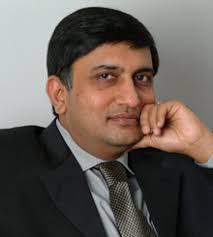
Sudhir Mehta is Chairman Emeritus of the Torrent Group, a diversified enterprise with revenues of approximately US $2.7 billion, spanning pharmaceuticals, power and city gas.
Its flagship businesses include Torrent Pharmaceuticals, Torrent Power—which supplies electricity to over 4.1 million customers—and Torrent Gas, which continues to expand India’s clean-energy infrastructure.
Founded over 60 years ago by his late father Uttambhai Nathalal Mehta, a former Sandoz salesperson, Torrent Pharmaceuticals has grown into one of India’s most respected branded generics companies.
Mehta is widely respected for shaping India’s business landscape through disciplined leadership, ethical governance and the building of institutions that have strengthened healthcare access, energy reliability and long-term value creation across the country.
Reflecting on leadership in late 2025, Dr Mehta observed that “lasting companies are built as much by restraint as by ambition.”
11. Harsh Goenka 68, Industrialist
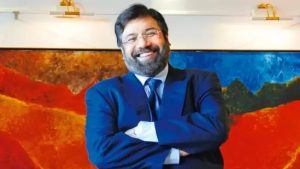
Harsh Goenka stands out as a rare blend of industrial leadership and sharp public engagement. As Chairman of the RPG Group, he oversees a diversified conglomerate spanning infrastructure, tyres, pharmaceuticals, IT, and power—while simultaneously shaping national conversations far beyond the boardroom.
What truly distinguishes Goenka is his influence as a thinker and communicator. Through social media, columns, and public commentary, he has emerged as one of India’s most articulate business voices—offering insights on leadership, governance, innovation, ethics, and everyday life. Witty, incisive, and often reflective, his posts resonate across generations, proving that credibility and clarity can thrive even in fast-moving digital spaces.
Under his stewardship, the RPG Group has continued to emphasise professional management, long-term value creation, and responsible capitalism, navigating market cycles with discipline rather than spectacle. Goenka’s leadership style reflects quiet confidence—empowering teams, backing innovation, and respecting institutional strength over individual dominance.
Goenka represents a modern Indian business leader: rooted in enterprise, alert to social responsibility, and unafraid to use his voice thoughtfully. Influential without being loud, and visible without being self-promotional, he exemplifies how leadership today is as much about ideas as it is about assets
12. Harsh Mariwala, 69, Industrialist
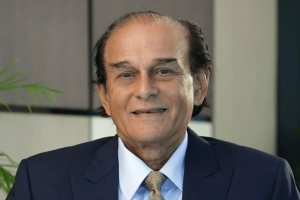
Harsh Mariwala, Founder and Chairman of Marico Limited, remains one of India’s most influential (and respected) FMCG visionaries—known for building brands that combine scale, trust and constant reinvention.
Under his leadership, Marico has evolved from a traditional consumer goods business into a modern FMCG powerhouse with strong positions across hair care, foods and wellness—driven by Mariwala’s belief that innovation is not episodic, but a permanent mindset. His ability to stay curious, challenge assumptions and learn continuously has helped Marico remain relevant in a rapidly changing consumer landscape.
The journey, however, has been far from linear. Mariwala often speaks candidly about setbacks and course corrections, famously observing, “Your degree is not your education.” Rejecting the notion of a single, immutable master plan, he has consistently argued that entrepreneurial vision must evolve with time—an approach that has allowed Marico to spot new opportunities early and adapt ahead of the curve.
As of 2026, Mariwala’s legacy is not only reflected in Marico’s market success, but in the generation of leaders he has mentored and his enduring message to India’s entrepreneurs: learning, adaptability and humility are the true engines of long-term growth.
13. Sanjiv Goenka, 65, Industrialist
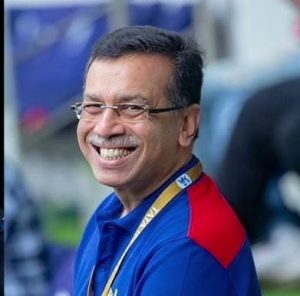
Sanjiv Goenka, Chairman of the RP-Sanjiv Goenka Group, has emerged as one of India’s most astute business leaders—known for transforming a traditionally power-led enterprise into a diversified, future-facing conglomerate.
At one time, the Group derived nearly 80 per cent of its revenues from the power sector. That dependence has since been decisively reshaped. CESC Limited was restructured into four separate listed entities, unlocking value and setting the stage for expansion across consumer goods, retail, IT services, sports and media. This strategic pivot has highlighted Goenka’s ability to balance legacy businesses with bold reinvention.
Beyond boardrooms, his passion for sport is evident through ownership of major sporting league teams, reflecting his belief in sport as both a business and a unifying cultural force.
With an estimated net worth of US $3.49 billion, Goenka’s economic influence is matched by sustained philanthropic initiatives focused on education, social welfare and community development. His leadership has not only expanded the Group’s footprint, but also contributed to steady value creation within India’s broader economy.
His most recent foray is into media and publishing, where the Group is introducing a range of international titles to Indian audiences—signalling yet another strategic diversification aligned with India’s evolving consumption of ideas and information.
Summing up his journey, Goenka offers a characteristically reflective insight: “The way I see it, my business can be defined into two categories: one was what I inherited and the other is what I have done with the inheritance.”
Indeed, it is this ability to honour legacy while reshaping it will continue to define Sanjiv Goenka’s leadership in the year ahead.
14. Anand Mahindra, 70, Industrialist
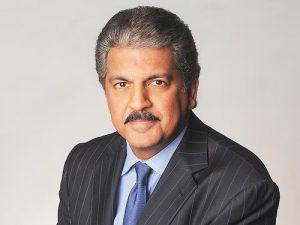
Anand Mahindra exemplifies modern Indian leadership—strategic yet reflective, performance-driven yet deeply human. Under his stewardship, the Mahindra Group has entered a phase of sustained global relevance, combining scale, innovation and purpose across automobiles, agriculture, electric mobility and sustainability.
The Group’s flagship, Mahindra & Mahindra, has delivered exceptional long-term shareholder value, emerging as the highest compounded growth performer among Nifty 50 companies since 2002. This consistent performance has elevated Mahindra into the ranks of the world’s most valuable automobile manufacturers, reinforcing India’s growing industrial credibility on the global stage.
Operational strength remains a cornerstone. Mahindra has sold close to 825,000 vehicles and 380,000 tractors, achieving an 18 per cent increase in vehicle sales while retaining its leadership in the tractor segment for an unprecedented 41 consecutive years. In electric mobility, the introduction of the XUV400 EL Pro strengthened the Group’s EV portfolio, earning multiple Electric Car of the Year recognitions and signalling Mahindra’s readiness for the mobility transition.
Sustainability is not an adjunct but a strategic priority. Mahindra’s inclusion in the Dow Jones Sustainability World Index for the fourth consecutive time, with the Group ranking as the top automotive OEM, underscores a long-term commitment to responsible, inclusive growth.
Beyond metrics, Mahindra’s leadership is defined by narrative and meaning. Speaking about India’s evolving position in the world, he has remarked that “India is no longer the 99-pound lightweight on the beach.” His emphasis on “manifesting” the future reflects a belief that even amid uncertainty, organisations—and individuals—can visualise, shape and build a better world.
Mahindra consistently sets an examples of a leader high in emotional intelligence and expansive in vision—one who urges institutions to rise, take charge of their destiny, and align commercial success with national confidence and global responsibility.
15. Dr Cyrus Poonawalla, 84, Industrialist
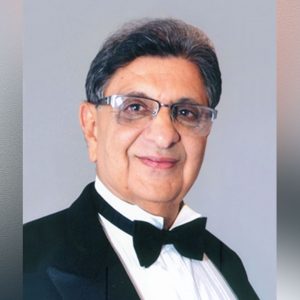
Dr Cyrus S Poonawalla is Chairman and Managing Director of the Cyrus Poonawalla Group, which includes the Serum Institute of India (SII), the largest vaccine manufacturer in the world and Poonawalla Fincorp, a keen player in the financial space in India.
ichest tycoons, with a net worth of $24.5 billion.
Last year, Poonawalla was the recipient of the Lifetime Achievement Award at the CNBC TV18 India Business Leader Awards (IBLA). He was honoured with the Padma Bhushan in 2022 for his lifetime of work in the biotech space.
Some of the recent achievements of SII include R21/Matrix-M Malaria Vaccine, collaboration with University of Oxford: SII is working with the university to develop a chimeric protein-based vaccine for Men-B disease. Together with Univercells, SII is partnering with the Belgian biotech innovator to increase access to personalised cancer care. SII is working with Immunity Bio to manufacture BCG on a large scale.
“We reach more children than Coca-Cola and PepsiCo can ever hope to,” he has famously said. We doff our hat to you, Dr Poonawalla.
16. Radhakishan Damani, 71, Industrialist
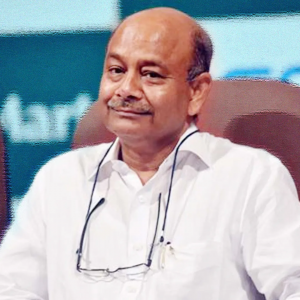
Radhakishan Damani stands as one of India’s most understated yet formidable business leaders—proof that quiet discipline can build extraordinary scale.
Topping Hurun India’s Top 200 Self-Made Entrepreneurs of the Millennium for the second consecutive year came as little surprise. His enterprise reached a valuation of approximately ₹3.4 lakh crore, marking a 44 per cent year-on-year increase. In parallel, Forbes ranked Damani and his family sixth among India’s 100 richest, with an estimated net worth of US $31.5 billion—a rare convergence of scale, consistency and restraint.
As the founder of Avenue Supermarts, which operates the DMart format, Damani has shaped a retail culture anchored in simplicity, value and customer trust. His proactive leadership has fostered an obsessive focus on the shopping experience—efficient stores, fair pricing and operational excellence—helping DMart become one of India’s largest and most successful retail chains. Today, the company operates over 430 DMart stores across India, steadily expanding its footprint while staying true to its core philosophy of value and customer focus.
What makes Damani’s journey especially compelling is its humility. Born in Mumbai in 1956 and raised in a one-room apartment, he dropped out of college after his first year and entered the stock market as a broker and trader in the late 1980s. With no inherited empire and little appetite for publicity, he climbed steadily—learning markets, mastering patience and leading by example.
Year after year, Damani has demonstrated that enduring success does not require noise or haste—only clarity of purpose, consistency of execution and respect for the consumer. His legacy is not just one of wealth creation, but of redefining how modern Indian retail can grow—quietly, responsibly and profitably.
17. Anil Agarwal, 70, Industrialist
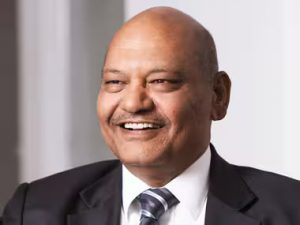
Anil Agarwal enters 2026 as one of India’s most consequential industrial leaders—driving a bold transformation of the Vedanta Group while deepening his commitment to culture and social impact.
A defining milestone has been Vedanta’s move toward a five-company demerger, creating focused, pure-play businesses across metals, energy and natural resources—an initiative designed to unlock value, sharpen strategy and position the Group for long-term growth. Operationally, Vedanta has delivered record production across aluminium, zinc and silver, with silver emerging as a major earnings driver, and announced strategic investments ranging from expanded oil and gas output to North India’s first phosphate fertiliser plant.
Parallel to business transformation, Agarwal has strengthened Vedanta’s global cultural footprint by becoming custodian of London’s iconic Riverside Studios, now operating as the Anil Agarwal Riverside Studios Trust—a rare bridge between Indian enterprise and international arts.
Through the Anil Agarwal Foundation, his philanthropy continues at scale, impacting crores of lives across education, healthcare, women’s empowerment, animal welfare and rural infrastructure.
18. Nandan Nilekani, 69, Entrepreneur
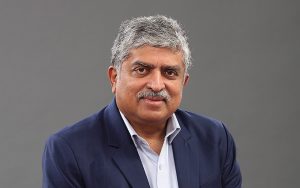
Long before Aadhaar became shorthand for India’s digital leap, Nandan Nilekani was already articulating a bold, future-facing vision of the country to the world. As Co-founder, CEO, President and Managing Director of Infosys, he championed the idea that technology could be India’s great equaliser—scalable, inclusive, and transformative.
Nearly two decades on, that vision feels not only prescient but foundational. Nilekani, it was never about technology for its own sake; it was about outcomes. As India enters the AI era at full throttle, Nilekani’s stance remains characteristically grounded. He has consistently argued that AI must be use-case-led, designed first around real human problems, and only then amplified through scale.
“Clearly, AI will lead to productivity improvement and automation,” he has said, particularly in areas such as customer service and service delivery. While acknowledging concerns around job displacement, Nilekani maintains that productivity gains—if harnessed wisely—will ultimately outweigh losses and create new forms of opportunity.
One of the most compelling questions Nilekani is asking in 2026 is also one of the most uncomfortable: How do you ensure AI benefits a country where nearly one in four people are illiterate?
This challenge sits at the heart of Adbhut India, his latest initiative, which explores how emerging technologies can serve populations that traditional digital systems often overlook. Voice-based interfaces, visual cues, local languages, and assisted intelligence—not abstract models—are the focus.
In Nilekani’s India, AI is not a luxury for the fluent and urban, but a tool that must work just as effectively for the rural, the elderly, and the marginalised. This people-first philosophy also defines EkStep, the not-for-profit platform Nilekani co-founded and now chairs. EkStep aims to improve basic literacy and numeracy by creating a learner-centric, open digital ecosystem—one that empowers millions of children through adaptable, localised learning experiences.
In 2026, as India stands at another technological inflection point, Nilekani remains what he has always been: not merely a builder of platforms, but a designer of possibilities. A true visionary—not because he predicts the future, but because he insists on shaping it responsibly, inclusively, and at scale.
19. Aroon Purie, 81, Media Baron
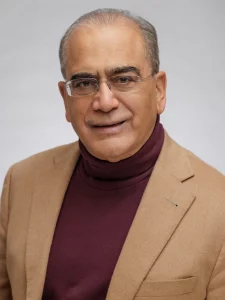
Few individuals have shaped Indian journalism as decisively as Aroon Purie. As Founder and Chairman of the India Today Group, Purie transformed a single magazine into one of India’s most influential multimedia platforms, spanning print, television, digital media and large-scale thought leadership forums.
Launched in 1975, India Today redefined news reporting with its bold, credible, and reader-first approach at a time when Indian journalism was still finding its modern voice. Over the decades, Puri steered the group through changing political climates, economic liberalisation, and rapid technological disruption—without compromising on editorial independence or journalistic standards.
In 2026, Aroon Purie is widely recognised not only as a media pioneer but also as a custodian of democratic discourse. Under his leadership, the India Today Group has successfully navigated the digital transition, combining speed and scale with credibility—an increasingly rare balance in today’s media landscape.
Beyond legacy and digital media, Purie’s legacy is equally visible through iconic platforms such as the India Today Conclave, which continues to convene global leaders, policymakers, and thinkers, shaping conversations that matter to India and the world.
Measured, principled, and fiercely committed to press freedom, Aroon Purie remains a defining figure in Indian media—one who proved that journalism, when done with courage and clarity, can both inform a nation and influence its future.
20. Dilip Shanghvi, 69, Industrialist
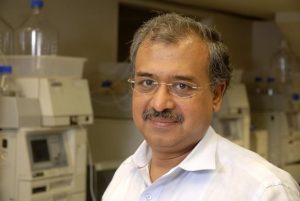
As of January 4, 2026, Forbes estimates Dilip Shanghvi’s net worth at approximately US$25.7 billion, placing him among the top 100 richest people globally.
Dilip Shanghvi, has leapfrogged up on our influential list not because he’s richer, but because wealth has never defined Shanghvi’s public persona. Widely regarded as India’s Medicine Mogul, his influence lies in what he has built—steadily, purposefully, and without fanfare.
In 1982, at the age of 27, Shanghvi invested ₹10,000 to establish a small pharmaceutical unit in Vapi, Gujarat. Named Sun Pharmaceutical Industries, it began with the manufacture of a single psychiatric drug. From these modest origins emerged India’s largest pharmaceutical company and one of the world’s top five.
His business interests have since diversified into oil, gas, and renewable energy, further reinforcing his standing among India’s most influential industrialists.
As of early 2026, Dilip Shanghvi is steering Sun Pharmaceutical Industries into its next growth phase with expansion focused on high-value specialty medicines, increased R&D investment, and a stronger manufacturing and commercial presence in the United States.
Beyond industry, Shanghvi’s philanthropic work through the Shantilal Shanghvi Foundation earned him the Padma Shri in 2016. Characteristically reserved and indifferent to labels of wealth, Dilip Shanghvi represents a form of leadership rooted in inner strength—where lasting impact matters far more than recognition.
21. Dr Yusuf Hamied, 89, Industrialist
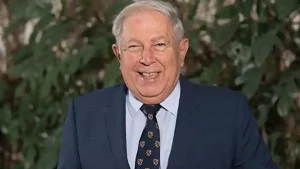
At 89, Dr Yusuf Hamied remains one of India’s most respected figures in global health and pharmaceuticals. As Non-Executive Chairman of Cipla, the generics maker founded by his father, Hamied’s influence has reshaped access to medicines worldwide with a singular mission: health should never be a privilege of the wealthy. Educated at University of Cambridge, where he earned a PhD in organic chemistry, Hamied brought scientific rigor and humanitarian purpose to the business of healthcare. Under his leadership, Cipla pioneered low-cost antiretroviral therapies in the 1990s, dramatically expanding treatment for HIV/AIDS in Africa and other developing regions—moves that saved millions of lives and redefined the global generics landscape.
Beyond business success, Hamied’s legacy is deeply philanthropic. The Yusuf and Farida Hamied Foundation champions equitable healthcare and education, extending his life’s work into future generations. He has also supported fellowships and collaborative research programmes, linking institutions in India and abroad to address public health challenges
In recognition of his impact, Cambridge named its chemistry department after him through 2050, recognising a lifelong commitment to science and learning.
Quiet and principled, Hamied has long stepped back from daily operations, yet his voice continues to influence debates on antimicrobial resistance, personalised medicine, and the role of affordable innovation in global health.
22. NR Narayana Murthy, 80, Industrialist, Philanthropist
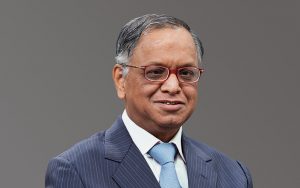
Last year, N R Narayana Murthy received the India Lifetime Achievement Award from the Chiratae Ventures Patrick J. McGovern Awards, recognising leaders who have built institutions with lasting impact on their industries. The honour, while significant, is one among many that Murthy has received over decades of principled leadership.
As the co-founder of Infosys, Murthy played a defining role in shaping India’s IT revolution and placing Indian enterprise firmly on the global map. Yet despite his stature, he is widely admired for his humility, restraint, and moral clarity—qualities that have made him one of the most respected voices in Indian business and industry.
A committed philanthropist focused on practical solutions for societal betterment, Murthy’s impact is closely intertwined with that of his wife, Sudha Murthy. Together, they have shaped Infosys’s enduring commitment to corporate social responsibility, with Sudha Murthy playing a pivotal role in embedding compassion and community service into the company’s ethos.
In 2026, N. R. Narayana Murthy remains what he has always been: a builder of institutions, a champion of values, and a quiet yet powerful conscience of Indian enterprise.
23. Amitabh Bachchan 83, Actor
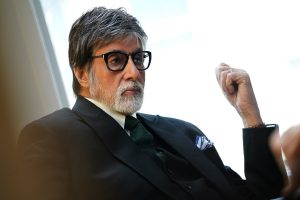
Few cultural figures in India command the reverence, longevity, and relevance of Amitabh Bachchan. More than five decades after he first appeared on screen, Bachchan in 2026 remains not merely a legendary actor but a living institution—one who has evolved with the nation while shaping its popular culture.
Rising to prominence in the 1970s as the embodiment of the “angry young man,” Bachchan went on to redefine stardom through range, discipline, and reinvention. His filmography spans parallel cinema, mainstream blockbusters, global collaborations, and nuanced character roles that continue to earn critical and commercial acclaim well into his eighties.
Beyond cinema, Bachchan has become a familiar and trusted presence in Indian households through television, most notably as the long-standing host of Kaun Banega Crorepati, where his gravitas, empathy, and quiet wit have bridged generations. Few public figures have managed such enduring emotional connection with audiences across age, language, and geography.
In recent years, Bachchan has also been a thoughtful voice on social issues, health awareness, digital responsibility, and national pride. His active engagement on social media reflects a rare ability to remain contemporary without losing dignity—an attribute that continues to endear him to younger audiences.
A recipient of India’s highest civilian honours and numerous international recognitions, Amitabh Bachchan wears his accolades lightly. In 2026, his greatest achievement may well be his continued relevance—proof that excellence, humility, and relentless commitment to craft can defy time itself.
24. Uday Kotak, 68, Banker
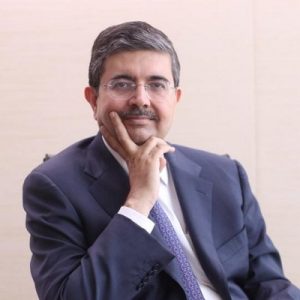
In 2026, Uday Kotak stands as one of India’s most respected financial leaders—known not for spectacle, but for prudence, clarity, and institution-building. As founder of Kotak Mahindra Bank, Kotak has played a defining role in reshaping modern Indian banking.
Beginning his entrepreneurial journey in the mid-1980s with a small bill-discounting firm, Kotak built a diversified financial services group that weathered multiple economic cycles. The transformation of Kotak Mahindra Finance into a full-scale bank marked a pivotal moment in Indian financial history, setting new benchmarks for governance, capital adequacy, and risk management.
Having stepped back from day-to-day executive responsibilities, Kotak continues to influence the sector through strategic oversight, public policy engagement, and thought leadership. His views on financial stability, long-term capital, and responsible lending carry weight in a world grappling with volatility and rapid technological change.
Beyond banking, Kotak is a strong advocate for education, governance reform, and institutional integrity. His leadership philosophy—rooted in patience, discipline, and ethical growth—has made him a trusted voice among regulators, investors, and entrepreneurs alike.
In an era defined by speed and disruption, Uday Kotak’s legacy is one of balance: proving that ambition tempered by responsibility can build institutions that endure.
25. Rajnikanth, 76, Actor
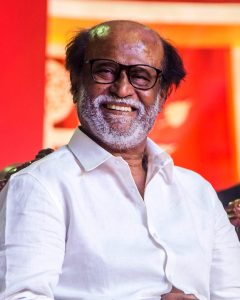
Born Shivajirao Gaekwad, Rajinikanth is far more than a cinematic icon—he is a cultural phenomenon whose influence cuts across language, class, and generations. From a bus conductor in Bengaluru to one of Asia’s most recognisable stars, his journey embodies resilience, reinvention, and rare humility.
Emerging in Tamil cinema in the late 1970s, Rajinikanth redefined heroism with his distinctive style, magnetism, and moral authority. Over five decades, he has balanced mass appeal with memorable performances, evolving gracefully from action hero to nuanced character actor—without losing his extraordinary connect with audiences.
In 2026, even as he chooses projects selectively, Rajinikanth’s presence remains commanding. His films are events; his words, widely quoted. Yet off screen, he is known for a deeply spiritual life, personal restraint, and an aversion to excess—qualities that have only deepened public respect.
A recipient of India’s highest cinematic and civilian honours, Rajinikanth wears acclaim lightly. His enduring appeal lies not merely in superstardom, but in authenticity: a man who rose from ordinary beginnings, stayed rooted, and allowed success to amplify purpose rather than ego.
In an industry defined by reinvention, Rajinikanth stands apart—proof that true greatness is as much about character as it is about charisma.
26. Shah Rukh Khan, 60, Actor
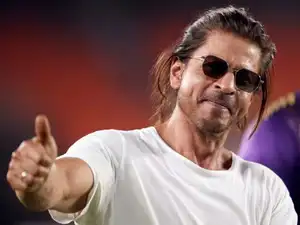
Having turned 60 in 2025, Shah Rukh Khan joins our esteemed list of the most influential seniors, continuing to captivate millions with his charisma, creativity, and timeless appeal. Known globally as the King of Bollywood, Khan has spent over three decades turning cinema into magic, blending romance, comedy, drama, and action with effortless charm.
From his early television days in the late 1980s to blockbuster films that defined generations, Khan has continually reinvented himself while staying true to his larger-than-life persona. Whether playing a romantic hero, a witty everyman, or a complex character, audiences worldwide still flock to watch him light up the screen.
Off-camera, he is a savvy entrepreneur and philanthropist, co-owning the Kolkata Knight Riders and supporting initiatives in children’s education and healthcare. Social media buzzes with his humour and warmth, proving that even post 60, his energy and relatability remain unmatched.
In 2026, Shah Rukh Khan exemplifies a rare combination of fame, influence, and purpose—an enduring symbol of joy, passion, and the power of a story well played out.
27. Mahendra Mohan Gupta, 84, Media Baron
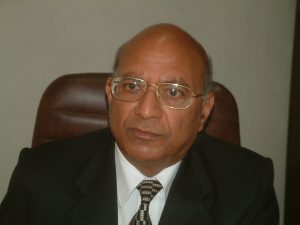
The Gupta family—led by Dr Mahendra Mohan Gupta and the next generation—owns Dainik Jagran, India’s largest-selling newspaper with a readership of 5.59 crore, reaching audiences across the country.
As Non-Executive Chairman, Dr. Mahendra’s formal role since 2023 reflects decades of inspirational leadership that have shaped every aspect of the company’s operations, from editorial excellence to business strategy. Under his stewardship, Dainik Jagran became a benchmark in Indian journalism, combining credibility with widespread reach.
A former Rajya Sabha member, Dr. Gupta has long been regarded as the “voice of the media” in Parliament, advocating for the industry and championing press freedoms. He has also been the driving force behind the company’s CSR initiatives, delivered through the Shri Puran Chandra Gupta Smarak Trust, supporting education, healthcare, and social welfare.
Dominant in the politically and culturally critical state of Uttar Pradesh, the Guptas wield significant influence in shaping public opinion and discourse, making them one of the most impactful media families in India.
28. Vineet Jain, 62, Media Baron
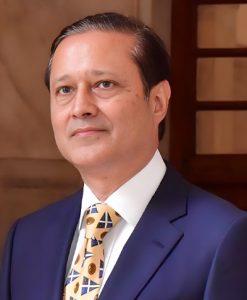
After the amicable parting with his older brother Samir Jain, Vineet Jain has been leading the television, entertainment and digital forays of India’s largest media company, Vineet Jain has been one of the most influential architects of modern Indian media. In 2026, his leadership continues to define how news, information and entertainment are created, distributed, and consumed across one of the world’s most complex and competitive markets.
Building on a formidable legacy, Jain has guided the Times Group through rapid digitisation, platform diversification, and changing audience behaviour—while preserving its position as India’s largest media enterprise. Under his stewardship, the group has successfully balanced scale with innovation, expanding across print, television, radio, digital platforms, and events.
Widely respected for his strategic clarity and business acumen, Jain has also been a key voice in shaping conversations around media ethics, advertising, data, and the future of journalism in a digital-first world. His ability to anticipate change and invest ahead of the curve has kept the Times Group relevant to both legacy readers and younger, mobile-first audiences.
Measured, forward-looking, and institution-focused, Vineet Jain represents a new generation of Indian media leadership—one that understands that influence today lies not just in reach, but in trust, adaptability, and long-term vision.
29. Sunil Mittal, 68, Industrialist
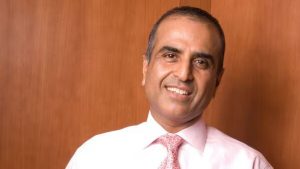
In 2026, Sunil Bharti Mittal stands among India’s most influential business leaders… an entrepreneur who transformed connectivity into a catalyst for economic and social change. As Founder and Chairman of Bharti Airtel, Mittal played a defining role in bringing affordable mobile services to hundreds of millions, fundamentally altering how India communicates, works, and does business.
Starting with a small bicycle-parts venture in the 1970s, Mittal’s journey mirrors India’s own liberalisation story. He built Bharti Airtel into one of the world’s largest telecom companies, expanding across Asia and Africa while navigating intense competition and rapid technological change. His focus on scale, partnerships, and long-term vision helped democratise access to technology at a national level.
Beyond telecom, Mittal’s influence extends globally through investments in digital infrastructure, financial services, and education. A committed philanthropist, he is the driving force behind the Mittal Champions Trust, which supports sports excellence, education, and leadership development.
Honoured with the Padma Bhushan and numerous international accolades, Mittal remains deeply engaged in shaping policy and enterprise discourse. In 2026, his legacy is clear: a builder of institutions who proved that connectivity, when scaled with purpose, can empower nations and connect them to the world.
30. Ajay Piramal, 70, Industrialist
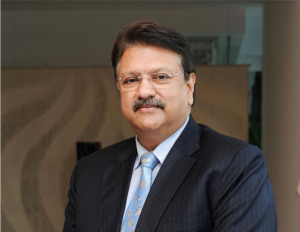
Ajay Piramal is widely regarded as one of India’s most thoughtful and respected industrialists—known for his ability to build, transform, and steward businesses with long-term vision. As Chairman of the Piramal Group, he has shaped a diversified enterprise spanning pharmaceuticals, financial services, real estate, and healthcare.
Piramal first rose to prominence by transforming Piramal Healthcare into a global pharmaceutical player, culminating in a landmark deal with Abbott Laboratories—a move often cited as one of India’s most successful business exits. Rather than resting on that achievement, he went on to rebuild and reposition the group with a renewed focus on healthcare and financial inclusion.
Under his leadership, the Piramal Group has emphasised ethical governance, patient capital, and institution-building over short-term gains. His foray into financial services has focused on responsible lending and long-term value creation, while healthcare remains at the heart of the group’s identity.
Beyond business, Ajay Piramal is a deeply committed philanthropist. Calm, reflective and values-driven, Piramal exemplifies a rare leadership style—one that measures success not only in scale and profitability, but in impact, integrity, and the institutions left behind.
31. Shobhana Bhartia, 67, Media Baron
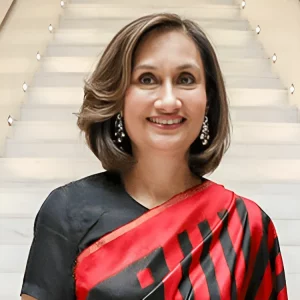
In 2026, Shobhana Bhartia remains one of India’s most influential media leaders—an editor-publisher who has shaped public discourse with steadiness, credibility, and restraint. As Chairperson and Editorial Director of Hindustan Times Group, she has guided one of India’s most respected news institutions through decades of political, economic, and technological change.
Taking over the reins of the family-run enterprise at a young age, Bhartia built her authority not through volume but through values. Under her leadership, the Hindustan Times Group strengthened its reputation for independent journalism while expanding across print, digital, radio, and events—successfully navigating the media industry’s most disruptive phase.
Widely admired for her editorial judgment, Bhartia has consistently defended press freedom and journalistic integrity, even as the media landscape grew louder and more polarised. Her ability to balance tradition with transformation has ensured that Hindustan Times remains relevant to both legacy readers and digital-native audiences.
Beyond journalism, Bhartia has played an important public role, serving in the Rajya Sabha and contributing to national conversations on governance, education, and women’s leadership. In 2026, her influence lies not just in reach or scale, but in trust—proof that quiet leadership, anchored in credibility, can endure and matter.
32. Sunil Gavaskar, 77, Cricket Commentator, Former Cricketer
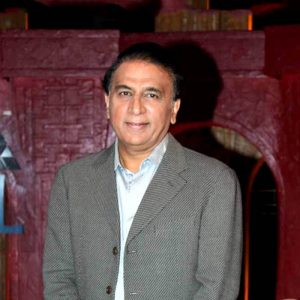
Sunil Gavaskar, one of Indian sport’s most revered figures— is a pioneer whose influence extends far beyond the cricket field. As India’s first great batting icon, Gavaskar didn’t just score runs; he changed mindsets, proving that Indian cricketers could dominate the world’s toughest bowling attacks with technique, courage, and intelligence.
Bursting onto the international stage in the early 1970s, Gavaskar rewrote record books with his consistency and composure, becoming the first player to score 10,000 Test runs. At a time when protective gear was minimal and fast bowling was ferocious, his fearlessness and flawless defence earned respect across the cricketing world.
Post-retirement, Gavaskar reinvented himself seamlessly—as a sharp cricket analyst, respected commentator, author, and administrator. His insights remain among the most authoritative in the game, valued for their balance, historical depth, and refusal to indulge in hype.
In recent years, Gavaskar has also been a thoughtful public voice on sports governance, player welfare, and the spirit of the game, advocating professionalism without losing cricket’s soul. Measured, articulate, and principled, he commands admiration across generations of players and fans.
In 2026, Sunil Gavaskar stands as a rare figure in Indian sport: a trailblazer whose legacy continues to guide the present—proof that true class, once earned, never fades.
33. Pawan Munjal, 72, Industrialist
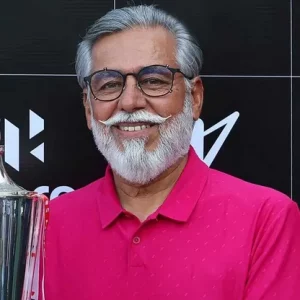
Pawan Munjal stands at the forefront of India’s mobility transformation. As Chairman and CEO of Hero MotoCorp, he has guided the world’s largest two-wheeler maker through a decisive shift—from scale-driven leadership to innovation-led growth.
Building on a legacy brand trusted by millions, Munjal has focused on future-ready mobility: accelerating investments in electric vehicles, strengthening global R&D, and forging strategic partnerships to expand Hero’s international footprint. The company’s growing EV portfolio and connected-vehicle initiatives reflect a clear intent—to remain relevant to younger, sustainability-conscious riders while retaining mass-market reliability.
Beyond products, Munjal has emphasised governance, design-led engineering, and customer-centricity, ensuring Hero MotoCorp stays competitive amid rapid technological change. His leadership balances ambition with discipline, a trait honed through decades of navigating cyclical markets.
A committed sports patron and philanthropist, Munjal continues to support grassroots development and education through the Hero We Care, reinforcing the group’s long-standing commitment to social impact.
In 2026, Pawan Munjal’s influence lies in evolution rather than reinvention—proving that India’s most iconic manufacturers can lead the transition to cleaner, smarter mobility while staying true to their roots.
34. Dr Devi Shetty, 71, Doctor, Entrepreneur
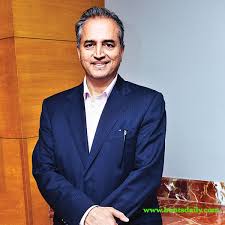
In 2026, Dr Devi Shetty remains one of India’s most transformative figures in healthcare—a cardiac surgeon whose mission has always extended far beyond the operating theatre. As Founder and Chairman of Narayana Health, he has relentlessly pursued a simple yet radical idea: quality healthcare should be affordable and accessible to all.
Internationally acclaimed for performing tens of thousands of heart surgeries, Dr Shetty applied engineering principles to medicine—standardisation, scale, and efficiency—to bring down costs without compromising outcomes. Under his leadership, Narayana Health pioneered high-volume, low-cost cardiac care, making complex surgeries possible for patients who would otherwise be priced out of treatment.
In recent years, Dr Shetty has championed technology-led healthcare delivery, advocating the use of digital platforms, telemedicine, and data-driven systems to bridge gaps between urban hospitals and rural populations. His belief that healthcare must move from being episodic to continuous has shaped conversations around preventive care and insurance-led models in India.
A recipient of the Padma Bhushan, Dr Shetty is also a respected global voice on healthcare reform, often emphasising that compassion and innovation must go hand in hand. In 2026, his legacy is not just measured in lives saved, but in systems redesigned—proof that large-scale impact is possible when medical excellence meets moral clarity.
35. Prathap C Reddy, 93, Doctor, Entrepreneur
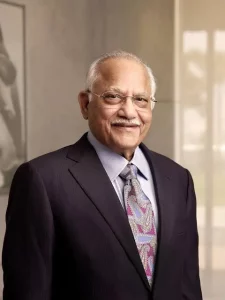
In 2026, Dr Prathap C. Reddy stands as a towering figure in Indian healthcare—a visionary physician who transformed the country’s hospital ecosystem and redefined access to world-class medical care. As Founder and Chairman of Apollo Hospitals Group, he laid the foundations of India’s first corporate hospital model, bringing global standards of treatment to Indian soil.
Trained as a cardiologist in the United States, Dr Reddy returned to India with a clear conviction: Indians should not have to travel abroad for quality healthcare. In 1983, he opened the first Apollo Hospital in Chennai, setting in motion a healthcare revolution that would eventually span hospitals, pharmacies, diagnostics, insurance, and digital health services.
Under his leadership, Apollo became synonymous with clinical excellence, ethical practice, and innovation—introducing cutting-edge procedures, pioneering telemedicine, and championing preventive healthcare long before it became mainstream. His emphasis on technology and scale has helped bridge urban-rural healthcare gaps across the country.
A recipient of the Padma Vibhushan, Dr Reddy is widely regarded as the conscience keeper of Indian healthcare. In 2026, his legacy is unmistakable: millions treated, systems strengthened, and a nation empowered to believe that affordable, high-quality healthcare can be both an aspiration and a reality.
36. Shardul Shroff, 65, Corporate Lawyer
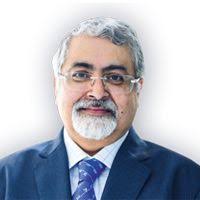
In 2026, Shardul Shroff stands as one of India’s most influential legal minds—a lawyer whose work has quietly but decisively shaped the country’s corporate, financial, and regulatory framework. As Executive Chairman of Shardul Amarchand Mangaldas & Co, he leads one of India’s largest and most respected full-service law firms.
A specialist in competition law, mergers and acquisitions, insolvency, and complex regulatory matters, Shroff has advised on many of India’s most significant corporate restructurings and policy-shaping transactions. His counsel is sought not only by leading Indian and global corporations, but also by regulators and policymakers navigating an increasingly sophisticated business environment.
Beyond client work, Shroff has played a critical role in strengthening India’s institutional and legal architecture. He has contributed to policy discussions on competition law, insolvency reform, and corporate governance, helping align Indian regulation with global best practices while remaining sensitive to local realities.
Measured, analytical, and institution-focused, Shardul Shroff exemplifies a modern form of leadership—one that values rigour over rhetoric and long-term credibility over short-term wins. In 2026, his influence lies not in public visibility, but in the enduring legal frameworks and governance standards that enable India’s economic growth to proceed with confidence and integrity.
37. Harish Salve, 69, Former Solicitor General of India
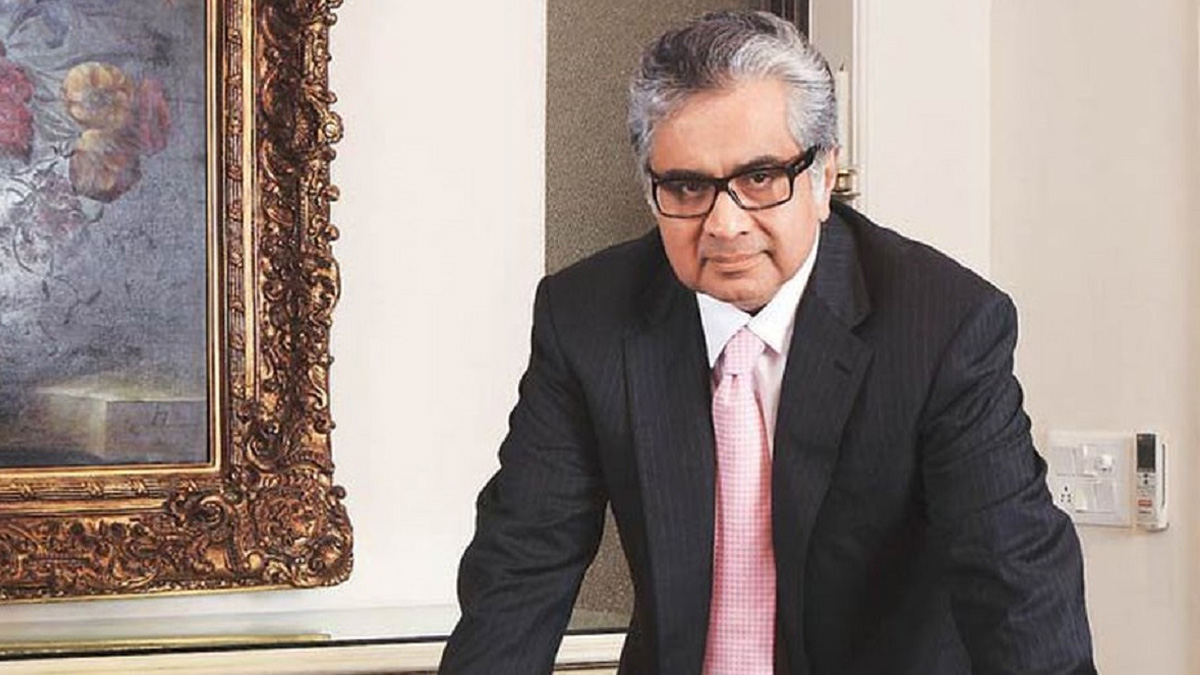
In 2026, Harish Salve remains one of India’s most formidable legal voices—a senior advocate whose influence spans courtrooms, capitals, and complex questions of international law. Known for his razor-sharp intellect and unflappable presence, Salve has represented India and leading corporations in some of the country’s most consequential constitutional, commercial, and cross-border disputes.
A former Solicitor General of India, Salve played a pivotal role in shaping modern Indian jurisprudence during a period of rapid economic and regulatory change. His advocacy before the Supreme Court of India, international arbitration panels, and foreign courts has helped position Indian legal thinking with global credibility and confidence.
Equally at home arguing matters of sovereignty as he is navigating intricate tax and commercial cases, Salve is admired for his clarity of thought and strategic precision. In recent years, his work has increasingly bridged national and international legal systems, reflecting India’s growing engagement with global institutions and norms.
Measured, persuasive, and deeply committed to the rule of law, Harish Salve represents a rare blend of legal brilliance and public purpose—an advocate whose impact lies not in headlines, but in precedents that endure.
38. Kapil Sibal, 78, Senior Advocate, Supreme Court of India, Politician
In 2026, Kapil Sibal remains one of India’s most prominent public intellectuals—a rare figure who has shaped national life from both the courtroom and the Cabinet. A distinguished Senior Advocate of the Supreme Court of India and a seasoned parliamentarian, Sibal’s influence lies in his ability to bridge law, governance, and public discourse.
Over a long public career, he has served India in multiple ministerial roles, including law, education, science and technology, and communications, leaving a lasting imprint on policy frameworks during periods of rapid economic and technological change. His tenure reflected a belief in institutional reform, academic freedom, and the importance of debate in a healthy democracy.
As a lawyer, Sibal is known for his sharp constitutional arguments and commanding courtroom presence, frequently appearing in cases that sit at the intersection of civil liberties, federalism, and governance. His advocacy continues to shape legal conversations on rights, accountability, and the balance of power.
In recent years, Sibal has also emerged as an independent political voice, emphasising dialogue, democratic norms, and the role of Parliament in safeguarding constitutional values. Articulate, combative when required, and deeply engaged with ideas, Kapil Sibal thrives on questioning authority—believing that strong institutions are built not through silence, but through rigorous debate.
39. Abhishek Manu Singhvi, 65, Senior Advocate, Supreme Court of India

Abhishek Manu Singhvi powers on as one of India’s most articulate constitutional minds—a jurist whose influence spans the courtroom, Parliament, and public debate. A Senior Advocate of the Supreme Court of India and an experienced parliamentarian, Singhvi is widely respected for his command over constitutional law and his ability to translate complex legal principles into persuasive argument.
Renowned for his incisive courtroom advocacy, Singhvi has appeared in many landmark cases involving federalism, civil liberties, electoral law, and institutional accountability. His legal style—measured, scholarly, and precise—has earned him credibility across the Bar and Bench, making him a trusted voice in matters that shape India’s democratic framework.
Beyond the courts, Singhvi has played an active role in legislative and policy discourse, often emphasising the importance of constitutional morality, free institutions, and informed public dialogue. His interventions in Parliament reflect a belief that democracy is strengthened when law, reason, and debate work in concert.
Singhvi represents a rare blend of intellect and engagement—an advocate who combines legal rigour with public purpose, and whose influence lies not in rhetoric alone, but in reasoned argument that endures.
40 Salman Khan, 60, Actor, Philanthropist
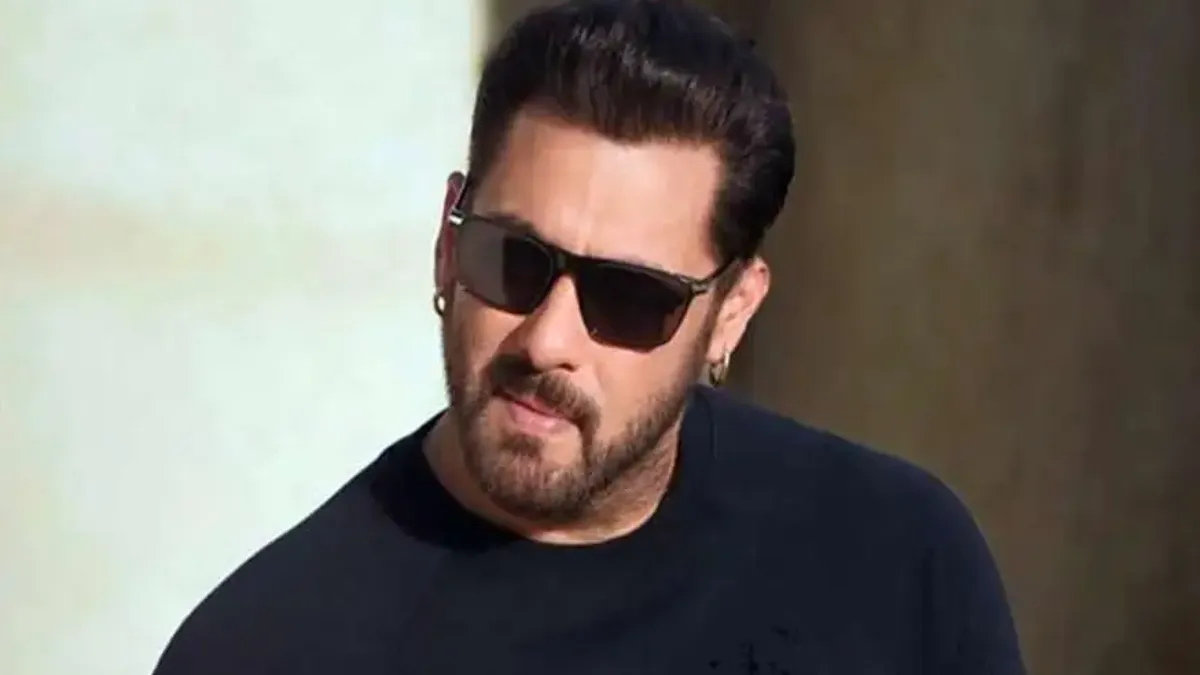
Salman Khan joins our list of the most influential seniors this 2026—continuing to command mass appeal while using his stardom to shape popular culture and social impact at scale.
In 2026, Salman Khan remains one of Indian cinema’s most recognisable and influential figures—a superstar whose presence transcends box-office numbers and generations. With a career spanning over three decades, Salman has built a unique connection with audiences through sheer star power, unmistakable screen presence, and an unapologetically mass appeal.
From romantic leads in the 1990s to action-packed blockbusters that redefined commercial cinema in the 2000s and beyond, Salman has repeatedly reinvented the idea of the Bollywood hero. His films continue to be celebratory events, especially in India’s heartland, where his popularity borders on the iconic.
Beyond cinema, Salman’s impact is deeply felt through Being Human, his philanthropic initiative supporting healthcare, education, and livelihoods for the underprivileged. Quietly and consistently, the foundation has helped thousands—revealing a softer, purposeful side to a star often known for his bravado.
As the long-standing host of reality show Bigg Boss, Salman has also become a familiar presence in Indian living rooms, blending authority, humour, and unexpected empathy—further widening his reach beyond the silver screen.
He’s a paradox that any audience loves to love: larger-than-life yet deeply human, fiercely individualistic yet socially conscious. A superstar not just because of fame, but because of the enduring emotional bond he shares with millions.
41. Vijay Chauhan 88, Industrialist
Vijay Chauhan represents a rare breed of Indian business leadership—low-profile, values-driven, and deeply focused on continuity rather than being a celebrity. As a key member of the promoter family behind Parle Products, he belongs to the third generation that has safeguarded and strengthened one of India’s most loved and trusted consumer brands.
Parle Products, best known for Parle-G, is more than a biscuit company—it is a cultural constant, reaching millions of Indian households daily across income levels and geographies. Under the stewardship of the Chauhan family, including Vijay Chauhan, the company has retained its distinctive strengths: affordability, scale, and an unwavering focus on the Indian consumer.
While Parle has consciously stayed away from aggressive publicity and external capital, its dominance in the FMCG space speaks for itself. Vijay Chauhan’s approach reflects the family’s long-held philosophy—build quietly, think long term, and let the product speak louder than the promoter.
In an era of flashy startups and rapid exits, Vijay Chauhan stands for something increasingly rare in Indian business: institutional patience. In 2026, his influence lies not in headlines, but in sustaining a brand that generations of Indians instinctively trust—proof that enduring success often comes from restraint, consistency, and deep respect for the consumer.
42. Sadhguru Jaggi Vasudev, 68, Yogi, Author

Sadhguru Jaggi Vasudev is easily one of India’s most globally recognised spiritual voices—a thinker who blends ancient wisdom with contemporary relevance. As Founder of the Isha Foundation, he has reached millions worldwide through teachings that emphasise inner wellbeing, self-realisation, and conscious living.
Rooted in yogic science yet articulated in a language accessible to modern audiences, Sadhguru’s influence extends far beyond spirituality alone. His initiatives around education, mental wellbeing, and rural upliftment have translated philosophy into practice, touching lives across cultures and generations.
In recent years, his environmental advocacy has gained global traction, most notably through the Save Soil Movement, which calls attention to soil degradation as a critical threat to food security and planetary health. Addressing international forums, governments, and youth audiences alike, Sadhguru has positioned ecological responsibility as a shared human imperative rather than a political choice.
A prolific author and sought-after speaker, he continues to engage with leaders from business, science, and public life, urging a balance between material progress and inner wellbeing. In 2026, Sadhguru’s enduring relevance lies in his ability to connect the personal with the planetary—reminding a restless world that sustainable change begins within.
43. Aamir Khan 60, Actor
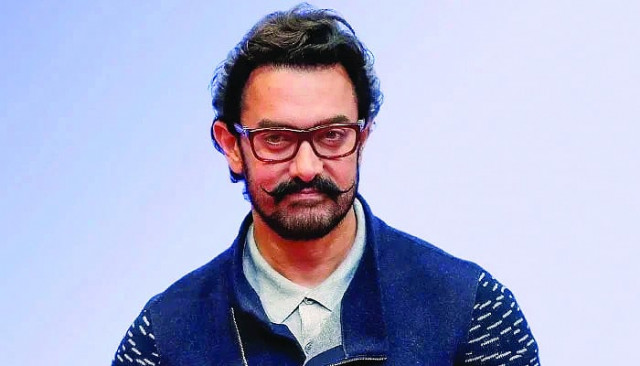
Aamir Khan stands apart in Indian cinema as an artist who has consistently chosen depth over volume and purpose over pace. Known as Mr Perfectionist, Khan’s influence lies not just in box-office success, but in his ability to shape conversations—through films that challenge norms, provoke thought, and leave a lasting imprint on society.
He is a welcome addition to our group of most influential seniors in 2026, a place where you would agree, he naturally belongs.
From redefining mainstream storytelling with socially resonant cinema to delivering landmark performances that span genres and generations, Khan has built a body of work marked by discipline, research, and creative risk. Each project is approached with deliberation, making his appearances rare but impactful.
Beyond films, Aamir’s role as a social communicator expanded his reach. Through initiatives and public platforms, he has amplified issues ranging from education and gender equity to mental health and social reform—earning credibility as a public figure who listens as much as he speaks.
Globally respected and selectively visible, Aamir Khan in 2026 represents a mature phase of influence—where stardom is less about constant presence and more about meaningful participation. A storyteller with a conscience, he continues to remind audiences that cinema, at its best, can both entertain and enlighten.
44. Savitri Jindal, 85, Industrialist, Politician
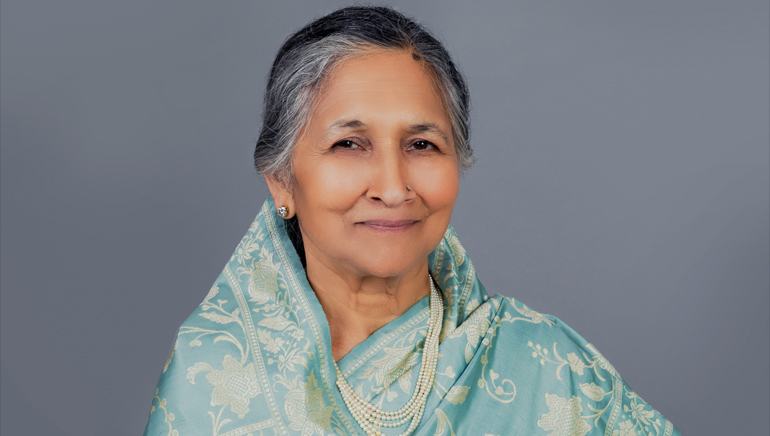
In 2026 at 85 years, Savitri Jindal continues to stand as one of India’s tallest business leaders—a matriarch whose influence spans industry, philanthropy and public life. As Chairperson Emeritus of the O P Jindal Group, she presides over one of India’s largest industrial houses, with interests across steel, power, cement, and infrastructure.
Taking charge after the passing of her husband, industrialist O.P. Jindal, Savitri Jindal led the group through a period of transition with remarkable resolve. Under her stewardship, the Jindal companies strengthened governance, expanded globally, and continued to play a critical role in India’s industrial growth—while remaining rooted in the values on which the group was founded.
Beyond business, Jindal has been an active public servant, serving as a Member of the Haryana Legislative Assembly and contributing to state-level governance. Her leadership reflects a rare blend of firmness and empathy, shaped by lived experience rather than corporate rhetoric.
A committed philanthropist, she has supported education, healthcare, women’s empowerment, and community development through the Jindal Foundation, reinforcing the group’s belief that industry must serve society.
In 2026, Savitri Jindal’s legacy is defined not just by scale or wealth, but by resilience—proof that leadership grounded in values, family and purpose can endure across generations.
45. Kiran Mazumdar-Shaw, 73, Entrepreneur
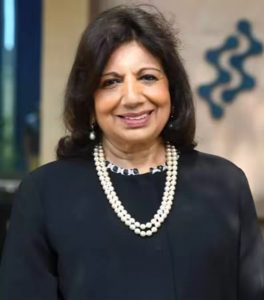
Kiran Mazumdar-Shaw remains one of India’s most respected business leaders, an entrepreneur who changed the country’s healthcare landscape by placing science, affordability, and ethics at the centre of enterprise. As Founder and Executive Chairperson of Biocon, she continues to shape India’s global standing in biotechnology and biosimilars.
From starting Biocon in a Bengaluru garage in 1978 to building a globally recognised biopharmaceutical powerhouse, Mazumdar-Shaw’s journey is often cited as one of India’s most inspiring entrepreneurial stories. Under her leadership, Biocon has focused on delivering high-quality, affordable therapies for chronic diseases such as diabetes, cancer, and autoimmune disorders—bringing life-saving medicines within reach for millions worldwide.
Kiran Mazumdar-Shaw’s receipt of the prestigious Jamsetji Tata Award stands as a powerful recognition of her pioneering leadership, ethical enterprise, and enduring contribution to Indian science and industry. Equally influential is her role as a public intellectual and advocate. In 2026, she remains a strong voice on healthcare policy, innovation-led growth, climate responsibility, and inclusive capitalism, consistently urging industry to balance profit with purpose.
Her philanthropic work, led through the Biocon Foundation, focuses on public health, education, sanitation, and environmental sustainability—especially for underserved communities. These initiatives reflect her long-held belief that access to healthcare is a right, not a privilege.
Calm, outspoken, and quietly trailblazing, Kiran Mazumdar-Shaw’s influence goes far beyond boardrooms. She stands as a role model for women in STEM, for ethical leadership, and for the enduring power of science-led compassion in shaping a healthier future.
46. Adi Godrej 84, Nadir Godrej 74, Jamshyd Godrej, 78, Industrialists
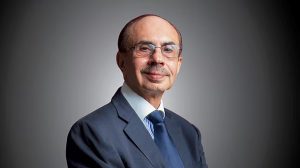
By 2026, Adi Godrej stands as the architect of one of India’s most successful business transformations—and now, one of its most graceful transitions. Having modernised the Godrej Group into a global, consumer-facing powerhouse, he played a central role in the 2025–26 family realignment, ensuring sharper strategic focus across businesses. Adi continues to guide the Godrej Industries Group, while also laying down a clear succession path, reinforcing his reputation not just as a visionary leader, but as a thoughtful custodian of legacy and continuity.
Nadir Godrej
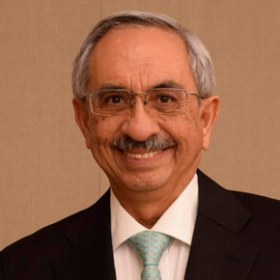
In 2026, Nadir Godrej represents the intellectual and sustainability-driven core of the Godrej Industries Group. As Managing Director, he has steered the group’s chemicals, agriculture, and rural-focused businesses with a long-term, science-led approach. The recent restructuring has given greater strategic clarity to his mandate, while plans for an orderly leadership transition underscore his belief in institutional strength over individual prominence. Known for his deep thinking and understated leadership, Nadir remains a vital bridge between tradition and future-ready enterprise.
Jamshyd Godrej
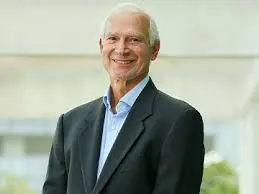
A pioneer of corporate environmentalism in India, Jamshyd Godrej continues to be the moral compass of the Godrej legacy. As Chairman of the Godrej Enterprises Group, following the family realignment, he now focuses fully on the group’s unlisted businesses while deepening his lifelong commitment to biodiversity, conservation, and sustainable urban development. Long before climate action became mainstream, Jamshyd embedded ecological responsibility into business thinking—an influence that continues to shape Godrej’s identity across generations.
Together, Adi, Nadir, and Jamshyd Godrej exemplify a rare leadership continuum: transformation, stewardship, and conscience. The 2025–2026 realignment marks not a division, but a maturation of legacy—ensuring sharper focus, generational continuity, and a future where values and enterprise move forward in equal measure.
47. Falguni Nayar, 61, Entrepreneur

Falguni Nayar is India’s most inspiring examples of late-blooming entrepreneurship and disciplined leadership. The former investment banker who founded Nykaa at the age of 49 rewrote the rules of India’s beauty and lifestyle retail, building a brand rooted in trust, curation, and deep consumer insight.
What sets Nayar apart is not just Nykaa’s scale, but its founder-led clarity—a rare blend of financial rigour and customer empathy. Under her guidance, Nykaa has evolved into a diversified digital-first platform spanning beauty, fashion, and content, while continuing to strengthen its Omni channel presence and private labels. Even amid market cycles, her long-term approach and conservative capital philosophy have reinforced confidence in founder-driven governance.
Falguni Nayar is widely respected not only as one of India’s wealthiest self-made women, but as a role model for women entrepreneurs, professionals reinventing themselves mid-career, and leaders who believe that growth and credibility must move together. Calm, precise, and purpose-led, she embodies a modern Indian business ethos—where ambition is matched by restraint, and success by substance.
48. Rajdeep Sardesai, 60, Journalist, Media Person
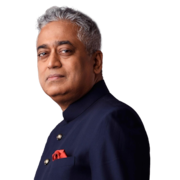
Rajdeep Sardesai is easily one of India’s most recognisable, resilient and influential journalistic voices. With a career spanning over three decades, he has helped shape modern Indian television journalism—combining reportage, debate, and sharp political insight at moments when the country’s democracy has been most intensely tested.
As a consulting editor with the India Today Group, Sardesai continues to anchor major political events, elections, and national conversations with trademark energy and intellectual rigour. Never afraid to ask uncomfortable questions, he has built a reputation for holding power to account while championing the core values of a free press—credibility, balance, and fearless inquiry.
An author of influential books on Indian politics and democracy, Rajdeep’s writing reflects both historical depth and lived newsroom experience. In recent years, he has also embraced digital platforms, engaging directly with younger audiences and reminding them why journalism matters in an age of noise, misinformation, and polarisation.
Opinionated, passionate, and unapologetically committed to democratic ideals, Rajdeep Sardesai in 2026 is also a debutant on our most influential seniors list. Sardesai stands as a reminder that journalism is not merely about reporting events—but about defending the space in which truth can be spoken.
49. The Influencer

By 2026, The Influencer has evolved from a trend-driven content creator into a central force in the global conversation economy. No longer defined solely by follower counts or brand endorsements, today’s influencer shapes opinion, behaviour, and even policy—often faster than traditional media or institutions can respond.
Influence in 2026 is platform-agnostic and purpose-tested. Audiences are more discerning, quick to spot inauthenticity, and less forgiving of performative activism. Credibility, lived experience, and consistency now matter more than “going viral.” The most impactful influencers are those who combine storytelling with substance—educators, professionals, creators, and citizens who explain complexity, question narratives, and translate information into meaning.
At the same time, the risks have sharpened. AI-generated content, deepfakes, and algorithmic amplification have blurred the line between truth and theatre. Influence can be engineered at scale, making responsibility—not reach—the defining metric of trust. In this landscape, silence, pause, and ethical choice have become as influential as constant posting.
The influencer in 2026 is no longer just a personality—it is a position of power. And like all power, it demands accountability. The future belongs to those who are effortlessly authentic.
50. The Unknown Indian

Not all influence announces itself. Some of it moves quietly, without applause, without headlines, and without followers. The Unknown Indian—the neighbour, the teacher, the caregiver, the small entrepreneur, the parent, the volunteer—shapes the country every single day, often without ever realising the depth of their impact.
This is the Indian who wakes early, does what must be done, and carries on. They keep families together through sacrifice, hold communities steady through kindness, and pass on values not through speeches, but through example. They vote, they save, they adapt. They learn, unlearn, and relearn—sometimes slowly, sometimes painfully—but always with resilience. Their influence lies not in visibility, but in continuity.
For seniors especially, the Unknown Indian is deeply familiar. It is their own reflection. A lifetime of quiet decisions—educating children despite constraints, caring for ageing parents, building modest careers, supporting neighbours in need—has shaped generations. Nations are often credited to leaders and institutions, but they are sustained by people who show up every day, even when no one is watching.
In a world increasingly obsessed with recognition, the Unknown Indian reminds us that dignity does not require an audience. Their influence is felt in shared meals, steady hands, moral courage, and the unspoken understanding that doing one’s duty matters. Long after trends fade and headlines change, it is this quiet influence that endures.
The Unknown Indian may never trend, but India stands tall because they do.