






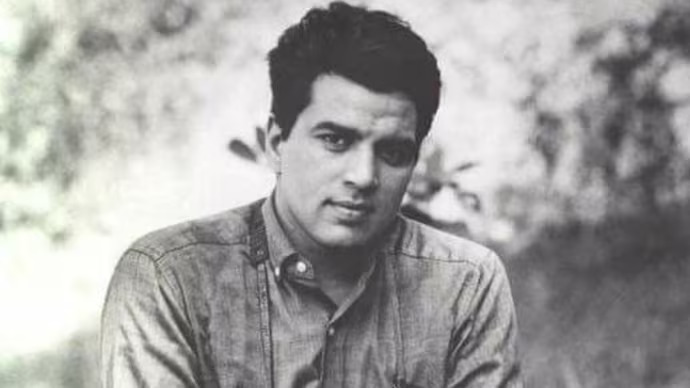
The death of Dharmendra marks the end of an era, of a star who blended strength with vulnerability, and made sincerity his signature, writes Deepa Gahlot
Had he lived, Dharmendra would have completed 90 years. A long and blessed life of a star and man who was known for his warmth and generosity. Also, a body of work that was so varied and so full of landmark films, that it looked as if luck was always with him and the acting muse always kind.
He was never trained in acting, but had staggering good looks on his side, an appealing voice and an inborn talent that directors like Hrishikesh Mukherjee, Basu Chatterjee and Vijay Anand were able to tap.
His approach was instinctive—he went with a sincerity of expressing emotions, rather than a studied or prepared method. In spite of being given labels like He Man and Garam Dharam, he was never afraid of showing vulnerability or shedding tears on screen. It was said that Dharmendra could not cry and would not dance, but it has to be admitted that when he did, it was honest and spontaneous.
At a time when bound scripts were not a norm, and dialogue was often written on the set, Dharmendra sometimes took a film because the producer was a friend or was in need, but he also trusted his judgment and put faith in the director.
He is better known for his action films, and later, comedies, but there were films in which he played softer characters, and did not care what impact those roles would have on his career—he never known to be calculative. His romantic aura depended on his natural, old school charm and inherent simplicity. He had a quality of elevating his co-stars rather than overshadowing them, which is why no other male stars objected to working with him; they were sure in the knowledge that he would not deliberately steal a scene or have their good scenes cut. Long before “chemistry” became an industry term, he embodied it with ease, no matter which leading lady was opposite him.
For his role in Satyakam (1969), widely regarded as his finest dramatic performance, he successfully portrayed an engineer of unyielding moral integrity struggling with corruption. He silently expressed so much in his final deathbed scene without a single line of dialogue, demonstrating immense control over subtle dramatic expression under director Hrishikesh Mukherjee. It’s a pity no other director saw what he was capable of, when given a director’s guidance.

Image Courtesy: The Telegraph
Caption: In Satyakam
Without seeming to make an effort he managed a synthesis of both macho physicality and tenderness, rural grit and urban charm, an innate seriousness when required and easy-going light-heartedness when the film needed it. This sincerity and adaptability allowed him to move easily between genres.
While Dharmendra is universally loved for Sholay and Chupke Chupke, the films that truly highlight his range and depth are often overlooked, probably because talent was eclipsed by his physical appeal and massive star status.
Here are some of Dharmendra’s most critically acclaimed and truly underrated roles:
Bandini (1963):
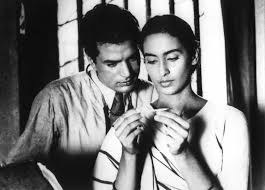
In Bimal Roy’s film he played a supporting but crucial role as a sympathetic prison doctor, Devendra, who falls in love with the convict (Nutan). Though her role was the central one, he held his own in this classic, demonstrating his grounding as a serious performer.
Haqeeqat (1964):
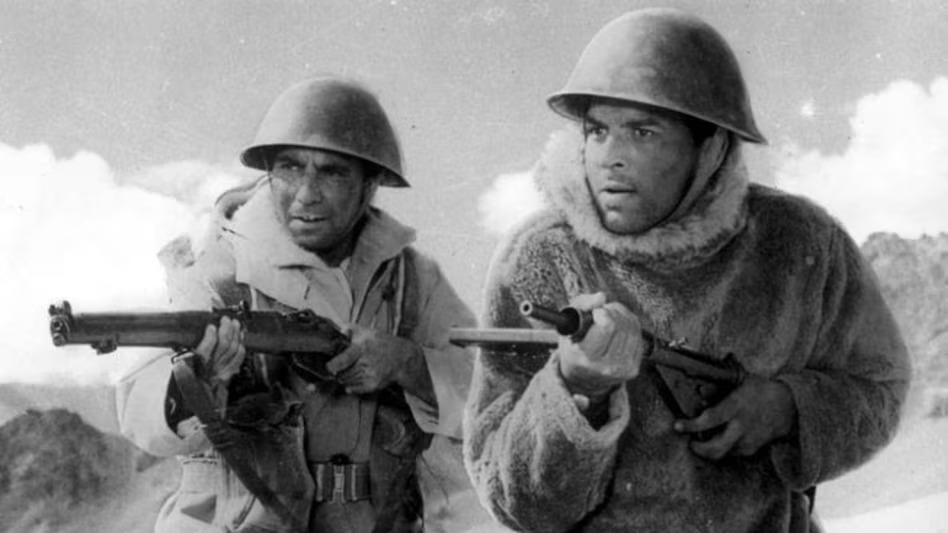
In Chetan Anand’s multi-starrer war epic, he played Captain Bahadur Singh and delivered a poignant, powerful performance as a courageous captain facing overwhelming odds. It is a grim, moving film that established his early dramatic prowess.
Anupama (1966):
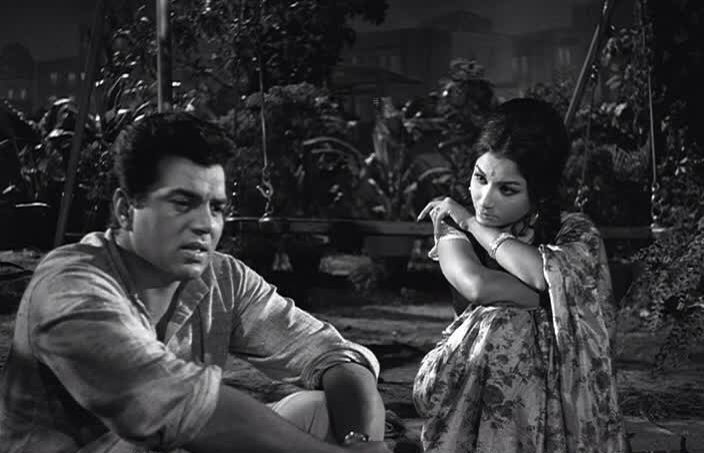
Hrishikesh Mukherjee directed him in this subtle, sensitive drama is a masterpiece of subtlety in the role of Ashok, a gentle, soft-spoken writer and teacher who helps the introverted, neglected protagonist (Sharmila Tagore) find her voice. It’s a role of immense emotional intelligence and tenderness, proving his mastery of sensitive romance.
Satyakam (1969):

The role of Satyapriya Acharya in this Hrishikesh Mukherjee film, is universally considered Dharmendra’s finest performance. He plays an intensely idealistic, morally upright man who struggles to maintain his truth and honesty in a post-independence India rife with corruption. The role is subtle, complex, and emotionally draining, showing a dramatic depth far beyond his popular image.
Yakeen (1969):
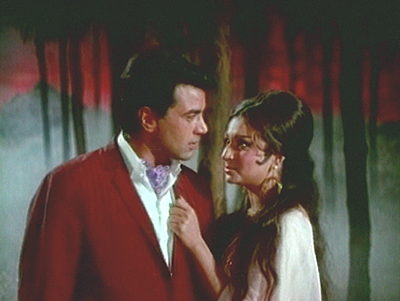
A difficult dual role as the honest scientist, Rajesh Varma, and his sinister look-alike imposter, Garson in this espionage thriller, directed by Brij, that was ahead of its time. Dharmendra showed great technical skill in shifting convincingly between the two contrasting characters, a performance often overlooked.
Jeevan Mrityu (1970):
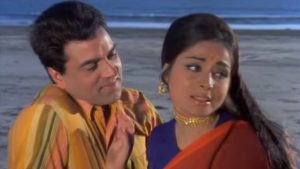
In the role of Ashok Tandon, an honest bank employee, who is framed and returns under a new identity seeking revenge, in the film directed by Satyen Bose, showed a brooding intensity from Dharmendra that was different from his usual invincible hero persona.
Sharafat (1970):

Dharmendra plays a teacher, Rajesh, in Asit Sen’s film, who is distressed by his students frequenting a kotha. He demands that the dancer, Chandni (Hema Malini), refuse entry to the boys. She agrees on the condition that he educates her, so that she can get out of the disreputable profession. He falls in love with her, and complications arise, because his mentor (Ashok Kumar) wants him to marry his daughter.
Naya Zamana (1971):
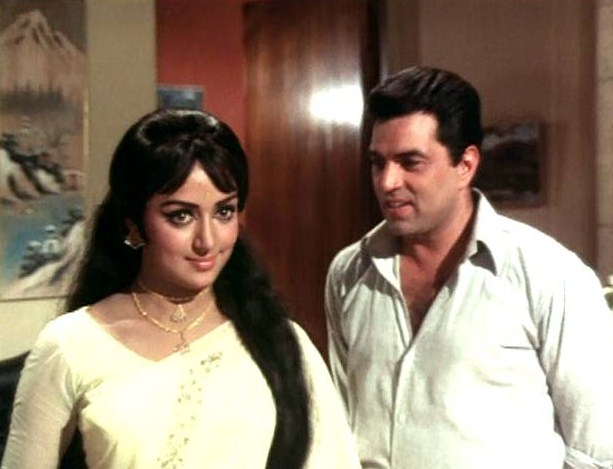
In Pramod Chakravorty’s social drama, he played Anoop, an idealistic writer, who falls in love with an heiress (Hema Malini). Her brother (Pran) steals Anoop’s novel and tries to destroy the basti where he lives, but the writer fights back.
Blackmail (1973):
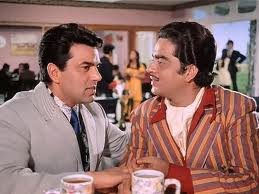
Vijay Anand cast him in the role of an engineer, Kailash Gupta, in this tightly-scripted, stylish suspense thriller that had his most iconic songs- Pal Pal Dil Ke Paas Tum Rehti Ho. He played a man who suspects that his wife (Rakhee) is cheating on him, and delves into the plot to acquire a scientific secret from him, by blackmailing her. He was compelling in the lead role, which was an unusual one for him.
Dillagi (1978) :
Directed by the master of middle-cinema, Basu Chatterjee, this romantic comedy had Dharmendra shed his action hero avatar completely. He plays a charming Sanskrit professor called Swarna Kamal, who schemes to woo a stern chemistry teacher (Hema Malini). Amazingly, his look was nerdy and his comic timing on point.
Box: Lesser Known Facets of Dharmendra
A large part of Dharmendra’s career was during the phase when gossip magazines and fanzines were the only way of getting information about stars. So a lot of gossip about Dharmendra was common knowledge—true or false was always gauged later. In spite of being written about so much, he led a mostly private life, but was known to be gregarious at functions and friendly with co-stars.
Still, a few interesting facts about the star:
He was born Dharam Singh Deol in the village of Nasrali, Punjab. His deep emotional connection to his ancestral village remained strong, and the doors of his home were always open to anyone from his village.
The son of a school headmaster, he decided to join the film industry after he watched the Dilip Kumar starrer Shaheed (1948) in a theatre.
Caption: On the left, with the finalists of – Filmfare New Talent Contest in 1958
His entry into Bollywood was not because of connections in the industry but by winning the Filmfare New Talent Contest in 1958.
When he first came to Mumbai, his only major goal was “one flat and one Fiat (car)!”
In his struggling days, he lived in a garage with other aspirants.
The payment for debut film, Dil Bhi Tera Hum Bhi Tere (1960), was reportedly ₹51.
It was rumoured back then, that he had a close relationship with Meena Kumari, which he denied.
He famously turned down Zanjeer (1973), which went on to define Amitabh Bachchan’s Angry Young Man persona.
Despite his “He-Man” action hero image, Hrishikesh Mukherjee considered him an incredibly versatile and underrated actor.
In 1987, he gave seven box office hits, then an unmatched feat.
It was reported that during the shooting of Sholay (1975), he allegedly paid the light-boys ₹20 per take to purposely fudge the shot, where he was teaching Hema Malini how to shoot with a revolver, so he could stay close to her for longer.
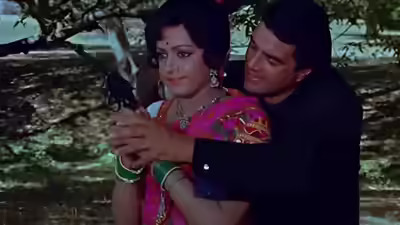
He chased gossip columnist Devyani Chaubal, and almost hit her, when she wrote something nasty about him and Hema Malini
His popularity allowed him to live down the scandal of reportedly converting to Islam and changing his name to Dilawar Khan, to marry Hema Malini, when he was already married to Prakash Kaur, the mother of his four children.
He had invested in a Garam Dharam restaurant chain in north India
He launched his production company Vijayta Films to launch the careers of his sons Sunny and Bobby. The two daughters were seldom seen in public.
He had an interest in Urdu poetry (Shayari), which he wrote and shared on social media, often filmed at his farmhouse near Lonavala
His favourite term of endearment for those he liked—male or female—was darling.