






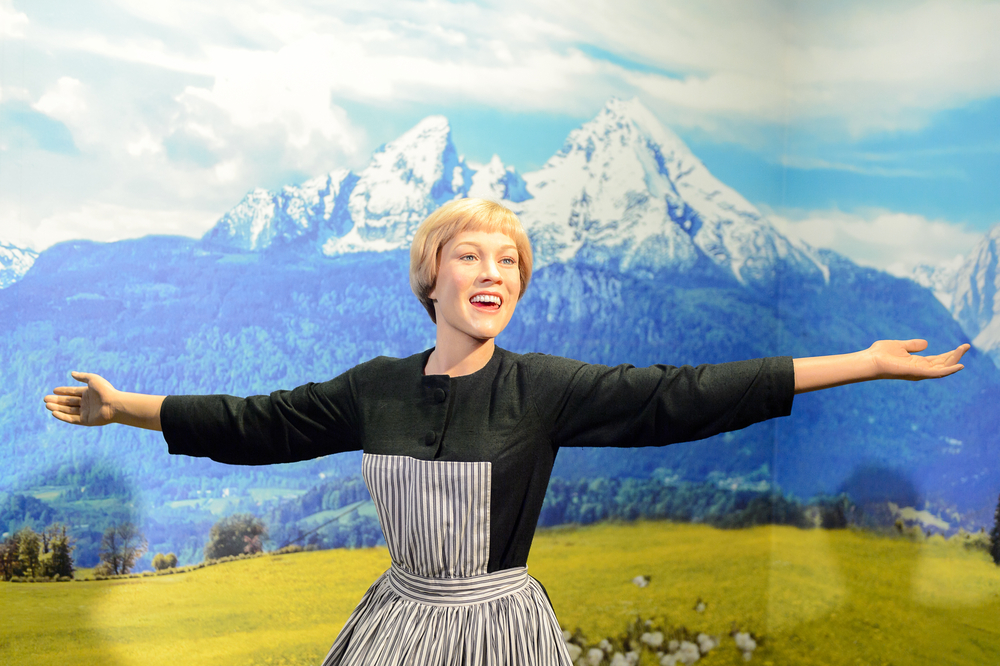
Having enriched generations with her movies and songs, she is a beloved cultural icon, writes Deepa Gahlot
Ask anyone who grew up under the magical shadow of Juile Andrews, and they’d be able to sing Do Re Me, My Favourite Things, A Spoonful Of Sugar and Supercalifragilisticexpialidocious. Every kid wanted a nanny like her, who would make childhood fun. Every girl wanted to wear pinafore dresses and get her hair in a fringed ‘boy cut’
Dame Julie Andrews turned 90 on October 1 this year, but in millions of memories, she remains Mary and Maria, and can bring on nostalgic smiles.
Her voice defined the golden age of Broadway and Hollywood, her crystalline voice evoking a sense of joie de vivre that remains unmatched.
She was born Julia Elizabeth Wells in Walton-on-Thames, in an unhappy, but musical household. Her mother, Barbara, was a pianist, and her stepfather, Ted Andrews, was a singer. With an erratic mother and alcoholic stepdad, she was forced to become the family’s breadwinner. Growing up in the world of English music halls, she was quickly recognised as a child prodigy, with a powerful, four-octave soprano range, perfect pitch, and a sound so clear it was described as silver. As she later reflected, she “could belt out any aria you handed me.” She famously made her professional debut at age 12, singing the difficult operatic aria “Je suis Titania” from the opera Mignon, at the London Hippodrome in the revue Starlight Roof. This early training in opera gave her the immaculate diction and technical precision that would make her songs such musical landmarks.
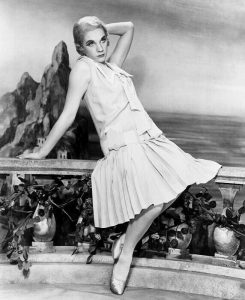
By the age of 19, she had arrived in America to make her Broadway debut in the popular musical spoof The Boy Friend (1954), for which she won a Theatre World Award. The success of this show made her a star, but her next production made her a legend. In 1956, Andrews was cast as the original Eliza Doolittle, the Cockney flower girl, in My Fair Lady. Alan Jay Lerner and Frederick Loewe’s wonderful musical stage adaptation of George Bernard Shaw’s Pygmalion, opposite Rex Harrison. She got her first Tony Award nomination for captivating audiences in one of the most beloved musicals of all time. She followed this triumph with another star-making turn as Queen Guinevere in Lerner and Loewe’s Camelot (1960), earning a second Tony nomination.
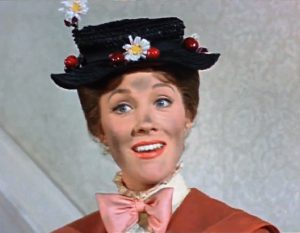
Strangely, with typical Hollywood ignorance, she was overlooked for the 1964 film adaptation of My Fair Lady, in favour of a bigger movie star, Audrey Hepburn (whose songs were dubbed by Marni Nixon). Andrews’s graceful response to this snub came when she accepted the Golden Globe for her first film role, Mary Poppins (1964). She famously said, “”My warmest thanks to Mr. Jack Warner for not casting me in My Fair Lady and for making it possible for me to come to this picture.”
Walt Disney personally selected her for the role of the magical “practically perfect” English nanny, which made her an international icon and perennial favourite with kids the world over. She also won an Oscar along with the Golden Globe win.
She reportedly drove around Los Angeles with a “Mary Poppins Was a Junkie” bumper sticker on her car, and said that she hated the word “wholesome.” In Hollywood, they called her “nun with the switchblade”.
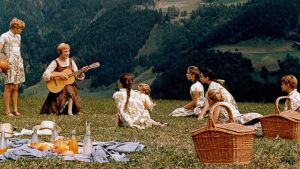
The very next year, she played Maria, nun-turned-governess, to the aristocratic von Trapp kids in The Sound of Music (1965). The film was a global phenomenon, one of the highest-grossing movies of all time, and for her performance, she earned a third Golden Globe and her second Academy Award nomination.
Wary of being typecast in these goody-goody roles in musicals she made a decision to do non-musical roles including the witty romcom The Americanization of Emily (1964) and Alfred Hitchcock’s Cold War thriller, Torn Curtain (1966).
It was her marriage, in 1969, to director Blake Edwards, that allowed her career to pivot. They made, what is a Hollywood rarity, a creatively fruitful personally fulfilling match, till his death in 2010. Their collaborations resulted in films like Darling Lili (1970), 10 (1979), and the satirical Hollywood comedy S.O.B. (1981), directed by Edwards, where she bared her breasts, shocked her fans and did away with the pristine screen image.
Their partnership peaked with Victor/Victoria (1982), a brilliant musical-comedy in which Andrews played a struggling soprano who finds success in Paris as a male female-impersonator, which means she played a woman pretending to be a man pretending to be a woman. The fabulously challenging role, earned her a fourth Golden Globe and a third Academy Award nomination. Later, she was highly praised for her performance as a violinist with multiple sclerosis in Duet for One (1986).
In 1997, a major turning point in her life occurred when a throat operation to remove non-cancerous nodules resulted in permanent damage to her singing voice, destroying her renowned four-octave range. Overcoming the devastating loss, she channelled her talent and intelligence into other creative pursuits– she embarked on a successful career as an author of children’s books, often collaborating with her daughter, Emma Walton Hamilton, including the popular The Very Fairy Princess series. She also wrote two bestselling, insightful autobiographies, Home: A Memoir of My Early Years and Home Work: A Memoir of My Hollywood Years.
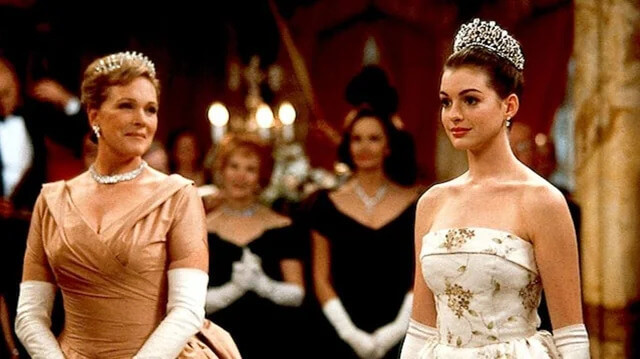
The new millennium brought a career revival on screen, albeit in roles that no longer required her to sing. She introduced a new generation of fans to her royal elegance as Queen Clarisse Renaldi in Disney’s The Princess Diaries (2001) and its sequel. She also became a much-admired voice actress, lending her distinct voice to Queen Lillian in the Shrek franchise and Gru’s mother in the Despicable Me films.
In 2000, she was recognised by the British Crown for her services to the performing arts, being made a Dame Commander of the Order of the British Empire (DBE).
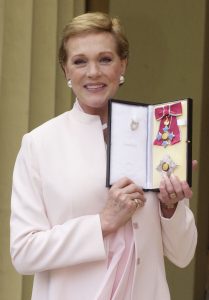
“A lot of my life happened in great, wonderful bursts of good fortune,” she once said, “and then I would race to be worthy of it.”
Her career and her life have been conducted with grace and dignity, making her an enduring legend in the notoriously fickle world of show business. Having enriched generations with her movies and songs, she is a beloved cultural icon.