






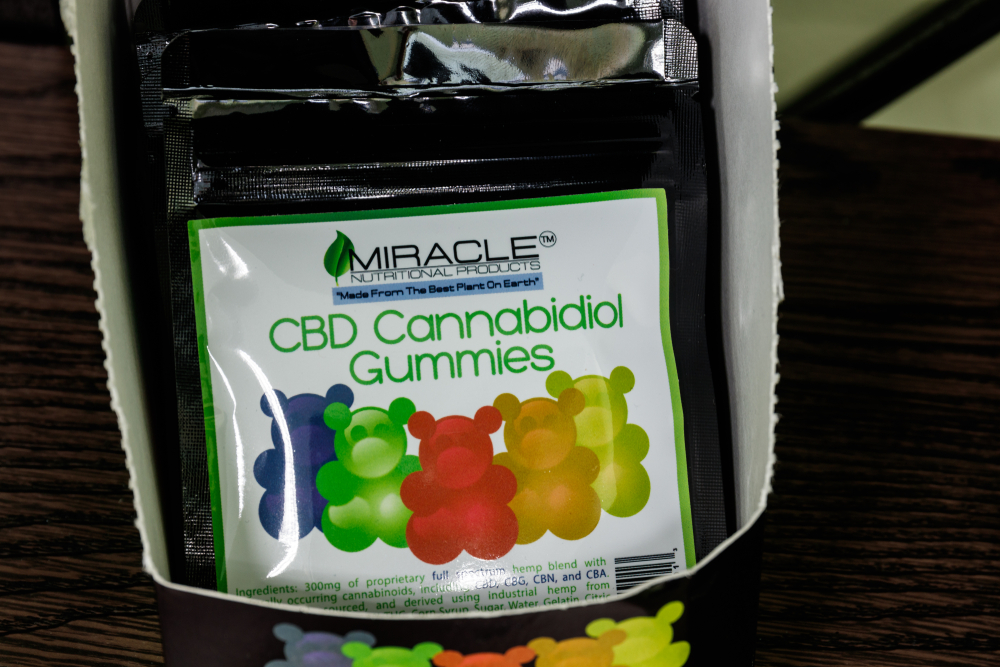
The popularity of gummies is not accidental; it is rooted in behavioural science and consumer psychology.
In recent years, the global supplement industry has witnessed a striking transformation: the emergence of gummy-based nutraceuticals marketed for everything from sleep and gut health to mental wellbeing and even blood sugar control. What began as children’s multivitamins has evolved into a multi-billion-pound category, with gummy products becoming mainstream.
View this scenario: On a bedside table in a modern urban home, a small glass jar sits beside a silk eye mask and a neatly stacked book. Inside it: jewel-toned gummies—raspberry, lemon, elderberry—promising sleep, calm, better digestion, sharper focus.
They look like sweets.
They taste like sweets.
And yet, they are sold as solutions.
In the past decade, the supplement industry has undergone a quiet but profound transformation. Capsules and tablets—once the austere symbols of health—have been replaced by something softer, more indulgent. Brands such as Olly and Goli Nutrition have led a global shift, reframing supplementation not as obligation, but as pleasure.
Is this is wellness, reimagined as confectionery?
A Habit Wrapped in Sugar
“Adherence has always been the biggest challenge in preventive health,” says Dr Emily Carter, a nutritional scientist specialising in behavioural health. “People know what they should take—but they don’t take it consistently.”
Gummies change that equation.
By engaging the brain’s reward pathways—sweet taste, soft texture, sensory pleasure—they transform a clinical task into a daily ritual. The effect is subtle but powerful: a habit that feels less like discipline and more like indulgence.
In behavioural terms, it is a near-perfect loop:
cue, reward, repetition.
And it works.
The Promise: One Gummy, Many Solutions
Today’s gummies are engineered to address an expansive list of concerns.
Sleep formulations typically contain melatonin, the hormone that regulates circadian rhythm. “Melatonin can be effective for specific conditions like jet lag,” notes Dr Carter, “but it is not a universal solution for poor sleep.”
Gut health variants offer probiotics—beneficial bacteria intended to support the microbiome. Meanwhile, “calm” or “stress” gummies include compounds such as L-theanine or GABA, designed to nudge the nervous system towards relaxation.
Even metabolic health has entered the arena, with gummies claiming to support blood sugar balance.
It is, on the surface, an elegant proposition:
complex physiology, simplified into a chewable cube.
The Reality Beneath the Gloss
Yet the science, as ever, is less tidy.
“Gummies are a delivery format—not a therapeutic breakthrough,” says Professor James Holloway, a pharmacologist focusing on nutrient bioavailability. “And the format comes with trade-offs.”
One of the most immediate is sugar. Many gummies rely on glucose syrup or sucrose to achieve their texture and taste. In small amounts, this is negligible. In daily use—particularly across multiple products—it becomes more significant, especially in populations already at risk of Type 2 Diabetes.
Then there is the issue of dose.
“Unlike pharmaceuticals, supplements are not always tightly standardised,” Holloway explains. “We’ve seen notable discrepancies between what’s on the label and what’s in the product—particularly with melatonin.”
For the consumer, this creates a paradox: a product that feels precise, but may not be.
Fragile Science in a Soft Format
The gummy itself presents a technical challenge.
Heat, moisture, and light—all inherent to the manufacturing process—can degrade sensitive nutrients. Probiotics, in particular, may struggle to survive both production and digestion in meaningful numbers.
“It’s not that gummies don’t work,” says Holloway. “It’s that they don’t always work as well as their capsule or tablet equivalents.”
In other words, convenience may come at the cost of consistency.
The Psychology of “Enough”
Perhaps the most intriguing aspect of the gummy phenomenon is not biochemical, but psychological.
A daily gummy offers a sense of completion—a feeling that one has done something positive for their health. It is small, manageable, reassuring.
But it can also be misleading.
“There’s a risk of what we call ‘health displacement’,” says Dr Carter. “People rely on supplements to compensate for behaviours that are far more impactful—diet, sleep, movement.”
The gummy becomes a stand-in for effort.
And while it may support health in specific contexts, it cannot replace the fundamentals.
A Modern Ritual
And yet, to dismiss gummies outright would be to miss their significance.
They represent a shift in how health is experienced—less clinical, more integrated into daily life. For individuals who struggle with traditional supplements, they offer an accessible entry point. For those with specific deficiencies, they can provide meaningful support.
Their success lies not in scientific superiority, but in human design.
They meet people where they are:
busy, tired, seeking ease.
The Verdict
Gummies are not a miracle. Nor are they meaningless.
They occupy a middle ground—useful, appealing, imperfect.
Taken thoughtfully, they can support wellbeing. Taken indiscriminately, they risk becoming little more than expensive sweets with a halo of health.
As Professor Holloway puts it:
“They’re a tool. A clever one. But still just a tool.”
And like all tools, their value depends entirely on how—and why—they are used.