






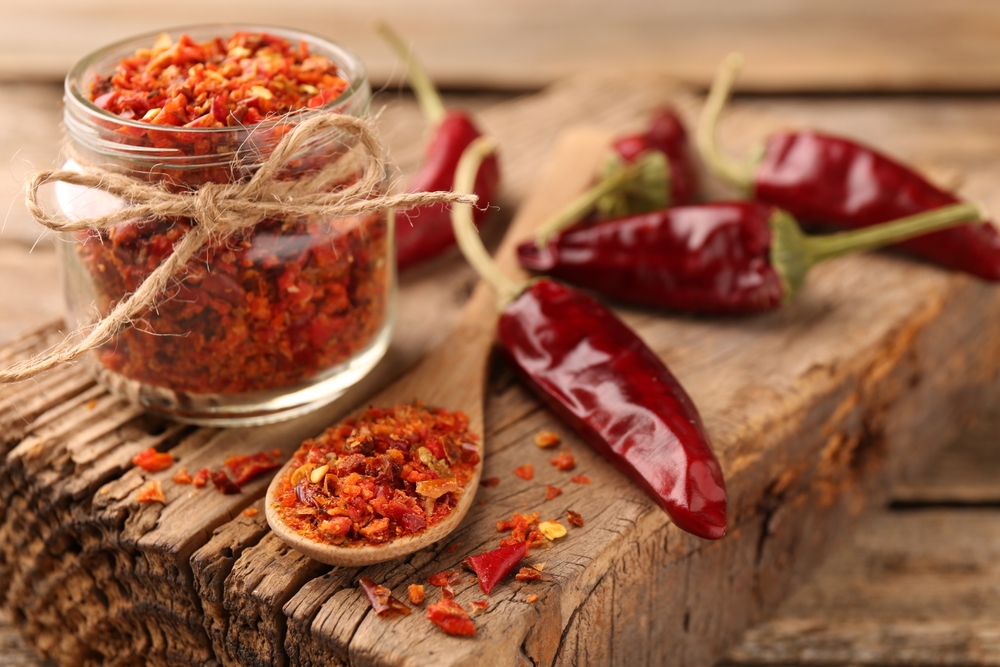
More than just a fiery flavour, this cheeky chilli spices up our health in many ways
We’ve all had that moment — a sudden rush of heat in the mouth, a tickle at the back of the throat, and perhaps even watery eyes — all thanks to the humble red chilli. For some, it’s a staple in every dish; for others, it’s a daring addition. But beyond the heat and spice, red chillies pack a surprising punch when it comes to health benefits.
So hold on to your tummy and take a closer look at how these vibrant pods do more than just spice up our meals — they help spice up our health too.
- A Natural Pain Reliever
The fiery compound responsible for the chilli’s heat is called capsaicin. This natural chemical is known for its ability to block pain signals to the brain. In fact, capsaicin is widely used in topical creams and patches to ease joint pain, arthritis, and even nerve pain. It’s not magic — it’s science with a kick!
- Boosts Metabolism and Aids Weight Loss
Love a spicy curry? Your body might thank you for it. Capsaicin has been found to raise body temperature slightly, a process known as thermogenesis, which may help increase metabolism and promote fat burning. It can also help suppress appetite — a small but useful tool in weight management when combined with a balanced diet and active lifestyle.
- The Power of Capsicum annuum
Most red chillies we consume — including cayenne and paprika varieties — come from the plant species Capsicum annuum. This plant doesn’t just give us heat — it offers a cocktail of health-boosting compounds.
Some of its key constituents include:
- Capsaicin – known for its pain-relieving, anti-inflammatory, and metabolism-boosting properties.
- Capsanthin – a powerful antioxidant found in red varieties, which helps combat oxidative stress and may support heart health.
- Carotenoids – including beta-carotene and lutein, which support eye health and boost immunity.
- Flavonoids – plant compounds that reduce inflammation and may help lower blood pressure.
- Vitamin C and A – both present in impressive quantities, supporting immune function and skin health.
In traditional medicine systems — from Ayurveda to Latin American herbalism — Capsicum annuum has been used to treat everything from indigestion and congestion to sore muscles and circulatory issues.
- Cayenne, Paprika and Their Indian Cousins
Although cayenne and paprika are native to the Americas, they are now cultivated in India too — particularly in Andhra Pradesh, Karnataka, and Tamil Nadu — often for export or industrial use.
✅ Indian Alternatives with Native Names:
| Western Chilli | Indian Alternative | Native Name | Region | Characteristics |
|---|---|---|---|---|
| Cayenne | Guntur/Sannam | Guntur mirch, 334 Sannam | Andhra Pradesh, Tamil Nadu | Long, thin, hot and pungent |
| Paprika (mild) | Kashmiri chilli | Kashmiri mirch (कश्मीरी मिर्च) | Jammu & Kashmir | Bright red colour, very mild heat |
| Paprika (aromatic) | Byadgi chilli | Byadgi mirch (ಬ್ಯಾಡಗಿ ಮೆಣಸಿನಕಾಯಿ) | Karnataka | Mildly spicy, deep red, aromatic |
These Indian-grown varieties offer a brilliant mix of heat, colour, and aroma — depending on what your dish calls for. Kashmiri mirch is ideal when you want a rich red tone without much spice, while Byadgi strikes a balance between flavour and warmth. If you’re after real heat, the Guntur chilli is your best bet.
- Rich in Antioxidants and Essential Nutrients
Red chillies are surprisingly nutrient-dense. Alongside capsaicin, they’re packed with:
- Vitamin C – essential for immune health and glowing skin
- Vitamin A – good for vision and tissue repair
- Vitamin B6 – important for mood regulation and brain function
- Potassium – helps control blood pressure
- Magnesium – supports muscle and nerve health
Just a small amount can go a long way toward topping up your daily intake of essential vitamins and minerals.
- Supports Heart Health
Capsaicin may help reduce LDL cholesterol (the “bad” kind) and improve circulation by promoting the dilation of blood vessels. Studies have suggested that regular chilli consumption is linked to a reduced risk of heart disease and stroke.
- Improves Digestion (Yes, Really!)
While spicy food often gets a bad name for causing indigestion, red chillies — when eaten in moderation — can stimulate the digestive tract. They increase saliva and gastric secretions, which aid in breaking down food.
That said, those with acid reflux or ulcers should proceed with caution. If you have IBS, GERD, or gastritis, capsaicin may worsen symptoms, so caution is advised.
A Note for Seniors
As we age, our metabolism naturally slows and taste sensitivity changes. Red chillies can help stimulate the appetite and digestion, and may even aid in keeping weight in check. But if you’re new to spicy food or managing conditions like gastritis, it’s best to introduce it gently. A pinch of chilli powder or a sliver of fresh chilli is often enough.
If you’re on medications like blood thinners or have digestive sensitivities, do consult your GP and dietician before making red chilli a regular part of your diet.
🌶️ Red Chillies: Health Benefits vs. Risks
| ✅ Potential Benefits | ⚠️ Possible Risks / Cautions |
|---|---|
| ✔ Boosts metabolism & fat burning | ❗ Can irritate gut lining in sensitive people |
| ✔ May support heart health | ❗ May trigger acid reflux (GERD) or heartburn |
| ✔ Natural pain relief (topical use) | ❗ High doses may cause diarrhoea or burning |
| ✔ Rich in antioxidants (vitamin C, capsanthin) | ❗ Not suitable for people with gastritis or IBS |
| ✔ May help lower blood pressure | ❗ Overuse may lead to digestive discomfort |
| ✔ Can help reduce appetite | ❗ May interact with blood thinners (if consumed in large amounts) |
| ✔ Antimicrobial & anti-inflammatory | ❗ May worsen haemorrhoids or anal irritation |
Q. So, Should You Add Red Chillies to Your Diet?
A. Embrace Red Chillies Wisely
Tips for Safe Inclusion
- Start mild: Use varieties like Byadgi or Kashmiri mirch to begin.
- Watch for side effects: If you notice acid reflux, burning, or loose stools, cut back.
- Pair with cooling foods: Yogurt, cucumber, coconut, and ghee help balance the heat.
- Avoid on an empty stomach: Capsaicin can irritate the lining in some individuals.
Red chillies — especially those from the Capsicum annuum family — are more than just culinary firecrackers. They’re tiny powerhouses of nutrients, antioxidants, and plant compounds that can support heart health, pain relief, metabolism, and even immunity.
India’s own chilli varieties like Guntur mirch, Byadgi, and Kashmiri mirch offer flavour, heat, and health in perfect balance. So the next time you stir them into a curry or sprinkle them on a snack, know that you’re feeding both your palate and your wellbeing.
📚 Key Research Studies on Red Chillies & Capsaicin
- Bonaccio et al., 2019 –
“Chili Pepper Consumption and Mortality in Italian Adults”- Journal: Journal of the American College of Cardiology
- Found that regular chilli pepper consumption was associated with a lower risk of cardiovascular and all-cause mortality.
- DOI: 10.1016/j.jacc.2019.09.068
- Whiting et al., 2012 –
“Capsaicinoids and capsinoids: A potential role for weight management?”- Journal: Appetite
- Reviewed evidence suggesting capsaicin may reduce appetite and increase energy expenditure.
- DOI: 10.1016/j.appet.2012.02.017
- Bley et al., 2012 –
“The plant-derived compound capsaicin, a potent spice, provides a spectrum of anti-inflammatory and pain-relieving benefits.”- Journal: Phytotherapy Research
- Outlines how capsaicin works with pain receptors and has anti-inflammatory effects.
- DOI: 10.1002/ptr.4291
- Sancho et al., 2002 –
“Capsaicin as a selective TRPV1 receptor agonist: A review on its pharmacological properties and toxicological profile.”- Journal: Molecular Nutrition & Food Research
- Discusses safe consumption levels and potential toxicity when used excessively.
- DOI: 10.1002/1521-3803(20020701)46:7<476::AID-FOOD476>3.0.CO;2-2
- Kawada et al., 1986 –
“Effects of capsaicin on lipid metabolism in rats fed a high fat diet.”- Journal: Journal of Nutrition
- Demonstrated improved fat metabolism and reduced triglyceride levels in animal models.
- DOI: 10.1093/jn/116.7.1272