







For most of our lives, we are taught how to make money, save it and invest it. Nobody really teaches us how to enjoy it. This becomes particularly relevant after 60. By then, many of life’s large financial responsibilities are hopefully behind us. The children have been educated and settled, the home has been bought, retirement has been planned for, and there is a reasonable idea of what we have and what we need. Yet strangely, we often continue behaving like consumers in their thirties—chasing the newer phone, the better car, the latest television, another watch, more clothes and countless small indulgences. We have spent a lifetime learning how to accumulate wealth, but very little time learning how to convert wealth into well-being. And that raises an interesting question: once our basic needs and financial security are taken care of, what should we actually do with our money?
Psychology offers one explanation for why buying more doesn’t necessarily make us happier. It is called hedonic adaptation—the remarkable ability of human beings to get used to almost anything. The new car smells wonderful for a few weeks and then becomes the car in the garage. The expensive sofa that you admired every evening soon becomes somewhere to sit while watching television. The latest smartphone initially feels magical, but within days we are using it for exactly the same WhatsApp messages, photographs and calls as the previous one. The problem isn’t that these things give us no pleasure; they do. The problem is that the pleasure fades extraordinarily quickly. Modern consumerism has understood this weakness brilliantly. Just as we become comfortable with what we own, somebody announces a newer model, a better camera, a larger screen, a redesigned dashboard or this season’s fashion. We are encouraged to become dissatisfied with perfectly satisfactory things.
This led me to a simple idea that I call the 4X Rule. If you already own something that does the job well, don’t replace it merely because something 20 or 30 per cent better has appeared. Wait until the difference is large enough to genuinely change your experience. In other words, if what you have represents ₹100 of value, don’t automatically jump to ₹120. Wait for the metaphorical ₹400 experience. The number four is not sacred; the principle is. Avoid endless incremental upgrades and save your money, attention and excitement for the occasional substantial leap. A person who changes a premium phone every year experiences a slightly better camera and processor each time and barely notices the improvement after a week. Someone who changes it after five years discovers an entirely different device. The same principle applies to cars. Replace a luxury car every two years and the excitement becomes routine. Keep a good car for much longer and the eventual replacement once again feels special. We enjoy contrast far more than continuity.
But after 60, I think the 4X Rule acquires another dimension. The question is no longer simply, “Should I buy a better version of what I have?” It becomes, “Is this where my money can create the most happiness?” At 40, a bigger house may represent achievement. At 70, perhaps a smaller, more convenient home with a comfortable bedroom, a good reading chair and family living nearby gives greater pleasure. At 45, one may dream about owning another expensive watch. At 70, the same money might finance a memorable holiday with children and grandchildren. At 50, we may take pride in having the latest car. Later, having a reliable driver and the freedom to meet friends whenever we want may be the greater luxury. Our definition of value changes with age, but unfortunately our spending habits don’t always change with it. We continue purchasing symbols of success long after we have stopped needing to prove that we are successful.
There is also something we have lost in the age of instant shopping—the pleasure of anticipation. Once, buying something important was almost a family project. You thought about it, discussed it, visited shops, compared alternatives, postponed the decision and finally bought it. The anticipation was part of the enjoyment. Today, we see something at 10.30 at night, tap “Buy Now”, and two days later a parcel arrives containing something we had almost forgotten ordering. We have eliminated inconvenience, but we may also have eliminated some of the joy. Waiting makes a purchase acquire meaning. The object becomes associated with desire, patience and finally achievement. The 4X Rule therefore isn’t simply about saving money. It restores selectivity. When you buy less frequently, you begin to care more about what you buy.

However, there is an important warning for those of us over 60. Don’t become so good at postponing expenditure that you postpone life itself. Our generation was brought up to save. Waste was frowned upon, debt was avoided and financial prudence was considered a virtue. Those habits served us extremely well. But there comes a point when money has to change jobs. For decades its job was to provide security for tomorrow. At some stage, part of its job should become improving today. There is little virtue in preserving every rupee until you are too old to enjoy what it could have provided. The purpose of a retirement corpus is not merely to remain intact; it is also to make retirement richer, easier and more enjoyable.
After 60, therefore, I would spend generously on a few things. Health, time, comfort, relationships and experiences. A better mattress, comfortable footwear, good hearing aids, physiotherapy, preventive healthcare or anything that keeps us mobile and independent can offer a return far superior to another luxury possession. Paying someone to handle an exhausting chore is not extravagance if it gives you back time and energy. And spending on relationships may provide the highest return of all. Take the family on the holiday you have been discussing for years. Fly across the country to meet an old school friend. Organise the reunion rather than waiting for somebody else to do it. Invite people home. Celebrate birthdays and anniversaries properly. Give while you are alive and enjoy seeing what your generosity does. We spend enormous effort planning what our children will inherit; sometimes it may be better to spend a little more creating memories they will inherit instead.
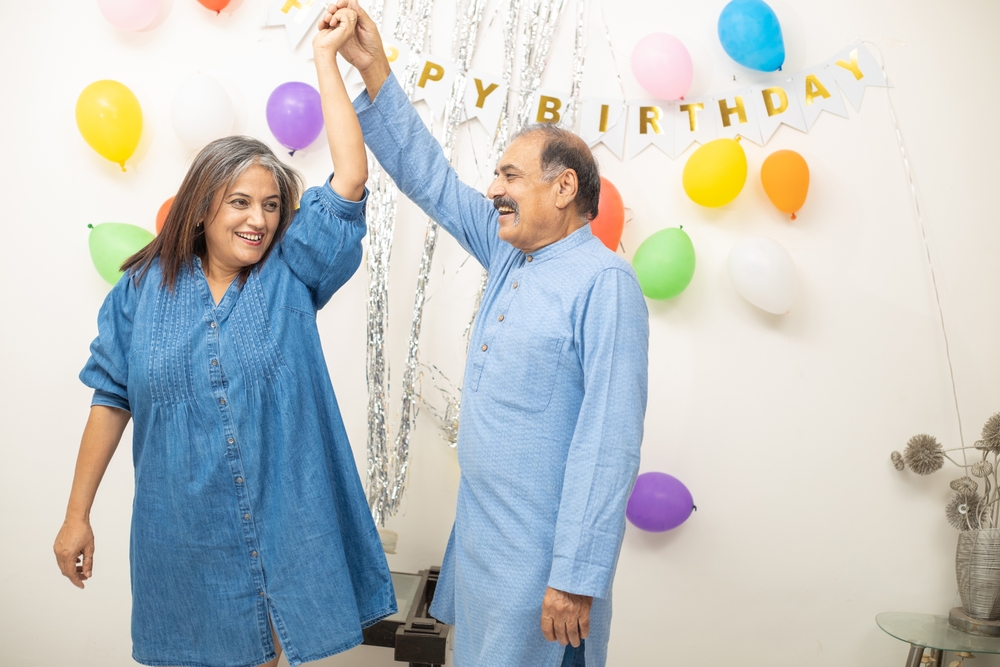
This is also why experiences increasingly beat possessions. Research by psychologist Thomas Gilovich and others has found that experiences tend to provide more lasting satisfaction because they become part of our identity and our memories. Think about your own life. When you look back over six or seven decades, what comes immediately to mind? It is probably not the refrigerator you bought in 1987 or the television you upgraded in 2004. You remember your wedding, the birth of your children, family holidays, college friends, a wonderful concert, a cricket match, a meal where everybody laughed until midnight, perhaps even a disastrous journey that has become funnier with every retelling. Possessions slowly disappear into the background of life. Experiences become stories, and stories often become more valuable with age.
None of this means that we should stop buying beautiful things. I enjoy art, design and objects that give lasting pleasure. A painting that makes you stop and look every morning is not the same as a gadget bought because an advertisement made last year’s model feel inadequate. Nor is the 4X Rule an argument for minimalism. It is an argument for significance. By 60, most of us already own far more than we use. Our wardrobes contain clothes waiting for occasions that never arrive. Cupboards hold forgotten gifts. Drawers are full of cables belonging to machines that no longer exist. Perhaps one privilege of growing older is finally understanding that abundance and happiness are not synonyms. The goal need not be to own less simply for the sake of owning less. It should be to own things that deserve their place in our lives.

The irony is that the modern economy depends on persuading us to think differently. Every industry has become brilliant at manufacturing dissatisfaction. Last year’s perfectly good car suddenly seems dated. A phone that worked beautifully yesterday becomes inadequate the morning a new model is launched. Fashion exists partly by convincing us that clothes still hanging in our wardrobes have somehow become old. Companies need us to keep upgrading because their balance sheets depend on it. There is nothing wrong with that; businesses are doing their job. But as consumers, particularly older consumers, we should do ours—distinguish between what is genuinely better and what is merely newer. Perhaps one advantage of being over 60 is that we have lived long enough to recognise the difference.
So my version of the 4X Rule for later life is slightly different from the one I would recommend to someone who is 30. Upgrade possessions slowly, but upgrade life generously. Don’t replace something useful for a marginal improvement. Wait for the purchase that genuinely transforms your experience. But don’t wait endlessly to travel, meet friends, help somebody, celebrate with family or do something you have always wanted to do. At this stage of life, “someday” can become an expensive word. Money is ultimately only stored possibility. Its value lies not in the number printed on a bank statement but in what it allows us to experience. A cupboard full of expensive objects depreciates; a wonderful memory can appreciate every time it is recalled. So before your next large purchase, ask yourself: Will this improve my life substantially, or am I simply buying a newer version of something I already have? And could the same money create a better memory instead? The 4X Rule is not really about spending four times as much. It is about making our money work four times harder for our happiness. After 60, perhaps the best portfolio is not merely one filled with good investments, but a life filled with good stories.