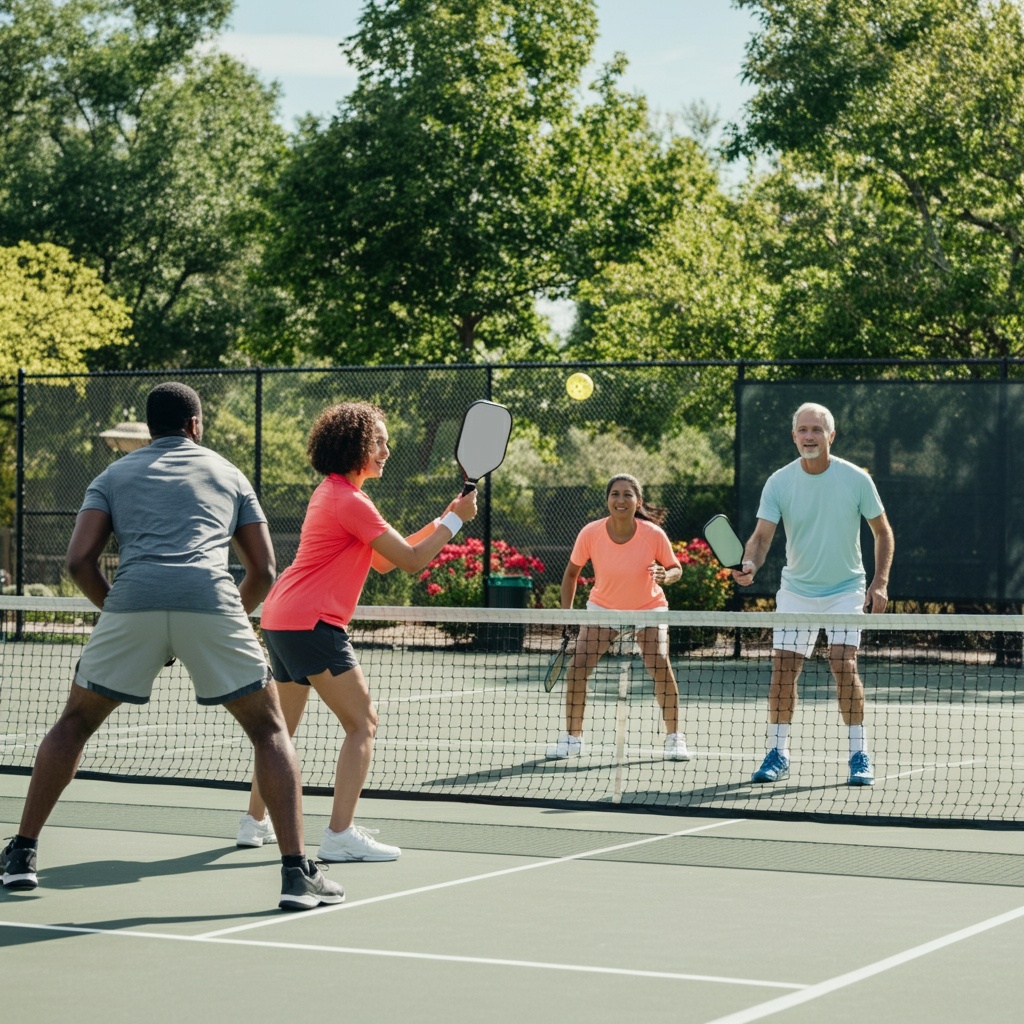






This is the story of pickleball, the curiously named American import that has, against all odds, become the defining pastime for India’s seniors, writes Harsh Goenka
In the quiet corners of clubhouses, on repurposed badminton courts in housing societies, and in community centres across India’s bustling metropolises, a quiet revolution is taking place. Its sound is a soft, rhythmic pop-pop-pop, and its ambassadors are not flashy young athletes, but a generation rediscovering the joy of play. This is the story of pickleball, the curiously named American import that has, against all odds, become the defining pastime for India’s seniors. It is more than a sport; it is a social movement, a wellness routine, and a vibrant new chapter for those who thought their sporting days were behind them.
I witnessed this revolution begin, quite by accident, during the pandemic’s forced pause. Retreating to our home in Khandala, the world’s anxieties were replaced by hilltop quiet. It was there a relative mentioned a game called pickleball, described with a compelling pitch: “It’s designed for people like us. Easy on the joints, strategic, and terribly fun.” Skeptical but curious, we looked at an old, disused cemented badminton court on the property. With some tape and a net, we transformed it into a makeshift court. What happened next was a revelation. Within thirty minutes, I was engaged in a lively rally. There was no strain, no gasping for breath, just the pure, effortless joy of hitting a ball, of movement that felt good. We weren’t just playing a game; we had, in our amateur way, unlocked a secret. Little did I know, thousands of other seniors across the country were having the same epiphany.
Why Pickleball? The Anatomy of a Perfect Fit
The explosive adoption of pickleball among seniors is no accident. It is a perfect storm of accessibility, engagement, and social design.
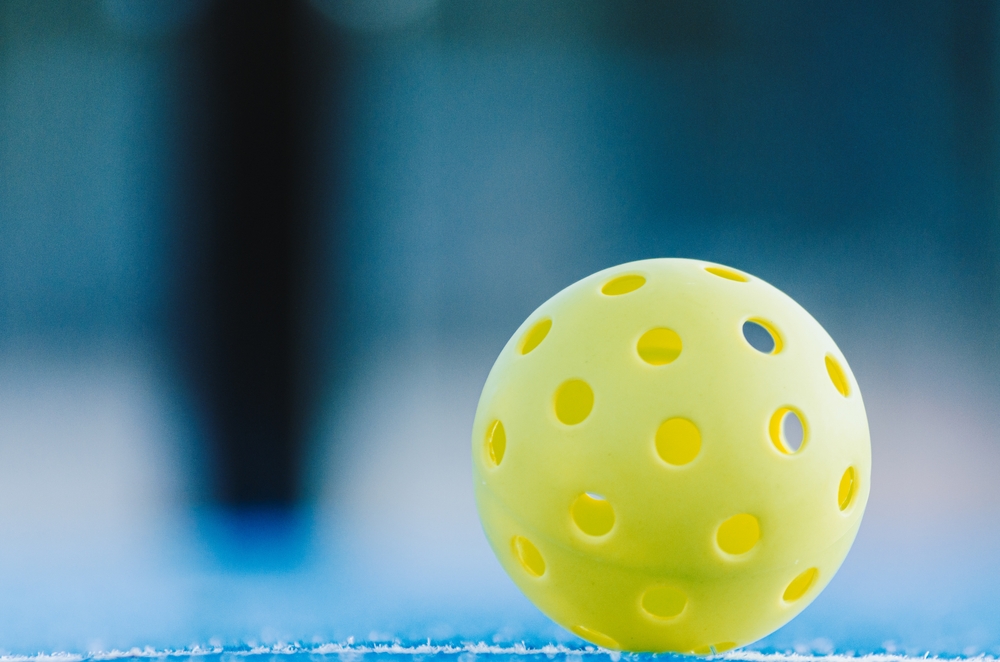
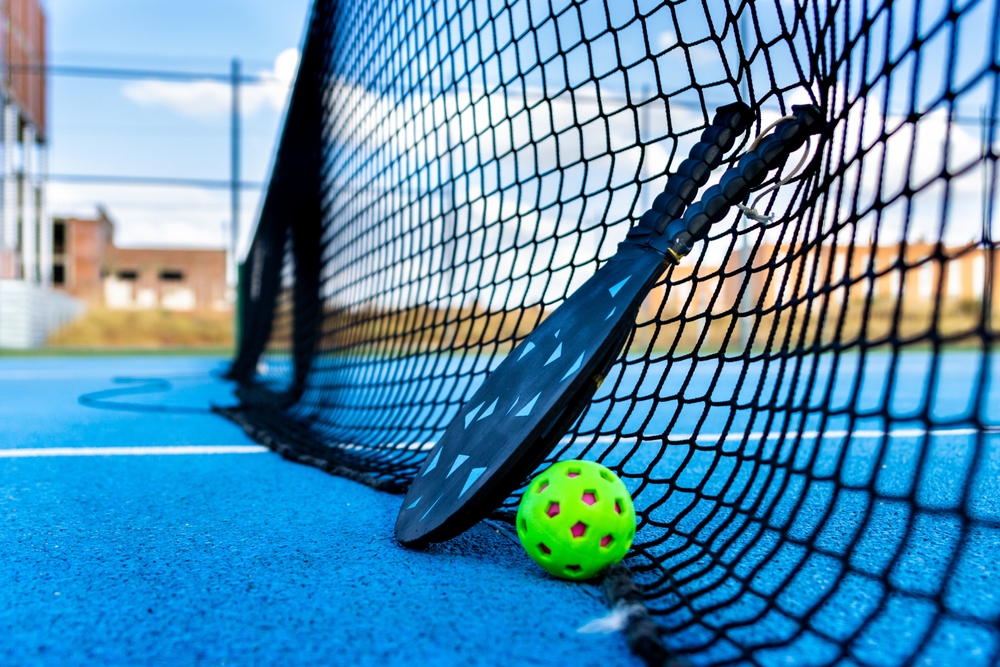
First, the physical accessibility is unmatched. The court is compact—roughly a quarter the size of a tennis court. This dramatically reduces the required sprinting and lateral movement, preserving knees and hips. The paddle is light and forgiving, easier to wield than a tennis racquet. The ball itself, a perforated plastic wiffle ball, is slow and floaty, creating longer, more participatory rallies from the very first game. The serve is underhand, eliminating the stressful, overhead torque that troubles so many senior shoulders. It is, in essence, a sport engineered for sustainable, lifelong play.
But to call it merely “easy” is to miss its brilliance. The second pillar is mental and strategic engagement. Pickleball is often described as a physical game of chess. The initial joy of simply keeping the ball in play quickly evolves into a fascination with strategy. The “kitchen” or non-volley zone at the net introduces a layer of tactical depth. Should you “dink” the ball softly into this zone, forcing your opponent to hit upward? When do you unleash a passing shot? The game rewards patience, placement, and partnership over brute power. It is a delightful cognitive workout that keeps the mind sharp, requiring focus, anticipation, and gentle cunning. For a generation that has spent a lifetime solving complex problems, it offers a playful new puzzle.
The Social Catalyst: Building Communities on the Court
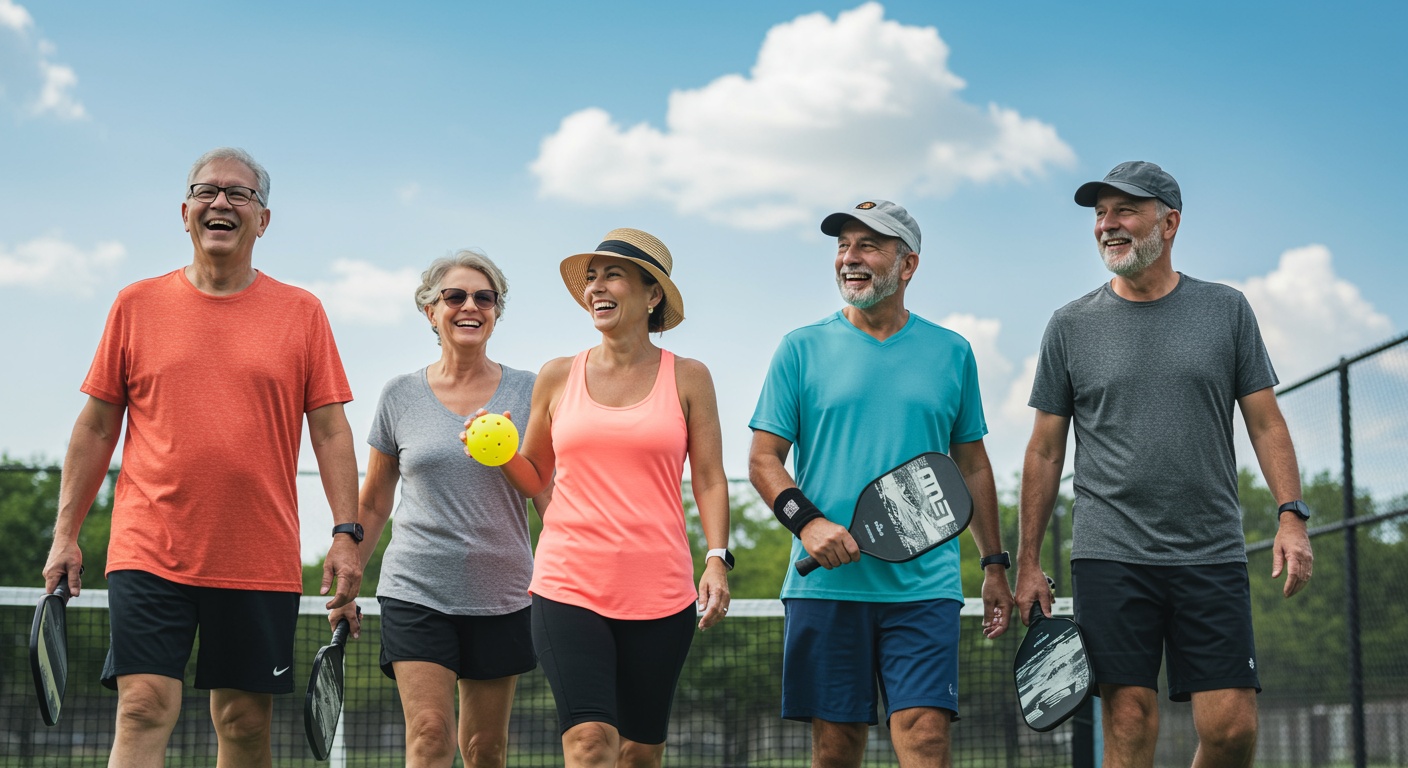
Perhaps the most profound impact of pickleball is not on the body, but on the social fabric of senior life. In a phase where routines can shrink and social circles sometimes dwindle, the pickleball court has emerged as a powerful, vibrant community hub.
It is the new town square. At 7 AM, you will find groups of retired professionals—former CEOs, doctors, engineers, artists—shedding their titles ready for a game. The court is a great leveller. Hierarchies dissolve in the face of a tricky spin serve. A retired bank manager partners with a former professor, strategising as equals. Long-married couples find a new activity to share, while singles find a welcoming, low-pressure environment to forge new friendships.
The laughter is constant and genuine. There’s the shared groan at a missed easy shot, the triumphant cheer for a well-placed winner, and the good-natured arguments over a line call (often resolved with a “let’s just replay the point”). This post-game ritual is as important as the game itself. The chai and samosas have been joined by healthier, conscious alternatives—almond-date laddoos, fresh fruit bowls, infused waters—but the conversation is richer than ever. Grandchildren’s achievements, travel plans, book recommendations, and yes, the analysis of the morning’s best rallies, fill the air. It combats isolation with shared fun.
Reigniting the Competitive Flame
Let us not mistake this gentle game for a passive one. The competitive spirit that defined so many professional lives has found a glorious, new, healthy outlet. What begins as “fun exercise” often evolves into passionate, friendly competition.
Housing societies now host inter-tower tournaments. Clubs run senior leagues. The focus and intensity during these matches are palpable. “You may have out-negotiated me for forty years,” a friend and former business rival joked with me, “but my backhand slice is finally my ultimate closing argument.” This reignited flame is incredibly motivating. It gives a reason to stay fit, to practice, to improve. It provides goals and a sense of accomplishment that is deeply rewarding. Winning a close doubles match with a partner brings a surge of camaraderie and triumph that is ageless.
A Note of Caution: Playing Smart for the Long Game
With this exciting new activity comes a necessary word of caution. Enthusiasm can sometimes outpace physical readiness. Doctors, particularly orthopaedists and physiotherapists, report a rise in “pickleball elbow,” ankle sprains, and knee strains among new senior converts. The term “pickleball injury” is entering the medical lexicon.
This is not a deterrent, but a call for wisdom. The key is to play smart. A proper 10-minute warm-up of dynamic stretches is non-negotiable. Investing in proper court shoes, not just running shoes, provides crucial lateral support. Listening to one’s body is paramount—knowing when to rest, when to ice a twinge, and when to focus on technique over power. Many clubs are now introducing “senior-specific” coaching clinics that emphasise safe movement and strategy over aggression. The goal is sustainability: to enjoy this beautiful game for years, even decades, to come.
A New Rhythm for a New Chapter
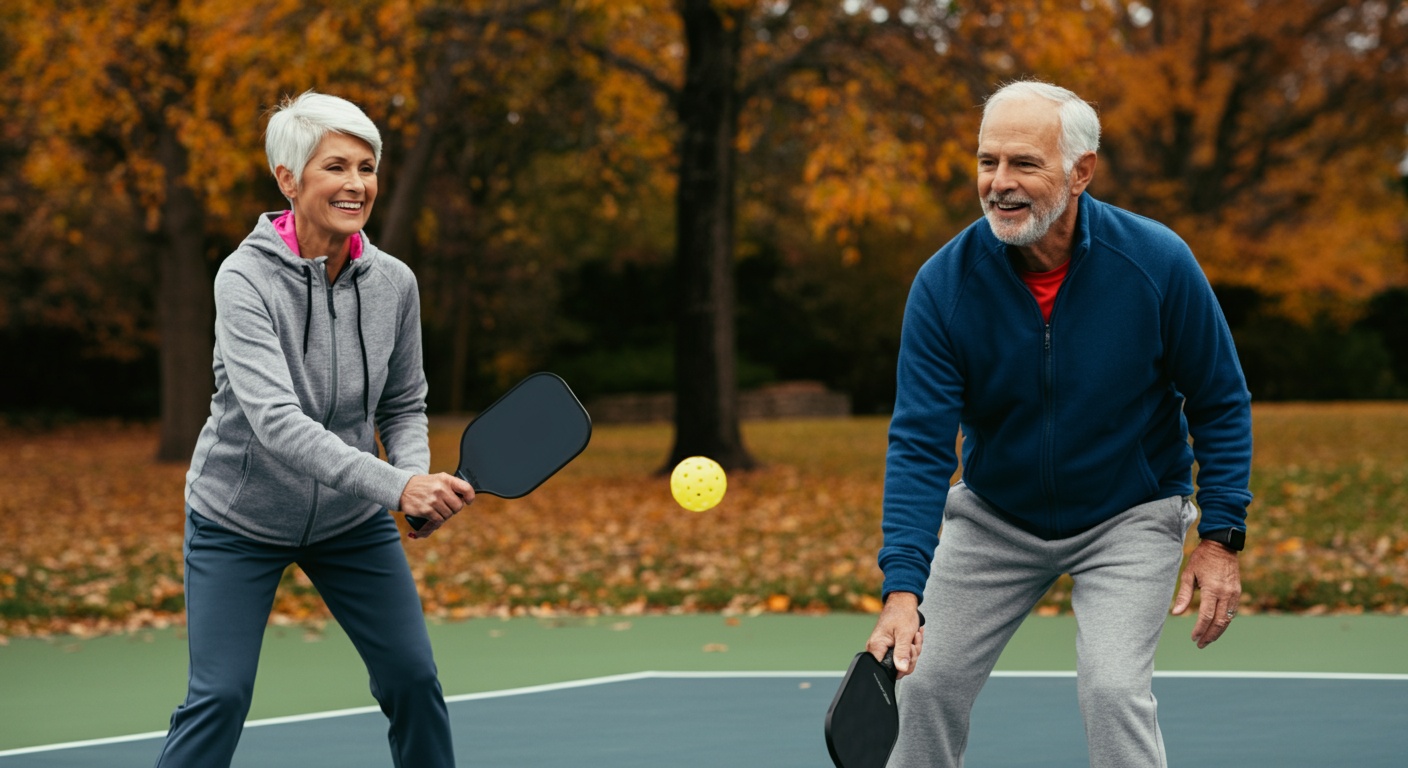
Pickleball has woven itself into the daily and weekly rhythms of senior life. It provides structure and purpose. It’s the reason to be up and out at dawn, to stay hydrated, to maintain flexibility. It has become a non-negotiable wellness appointment, but one booked with friends and filled with laughter.
I see it in the transformed demeanour of peers. The gentleman who found a new friend circle after losing his spouse. The couple who now travels with their paddles, seeking out courts in new cities. The group that collectively lowered their blood pressure and blood sugar readings, crediting the combined effect of regular play and reduced stress.
So, why has this simple game with the silly name (named after a dog, of all things!) become such a powerful force? It fulfills a multifaceted need for the modern senior: the need for gentle physical activity, mental stimulation, deep social connection, and joyful competition. It is a formula for holistic well-being.
In the end, pickleball is more than a sport. It is a celebration of continued vitality. It is a testament to the idea that play is not the opposite of work; it is the opposite of decline. It proves that new beginnings, new skills, and new friendships are always possible. On the pickleball court, we are not defined by our age, but by our spirit—our willingness to try, to connect, and to find joy in the gentle pop-pop-pop of a ball well met. As a spirited octogenarian in Pune told me after a particularly lively game, “For fifty years, I carried a briefcase. Now, I carry a paddle. And let me tell you, the paddle is a great deal more fun.” The revolution, it seems, is just getting started.