





Choosing the right safari destination, as per the season makes all the difference advises Malti Gaekwad
There are almost a thousand wildlife safari parks in our country. Whether you are a first timer like me, or a seasoned wildlife enthusiast, choosing the right safari destination, as per the season makes all the difference. Usually most reserves cover tigers, leopards, elephants, different type of deer, sloth bears, Indian bison – gaur, even rhinos and rare birds. Dense jungles, saal and bamboo forests, river beds, lakes, wetlands, rocky hills and deserts offer varied experiences in different seasons. The most popular National Parks are of course Ranthambore, Bandhavgarh, Jim Corbett, Kanha, Tadoba, Pench, Panna, Jawai (although it is not a structured reserve) Bera, Kabini, Periyar, Madhumalai, Kaziranga and Gir where Safaris can be taken by Jeep and Gypsy and by boat in the Sundarbans area. Selecting the animal you most want to see, you tend to select the destination, unless of course the trip is just an outing with family! If someone is really interested only in birding or bird watching the destination will be selected likewise – places with big lakes and water bodies.
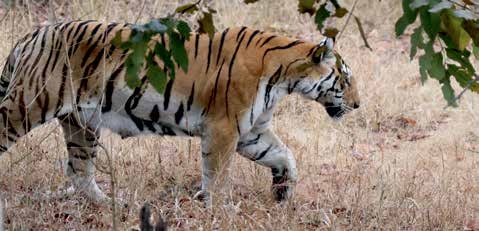
However spotting a tiger remains a favourite. This majestic animal which was once threatened, is luckily, now thriving in the Indian forests. After the success of Project Tiger which was launched in 1973, today there are an estimated over 3000 Royal Bengal tigers in India – and that’s the only species found here.
Most parks remain closed during the monsoon. They are open from October to June, while the best time to see tigers and leopards is April and May. That is when the forests are quite barren and dry, the big cats can be spotted easily….
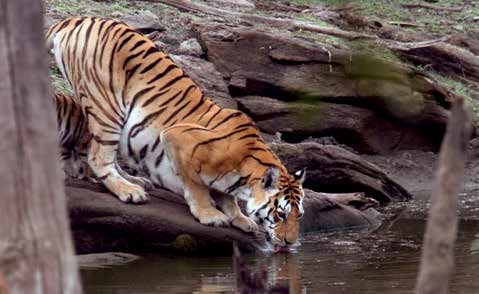
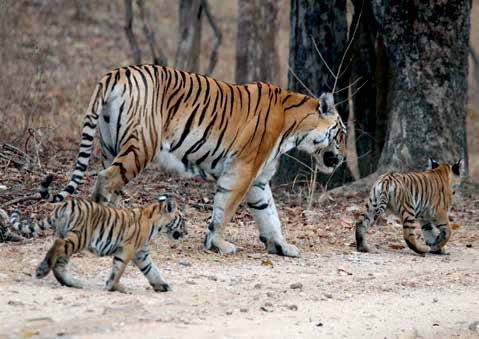
The sure spots are near the water bodies, early mornings and evenings. In the afternoons tigers can be seen sleeping under some dense shade. This is also a season when you get to see mothers with their cubs which are just about 3 to 4 months old.
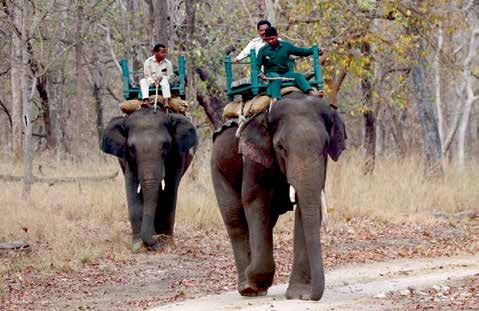
When you go into a Jungle you need to follow certain rules. First and foremost are the instructions of your Safari guide and the driver, which have to be followed very strictly. For one, no stepping off the vehicle inside the park. Remain silent, talk only in whispers. If you keep talking you are likely to miss the alert calls given by monkeys and deer, as they communicate to each other about a predator in that vicinity. These calls are important for visitors too, as they indicate a possible sighting! Playing music also is not allowed. The forest officials and their staff are on a constant patrol through the forest on elephants and come out of least expected places.
Mobile phones are banned at most safari parks, especially tiger reserves. This decision aims to reduce disturbance to wildlife and preserve the sanctity of the forest and prevent overcrowding around sightings. Safaris are meant to give us an opportunity to observe wildlife and in their natural habitat without disturbing them.
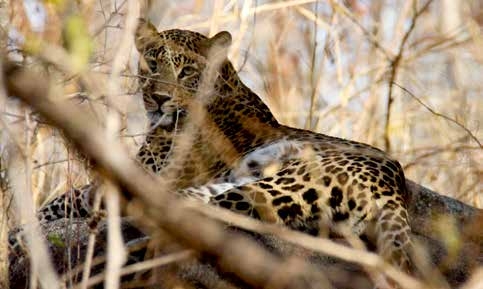
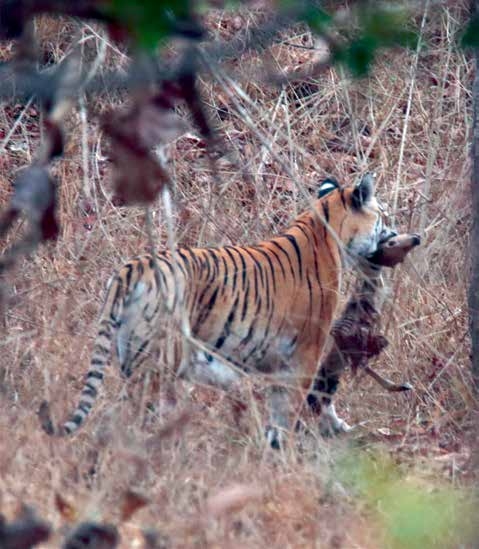
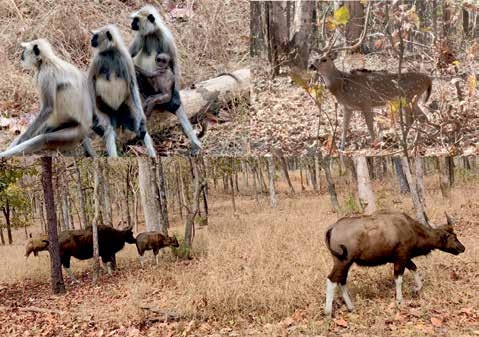
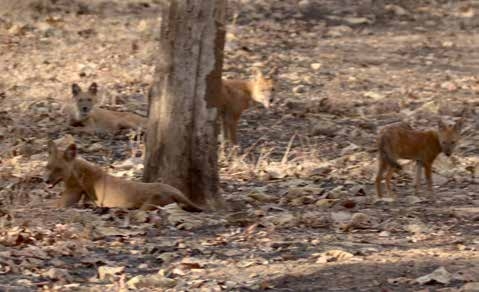
On a recent Safari we were lucky to see so many tigers, male and female with their cubs. We also got to see a female leopard with her two cubs. Blue bull, Indian bisons – gaur, monkeys, langurs, wild dogs called dhole, and jackals. That area also has sloth bear, while we missed seeing one, there are wolves, striped hyenas, foxes, jungle cats, chital – spotted deer, sambar, barasingha (swamp deer) and barking deer.
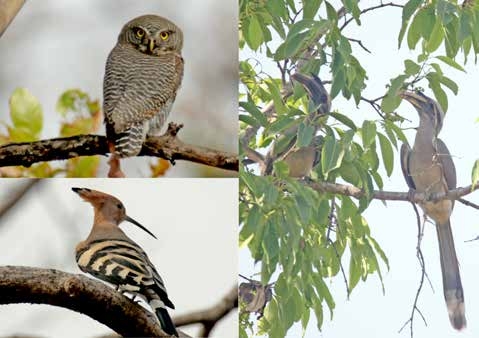
A countless species of birds can be seen in the Indian forests. During our Safari, some of the birds that we saw were – the Indian Roller, Brain Fever Bird, Jungle Owlet, White Eye Buzzard, Black Rumped Flameback, Purple Sunbird, Brahmany Duck, countless Peacocks, different types of Cormorants, Egrets, Parakeets, Herons, Storks, Robbins, Hornbills, Drongos, Kingfishers, Rufous Treepie, Red Vented Bulbul Hoopoe, Brown Headed Barbet, Red Jungle Fowl, Storks, Ibis, Terns, Crested Serpent Eagle.
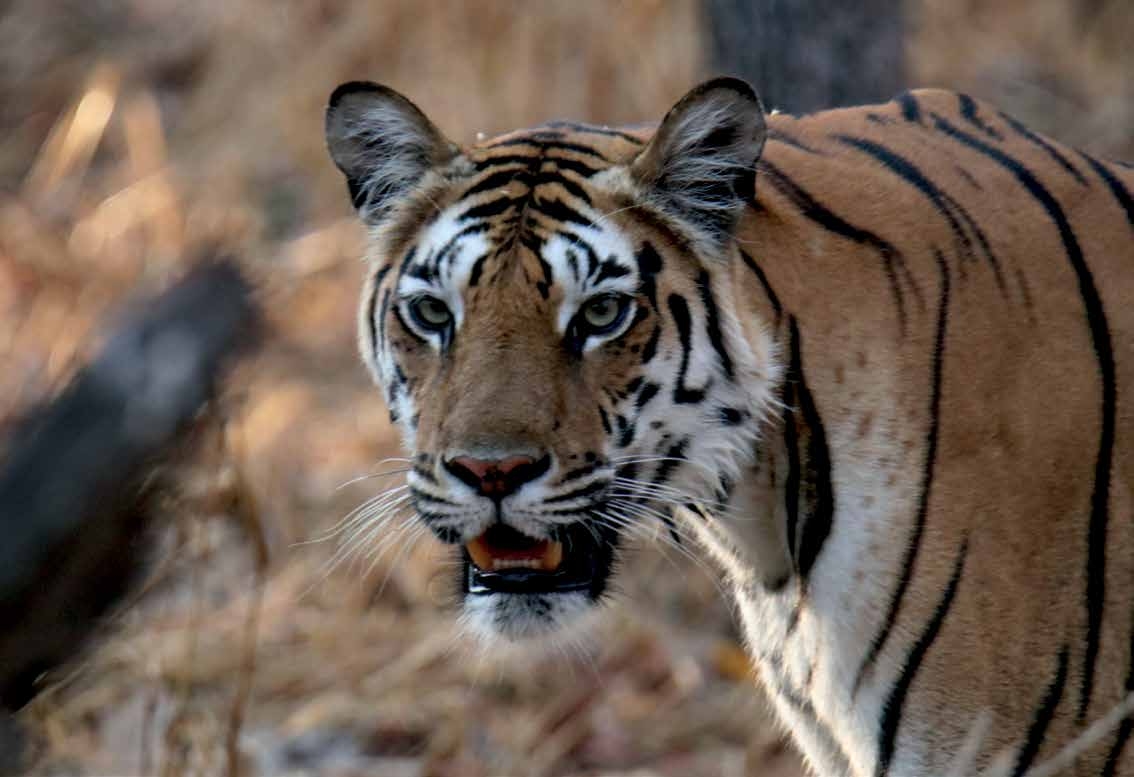
In most parks, apart from numbers, the tigers are also given names – like this one we saw is called Laxmi because of the visible “L” seen on her cheek.
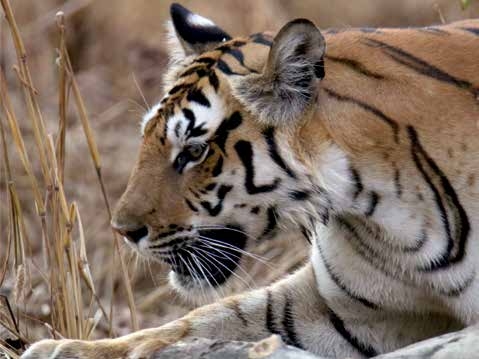
Tigers have a strong and very powerful sense of smell. When a tiger smells a tree it is detecting scent marks left by other tigers. Those scent marks work like unwritten messages for them in the forest – like telling them who passed through the area, a male or a female and how recently they were there. It even tells them if the other tiger is ready to mate. The tiger’s scent glands help them spray their urine on bushes and trees while make marking their territory. The smell, sharp and heavy can linger for days togethr.
THINGS YOU MUST CARRY
A backpack, Water bottle (not plastic) Sunglasses, Cap/hat preferable. Binoculars, all your medicines – there is no pharmacy nearby. Masks are good, as well as sunscreen lotion, the sun can get really hot. Carry full sleeve shirts and no bright colours. A jacket or a wind cheater for early morning safaris and late evenings. No perfumes to be used.
TIPS
* Book well in advance to avoid disappointment. There is always a rush during the season.
* Either you book a package through a tour operator who takes care of everything – transport, permit, permission, bookings etc,
* The other option is that your book /get the Safari permit yourself from the official website of the State’s Forest Department for the Safari you select. Once you get the permit do the rest of your bookings like travel and stay.
* While booking your hotel, request pick-up from the airport or railway station however you are travelling.
* Mostly 3 types of vehicles are available for the jungle safari. Gypsies are most common and best for photographers, (but a little difficult for senior citizens to climb in.) Other options are, a bigger vehicle called Force, which can accommodate 6 tourists. Then, there are buses called Canters, which accommodate about 20 to 22 persons, but the seats cannot be book in advance unless the whole bus is being booked. The bigger vehicles have a disadvantage in terms of mobility as they cannot go on certain narrow or bumpy roads, so their jungle routes are restricted.
* Mobile phones are banned in most safari Park so if you want to take pictures you must carry a camera.
* Most parks have two Safaris in a day. One early morning usually lasting 4 to 5 hours and evening, also roughly of the same duration.
* Once the jeep or vehicle has entered the Safari route no one is allowed to step down not even the driver and guide and mind you there are no toilet halt either.
* You may or may not opt for both morning and evening Safaris in one day it can get tiring, but the routes are different and the forest and its animals behave differently at both time. During the viewing season sightings can happen at any time depending on your luck, route and an experienced guide.
* Most sighting are predictable at the water holes and lakes. However spotting a tiger walking majestically through a bamboo forest is unimaginable!