





Lush green meadows, pine covered mountains and gushing rivers topped with fluffy white clouds and a deep blue sky. All of it dotted with white painted monasteries makes for an ideal holiday for seniors, writes Malti Gaekwad
Bhutan also known as the Dragon Kingdom is purely Buddhist Himalayan region, with unsurpassed scenic beauty, majestic mountains and a vibrant culture. The Kingdom is still regarded as one of the last Shangri-La and is a living heritage of Buddhism. Sandwiched between India, Nepal and Tibet region of China, Bhutan has majestic Dzongs, temples and houses with architecture found no where else in the world.
Lush green meadows, pine covered mountains and gushing rivers topped with fluffy white clouds and a deep blue sky. All of it dotted with white painted monasteries, sum up for a breath-taking view of the countryside.
Bhutan is the ideal place for retired seniors or super seniors to go and have a relaxed holiday. It has the old world charm deeply rooted in Buddhist culture and there are modern hotels and good roads. There is only one airport in Bhutan, it is at Paro. Even that is so small within a valley that it is believed only expert pilots are appointed to fly to Paro as it is really a precision landing!
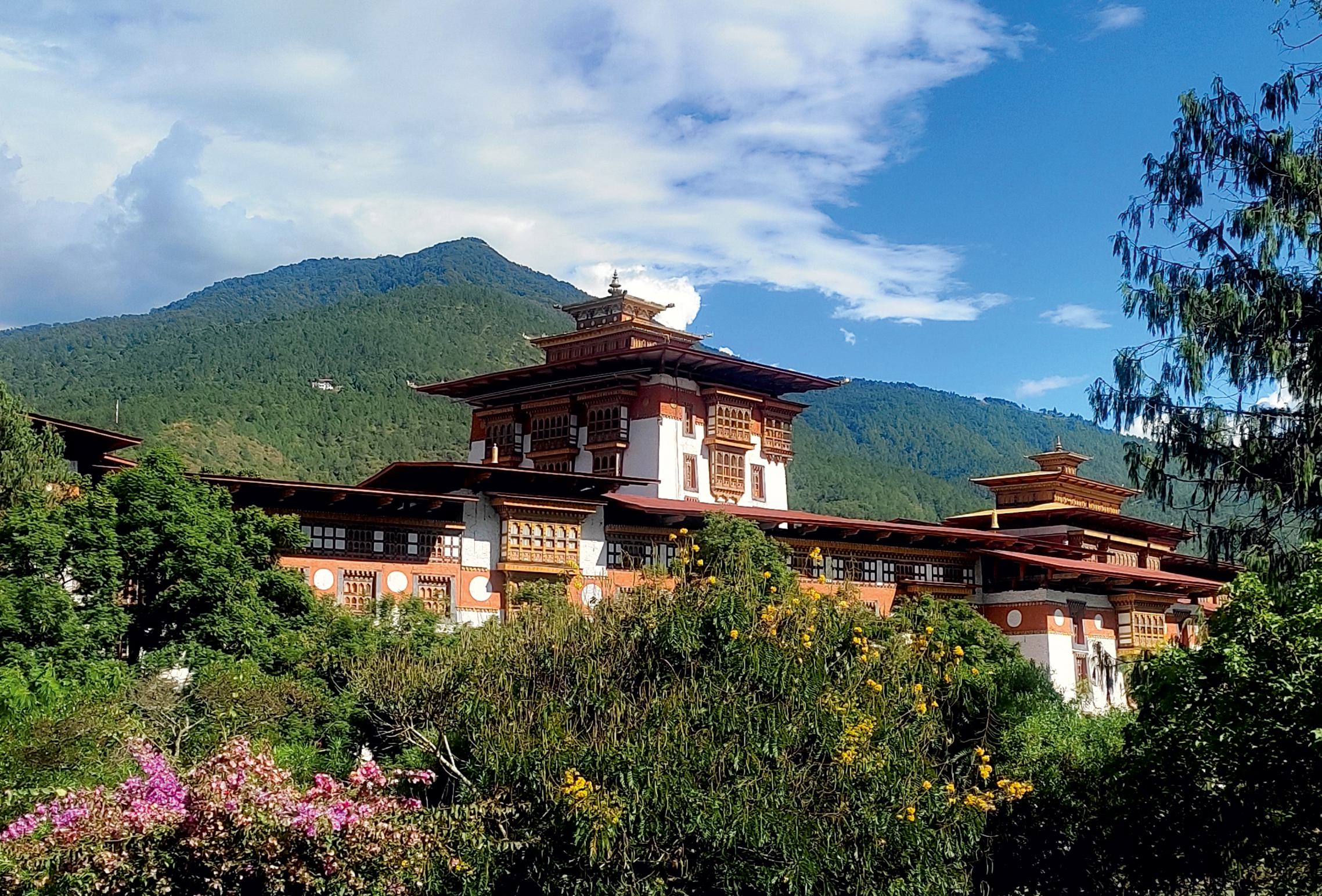
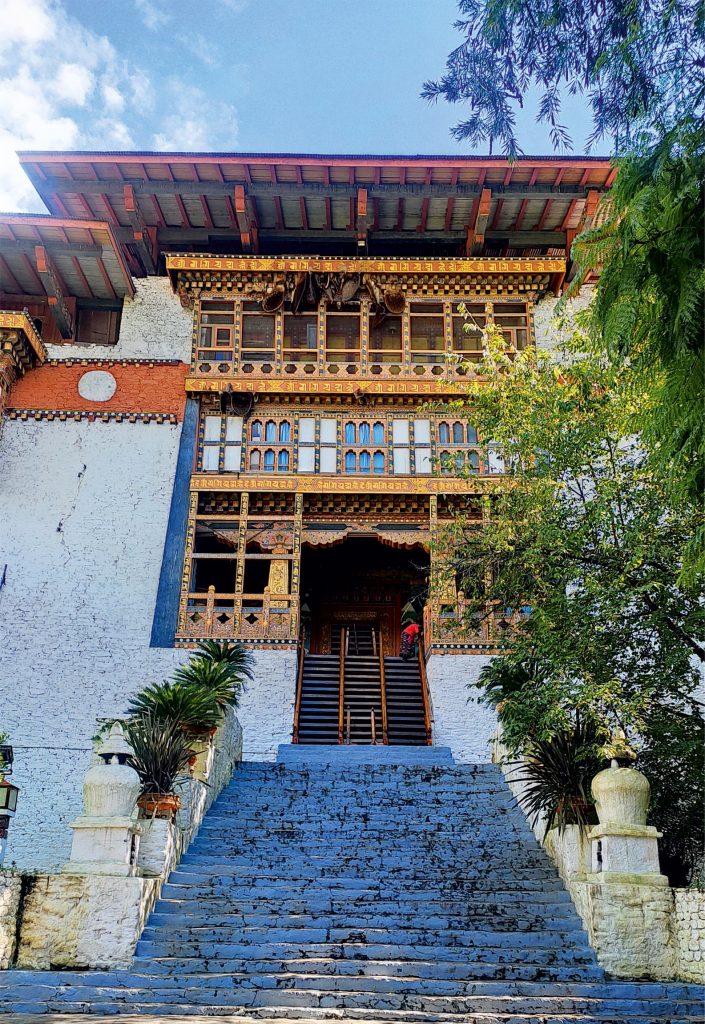
Bhutan is full of monasteries and Dzongs. Most Dzongs are fortified and well situated to function as defence fortresses. Some are high up on the mountains or on a hilltop within a valley or surrounded by rivers. If a Dzong is built on the side of a valley a smaller Dzong or watch tower is built directly uphill with the purpose of keeping an eye on any attackers or invaders. The one at Punakha is a must see. The Punakha Dzong was built in 1637 it is called the Palace of Great Happiness or Bliss. It is the second oldest and the second largest Dzong and one of its most majestic with 45 structures within. The Monastery houses relics for which many wars were also fought. It is located at the confluence of the Pho Chhu (father) and Mo Chhu (mother) rivers in Wangdue Valley. Later it becomes Puna Tsang Chu. The monastery itself is surrounded by flowering trees, which make for a pleasant site during spring. The massive architecture with towering exterior walls surrounding a complex of courtyard includes temples, monk’s accommodation and administrative offices. To visit one has to be prepared to climb up and down steep staircases without any railing which can be a daunting task.
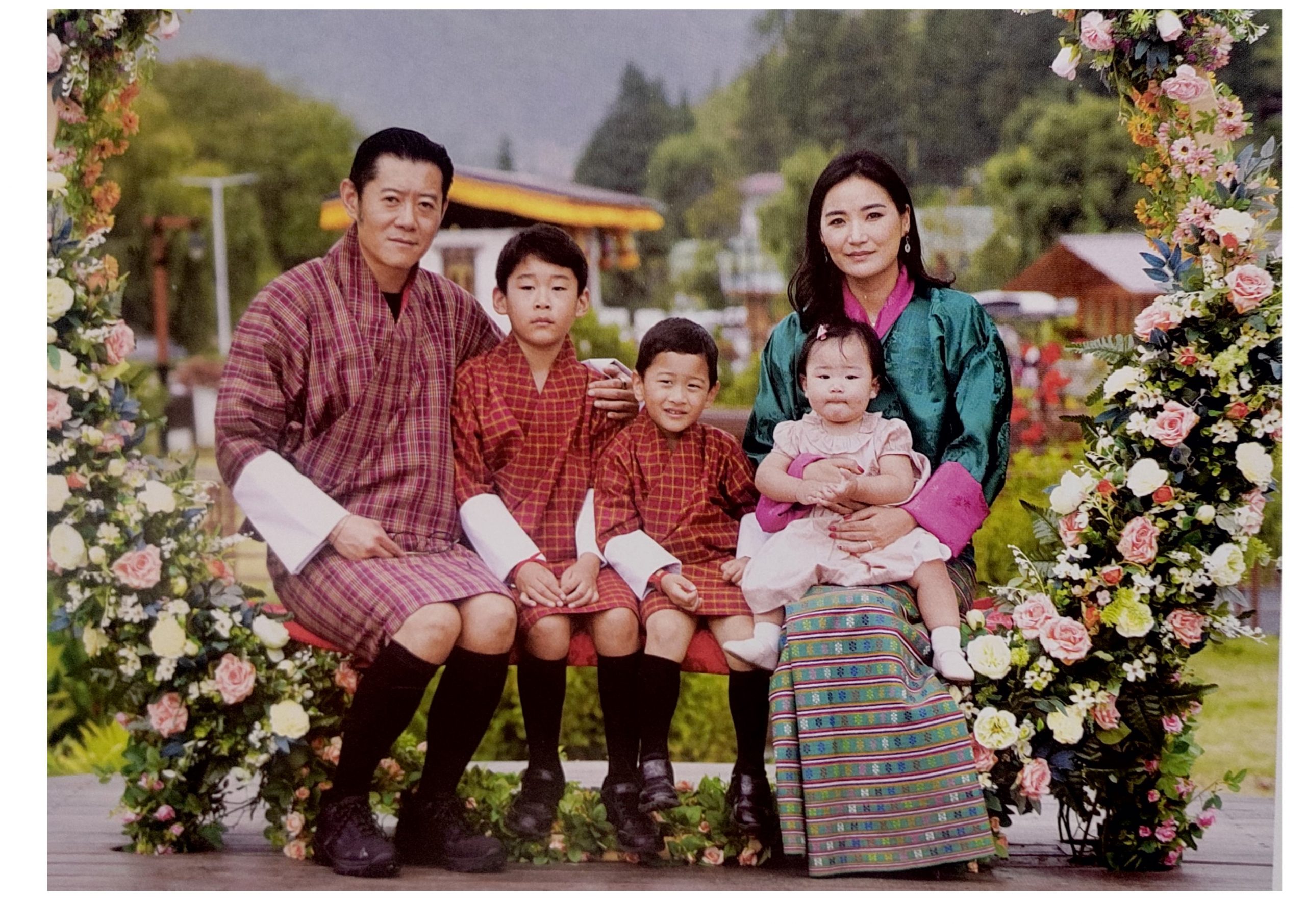
The monasteries are probably the only things apart from their culture that are centuries old or antique. Since 1974 many new things have been built and created by the Royal family, majorly by their fourth King H H Jigme Singye Wangchuk. Currently, the fifth king is ruling and he has three children. They have a custom where the ruling King retires from public life after attaining the age of 60 to make way and guide his heir. The Bhutanese people have great respect for their monarchy. Public places and gardens are adorned by large pictures of the King and his family.
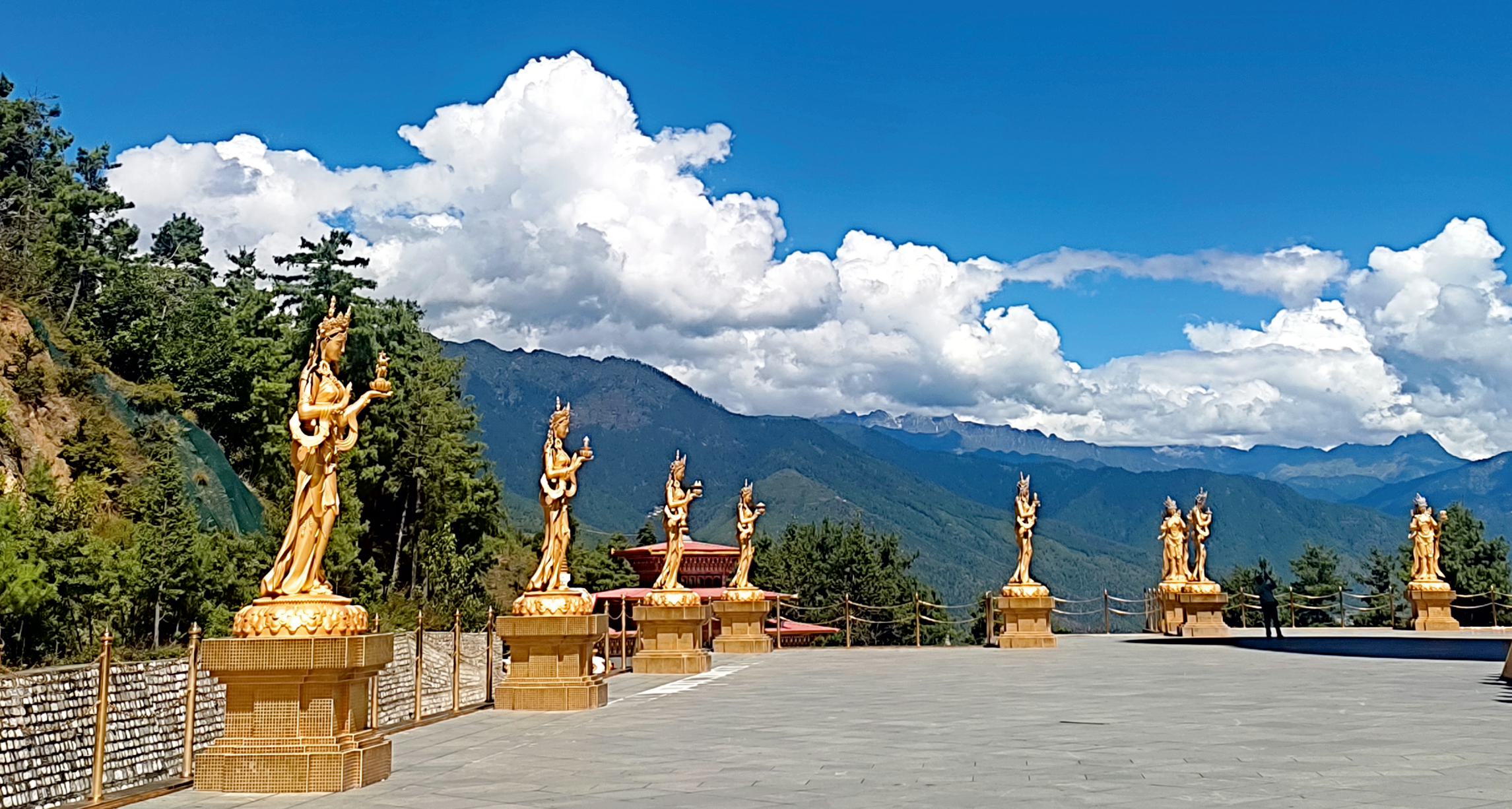
One of the places we visited is Buddha Point, also known as Kuensel Phodrang. On a raised high platform is built a gigantic golden statue of a sitting Sakiya Muni, high up on the mountainside overlooking the town of Thimpu. It is called the ‘Great Buddha Dordenma’. It was built to commemorate the 60th anniversary of the 4th king. The statue houses over 100,000 smaller one gilded in bronze. The main statue is at 177 feet. It is one of the largest Buddha stupas in the world. There are other beautiful and delicately designed statues, which are placed all around the massive platform.
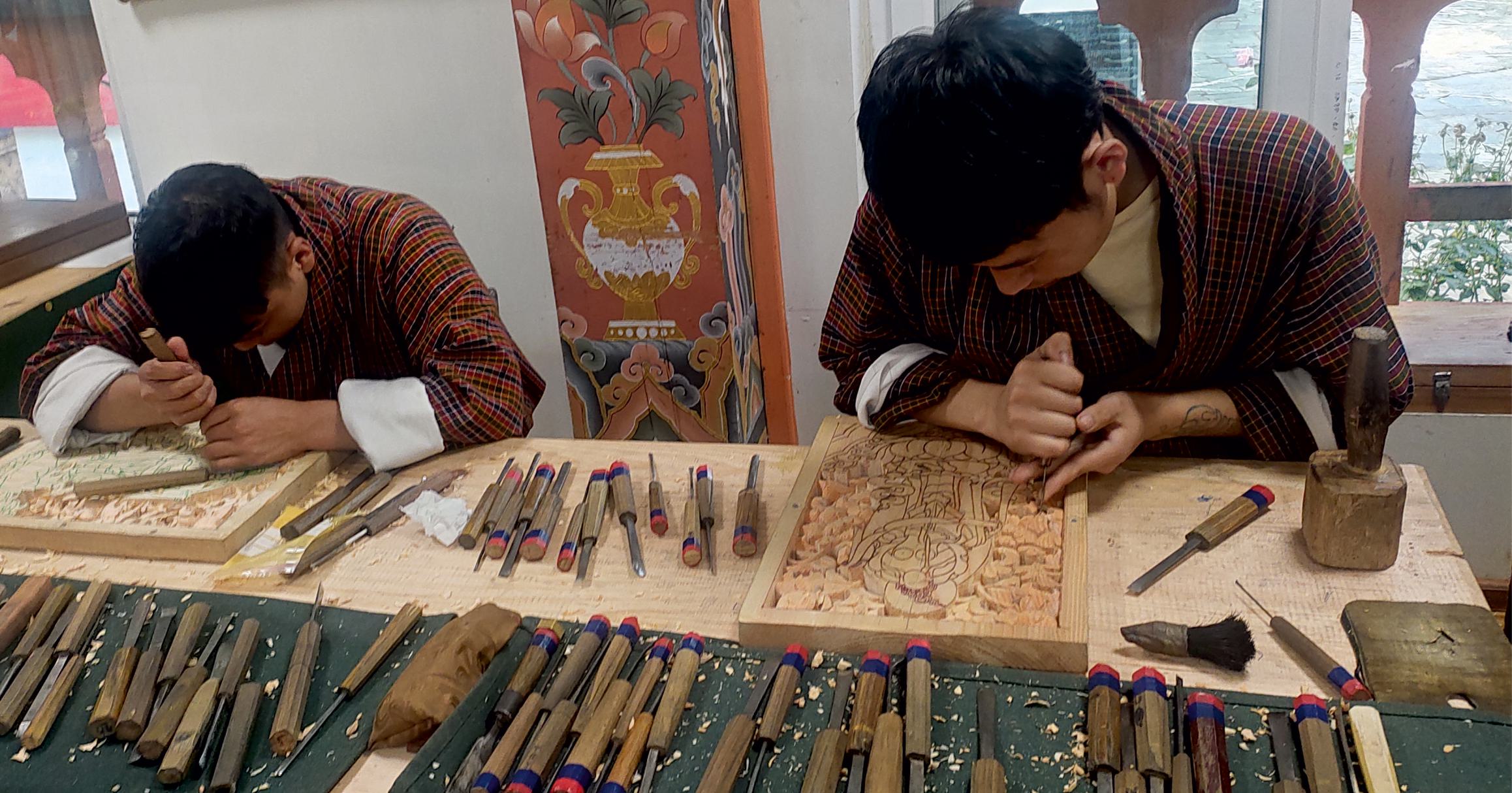
Two very interesting places we visited in Thimphu were The School of Art and Craft and a touristy place called ‘Simply Bhutan’. The school was quite impressive. While classes were going on, we could peep in. Interestingly, the students were being given vocational training in various traditional crafts, which today have great commercial demand.
The second one, Simply Bhutan had an entrance fee of Nu.1000/- . Here we were first given a swig of local wine and told a bit about Bhutan’s history. Then we were shown how they built their houses. Worth a mention here – they have fixed designs and formats and rules for all construction. No one breaks these rules. The exteriors of all buildings are similar to each other and highly decorated with traditional motifs and sacred symbols. There was a small café, where guests were treated to taste some local food. While guests savour these delicacies, folk music is playing and small groups perform various dances. Guests are encouraged to join, learn and enjoy.
Outside in the compound was the archery section. Archery is Bhutan’s National Sport so they give it a lot of importance. Here, a guest is given a chance to try their aim. Most people are unable to make a mark…however, if you do, the attendants, come centre stage and break into an impromptu dance….and the successful guest archer is expected to join the celebration. This was good fun!

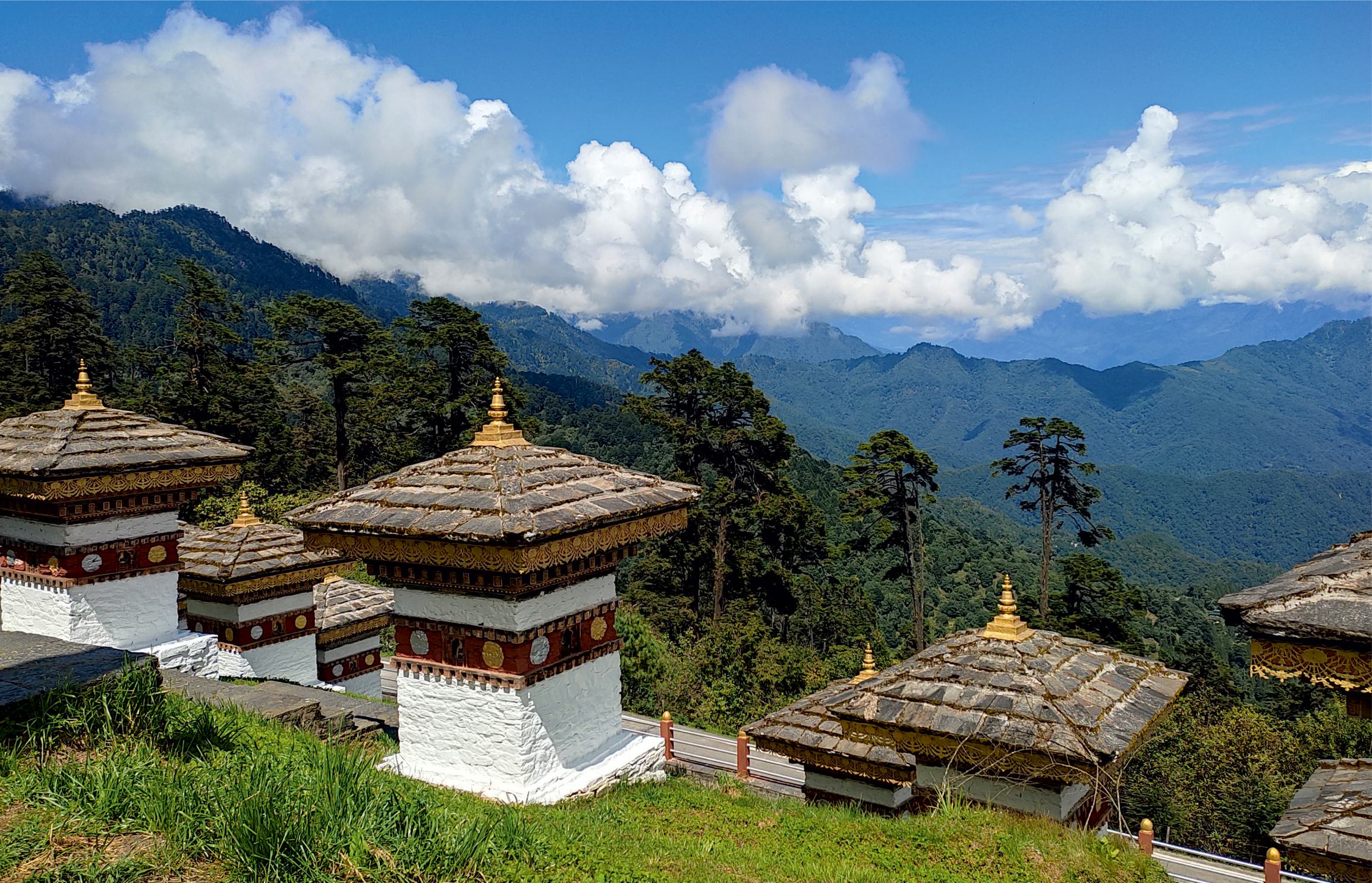
From Thimpu, we travelled to Punakha. Dochula Pass, the highest point, is on the way. It is a long drive on winding roads. Situated at the height of 3080 mts, it gives a fascinating view of the snow-capped mountains on a clear day. A small hill invites you to go around the 108 sacred chortens. These are known as the Druk Wangyal Chortens. Commissioned by the Queen Mother and built in the memory of Bhutanese soldiers who were killed during the Military operation in 2003. The place offers a blend of natural beauty, historical significance and spiritual tranquillity.
Two things the Bhutanese take great pride in, are the Black Neck Crane Conservation Centre and the Takin Park. Black Neck Cranes are migratory birds which come to Bhutan’s wetlands in the Phobijikha Valley in an area call Gangtey. Two black neck cranes were rescued by the locals and are now housed in the aviary. At the Centre you can know more about the birds as well as see a short informative film.
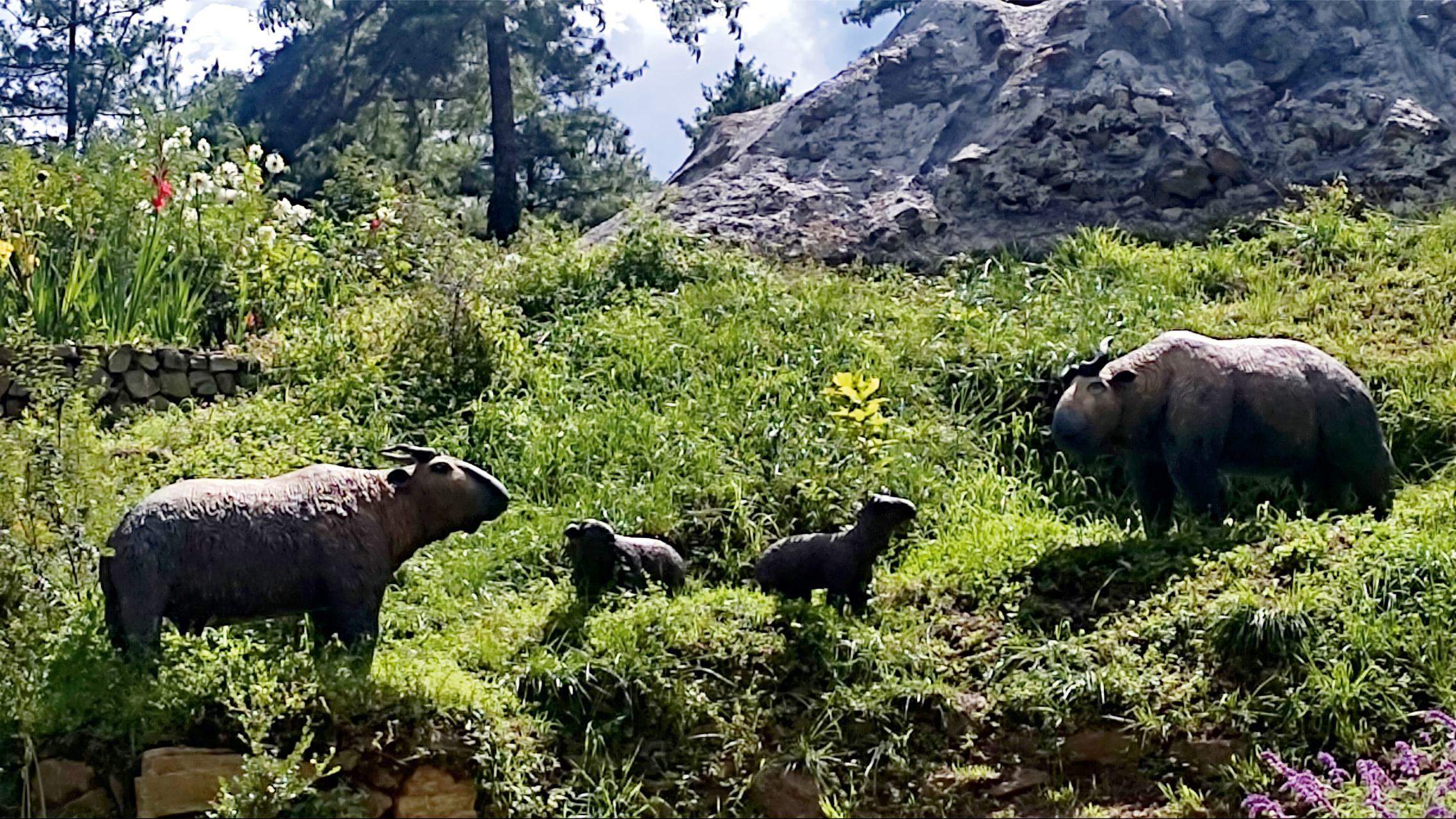
To see a rare animal, go to The Royal Takin Park. Established in 1974, it serves as a sanctuary for Takins. Takin is Bhutan’s national animal. Locally known as Drong Gimtse. Popular in Bhutanese myths and folklore it is believed to have been miraculously created by a Lama long ago, around 15th century, by fixing the head of a goat to the body of a cow giving it a unique appearance. This Park has elevated walkways, so visitors can observe the Takins from above, while the animals move around grazing undisturbed. They are important prey for tigers and the Asiatic wild dogs.
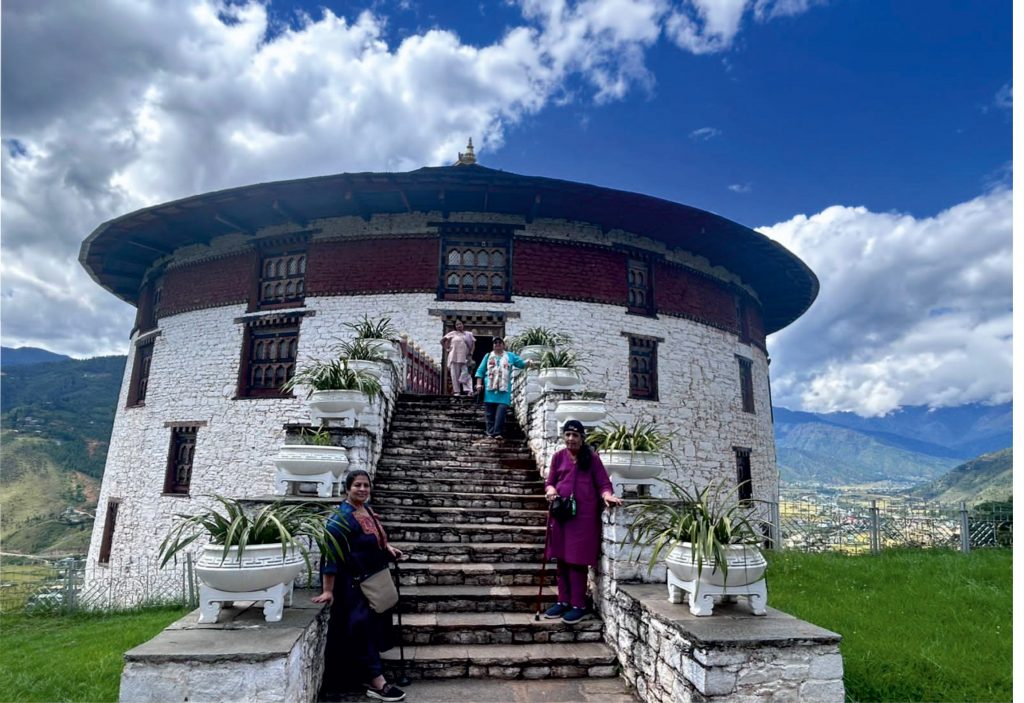
During our last leg we went around the picturesque town of Paro. Most adventurous people head to the Tiger’s Nest Monastery which is an arduous climb of 3 hours, instead we went to see the National Museum – Ta Dong, another Monastery – Rinpung Dzong and do some shopping. The Museum overlooks the Dzong and was a crucial watch tower at one time. Now it’s a seven storey circular museum…four of them are underground. The circular corridors with countless windows provide light, ventilation and all round view. The inner portion houses interesting antiques and ancient priceless items and religious sculptures.