






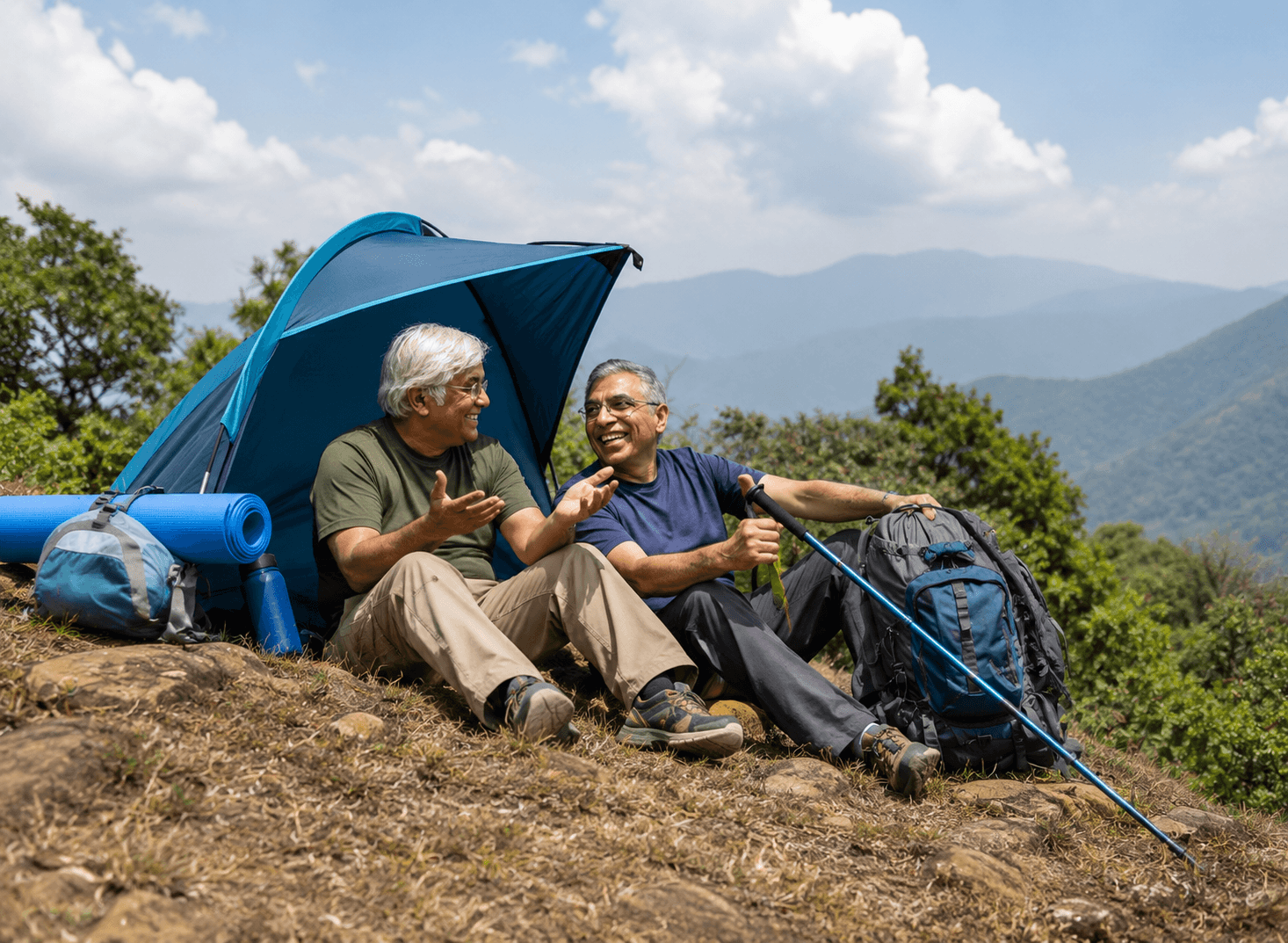
Collect moments, not just passport stamps
There was a time when holidays were precious. Suitcases were packed days in advance, maps were folded carefully, and a camera roll held just 36 photographs, so every click mattered. Travelling wasn’t about racing from one attraction to another. It was about discovering a place, one conversation, one meal and one leisurely stroll at a time.
Today, travel has changed. Social media encourages us to tick off as many destinations as possible. We hurry from airport to hotel, museum to monument, café to selfie spot, often returning home needing another holiday to recover.
This has led to an interesting question: Is travelling more actually helping us enjoy life more?
Science suggests perhaps not.
What Exactly Is Slow Travel?
Slow travel doesn’t necessarily mean travelling slowly by train, although that can certainly be part of it. It is more about travelling with intention.
Rather than spending three days in five different cities, slow travellers might spend ten days in one town. They wander through neighbourhood markets, sit in local cafés, chat with residents, discover hidden gardens and allow themselves to simply be.
The goal isn’t to see everything.
It’s to experience something deeply.
The Psychology of Savouring
Psychologists use the term “savouring” to describe our ability to fully appreciate positive experiences while they are happening.
When we rush from one attraction to the next, our brains are busy planning what comes next. We don’t fully process what we’ve just seen.
Researchers have found that slowing down allows the brain to encode memories more effectively. The sights, sounds, aromas and emotions become richer because we’re paying attention rather than merely passing through.
In other words, slowing down helps memories last longer.
The Happiness Paradox
It seems logical that seeing more places would create more happiness.
Surprisingly, research suggests otherwise.
Behavioural scientists have found that once our schedule becomes too packed, enjoyment begins to decline. Decision fatigue, transport delays, queues and constant planning create mental overload.
This phenomenon is sometimes called the “Paradox of Choice.”
The more we try to squeeze into one holiday, the less satisfying each experience often becomes.
Sometimes fewer experiences create richer memories.
Travel Through All Five Senses
One of the greatest pleasures of slow travel is that it awakens the senses.
Instead of rushing through a city, imagine spending an afternoon simply sitting in a quiet square.
You notice:
- Church bells echoing through narrow streets.
- The aroma of fresh bread drifting from a bakery.
- Children laughing as they chase pigeons.
- Elderly neighbours chatting on balconies.
- The warmth of the afternoon sun on your face.
These are the moments we rarely photograph but often remember for years.
Good News for the Brain
For older adults, slow travel offers another advantage.
A more relaxed pace reduces stress hormones while still providing gentle mental stimulation. Exploring unfamiliar streets, learning a few local phrases or navigating public transport encourages the brain to build new neural connections.
Scientists sometimes refer to this as maintaining cognitive flexibility—keeping the brain active by exposing it to new but manageable experiences.
Unlike exhausting itineraries, slow travel challenges the mind without overwhelming it.
Better for the Body Too
Let’s be honest.
Our knees, backs and energy levels may not appreciate twelve-hour sightseeing marathons quite as much as they once did.
Slow travel naturally includes:
- Gentle walking.
- Plenty of rest breaks.
- Longer meals.
- Better sleep.
- Less rushing with luggage.
Ironically, many people discover they actually see more because they have the energy to notice more.
Meeting People Instead of Attractions
Ask someone about their favourite holiday memory and it often isn’t a famous landmark.
It’s the fisherman who shared his morning catch.
The café owner who remembered their name.
The elderly lady who explained the history of the village church.
The child who insisted they try the local sweet.
Human connections create emotional memories that no guidebook can replicate.
The Joy of Missing Out
We’re all familiar with FOMO—the Fear of Missing Out.
But slow travellers often embrace something different: JOMO, the Joy of Missing Out.
Missing one museum isn’t a tragedy if it means spending an unforgettable afternoon watching boats drift across a harbour with an ice cream in hand.
After all, holidays aren’t examinations. Nobody awards marks for visiting every attraction.
You Don’t Need to Go Far
One of the nicest aspects of slow travel is that it doesn’t require crossing continents.
A nearby hill station.
A quiet coastal village.
A heritage town you’ve never properly explored.
Even spending two leisurely days in your own city as a tourist can offer surprising discoveries.
Sometimes the most memorable journeys begin just a few miles from home.
A Holiday That Lasts Longer
Interestingly, psychologists suggest that anticipating a trip and reminiscing afterwards contribute significantly to our overall happiness.
Slow travel creates more meaningful memories to revisit.
Instead of remembering airports and queues, you remember the tiny bakery with the cinnamon rolls, the park bench where you watched the sunset or the friendly stranger who recommended the perfect cup of tea.
Those memories become souvenirs that never gather dust.
As we grow older, our priorities often shift.
We value peace over pressure.
Quality over quantity.
Experiences over checklists.
Perhaps the greatest luxury in modern travel isn’t flying further or spending more.
It’s having enough time to linger.
To listen.
To notice.
To savour.
Because, in the end, the best journeys aren’t measured in miles travelled or landmarks visited.
They’re measured in the moments that quietly stay with us long after we’ve unpacked our suitcase.
Did You Know?
- Your brain remembers emotional experiences better than busy schedules. Slowing down helps create richer, longer-lasting travel memories.
- Walking at a relaxed pace stimulates creativity. Studies suggest gentle walking encourages reflection, problem-solving and positive mood.
- Italy has a “Slow Cities” movement. The Cittaslow initiative promotes towns that value local traditions, good food, walkability and a slower pace of life.
- You don’t need an expensive holiday. Research consistently shows that meaningful experiences contribute more to lasting happiness than luxury spending.
- Sometimes doing less allows you to experience more. The places we remember most are often those where we simply had time to sit, watch and enjoy life unfolding around us.