






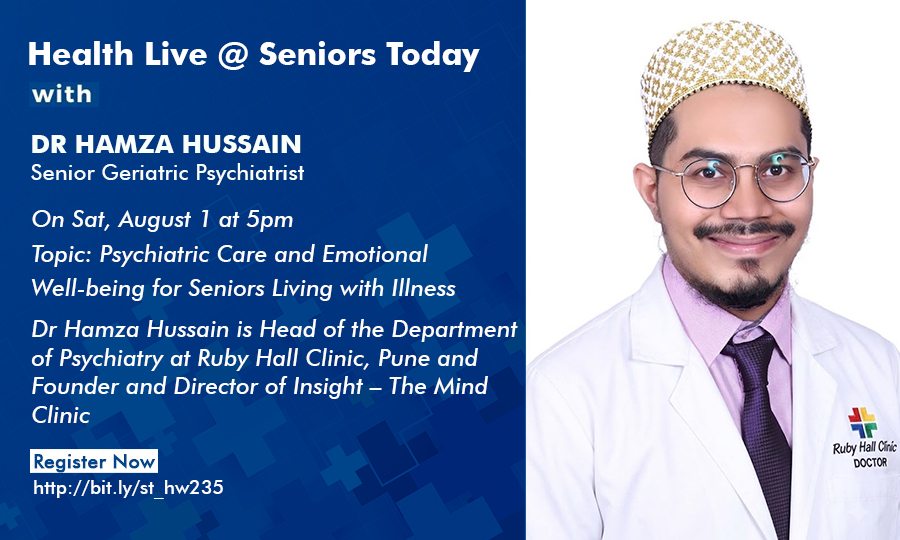
Hosted by Seniors Today | Webinar Date: Saturday, August 1, 2026
Introduction & Speaker Profile
The session was hosted by Pradyuman Maheshwari, Editor of Seniors Today, and featured Dr Hamza Hussain as the guest speaker. Dr. Hussain is a gold-medallist Consultant Psychiatrist, Head of the Department of Psychiatry at Ruby Hall Clinic in Pune, and Director of Insight – The Mind Clinic. He is a pioneer in Integrated Psychiatry in India, specializing in a holistic treatment model that combines traditional psychopharmacology with evidence-based lifestyle medicine, psychotherapy, and nutritional psychiatry to enhance long-term quality of life.
Core Philosophy: Disease vs. Suffering
Dr. Hussain opened the session by clarifying that psychiatry is not merely about treating severe psychosis, but about helping individuals sleep better, worry less, and live meaningfully rather than just existing. He highlighted a crucial distinction in modern healthcare:
- Disease: A physical pathology affecting an organ or body system (e.g., diabetes, heart disease).
- Suffering: The emotional and mental burden experienced in the mind.
Medical advancements excel at managing physical diseases, but healthcare often overlooks the mental suffering that accompanies chronic illnesses. Dr. Hussain emphasized that while growing older is inevitable, living without joy, experiencing excessive anxiety, or feeling constantly lonely is not a normal part of aging.
You can watch the full interactive broadcast on the Seniors Today Psychiatric Care Live Discussion to listen to the extensive clinical insights shared by the doctors during this session.
Key Audience Q&A Highlights
During the interactive segment, the host presented several anonymous questions from the audience, which Dr. Hussain addressed with practical guidance:
- Hallucinations in Seniors: Responding to a query about a senior mother experiencing hallucinations, Dr. Hussain explained that this often stems from late-onset psychosis or dementia-related psychosis. These are serious medical symptoms requiring psychiatric evaluation but are highly treatable with appropriate low-dose antipsychotic medications.
- Bipolar Disorder & Mindfulness: When asked if meditation could treat a husband’s bipolar disorder, Dr Hussain clarified that while mindfulness is excellent for general well-being and managing depressive phases, it cannot serve as a standalone treatment—especially during manic phases when a patient cannot sit to meditate. He also confirmed that psychiatric illnesses are multifactorial, meaning genetics plays a variable role (10% to 80%) alongside environmental and lifestyle factors.
- Psychiatrist vs. Psychologist: Dr. Hussain outlined the distinct roles of these professionals. A Psychiatrist is a medically trained doctor (MBBS + MD/DNB) who evaluates conditions, orders clinical assessments, and prescribes medications. A Psychologist holds academic degrees in psychology and specialises in administering psychological tests (assessments) and conducting talk therapies (such as CBT). He recommended that patients seeking help should ideally consult a psychiatrist first for a baseline evaluation.
- The Danger of Self-Medicating for Anxiety: Addressing a participant who mentioned purchasing anti-anxiety pills like Ativan (Lorazepam) over the counter, Dr. Hussain issued a strong caution. These medications are Scheduled H drugs and can cause chemical dependence if misused. Furthermore, long-term unmonitored use of benzodiazepines can lead to cognitive issues and forgetfulness later in life.
- Supporting a Friend with Dementia: For a viewer whose friend in the US was showing early signs of dementia and becoming socially withdrawn, Dr. Hussain highly commended the friend’s initiative to hold weekly video calls. He advised keeping the individual mentally stimulated, encouraging regular physical movement, involving them naturally in day-to-day decisions without emphasizing their illness, and looking into specialized dementia support groups.
- Coping with the Emotional Weight of Cancer: A 75-year-old participant recently diagnosed with cancer shared their deep depression over feeling like a financial and emotional burden to their adult children. Dr. Hussain offered comforting counsel, reminding the senior not to make assumptions about what their children are feeling. He recommended open, honest communication with the family and advised focusing energy on adhering to the medical routine and staying active to foster personal health, which is ultimately what the children would want.
Dr. Hamza Hussain’s 5 Daily “Prescriptions” for Senior Mental Health
To close his address, Dr. Hussain shared five practical, non-pharmaceutical lifestyle strategies to protect and maintain cognitive and emotional health as a senior:
- Prioritise Movement: Engage in daily physical activity—whether it is walking, jogging, yoga, or mild gym work. Physical movement directly boosts brain chemistry and mood.
- Challenge Your Brain: Never assume you are “too old” to learn. Actively exercise your brain by learning new technologies, studying a new language, solving puzzles, or picking up a hobby.
- Stay Connected and Engaged: Do things that make you feel heard and happy. Spend time gardening, talking to grandchildren, or socializing with peers in a park rather than isolating yourself in a single room.
- Protect Your Sleep: While sleep duration naturally alters with age, getting adequate, structured rest remains foundational to mental stability and emotional resilience.
- Never Hesitate to Ask for Help: If your knees hurt, you see an orthopaedist; if your chest pains, you see a cardiologist. Likewise, if your mind hurts or you feel overwhelmed by loneliness or anxiety, seeking psychiatric help is a sign of wisdom, not shame.