






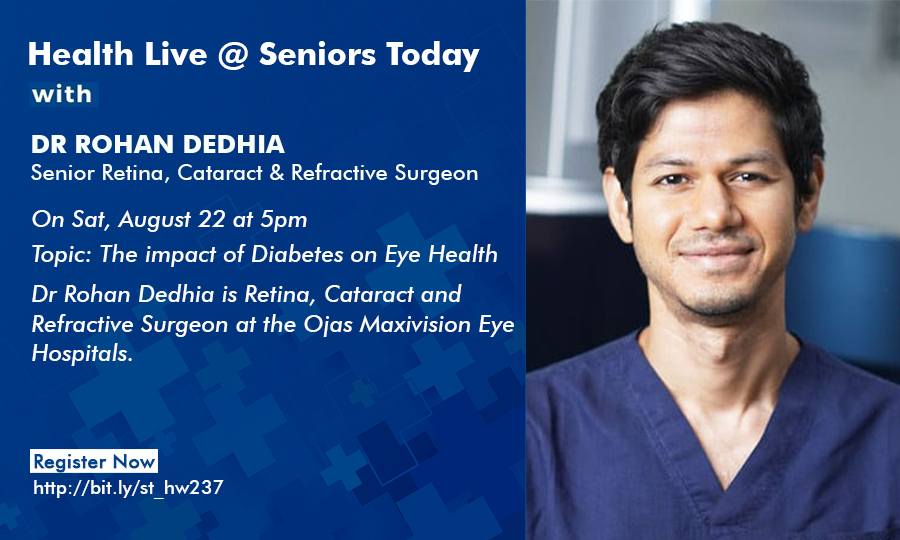
Here is a detailed summary of the webinar conducted on Saturday, August 22, 2026, hosted by Pradyuman Maheshwari (Editor, Seniors Today) featuring Dr. Rohan Dedhia (Senior Retina, Cataract, and Refractive Surgeon, Medical Director at Maxivision Eye Hospital) discussing “The Impact of Diabetes on Eye Health”.
- Introduction & Overview
- The Eye as a Window to the Body: Elevated blood sugar levels affect delicate blood vessels across the entire body, but the microscopic vessels in the eye are often the earliest to show visible damage.
- The Scale of Diabetes in India: India has over 77 million diagnosed cases of diabetes.
- Awareness & Treatment Gap:
- Only ~50% of individuals with diabetes are aware of their condition.
- Of those diagnosed, only about 50% receive structured medical care, and among those treated, only half achieve tight glycaemic control.
You can watch the full interactive broadcast on the Seniors Today The Impact of Diabetes on Eye Health to listen to the extensive clinical insights shared by the doctors during this session.
- How Diabetes Directly Affects Vision & Eye Structures
- Early-Onset Cataracts: While cataracts are a normal part of aging as the natural lens becomes cloudy, diabetes accelerates this process, causing cataracts to develop at a significantly younger age.
- Glaucoma: Diabetes increases the risk of glaucoma by roughly 40%. When the internal fluid drainage channels of the eye become obstructed, intraocular pressure rises, putting pressure on and damaging the optic nerve.
- Diabetic Retinopathy (DR): Long-term high blood sugar weakens and damages the walls of the retinal microvasculature.
- Around 34% of diabetic adults develop diabetic retinopathy, and about 7% develop Diabetic Macular Edema (DME) (fluid leakage causing swelling in the central retina).
- It remains a leading cause of preventable blindness in working-age adults.
- Stages of Diabetic Retinopathy
- Non-Proliferative Diabetic Retinopathy (NPDR):
- Early stage where retinal blood vessels leak fluid or blood, forming microaneurysms and yellow exudates (oedema).
- Reversibility: Often reversible or manageable purely with strict glycaemic control, diet, and lifestyle adjustments without invasive interventions.
- Proliferative Diabetic Retinopathy (PDR):
- Advanced stage where damaged vessels trigger the growth of fragile, abnormal new blood vessels (neovascularization).
- These fragile vessels rupture easily, leading to vitreous haemorrhage (blood clots over the retina) or tractional retinal detachment, which can severely impair central vision.
- Risk Factors & Screening Timelines
- Key Risk Factors:
- Duration of diabetes (risk rises sharply after 15–20 years).
- Poor glycaemic control (high HbA1c).
- Co-existing hypertension, high cholesterol, diabetic nephropathy (kidney disease), anaemia, obesity, or smoking.
- Presence of diabetic foot ulcers indicates advanced microvascular/neuropathic complications elsewhere in the body.
- Recommended Screening Intervals:
- Type 1 Diabetes: First comprehensive dilated retina exam within 3 to 5 years after diagnosis.
- Type 2 Diabetes: Immediate retina screening upon diagnosis (since diabetes may have been present undetected for years), followed by checkups every 6–12 months.
- Known Proliferative DR: Review with a retina specialist every 2 to 3 months.
- Modern Treatment Options & Practical Lifestyle Advice
- Medical & Surgical Interventions:
- Metabolic Control: Primary foundation for preventing disease progression.
- Intravitreal Injections (Anti-VEGF): Quick, painless in-clinic injections (taking just a few seconds) that dry up retinal swelling and resolve haemorrhages.
- Retinal Laser Therapy & Vitrectomy Surgery: Advanced procedures to stabilize leaky vessels and restore retinal anatomy.
- Dietary & Lifestyle Tips:
- Resistant Starch: Consuming cooked rice or rotis that have been cooled overnight (or using jowar/millet flour instead of refined wheat) reduces postprandial blood sugar spikes.
- Post-Meal Walks: Taking a gentle 10-minute walk immediately after meals helps blunt rapid glucose spikes for both diabetics and non-diabetics.
- Audience Q&A Highlights
- Managing Glaucoma in Diabetics (Mr. Satish Kalia):
- Glaucoma requires lifelong management akin to hypertension. Anti-glaucoma eye drops (e.g., Latanoprost) must be taken consistently, and eye pressure checked every 2–3 months to avoid irreversible optic nerve damage.
- Light Flashes in the Eye (Hina Mehta):
- Flashes typically happen during Posterior Vitreous Detachment (PVD) when the aging vitreous gel pulls away from the retina. Any sudden flashes warrant an immediate retina checkup to rule out retinal tears.
- Cataract Surgery Timing (Bomi):
- Modern cataract surgery no longer requires waiting for the cataract to mature (“ripen”). Once blurry vision interferes with daily activities, modern surgical techniques allow safe, early intervention.