






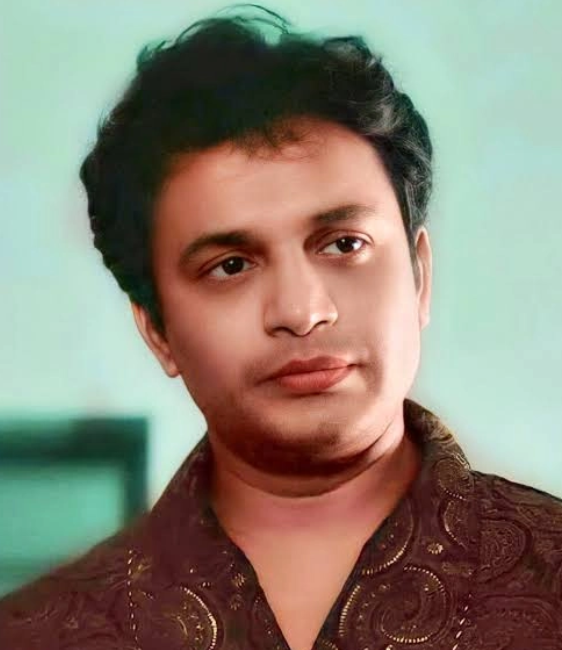
Uttam Kumar was revered by Bengali fans and given the title of Mahanayak, writes Nanda Singh
Uttam Kumar’s stardom in his home state of West Bengal was so huge, that he did not feel the need to move to Hindi cinema in any rush. He did a handful of Hindi films, produced and starred in one. Bengali cinema offered him so much more.
He was almost revered by Bengali fans and given the title of Mahanayak. Born on September 3, 1926, this happens to be his centenary year and the tributes have been pouring in.
Uttam Kumar was considered the definitive ideal of the modern Bengali man—cultured and sophisticated, but also empathetic of the wide swathe of class structures that enabled him to play any character with ease and understanding.
Born Arun Kumar Chattopadhyay into a lower-middle-class family in Ahiritola, North Kolkata, his early years were marked by financial hardship. His father was a projectionist at the iconic Metro Cinema, providing young Arun with an early window into the magic of movies. While working as a clerk at the Kolkata Port Trust during the day to support his family, he learned to act through evening theatre with local amateur groups.
Stardom did not come instantly. His debut film, Maya Dore (1947), in which he was an extra, was unreleased and projects like Drishtidan (1948), Kamona (1949), and Sahajatri (1951) failed at the box-office, leading to the Bengali industry calling him “Flop Master General.”
While his career was stuck, he kept changing his screen names from Arun Kumar Chattophadyay to Uttam Chatterjee to Arup Kumar. In the film Sahajatri (1951), he settled on Uttam Kumar. He was disappointed and even decided to leave the film industry, and continue working at the Port Trust.
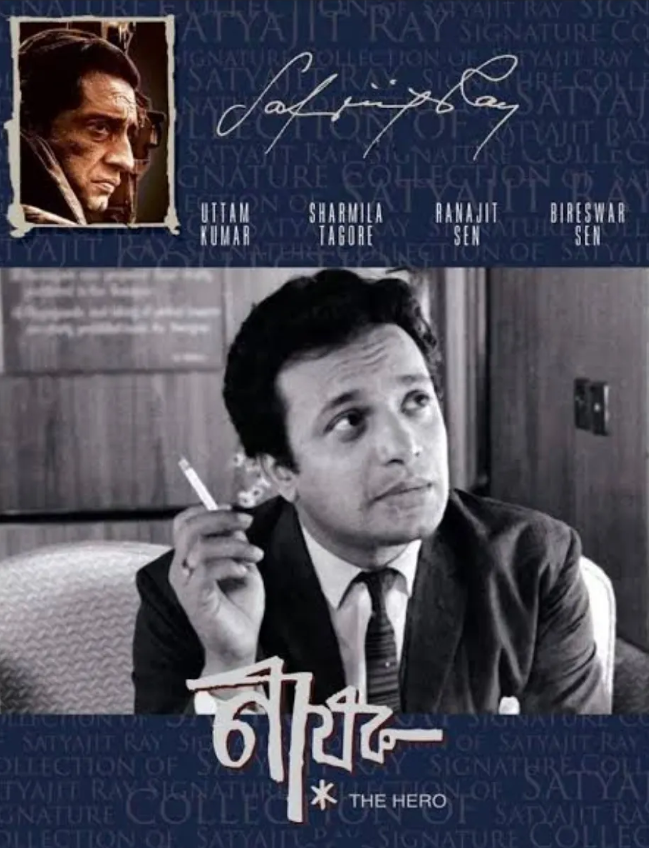
While famous for his romantic image, Uttam Kumar sought roles that challenged his stardom. In Satyajit Ray’s masterpiece Nayak (The Hero, 1966), he played what could be considered a meta-narrative version of himself—Arindam Mukherjee, a superstar struggling with loneliness and guilt on a train journey. Ray later remarked that no other actor in India possessed the regal charisma to pull off the role. He also starred as Byomkesh Bakshi in Ray’s Chiriyakhana (1967).
He won the inaugural National Film Award for Best Actor in 1967 for his contrasting performances in and Chiriyakhana and Antony Firingee (as a 19th-century Portuguese-Bengali folk poet)
He went on to win more National Awards, but as producer for Harano Sur (1957), Saptapadi (1961), Uttar Falguni (1963) and Jatugriha (1963).
As an actor, he was without parallel—from light-hearted comedy in Chhadmabeshi (1971—later remade in Hindi as Chupke Chupke) to gray-shaded, flawed characters in Stree (1972) and Sanyasi Raja (1975), he demonstrated remarkable dramatic elasticity.
He was also an accomplished director, producer, screenwriter, singer and music composer—that makes him stand out amidst other stars, so concerned with their image, that they were trapped in it. Uttam Kumar directed acclaimed films such as Sudhu Ekti Bochor (1966), Bon Palashir Padabali (1973), and Kalankini Kankabati (1981).
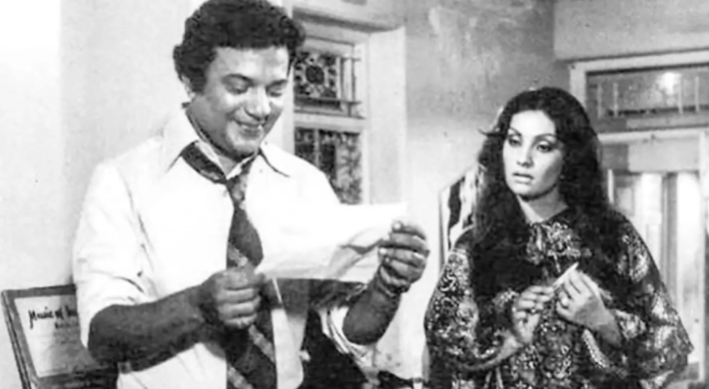
He produced national award-winning films like Harano Sur (1957) and Saptapadi (1961) under his production banner, also the Hindi version of the Bengali Agni Pariksha (1954), that turned out be a financially ruinous proposition. However, he later found critical acceptance in Hindi cinema through films like Gulzar’s Kitaab (1977) and Shakti Samanta’s hit Amanush (1975).
As a music composer, he worked on soundtracks for films like Kaal Tumi Aleya (1966) and Sabyasachi (1977).
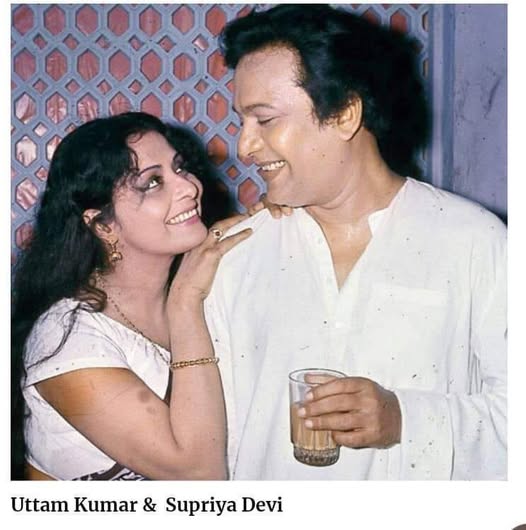
His personal life was always in the public eye. Married to Gouri Devi in 1948, he later separated and lived with actress Supriya Devi until his death.
By the mid-seventies, Uttam Kumar’a career began to wane as his films like Hotel Snow Fox, Anandamela, Mombati and Chander Kachhakachhi (all released in 1976) did not do well. There were hits too, like the action thriller Banhishikha (1976), Sei Chokh, Nidhiram Sardar.
After a few years of ups and downs, in 1980 Dui Prithibi was released and turned out to be the film released during his lifetime. After his death some films were released; one of them Ogo Nadhu Sundori (1981) was a huge hit. In 1982 a Hindi film, Desh Premee was released in which he had an important supporting role. His last released film in 1987 was also a Hindi film Mera Karam Mera Dharam in which he had a brief role.
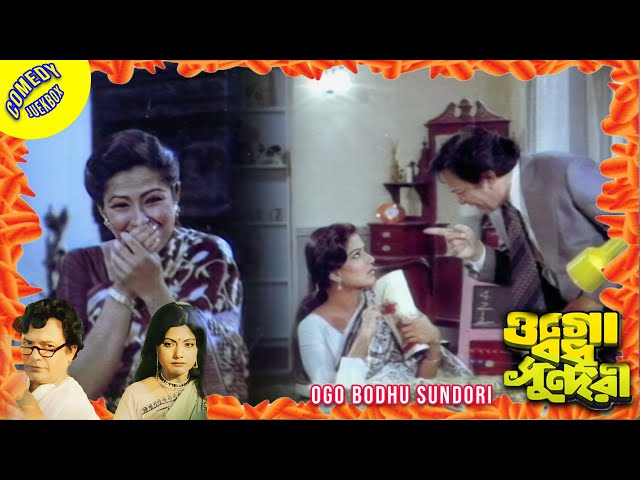
On July 24, 1980, while shooting for the film Ogo Bodhu Sundari, Uttam Kumar suffered a fatal heart attack at the age of 53. His funeral in Kolkata saw thousands of grieving fans line the streets, bringing the city to a standstill.
Decades after his passing, the Mahanayak remains an unmatched cultural icon. The Tollygunge Metro Station in Kolkata was renamed Uttam Kumar Metro Station in his honour, and the West Bengal government presents the annual Mahanayak Samman awards to recognize cinematic excellence—a testament to the actor’s timeless charisma.
Top Five Films of Uttam Kumar
The Mahanayak was not just talented, he was also very versatile, comfortable in any film, any role.
A pick of his top five out a many memorable films.
1.Nayak (1966)
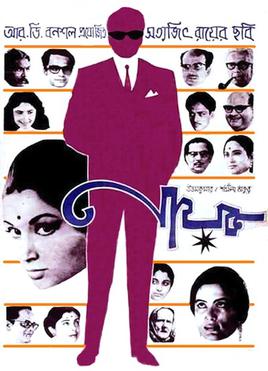
Director: Satyajit Ray
Ray wrote the film specifically for Uttam Kumar, keeping in mind his star status. He played
Arindam Mukherjee, a superstar grappling with internal insecurity, loneliness, and guilt. Set entirely during a train journey from Kolkata to Delhi, the narrative unravels through a series of introspective interviews with a straightforward journalist, played by Sharmila Tagore. It is considered one of his finest performances, as it blurs the line between his real-life superstardom and his fictional persona, which he handled with subtle emotional shifts
2. Saptapadi (1961)
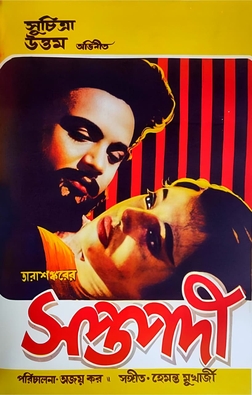
Director: Ajoy Kar
This romantic drama was set during World War II, and follows Krishnendu, an orthodox Hindu medical student who falls in love with Rina Brown, an Anglo-Indian Christian classmate. Separated by religious barriers and parental disapproval, their paths cross years later in a military field hospital under dramatic circumstances. It shows why the pairing of Uttam Kumar and Suchitra Sen was such a hit.
3. Harano Sur (1957)
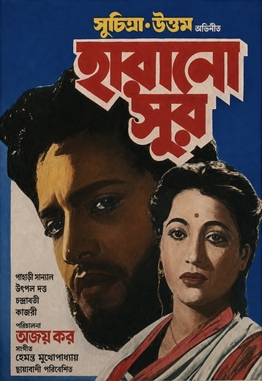
Director: Ajoy Kar
Co-starring Suchitra Sen, the romantic drama was loosely inspired by the Hollywood classic Random Harvest. Uttam Kumar plays Alok, a wealthy industrialist who suffers amnesia after a train accident. He falls in love with a doctor (Sen) who helps him heal, but a subsequent accident restores his memory while erasing his recent past with her. The success of this film cemented his position as the finest romantic lead of post-independence Indian cinema.
4. Antony Firingee (1967)
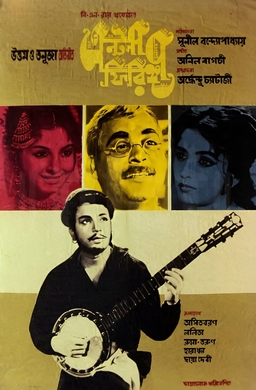
Director: Sunil Banerjee
Based on the life of Hensman Anthony, a 19th-century Portuguese poet-singer who made Bengal his home, embraced its culture, and became a master of Kavigan (folk music duels) the film won for Uttam Kumar a National Film Award for Best Actor (alongside Chiriyakhana) for this performance. His portrayal of a foreigner’s deep passion for Bengali folk tradition and music demonstrated his broad dramatic range beyond modern urban roles.
5. Bhranti Bilas (1963)
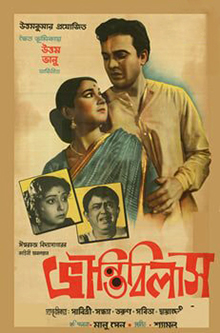
Director: Manu Sen
This comedy of errors co-starring Bhanu Bandopadhyay and, Sabitri Chatterjee was Based on Ishwar Chandra Vidyasagar’s play (adapted from Shakespeare’s The Comedy of Errors), the plot is about two pairs of identical twins separated at birth, leading to widespread confusion.
Uttam Kumar played a dual role, displaying impeccable comedic timing and physical comedy alongside legendary comedian Bhanu Bandopadhyay.