






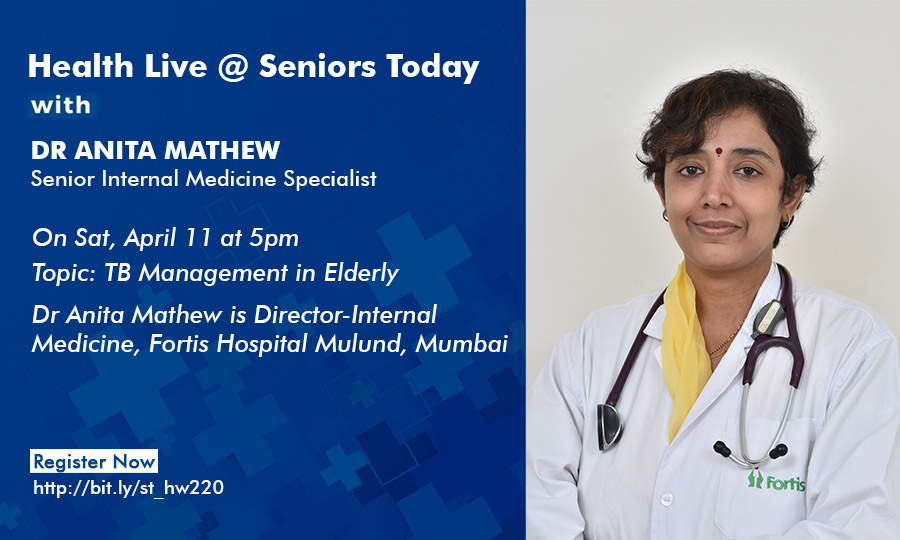
In a detailed health Live@ Seniors Today Webinar, recorded on 11 April 2026, leading infectious disease expert Dr Anita Mathew has sounded the alarm over the management of tuberculosis (TB) among the ageing population. While often perceived as a disease of the past, Dr Mathew emphasised that senior citizens remain at a significantly higher risk due to a combination of declining immunity and complex pre-existing health conditions.
Dr Anita Mathew, Director-Internal Medicine at Fortis Hospital Mulund brings with her years of dedicated service in internal medicine, especially in the treatment of patients with diseases including Covid-19, Tuberculosis, Hepatitis C, and certain forms of Pneumonia. Dr Mathew underwent rigorous training in Thailand in the domain of HIV/AIDs, one of the most long-term infectious diseases afflicting mankind. The hands-on experience she gained in managing emergencies in immuno-compromised patients and in handling infectious diseases and epidemics has stood her in good stead over the years.
A Disease Beyond the Lungs
Tuberculosis, an airborne infection caused by the bacterium Mycobacterium tuberculosis, is traditionally associated with respiratory issues. However, Dr Mathew clarified that while the lungs are the primary entry point, the infection is far more versatile than many realise.
The disease is classified into “open” cases, where bacteria are present in the sputum and easily transmissible, and “non-open” cases. Crucially for the elderly, TB can migrate beyond the respiratory system, affecting the heart, brain, eyes, skin, and kidneys.
The “Immunosenescence” Factor
The heightened vulnerability of seniors is driven by a biological process known as immunosenescence—the natural ageing and weakening of the immune system. This, combined with physiological changes such as reduced lung capacity and the weakening of chest muscles, makes the elderly a “prime target” for the bacterium.
The risk is further compounded by:
- Co-morbidities: Pre-existing conditions such as diabetes, asthma, and COPD.
- Medical Treatments: The use of immunosuppressant drugs for conditions like rheumatoid arthritis.
- Under-nutrition: A lack of protein, which Dr Mathew identified as a critical risk factor for seniors across all demographics.
Modern Challenges in Diagnosis
Detecting TB in older patients presents unique challenges. Standard symptoms to watch for include a persistent cough lasting over three weeks, breathlessness, and a characteristic “evening rise” in body temperature.
However, Dr Mathew warned that symptoms can be organ-specific and easily misdiagnosed. For instance, brain TB may manifest as headaches or altered mental states, while kidney TB often mimics recurrent urinary tract infections.
She noted that traditional diagnostic tools, such as the Mantoux skin test, are increasingly considered obsolete for the elderly as their immune systems may not produce a detectable response. Instead, modern medicine is prioritising microbiological diagnosis and PCR-based techniques to identify bacterial DNA and screen for dangerous drug-resistant strains (MDR-TB).
Prevention: The Three Pillars
Dr Mathew concluded her briefing with a call to action for caregivers and seniors alike, proposing three pillars for a healthy immune system:
- A balanced, protein-rich diet.
- Regular physical exercise.
- Minimising emotional and mental stress.
Environmental factors also play a pivotal role. Dr Mathew advised that quitting smoking and alcohol is essential, alongside ensuring regular outdoor activity and exposure to sunlight. For those in long-term care facilities, she stressed that both staff and residents must undergo rigorous screening at the first sign of symptoms.
While latent TB remains common in the general population, Dr Mathew’s message was clear: vigilance and early intervention are the most effective weapons in protecting the elderly from this resilient threat.