

Five decades later, Deepa Gahlot revisits standout Hindi and Hollywood cinema that defined a remarkable moment in storytelling.
The year 1976 continued the lucky streak of the previous year, and had a mix of blockbusters, as well and art and middle-of-the-road releases. Here’s a pick of 10 noteworthy films of the year:
Arjun Pandit:
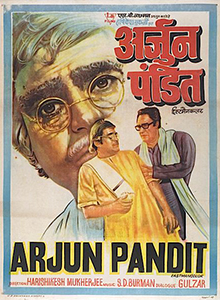
Hrishikesh Mukherjee directed this heartfelt drama of reformation and redemption, based on a Bengali novel by Balai Chand Mukhopadhyay. Sanjeev Kumar, who won a Filmfare Award for Best Actor, played a feared enforcer for the local zamindar, who, under the benign influence of a doctor (Ashok Kumar), gets an education and becomes Arjun Pandit.
Balika Badhu:
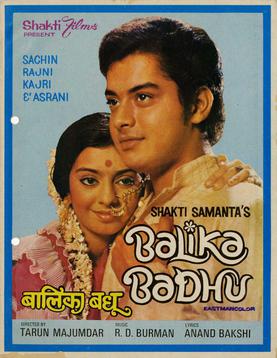
A small and sweet romantic drama directed by Tarun Majumdar, based on a Bengali novel by Bimal Kar, starred Sachin Pilgaonkar and Rajni Sharma as a young couple that grows from naivete to maturity to understand the true meaning of marriage. RD Burman’s mellow music included the evergreen hit, Bade Achche Lagte Hain.
Charas:
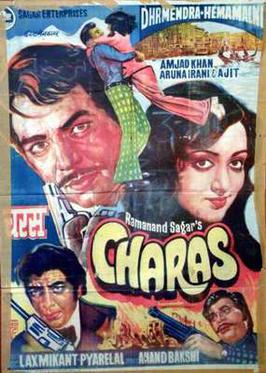
Ramanand Sagar’s extravagant action thriller was shot on beautiful locations in Europe, and was one of the first to focus on drug smuggling and international intrigue. Dharmendra played a man who teams up with the police to smash the gang of villain Kalicharan (Ajit), and find his missing sister. Hema Malini played the female lead; Laxmikant -Pyarelal’s music had songs like Aaja Teri Yaad Aayi and Kal Ki Haseen Mulaqaat Ke Liye.
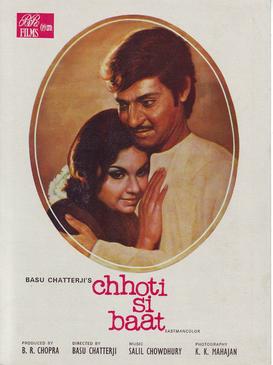
Chhoti Si Baat:
Basu Chatterjee had two hits that year, this one and Chit Chor, both starring Amol Palekar. In this one, he plays a shy man, who has to take lessons in how to woo a woman (Vidya Sinha) he loves, only to learn that sincerity is the key.
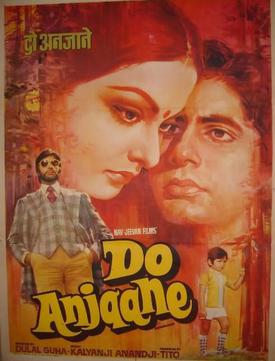
Do Anjaane:
In Dulal Guha’s film, based on the story Raater Gaari by Nihar Ranjan Gupta, Amitabh Bachchan plays an amnesic who goes out to reclaim his old life, when he gets his memory back and finds that his wife (Rekha) is an actress, and his best friend (Prem Chopra) her manager.
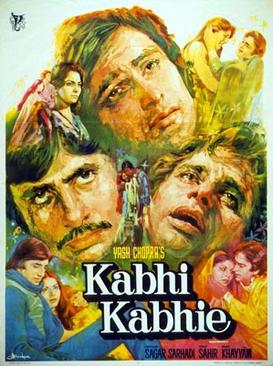
Kabhi Kabhie:
Yash Chopra’s romantic drama with a enviable star cast led by Amitabh Bachchan as a heartbroken poet and Shashi Kapoor as the man who marries the woman he loves. Things get complicated when the next generation also gets caught up in a romantic triangle too. Waheeda Rehman, Raakhee, Simi Garewal, Rishi Kapoor and Neetu Singh also starred in it. The exquisite songs were composed by Khayyam.
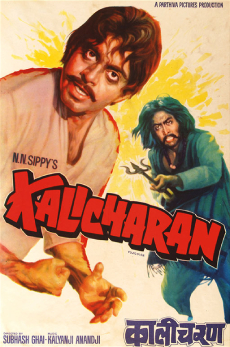
Kalicharan:
Subhash Ghai’s first film as director, Shatrughan Sinha’s first major hit as leading man– the film was about a cop who goes undercover to nab a criminal, codenamed Lion (Ajit); when he killed, a lookalike is sent in his place. Reena Roy was the female lead.
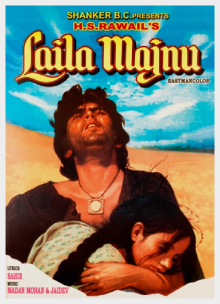
Laila Majnu:
The classic love story reimagined as a musical by HS Rawail. It was Ranjeeta’s debut as Rishi Kapoor first big solo hit after Bobby. The music by Madan Mohan and Jaidev was a major factor in the film’s success.
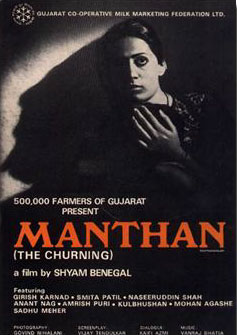
Manthan:
Shyam Benegal’s film was based on the real-life milk cooperative revolution in Gujarat, led by Verghese Kurien (the fictionalised version played by Girish Karnad). The film with Naseeruddin Shah, Smita Patil and Kulbhushan Kharbanda in the lead, was the first crowdfunded film in India, made with 500000 farmer,s contributing Rs 2 each. The film won National Award for Best Feature Film and the Best Screenplay Award for Vijay Tendulkar. It was India’s entry for the Academy Awards. A restored version was released in the Cannes Classics section of the Festival in 2024.
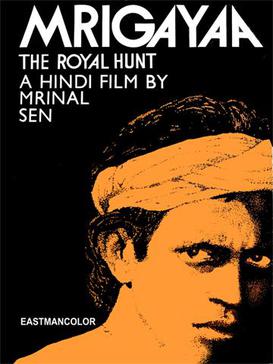
Mrigayaa:
Mrinal Sen directed Mithun Chakraborty in his first lead role, for which he won a National Award. The film was based on Shikaar, an Odia short story by Bhagbati Charan Panigrahi. The National Award-winning film, set in the 1930s, was about the unlikely friendship between a young tribal archer and the newly appointed British administrator (Robert Wright) fond of big game hunting.
Headline: Hollywood in 1976
Intro to second part on Hollywood films
Film aficionados have noted that 1976 was a defining year for Hollywood, marking the peak of the New Hollywood movement where gritty, auteur-driven films began to intersect with the birth of the modern blockbuster.
Here are the 10 of the best Hollywood films of 1976, selected for their critical acclaim, Academy Award success, and lasting cultural impact.
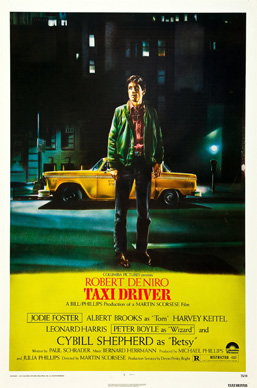
Taxi Driver:
This film directed by Martin Scorsese and written by Paul Schrader, was set in crime-ridden New York city, where mentally disturbed Vietnam War veteran, Travis Bickle (Robert De Niro), driving a taxi at night gets obsessed with cleaning up the city and particularly rescuing an underage sex worker (Jodi Foster). The film critically and commercially successful, despite the controversy over the excessive violence and the casting of the 12-year-old Foster. The film went on to win the Palme d’Or at Cannes and for Academy Award nominations. The film came into focus again when John Hinckley Jr cited it as his trigger to attempt an assassination of the president, Ronald Reagan in 1981. The film is considered one of the greatest films ever made. Interestingly, Mahesh Bhatt copied it for hls film Sadak, starring Sanjay Dutt and Pooja Bhatt.
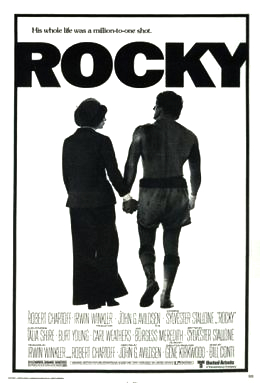
Rocky:
Sylvester Stallone, not yet a major star, wrote the script and refused to sell it, if he could not star in it himself. The film, directed by John G. Avildsen was the ultimate underdog story, about Rocky Balboa, a small-time boxer with big dreams. He is given a once in-a-lifetime shot to fight the world heavyweight champion, Apollo Creed, and it is his way out of oblivion. It won Oscars for Best Picture and Best Director.
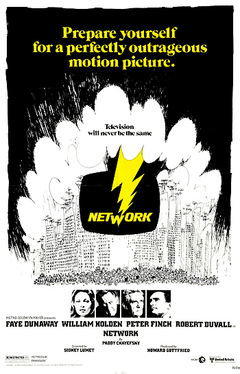
Network:
This Sidney Lumet film with a screenplay by Paddy Chayefsky, about media sensationalism and corporate greed was decades ahead of its time. When a veteran news anchor is fired, he has a televised breakdown that unexpectedly skyrockets the network’s ratings. The film is a biting satire of the television industry and the “outrage” economy. It won three acting Oscars for Peter Finch. Faye Dunaway and Beatrice Straight, and Best Original Screenplay.
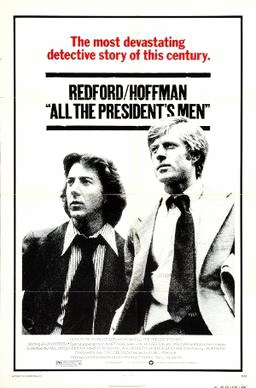
All the President’s Men:
Alan J Pakula’s film about the Watergate Scandal, followed the story of the scoop by Washington Post reporters Bob Woodward and Carl Bernstein, that led to then President Richard Nixon’s resignation. The film starring Robert Redford and Dustin Hoffman, is considered the greatest journalism film ever made, emphasising the painstaking work that goes into investigative reporting. It won four Academy Awards, including the adapted screenplay for William Goldman and Best Supporting Actor for Jason Robards.
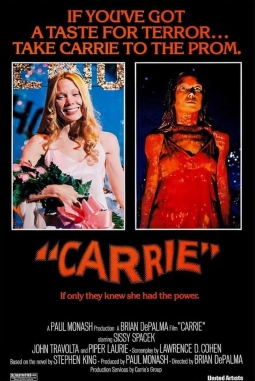
Carrie
Based on a book by Stephen King, the film directed by Brian De Palma, was about a shy, bullied high school girl (Sissy Spacek) with a fanatically religious mother (Piper Laurie), who discovers she has telekinetic powers. After a cruel prom prank, she unleashes her fury on her classmates. Using split-screens and slow motion, the director created a stylized horror masterpiece. Both actresses earned Oscar nominations.
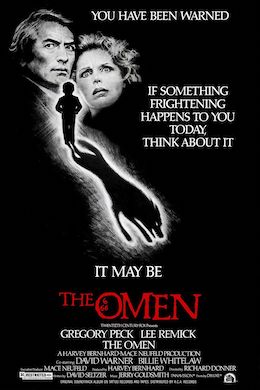
The Omen
Widely considered one of the most terrifying films of all time, the film directed by Richard Donner, was about an American diplomat (Gregory Peck), who realises that his young son, Damien (Harvey Spencer Stephens), might actually be the Antichrist after a series of mysterious and gruesome deaths occur around him. Enhancing the horror was the Oscar-winning score by Jerry Goldsmith.
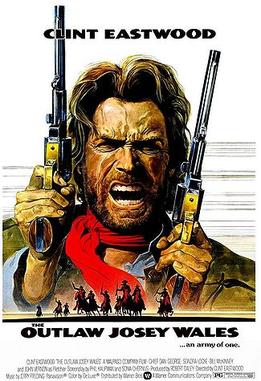
The Outlaw Josey Wales:
After his family is murdered by Union militants during the Civil War, a Missouri farmer (Clint Eastwood who also directed) heads west to seek revenge, eventually forming an unconventional family of outcasts. One of the most acclaimed Westerns of the 1970s, noted for its sympathetic portrayal of Native Americans. Interesting piece of trivia, Eastwood had differences with director Philip Kaufman, and had him fired. The resulting outrage in Hollywood resulted in the Director’s Guild passing a new rule, known as “the Eastwood Rule”, which prohibits an actor or producer from firing the director and then personally taking on the director’s role.
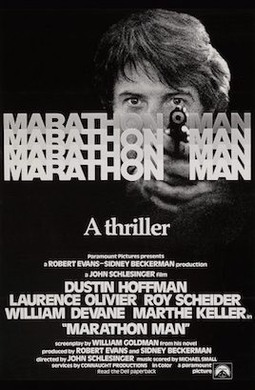
Marathon Man:
The film that will forever be remembered for its dental torture scene, directed by John Schlesinger, adapted by William Goldman from his 1974 novel, it starred Dustin Hoffman as Babe Levy, a distance runner, who becomes unwittingly embroiled through his brother in a plot by Nazi war criminal, Christian Szell (Laurence Olivier), to retrieve ill-gotten diamonds from a safe deposit box owned by Szell’s dead brother. The film was a hit, and the character of Dr Szell is listed among the greatest villains of all time.
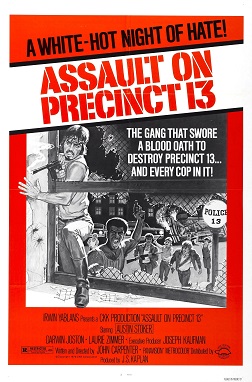
Assault on Precinct 13:
John Carpenter’s modern-day urban Western-style siege film, starred Austin Stoker as a highway patrol officer, who defends a defunct Los Angeles precinct office from attack by a savage street gang, with two criminals and a station secretary for help. Made on a low budget, the film was highly appreciated and became the cult film of the year.
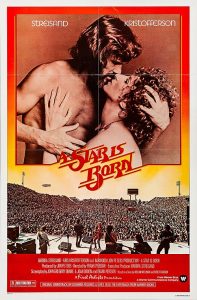
A Star Is Born:
Starring Barbra Streisand and Kris Kristofferson, directed by Frank Pierson, the much-loved musical was a top grosser of the year. A remake of the 1937 and 1954 films of the same name, it was an intense love story between an unknown singer and an established rock star, which is shaken when her career ascends and his goes into decline. It was remade yet again in 2018, by Bradley Cooper, starring him and Lady Gaga.