






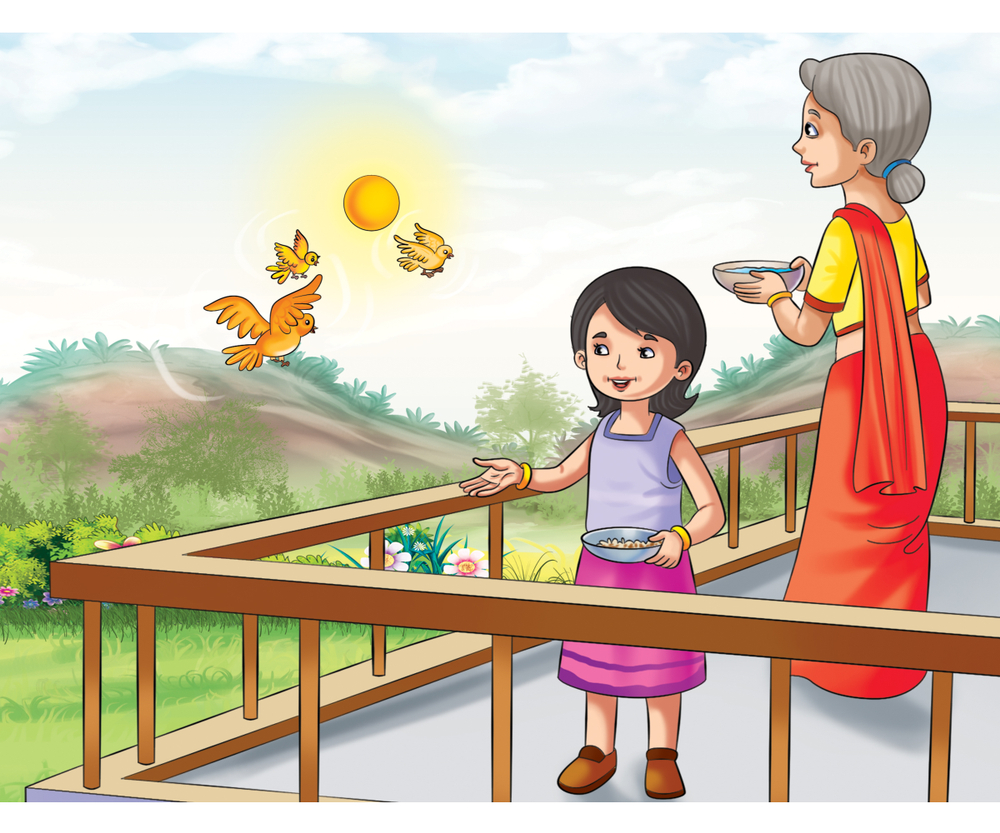
Perhaps growing older does not make life smaller. Perhaps it teaches us to see more.
There is a particular kind of happiness that arrives quietly.
It does not ring the doorbell. It does not come wrapped in expensive paper. It does not require a passport, a reservation, a new wardrobe or a carefully planned itinerary.
Sometimes it arrives as sunlight falling across the floor at 7.15 on a Sunday morning.
Sometimes it is the first sip of tea from a favourite cup.
Sometimes it is clean sheets, an old song on the radio, the smell of rain, a perfectly ripe mango, a neighbour waving from across the road, or finding a book you loved thirty years ago and discovering that you still love it.
Perhaps this is one of the gifts of growing older: we become better at noticing.
When we are young, happiness can feel like something we have to chase.
A better job. A bigger house. A holiday. A promotion. A wedding. Children. A new car. A new achievement.
We are often looking ahead to the next thing.
Then, somewhere along the way, something changes.
The next thing becomes less important.
The thing in front of us becomes more precious.
The tea that was never “just tea”
A retired schoolteacher I once knew had a very particular morning ritual.
Every day, at almost exactly the same time, she would sit beside her bedroom window with a cup of tea.
Nothing elaborate. No special health drink. No expensive tea leaves.
Just ordinary tea in an old porcelain cup that had belonged to her mother.
For years, her family teased her about it.
“You take so long to drink one cup of tea!”
She would smile and say, “Because I’m drinking it.”
There was something profound in that answer.
She wasn’t drinking her tea while checking messages, paying bills, watching television and thinking about what needed to be done next.
She was simply drinking her tea.
She noticed its warmth. The morning light. The trees outside. The occasional bird on the wall.
It took her perhaps fifteen minutes.
But those fifteen minutes belonged entirely to her.
The balcony
Then there was a man in his seventies who told a friend that retirement had initially made him miserable.
For decades, his days had been structured by meetings, deadlines and responsibilities.
Suddenly there were no meetings.
No office.
No colleagues asking for something.
He felt useless.
One morning, while sitting on his balcony, he noticed a small bird building a nest in a nearby tree.
The next morning he looked for it again.
Soon he knew when the bird arrived, where it disappeared to, and when the chicks eventually appeared.
“I had spent forty years looking at that tree,” he said. “I had never actually seen it.”
That sentence stays with you.
Because how much of life do we merely look at without actually seeing?
The old song
For another woman, happiness arrived through music.
She was cleaning a cupboard one afternoon when she found an old cassette.
She no longer had a cassette player.
But she remembered the songs.
One of them immediately took her back to a college dance, where she had worn a blue dress and danced until her feet hurt.
She stood in the middle of the room, holding the cassette in her hand, laughing.
Nothing about that moment changed her circumstances.
The bills remained.
The knees still hurt.
The house still needed repairs.
But for a few minutes, she was twenty again.
Memory has a curious generosity.
It allows us to visit places our bodies can no longer travel to.
Why small pleasures matter
There is actually something quite sensible about paying attention to these seemingly insignificant pleasures.
Our brains are strongly influenced by what we repeatedly notice.
If we spend the day scanning for irritation—the noisy neighbour, the aching knee, the late delivery, the rude driver, the family member who forgot to call—we can become remarkably efficient at finding things that are wrong.
But attention can also be directed towards what is right.
The warmth of the sun.
The taste of a favourite fruit.
A good conversation.
A familiar voice.
A walk after rain.
The smell of something cooking in the kitchen.
The pleasure of finishing a book.
A cat choosing your lap.
A friend remembering something you told them six months ago.
These things may appear tiny.
They are not.
They are the texture of a life.
We don’t have to be grateful for everything
There is, however, a difference between appreciating small joys and pretending that everything is wonderful.
Growing older can bring loss.
There can be loneliness, illness, financial worries, changing relationships, grief and the frightening awareness that time is no longer infinite.
We should not be told to “look on the bright side” when what we need is permission to acknowledge that something hurts.
The joy of small things is not about denying difficult things.
It is about refusing to let difficult things become the only things we see.
A rainy afternoon can be miserable.
And it can also smell wonderful.
We can miss someone terribly.
And still laugh at something they once said.
We can have an imperfect life.
And still have a very good cup of tea.
Both things can be true.
The small things we once ignored
Perhaps youth trains us to measure happiness by size.
Big celebrations.
Big journeys.
Big achievements.
Big milestones.
Age has a way of changing the measurement.
A quiet house can become a luxury.
An uninterrupted morning can feel extravagant.
A friend who drops in without calling can make an entire afternoon brighter.
A comfortable chair can become a favourite possession.
A good night’s sleep can feel like a gift.
And sometimes, simply having nowhere you urgently need to be is its own kind of freedom.
We begin to understand that happiness does not always announce itself.
Sometimes it whispers.
A weekend experiment
So this weekend, perhaps don’t make a grand plan.
Instead, become an observer of your own life.
Notice the first patch of sunlight entering the room.
Make your tea or coffee and drink it without your phone.
Open a window.
Listen to an old song.
Call someone whose voice makes you happy.
Cook something you haven’t made in years.
Change the bedsheets.
Sit outside for ten minutes.
Watch the birds.
Read three pages of a book you love.
Or simply sit quietly and notice what is around you.
And before the weekend disappears, ask yourself one small question:
What made me happy today that cost me nothing?
The answer may surprise you.
Perhaps it was the smell of rain.
Perhaps it was your neighbour’s smile.
Perhaps it was an old photograph.
Perhaps it was the cat curling up beside you.
Perhaps it was sunlight on the balcony.
Perhaps it was nothing more complicated than a cup of tea.
And perhaps that is the secret.
We spend so much of our lives waiting for happiness to arrive as something large and unmistakable that we sometimes overlook the hundreds of tiny ways in which it has already entered the room.
Maybe growing older isn’t about having fewer things to look forward to.
Maybe it is about finally learning how much there is to notice.