





At 83, Jeetendra reflects on his extraordinary path from a Mumbai chawl to iconic stardom, sharing candid memories of triumphs, regrets and the everyday joys that sustain him now.
A prominent figure in Indian cinema, Jeetendra’s journey in acting commenced with the 1964 film Geet Gaya Patharon Ne. His breakthrough arrived in 1967 with Farz, catapulting him to widespread recognition. His dynamic on-screen presence in numerous Hindi films earned him the moniker “Jumping Jack.” Throughout the late 1960s and extending into the 1980s, he consistently featured in highly successful Indian movies, including Jeene Ki Raah, Khilona, Caravan, Bidaai, Udhar Ka Sindur, Dharam Veer, Swarg Narak, Jaani Dushman, Aasha, Meri Aawaz Suno, Farz Aur Kanoon, Himmatwala, Tohfa, Maqsad, Swarag Se Sunder, Khudgarz, and Thanedaar. Beyond commercial hits, he also delivered critically praised performances in films like Boond Jo Ban Gayee Moti, Mere Huzoor, Dharti Kahe Pukar Ke, Humjoli, Parichay, Khushboo, Kinara, Priyatama, Lok Parlok, Takkar, Jyoti, Pyaasa Sawan, and Sanjog. In the early 2000s, he ventured into production, establishing Balaji Motion Pictures with his daughter Ekta Kapoor at the helm, which grew to become a leading production house in Hindi cinema.

“Time has just flown by, I don’t know how,” Jeetendra begins the conversation, a sense of contentment in his voice stemming from the huge body of work and the fact that his kids are settled at work and grandchildren too are in place. He savours the newfound freedom that comes with age. “Now I am no longer a slave to the clock. I wake up when I like. I go to sleep when I want, not having to worry about shooting schedules the next day.” For the veteran actor, this autonomy is “very liberating.” His days are now filled with precious moments, primarily spent with his grandchildren. Yet, the spark for acting remains: “As far as work is concerned I am still open to good offers.”
But then a poignant note enters the conversation as Jeetendra touches upon the sacrifices made during his career’s peak. His prolific work in Southern films meant immense time away from his children, Ekta and Tusshar. With a visible sigh, he admits, “It is true. I don’t remember anything about Ekta and Tusshar’s growing years. I don’t remember playing with them, being with them, attending their school functions.”
He recounts a common scenario: “Whenever my two children had a holiday, I’d make them fly down to my shooting to be with me. But that’s no way to bring up children.” This deep-seated regret remains “the one missing link in my life.” However, his grandchildren now offer a chance for solace and a sense of “reliving Ekta and Tusshar’s childhood.”

Despite the missed years, Jeetendra beams with pride when discussing his children’s accomplishments. “Both Tusshar and Ekta have done well for themselves,” he states. He particularly marvels at Ekta’s drive. “Ekta works so hard. She reminds me of what I used to be. She produces TV serials and films; she has also stepped into the digital space. I sometimes wonder how she manages all these things.”
Yet, there’s one force potent enough to bring all their professional endeavors to a halt. “Only my grandchildren can do that,” Jeetendra says with a happy smile, underscoring the central role family now plays in his life and has become a farz of sorts for him.
Farz also is the pivotal moment in his career. “It changed the course of my career,” he declares. Before its release, he felt he was “just thrashing around, trying to find a place for myself.”
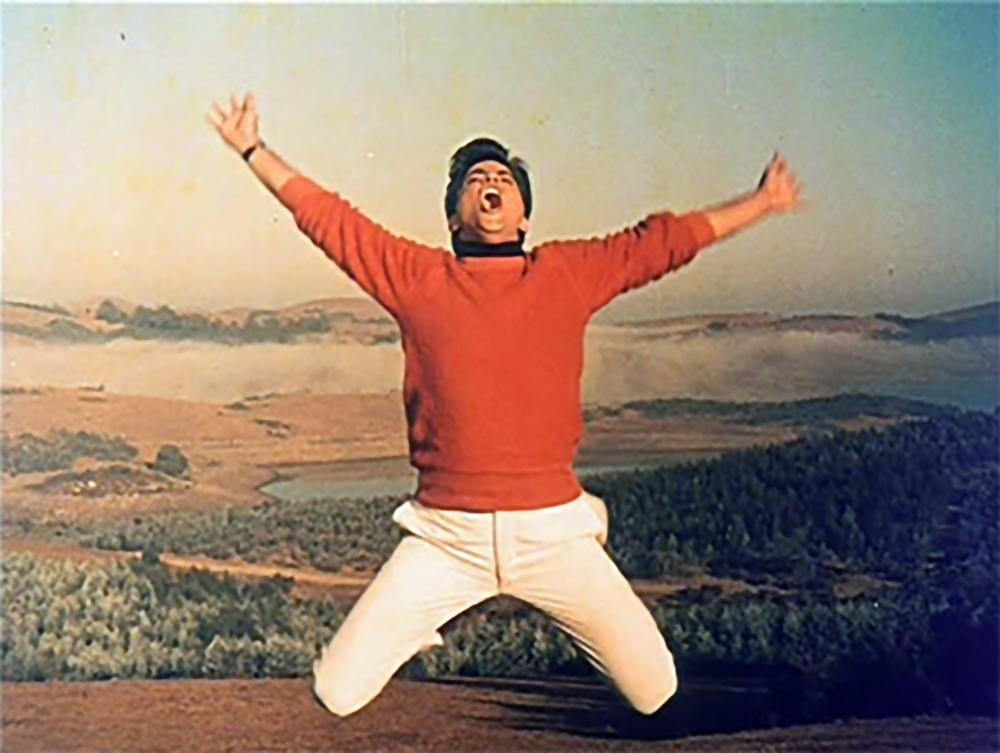
He shares an intriguing anecdote: “Do you know every major star of the 1960s said no to Farz? I am thankful to each one of them. I was probably the last choice.” The film was shot on a tight budget, with a memorable schedule in Ooty where four songs were filmed, including the iconic “Mast Baharon Ka Main Aashiq” and “Happy Birthday To Sunita.”
While acknowledging the “fantastic” original Telugu version starring Krishna and Jayalalitha, Jeetendra humbly adds, “But Babita and I were not bad either.” He takes particular satisfaction in the enduring popularity of one song: “The song Happy Birthday to Sunita is played at every birthday party to this day.” With a happy chuckle, he asserts, “The credit for bringing the Indian James Bond to Hindi cinema goes to me.” That perhaps is the rare off moment when he indulges in self praise.
But then, the actor’s roots are what keeps him even grounded today. Jeetendra fondly recalls his formative years, the first two decades of his life spent in a Girgaon chawl, which profoundly shaped him. “Mujhe aisa lagta hai ki jo meri parvarish, jo sanskaar… Maa-baap ne toh diye hi, par aapke mahaul se bhi aapko bahut sanskaar milte hai,” he explains, emphasising the significant role surroundings play in upbringing and values. “I am a typical Maharashtrian in habits, language and everything. I became a hero because I could speak Marathi very well.”
He describes those days as the “best” of his life, remembering a close-knit community of “80 families” in the four-story chawl, bound by “a lot of love.” Neighbors could always rely on one another, even for simple things like “tea leaves or other supplies.” He vividly recalls, “Jab mere ghar mein pankha laga, sab building ke log dekhne ko aaye,” adding that his house was also the first to get tubelights – simple luxuries that brought the entire community together.
Jeetendra spent 18 years in that chawl. “While I lived in this small chawl, there was always sufficient amount of love,” he shares, reflecting that those “was the greatest time in my life.” He also shares a fascinating detail about his first break: “I was an extra actor, junior artist, I got my first break because V Shantaram found it so hilarious that me being a Punjabi guy spoke such clear Marathi.” Having moved to Bombay from Amritsar at just 15 days old, he proudly declares, “I am more Maharashtrian than anything else.”
The Heroine’s Body Double and Early Struggles
An amusing, yet telling, anecdote emerges when asked about a period where he reportedly played a heroine’s body double. “Yes… now you think, I am a junior artist in the picture ‘Sehra’ and have to do Chamchagiri of Shantaram ji, I am ready to do anything,” he laughs.
He elaborates on the situation: “So duplicate was not found in Bikaner. You will not believe that I played a duplicate of Sandhya ji. In those days, clothes were also like that and Shantaram ji was an authentic filmmaker and neither made me an authentic girl.” Despite his disappointment, Jeetendra was determined to remain in Shantaram’s film.
He recounts a moment of sternness from the legendary filmmaker: “We were shooting in Bikaner. Shantaram did not like delay. When I reached late for dinner, he got angry and asked me to go back. He told my make-up man not to dress me up the next day.”
Determined, Jeetendra recalls, “I woke up at five in the morning and asked the makeup man to prepare me. When I went to V Shantaram’s room crying, he was surprised to see my preparation, and then I made him happy with my work.” This dedication earned him the role of Sandhya’s body double. While the film was a hit, it didn’t immediately benefit him. He appeared in the less successful 1964 film Geet Gaya Patharon, before Farz in 1967 finally propelled him to superstardom.
Gudi Padwa Memories and Chawl Celebrations
With Gudi Padwa around the corner, Jeetendra’s thoughts drift to childhood festivities. “Though it starts getting really hot after Holi, I’d wait for Gudi Padwa since early childhood,” he reminisces, citing the “festivities and the food,” including the season’s first mangoes. He describes the elaborate, yet simple, meals as “heavenly compared to the lavish food these days.”
A slight problem, however, always accompanied these delicious feasts. “There was a neem chutney served and none of us kids liked it,” he chuckles. But the elders would insist it was necessary to truly enjoy the other delicacies like “the tasty yellow potato bhaji with puris, the varan bhaat with toop, the koshimbir and aamras/ mango shrikhand.” Given the choice, the children would “just agree and gulp the chutney.” He notes the working-class simplicity of those times: “No taam-jhaam like now. Even radios were rare and people went to small chai kiosks to hear them. It was a different time…”
Despite the camaraderie, conflicts were not uncommon. “Plenty! Mostly over water,” he reveals about the chawl. “But these escalated as quickly as they dissipated.” He explains that underlying the squabbles was a deep sense of mutual dependence: “You knew, if you ran out of sugar/jeera the next day you’d still go to each other.” He fondly recalls the “drunken brawls at Holi” as particularly “entertaining for us kids,” often imitated by them in the absence of television.
A Punjabi in a Maharashtrian Milieu
Jeetendra explains his family’s journey from Amritsar to Mumbai. “I was born in Amritsar where the extended family were merchants but there was some fall out and my father Amarnathji brought us all to Bombay to start afresh.” His father’s imitation jewelry business “boomed.”
His life, he says, truly began to change then. He attended “Girgaum’s St. Sebastian’s School” and helped his father by “supplying imitation jewellery to the film industry.” Filmmaking legend V Shantaram was a client. “I’d courier the goods. The glitz and glamour of films was very attractive for a young boy my age.” He confesses to purposefully “hung around willing to do bit tasks or run errands so that I could avoid being home and studying which I hated…”
Interestingly, he shares a connection with another Bollywood icon: “Rajesh Khanna used to live in Thakurdawar and I stayed at Girgaum. We went to the same St. Sebastian high school.” While Khanna was “very fond of acting” and participated in dramas, Jeetendra’s path was less clear. “My father’s financial position was not that great. I was bad at studies. I didn’t know what to do in life. I could neither be a businessman as we had not enough money and I was bad so I didn’t know what job I could get.”
The Allure of Cinema: Beyond Money
When asked if he was paid for his early roles, Jeetendra’s response reveals his passion. “It never struck me. When asked to be a junior artiste in a crowd scene too, it felt so heady that money was the last thing on my mind.” For him, the basic necessity was a luxury: “The fact that there would be food was itself great!” Later, he earned “a princely Rs 5 a day.”

Festivals on Set and Enduring Influences
Even on film sets, festivals like Gudi Padwa were acknowledged through food. “The food would be in keeping with the festival,” he notes, often with “a distinct Kolhapur flavour since so many people in the company were from that region.” He credits this experience for his love of Maharashtrian delicacies: “My taste for modak, puran poli, shrikhand, basundi and narali bhaat have all come from there.”
He continues to visit his roots, returning to “Girgaum’s Shyam Sadan Chawl.” “For 22 years I went from adolescence to being an adult there,” he shares. “Every year, I unfailingly visit our chawl’s Ganpati pandal on the first day. It is a great reminder of my roots.”
The impact of Maharashtrians on his character is profound. “Maharashtrians are mostly tenacious, hardworking, fearless and so humble despite coming from a land of rich music, cinema, literature and culture,” he observes. “I imbibed those values which have stood me in good stead.”
Of Rekha and Sridevi
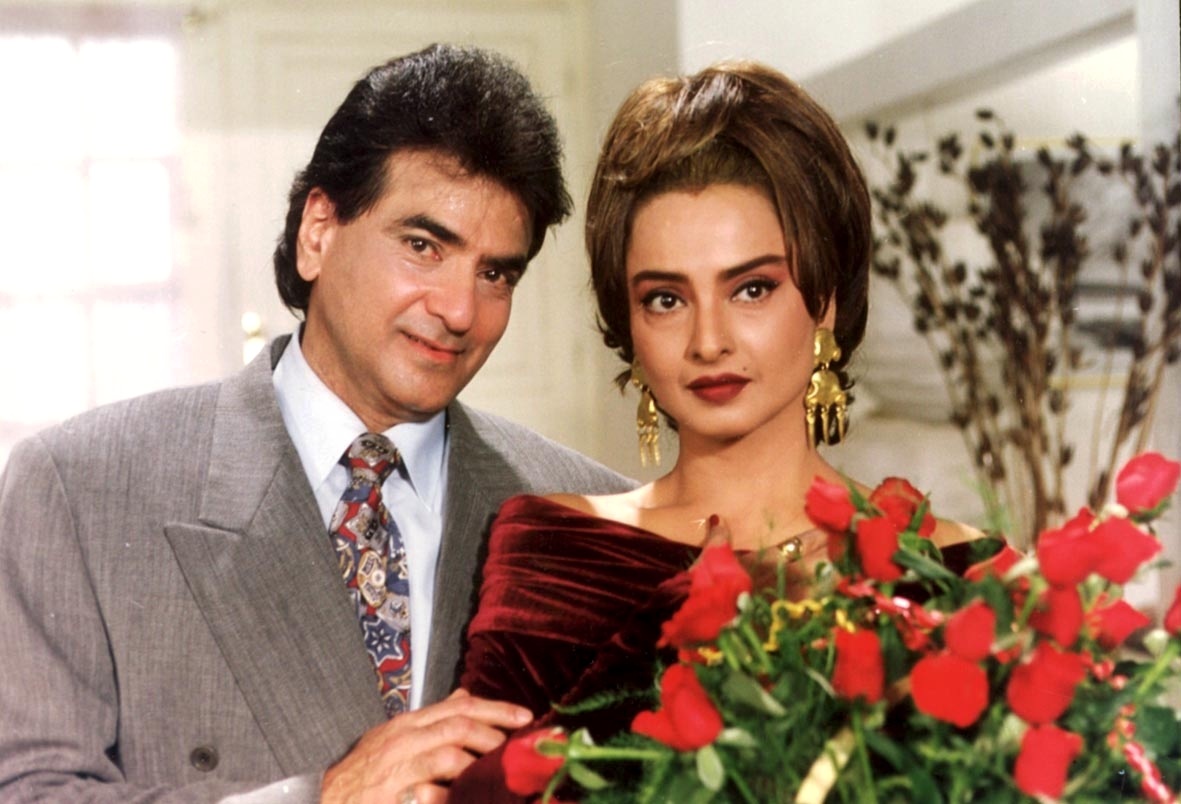
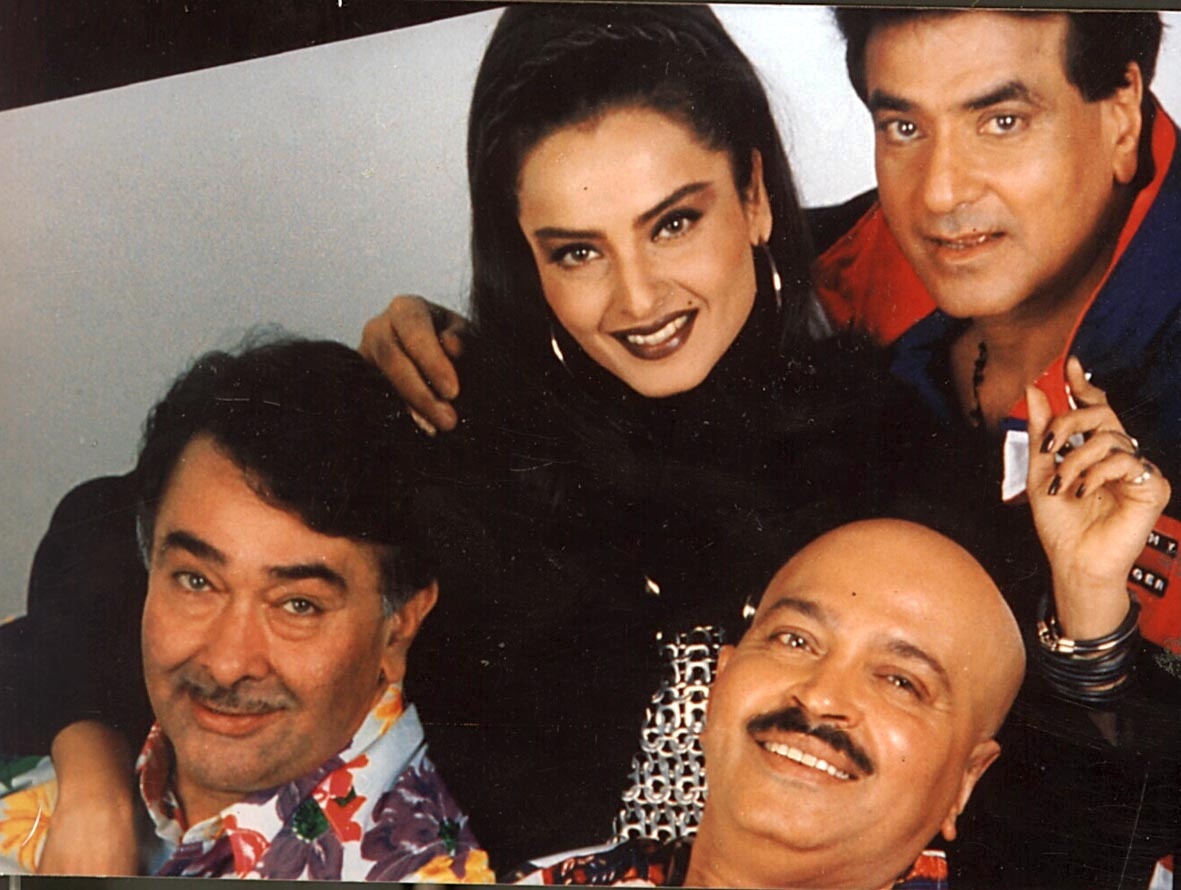
Jeetendra speaks with immense warmth about his long-time co-star, Rekha, who affectionately calls him “Ravya,” his real name. “Rekha and I have done about 30 films together, some hits and some super hits,” he notes, praising her “terrific acting skills and utmost professionalism.”
He reiterates a past anecdote that exemplifies her generosity: “I remember once I had to solve some income tax problems. My chartered accountant told me that the officer in charge was a huge Rekha fan and would be only too happy to meet her.”
Without hesitation, Rekha responded, “‘No problem Ravya, I’ll be there.'” He recalls her going “out of her way to be cordial with the officer” and even “served him snacks with her own hands.” The result? “The fan boy was floored and my tax problems were all sorted.” He poses a rhetorical question, “Now you tell me, who does that? Unless it’s a true friend. There have been so many instances where she’s just been there rock solid.”

Jeetendra also shares a fascinating detail about Sridevi’s casting in Himmatwala. “One time me and Rekha were watching a Telugu film (which starred Sridevi). Rekha was supposed to play the female lead in Himmatwala at the time.” He recalls Rekha repeatedly telling him, “‘You should work with her.'” He assured her he would. “I think Rekha couldn’t give her dates for Himmatwala and then the film’s director K Raghavendra Rao said let’s take Sridevi.”
The Power of Healthy Choices
Now in his eighties, a “totally fit” Jeetendra offers valuable advice on well-being. He reveals that his health took a turn for the worse in his mid-fifties. “That was the time I stopped drinking, smoking and having tobacco. My life changed after that.” This personal transformation informs his message to others: “If others can stop their bad habits they will be fitter. Even youngsters will be fit if they give all this up early.”