






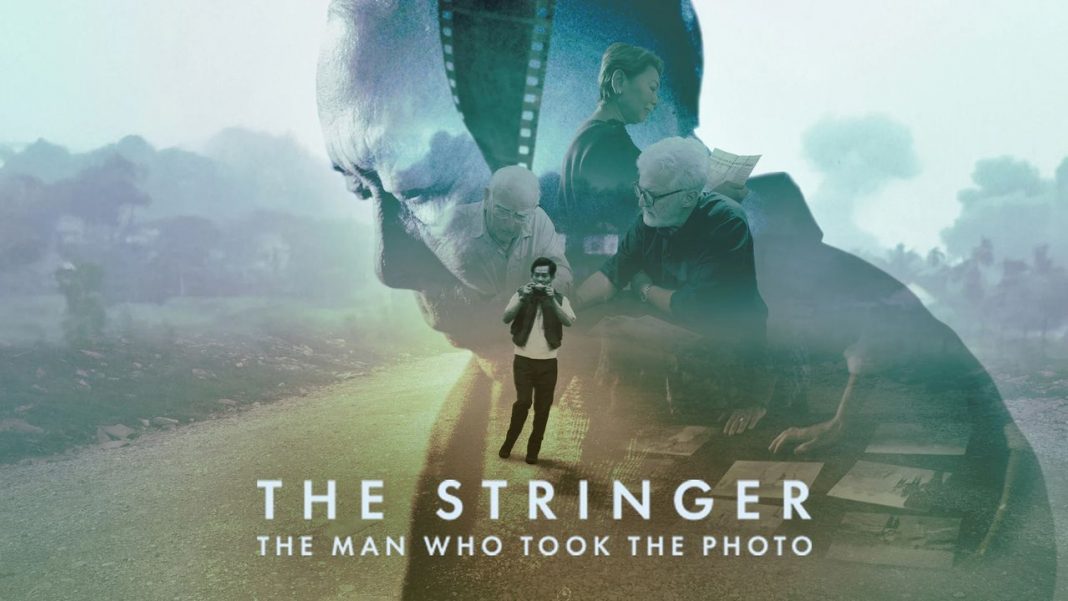
It is one of the most heart-rending and memorable photos of all time– ‘Napalm Girl’ or The Terror of War—in which a terrified girl is seen running, her clothes ripped off by a napalm bomb. For over 50 years, this photo, which came to depict the worst aspects of the Vietnam War, has been attributed to Associated Press (AP) staff photographer Nick Ut. Now Bao Nguyen’s astonishing documentary on Netflix, The Stringer: The Man Who Took The Photo, presents a compelling argument that the person behind that iconic photo was Nguyễn Thành Nghệ, a local Vietnamese freelance photographer, or “stringer,” whose crucial contribution was allegedly erased by a white establishment
The documentary starts with the confession of Carl Robinson, a former AP photo editor in Saigon, who reveals his decades-long guilt over a deception he felt compelled to participate in. His testimony sets acclaimed war photographer Gary Knight and a small team of journalists on a two-year quest for the truth, hunting for the elusive “stringer” and forensically reconstructing the events of June 8, 1972, in the village of Trảng Bàng. The film is driven by a commitment to facts, even though it could be argued that, after so many years, how does it matter? Then again, is the truth time-bound?
The film’s central conflict revolves around the question of who actually pressed the shutter. The investigation questions the established narrative using a combination of witness testimony, photographic analysis, and forensic reconstruction by a team of French forensic experts. Employing advanced photogrammetry, they virtually recreate the scene based on all available images and footage from that day. Their findings, which map out the positions of the various photographers and the camera angles required for the shot, strongly suggest that Ut was unlikely to have been in the correct position to take that shot. Instead, the evidence points definitively toward Nghệ, who was on the ground that day working as a driver for NBC and selling his photos to the AP. The meticulous visual evidence, including the reconstruction sequences, is the film’s most compelling element, providing a convincing argument.
Nguyen traces Nguyễn Thành Nghệ himself, now an elderly man in poor health. His testimony, and that of his family, provides a moving account of a man who never sought fame but whose truth was overshadowed by powerful people. The simplicity of his claim, juxtaposed with the decades of recognition afforded to the credited photographer, lends the film a sense of delayed justice.
There is obviously racism at play here, so the documentary is more than a photo-credit dispute; it is also a critique of the unfair systemic imbalance in the global media field, particularly during the Vietnam War.
Vietnamese journalists, translators, and photographers—the “stringers”—were essential to frontline reporting, often risking their lives in a way their Western counterparts did not. Yet, as the film illustrates, their contributions were routinely marginalised in favour of Western staff photographers, reflecting broader patterns of racial and colonial bias, leading to this exploitation within the press corps. The film suggests that Horst Faas, the chief of photos at the AP’s Saigon bureau, may have deliberately misattributed the photo to Nick Ut, rather than give due credit to an unknown local stringer. So, a white journalist was assured a place in journalistic history, while the real contributor was paid $20 and forgotten. Sad and shocking.
Nick Ut, who helped save the injured Kim Phuc and has had since. a distinguished career, denies the film’s claims, and the Associated Press has conducted its own investigations, standing by their original attribution, though acknowledging new inconsistencies in Ut’s historical account. Taking serious note of the claims made by the film, the World Press Photo organisation, which awarded the photograph its highest honour, conducted its own independent review and temporarily suspended the attribution, acknowledging that Nghệ was better positioned to take the shot. This demonstrates the film’s success as a genuine act of justice for the actual photographer.
The Stringer: The Man Who Took The Photo
Directed by Bao Nguyen
On Netflix