







Asha Bhosle could seamlessly shift from genre to genre – a sexy cabaret, classical ghazal, pop songs, folk songs, love songs, romantic ones, natya sangeet – you name it, she could render them flawlessly, writes Nagesh Alai
A sound sleep, post a late-night flight arrival, saw me awaking energetically on Sunday, 12th April and getting all set for a leisurely unfolding of a warm and languorous day. I was greeted by a warmer message from an ex-colleague’s wife in remembrance of her husband’s final passage 5 years ago and his good friends over his lifetime. I was flooded with memories; sweet, sorrow and myriad other emotions, of my 38 years’ close association with him with diverse experiences akin to the placid ripples and rapids of rivers meandering or rushing to merge with the seas and the cosmos.
The day was indeed good but sadly a melancholic one due to the silencing of the famed vocal cords of Asha Bhosale, with a repertoire and range par excellence, that had thralled music afficionados over decades. She was 92, as was her legendary sister, Lata Mageshkar, a Ratna of Bharat, when she passed four years earlier on 6th of February 2022. Perhaps the two outliers in the gifted Mangeshkar family, pined for each other, antonyms of each other but nevertheless full of overt competitiveness and covert envy, wanted to sing a song of a duet, under the musical baton of Khayyam or O P Nayyar or R D Burman, who all had preceded Asha to the heavenly stage, and enrapture the divine audience up there.
Most of us would identify with the nav rasas or the nine emotions representative of our various states of our mind which manifest in varying situations and phases of our lives. These often find expression in our various art forms like music, dance, theatre, paintings, poetry, lyrics, sculptures, storytelling, films and literature and are used to communicate feelings or evoke feelings in the audience and connoisseurs. Anyone who knows or appreciates, say Bharata Natyam or Kathakali or Kuchipudi or Odissi or say Carnatic or Hindustani or Sufi genre of music, will see these emotions resonate in the rendition of these art forms and take them to heights of musical and finer experiences. These nav rasas are instrumental in establishing the emotional between the art and the audience. These nav rasas are:
- Sringara – beauty, love, romance, attraction, harmony
- Hasya – laughter, humour, joy, amusement
- Karuna – compassion, empathy, sorrow, sadness
- Raudra – anger, fury, rage
- Veera – courage, bravery, heroism, determination
- Bhaya – fear, terror, danger, anxiety
- Bibhatsa – revulsion, disgust, aversion, repulsion
- Adbhuta – wonder, curiosity, awe, amazement
- Shanta – tranquillity, peace, equanimity, calm, bliss

Any exalted and erudite singer would incorporate these nav rasas in their metier and take the listeners to a high of intoxication every time their auditory and sensory nerves seek out their music and melody. Asha Bhosale, with an incredible and exceptional range of musical nuances and supple vocal cords brought out these elements in full measure in her songs picturised on a heroine or a vamp, a mother or a teen, a cabaret dancer or a classical dancer, situations of love, romance, envy, energy, anger, rebellion, poignancy, joy, sorrow or comedy, in her 80 years of professional resume having sung over twelve thousand songs in twenty plus languages in different genres including classical. She was an experimenter and an eternal learner having done songs with Boy George, the prominent UK singer and several others, which drove encomiums and awards her way including the international Grammy nominations. That she won some of the most coveted and highest awards in our country like the Padma Vibhushan, Dada Saheb Phalke and the National Awards twice and the industry Filmfare awards 7 times speaks volumes about her dedication, discipline, renditions, repertoire and passion. Her songs had something for everyone with every person having her/his oven favourites, the reason for her universal appeal and attraction.
While it will not do justice to her or her humungous portfolio of songs to select one over the other as better, let’s look at a miniscule random sample of nine of her Hindi songs, all of which are timeless classics and each of will have elements of one or more of the nav rasas.
- Raat ke humsafar thak ke ghar ko chale, jhumuti aa rahi hain subah pyar ki – a romantic song picturised on Sharmila Tagore in An Evening in Paris
- Raaz ki baat keh doon toh jaane mehfil mein phir kya ho – a qawwali number picturised on Bindu, in Dharma, expressive of fear and anxiety
- Jhoomka gira re, Bareli ke bazaar mein – a peppy comic song picturised on Sadhana in Mera Saaya
- O mere raja, khafa na hona, der se aayi, door se aayi – a situational song picturised on Hema Nalini in Johnny Mera Naam
- Aaiye meherban, bhaitiye jaan-e-jaan, shauq se lijiye ishq ka imtihaan – a sensuous song picturised on Madhubala in Howrah Bridge
- Dil cheez kya hain aap meri jaan lijiye, bas ek baar mera kaha maan lijiye – a classical song picturised on Rekha in Umrao Jaan
- Piya tu ab toh aa jaa – an evergreen cabaret song of desire, which will make anyone pine for more and take to the dance floor
- Dum maaro dum, mith jaaye ghum, bolo shubh shaam – a swaying song of rebellion set in conservative milieu of the past – picturised on Zeenat Aman in Hare Rama Hare Krishna
- Kahi aag lage lag jaave, kahi naag dase das jaave – a lyrical melody picturised on Aishwarya Rai in Taal
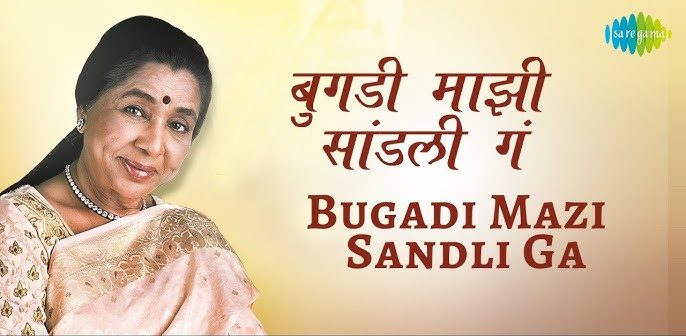
Asha Bhosle’s songs in Marathi, her mother tongue, are as cherished and legendary with millions of followers. Just to name a top-of-mind one – ‘Bugadi maajhi saandli ga, satarayala jata satarayala’ – a vivacious Lavani song picturised on Jayashree Gadkar in the 1959 Marathi film, Sangte Aika – it resonates even with the younger crowd of today, after 77 years. One must just look at the movers and shakers dancing to that pulsating song at social soirees and have a ball. That’s timeless indeed.
She could seamlessly shift from genre to genre – a sexy cabaret, classical ghazal, pop songs, folk songs, love songs, romantic ones, natya sangeet – you name it, she could render them flawlessly. A believer in diction and clarity, her songs well intonated and modulated, expressing the beauty of words and merging them with the subtle emotions and gravitas.
I had never been fortunate to attend any of her live concerts. I desperately tried to get a ticket for her recent live performance in a famed auditorium a few months ago, but it was not just very expensive, but a complete sell out. A regret that I will have to live with. But whose voice and songs will nevertheless continue to permeate every cell in your body and resonate with every emotion in your being. She considered herself as much an actress, only difference she let her voice do the talking and acting. Little wonder that many of the famed stars stay entrenched in our thoughts and remembered more for her songs picturised on them.
To end on a tinge of nostalgia, Asha Bhosale was born in 1933, the same year as my mother, a simple and loving home maker, whom I had lost on her 75th birthday. But the movie buff in her had enjoyed every song of Asha. So did I and so will I. Asha was never merely a hope, but a soup for our soul. A voice of virtuosity that the nav rasas cannot do without.