






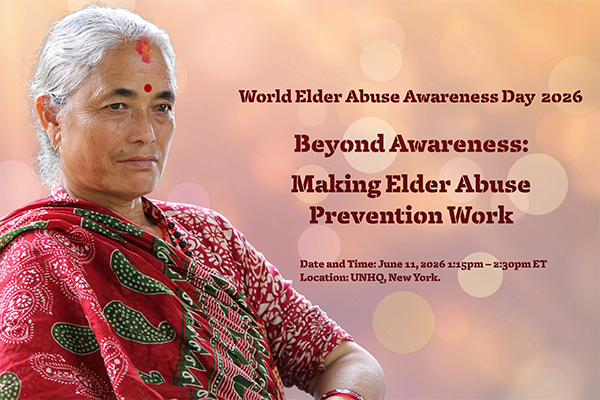
2026 Theme: Beyond Awareness: Making Elder Abuse Prevention Work
World Elder Abuse Awareness Day 2026 will be marked by an event held at United Nations Headquarters in New York, alongside a major international meeting on the rights of persons with disabilities.
As populations age, more people with disabilities are growing older, and many older persons develop disabilities later in life. This overlap calls for closer coordination between efforts on ageing and disability, especially in areas such as protection, care, and community-based support—all of which are essential to addressing elder abuse.
Elder abuse remains widely under-recognised and under-reported. It can take many forms, including physical, psychological, and financial abuse, as well as neglect. It often occurs in situations where individuals lack visibility, support, or access to services. Addressing this issue requires more than raising awareness. It calls for stronger systems that can prevent abuse and respond effectively when it happens, while respecting the dignity, independence, and rights of older persons.
#WEAAD2026
What needs to be in place for societies to effectively prevent, identify, and respond to elder abuse?
This year, the United Nations Department of Economic and Social Affairs, together with the International Network for the Prevention of Elder Abuse and the Office of the High Commissioner for Human Rights, will mark the World Day through a side event held alongside the nineteenth session of the Conference of States Parties to the Convention on the Rights of Persons with Disabilities at United Nations Headquarters in New York.
Addressing Elder Abuse
Between 2019 and 2030, the number of persons aged 60 years or over is projected to grow by 38%, from 1 billion to 1.4 billion, globally outnumbering youth, and this increase will be the greatest and the most rapid in the developing world, and recognizing that greater attention needs to be paid to the specific challenges affecting older persons, including in the field of human rights.
Elder abuse is a problem that exists in both developing and developed countries yet is typically underreported globally. Prevalence rates or estimates exist only in selected developed countries — ranging from 1% to 10%. Although the extent of elder mistreatment is unknown, its social and moral significance is obvious. As such, it demands a global multifaceted response, one which focuses on protecting the rights of older persons.
Approaches to define, detect and address elder abuse need to be placed within a cultural context and considered along side culturally specific risk factors. For example, in some traditional societies, older widows are subjected to forced marriages while in others, isolated older women are accused of witchcraft. From a health and social perspectives, unless both primary health care and social service sectors are well equipped to identify and deal with the problem, elder abuse will continue to be underdiagnosed and overlooked.
For more details visit https://www.un.org/en/observances/elder-abuse-awareness-day