






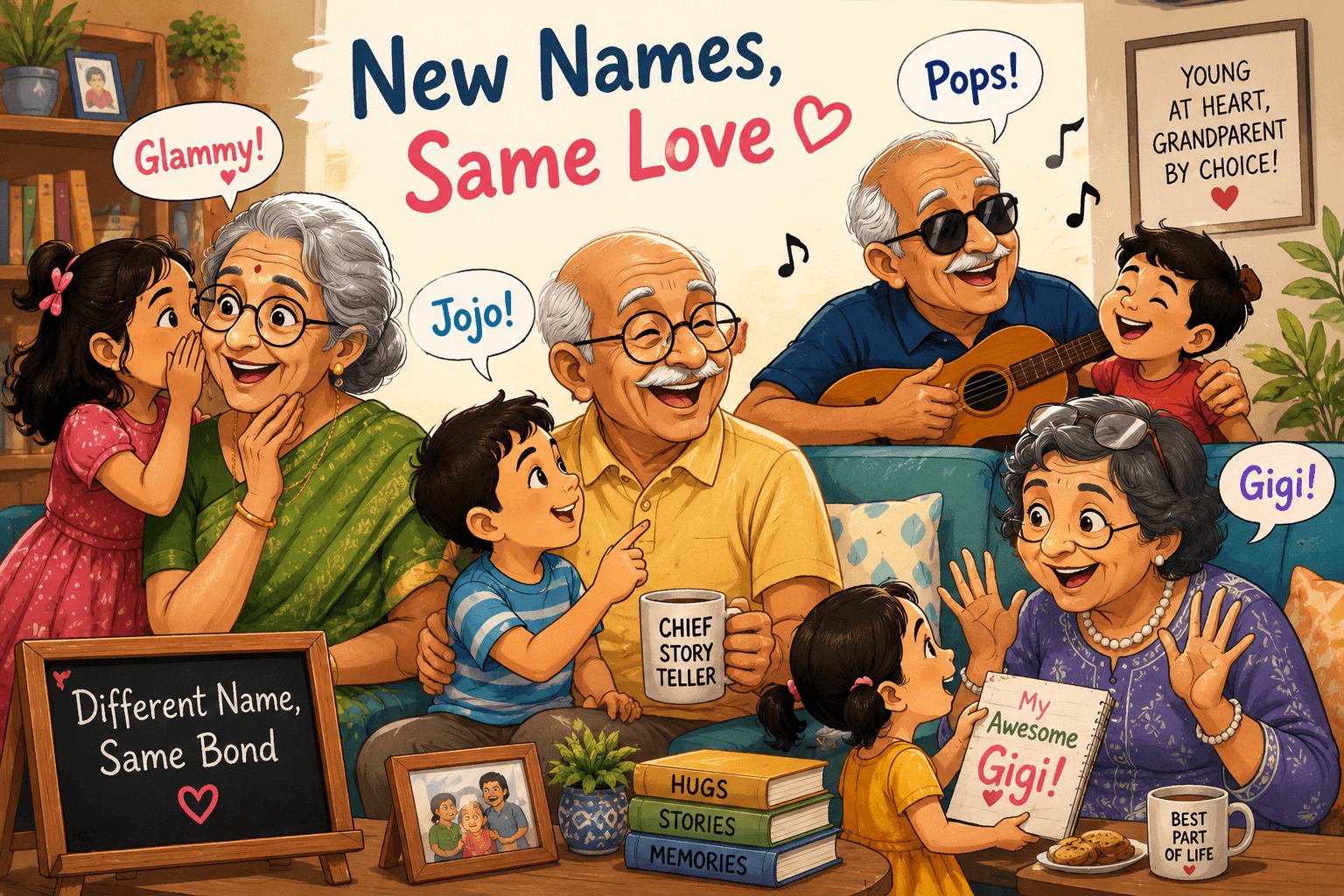
Across Indian families, grandparents are quietly reinventing themselves, beginning with what their grandchildren call them, writes Vickram Sethi
Baby news has a way of sending even the calmest of expectant parents into a flurry as they search for the perfect name for their soon-to-arrive child. But increasingly, another equally spirited search is unfolding quietly in many Indian families. This time, it is the grandparents doing the searching — not for the baby’s name, but for their own.
There was a time when becoming a grandparent came with a ready-made title. You stepped into the role and, almost by default, became Nanna, Dada, Nana, Granny, Aajoba or Paati. The names were comforting, familiar, and handed down like heirlooms. They carried warmth, respect, and a quiet dignity.
But something interesting is happening today. Grandparents are gently setting aside some of these traditional labels and choosing names that feel more personal, more playful, and sometimes more reflective of who they are.
At first glance, it may seem like a small shift. After all, what is in a name? Yet, if one listens closely, these choices reveal something deeper about how people now see ageing, identity, and their place within the family.
The grandparent of today is not quite the same as the grandparent of a generation ago.
Many people are becoming grandparents while still deeply immersed in active lives. They travel independently, discover new hobbies, attend yoga classes, experiment with cuisines they had never heard of thirty years ago, and occasionally understand technology better than their own children. Retirement no longer signals a slowing down in the way it once did. For many, it marks the beginning of an entirely new chapter.
In such a context, the traditional image of a grandparent sitting quietly in a corner, wrapped in routine, no longer resonates with everyone. And so, the names evolve.
Some choose variations of their own names. A Meena may become Minima, a Rajesh could turn into Raju Papa, while a Sunita might delight in being called Sunny Ma. Others borrow from global influences — Grandma, Pops, Mimi, Gigi. Some names are carefully chosen. Others emerge accidentally from the delightful linguistic inventions of toddlers and stay forever.
There is also gentle humour in this shift. Many grandparents admit, with a smile, that they simply do not feel old enough for certain titles.
A South Delhi grandmother recently confessed that she could not quite imagine herself responding to “Dadima”. “It sounds like someone who wears only white saris and complains about blood pressure,” she laughed. She preferred Glammy. Not because she rejected tradition, but because she still saw herself as energetic, social, and fully alive to the world around her.
And perhaps that is the heart of this quiet cultural change. These new names are not acts of rebellion. They are acts of self-definition.
Previous generations often accepted ageing as a gradual shrinking of identity. Society assigned you a role, and you stepped into it quietly. Today’s seniors are less willing to disappear behind stereotypes. They wish to remain visible as individuals while embracing new family roles.
Interestingly, this change is not only driven by grandparents. Children, with their delightful spontaneity, often play a role too. What begins as a toddler stumbling over syllables can quickly become a permanent family title. An Aajoba may become Jojo. An Aajji may become Jiji. Before long, it feels as though the name had always existed.
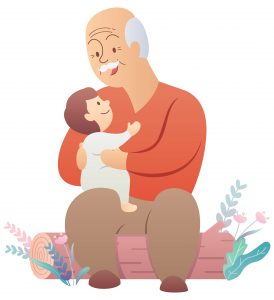
Yet, despite all the changing terminology, the essence of grandparenting remains beautifully untouched.
A grandmother holding her grandson for the first time described it simply: “I felt such deep love, my heart melted. I love my grandchild like my own child, but I know I cannot have him with me all the time.”
That perhaps explains grandparenthood better than any sociological theory ever could.
There is a tenderness to this phase of life that feels different from parenting. Parents carry the burden of responsibility. Grandparents often carry the luxury of affection. They become custodians of stories, secret chocolates, indulgence, family history, and emotional safety.
When a grandchild insists on sleeping beside a grandparent, it is rarely because of what they are called. It is because of the sense of comfort and security they feel in that presence.
And that is why, ultimately, the bond between grandparent and grandchild is not defined by a title. It is defined by the time, attention, patience, and love invested in the relationship.
Of course, not everyone feels the need to move away from tradition. For many, the classic names still hold a special place. They carry memories of childhood, echoes of their own grandparents, and a comforting sense of continuity. And that is the beauty of modern Indian families today. The old and the new coexist quite happily.
In one home, a child may call out “Nanu!” from the kitchen. In another, “Gigi!” over a video call. Both carry the same instinctive affection.
What matters most is the relationship behind the name. Whether one is called Nanu, Dadu, Dadi, Glammy, or something entirely invented by a toothless toddler, the privilege remains the same.
To be loved by a child who sees you not as old, but as home.
In the end, it is not really about tradition or modernity. It is about love, memory, and the many ways in which we choose to live — and be remembered.