







When the body begins to protest and the years gather quietly behind us, strength becomes less about youth and more about resolve, writes Vickram Sethi
There comes a moment — usually while getting up from a low chair, climbing a flight of steps, or negotiating with a small trolley bag — when the body delivers a quiet but unmistakable message. It says: we are no longer coasting. Things now require real effort, attention, and conscious action.
I am, as they say, “pushing” 70, dragging a respectable train of years behind me, and yet somehow failing to collect much muscle along the way. The irony is not lost on me. I went to a military school; the long marches and cross-country runs seem to have evaporated. Decades of carrying responsibility, expectation, and the occasional existential worry — and still my legs feel oddly heavy, as if they’ve grown tired of themselves.
It isn’t that I feel old. Not in the dramatic, cane-waving sense. It’s subtler than that. A stiffness that arrives uninvited. A jar lid that resists longer than it should. A realisation, one morning, that strength is no longer a given but something that must be actively negotiated with.
Perhaps this is also the time to wrap up unfinished business.
Taking up serious weight training in one’s early seventies feels a bit like being handed unexpected permission. Permission to start late. Permission to surprise oneself. Permission to believe that decline is not the only narrative available to us once birthdays begin to feel less festive and more reflective.
Once I decided to begin training — weights, strength and all that accompanies it — what struck me most was not the bravado of barbells or the numbers attached to them. It was a quiet pride. The dignity of doing something difficult and doing it deliberately.

There is something deeply reassuring about the idea that the body, even after years of neglect, is still capable of learning new tricks — provided we are willing to listen to it again.
My own ambition, however, is far humbler. I would like to be able to lift my grandson when he comes charging at me shouting, “Dadu! Dadu!”
This may sound whimsical, but it is born out of necessity. He has a habit of bounding joyfully into the room and running straight up to me. There is something magical about a grandchild rushing towards you — two little hands like magic wands that change everything.
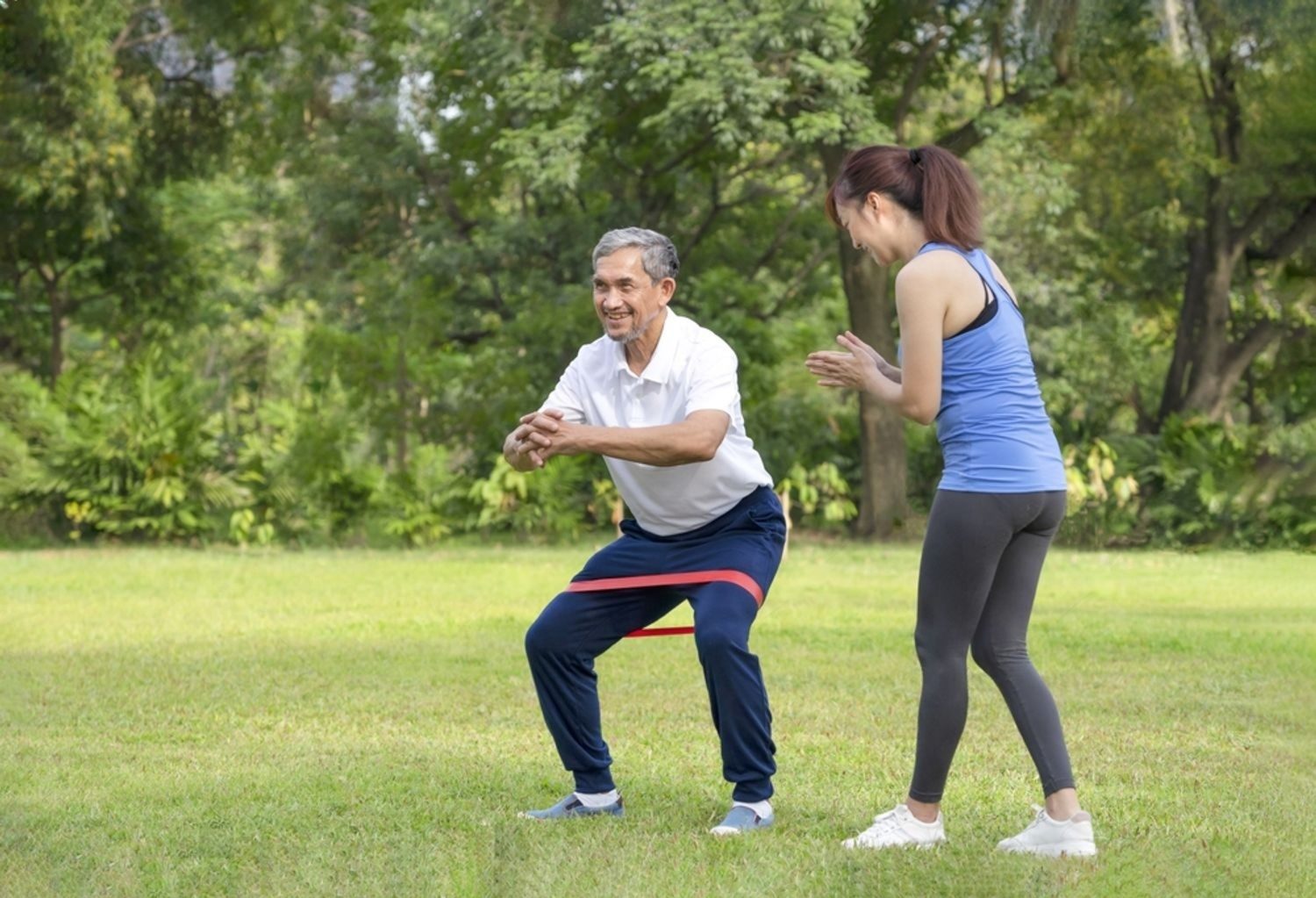
At present, the weight training involves a series of awkward manoeuvres, a mildly offended lower back, and a good deal of bargaining between the trainer and my spine. If I do not grow some better muscles, these joyous “Dadu” moments may become difficult.
Strength, I am learning, is not about vanity at this stage of life. It is about insurance. It is about future-proofing the everyday moments that matter. Picking up a child. Lifting a suitcase. Catching yourself before a fall becomes a headline.
Muscle, it turns out, is not merely aesthetic; it is deeply practical.
And yet many of us were raised to believe that gyms are for the young, the shiny, and the already fit. Walking into a training routine after a certain age can feel like arriving at a party where you do not know the dress code — and everyone else seems to have arrived decades earlier.
There is a certain self-consciousness that comes with it: the feeling of being slightly out of place in a world obsessed with speed and spectacle.
But here is the secret no one tells you early enough: everyone in that room is negotiating something. Injury. Age. Insecurity. Ambition. The mirrors may reflect bodies, but the real work is happening internally.
And there is a peculiar freedom in lifting weights when you are no longer trying to impress anyone. You are there to serve your future self — the one who would like to keep doing things independently for as long as possible.
There is also something unexpectedly meditative about strength training. The slow, deliberate movements. The attention to breath. The conversation between effort and rest.
It demands presence in a way that much of modern life does not.
You cannot scroll while squatting.
You cannot multitask while deadlifting.
For a few minutes, the world narrows to a simple question: can I lift this safely and well?

Progress, when it comes, is wonderfully unglamorous. An extra kilogram. One more repetition. The quiet surprise of realising that something which once felt impossible now feels merely challenging.
These are not triumphs that invite applause. But they bring a deep sense of satisfaction.
Of course, there are days when the body pushes back. When joints creak like old floorboards and enthusiasm must be coaxed rather than summoned. On those days, the temptation to retreat into the familiar — the chair, the cup of coffee, the comforting fiction that rest alone will keep us capable — is strong.
Sometimes I even call the trainer and cancel the appointment.
But strength is not built in comfort. It is built in conversation with resistance.
What I am learning, slowly and with occasional grumbling, is that ageing does not require surrender. It requires adaptation. We cannot train the way we once did, nor should we want to. But we can train wisely. Patiently. With respect for the miles already travelled.
Ageing, after all, is not a failure of strength; it is a reminder to redefine it.
And if strength today looks like patience, persistence, and simply showing up despite doubt, then perhaps I am stronger than I thought.

If I can lift my grandson without fear, climb a staircase without strategy, or travel without dreading the luggage carousel, that will be victory enough. Not the loud, triumphant kind, but the deeply satisfying sort that settles quietly into daily life.
There is a particular satisfaction in feeling physically capable again — not youthful, but reliable.
To trust your body is a quiet joy. To know that when life asks you to lift something — your grandchild, a bag, or simply yourself up a flight of steps — you are less likely to be undone by it.
So yes, the mind is willing but the flesh is not.
At least not yet.
But perhaps, with patience, that too will change.