






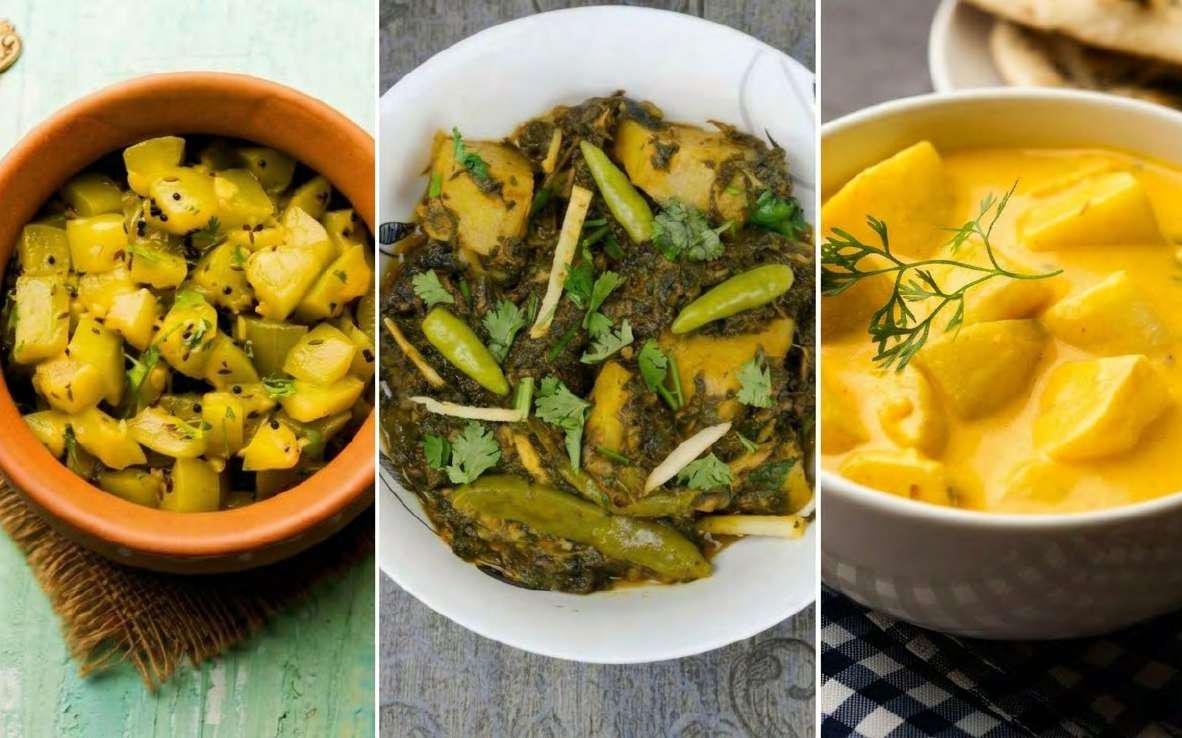
Udai Mathur takes us down the potato trail, sharing recipes that are comforting and with a healthy twist
It is a scene familiar in almost every Indian household: the aromatic sizzle of jeera and hing hitting the pan, followed by the satisfying thud of diced potatoes. Whether you call it Aloo in the North, Urulaikizhangu in the South or Alu in the East, this humble tuber is more than just a vegetable; it is a comfort, a staple, and for many, the very heart of the meal.
However, for those of us navigating our golden years, a diagnosis of “sugar” (diabetes) often feels like a door closing on these simple pleasures. We are frequently told that the potato is the enemy, a “starch bomb” that must be banished from the kitchen. But is that the whole truth? Or is there a way to balance our heritage flavours with our health?
Let’s pull back the curtain on the potato and explore how we can manage our blood sugar without losing the joy of the dining table.
The Science of the ‘Sugar’ Spike
To understand why doctors are often wary of potatoes, we first need to look at how our bodies handle fuel. Whether we are in our sixties or our eighties, our bodies run on glucose, a type of sugar derived from the carbohydrates we eat.
Think of your body like a vintage car. The food you eat is the petrol. When you eat starchy foods like potatoes, rice, or wheat, your digestive system breaks them down into glucose, which enters your bloodstream. To use this “petrol,” your body needs a key called insulin to open the doors to your cells.
As we age, this system can become a little temperamental. In Type 2 diabetes—which is common as we get older—the locks on our cells become “rusty” (insulin resistance), or our body just doesn’t produce enough keys to keep up. When the glucose can’t get into the cells, it stays in the blood, leading to high sugar levels that can, over time, affect our heart, kidneys, and eyesight.
The Potato Paradox: Friend or Foe?
The potato gets a bad reputation because it is a “high-carb” food. Because it is mostly starch, it can cause a rapid rise in blood glucose. In medical terms, it has a high Glycaemic Index (GI).
However, the “truth” about the potato is that it isn’t just a lump of sugar. It is packed with Vitamin C, potassium (excellent for blood pressure), and Vitamin B6. The secret to enjoying it lies not in total avoidance, but in how we cook it and what we pair it with.
The Magic of the ‘Cooling’ Method
Here is a bit of kitchen science that every Indian grandparent should know: if you boil a potato and let it cool down completely before eating it—or even better, keep it in the fridge overnight—something wonderful happens. The starch transforms into “resistant starch.”
This type of starch acts more like fibre. It bypasses the small intestine and doesn’t cause that dreaded sugar spike. So, a cold Aloo Chaat or a dish made with cooled, boiled potatoes is much kinder to your blood sugar than a hot, mashed potato or a fried Pakora.
Refining the Indian Plate
In India, we rarely eat a potato by itself. It is usually part of a larger, vibrant meal. This is our greatest advantage. By using a few traditional techniques, we can “blunt” the impact of the potato:
- The Fibre Buffer: Never let the potato travel alone. If you are making a sabzi, load it with green beans, peas, or Palak (spinach). The fibre in the green vegetables slows down the digestion of the potato starch.
- Protein Pairing: Always ensure there is a bowl of Dal, a serving of curd, or some paneer on your plate. Protein is excellent at stabilising blood sugar.
- The Roti Rule: If you are having a small portion of potatoes, try to reduce your rice or roti portion for that meal. Think of it as a trade-off.
- Mind the Oil: Often, it isn’t the potato that causes the problem, but the heavy ghee or refined oil we use to fry it. Steaming, light sautéing, or pressure-cooking are your best friends.
Living with diabetes in your senior years is not about punishment; it is about mindfulness. You don’t have to say a permanent goodbye to the Aloo. Instead, invite it to the table as a guest rather than the guest of honour.
3 Healthy, Senior-Friendly Potato Recipes
These recipes use the “boil and cool” method or high-fibre pairings to make them safer for blood sugar management.
- The “Cool” Dahi Aloo (Potato in Spiced Curd)
This dish uses the resistant starch method. Cooling the potatoes and pairing them with protein-rich curd makes it a much safer option.
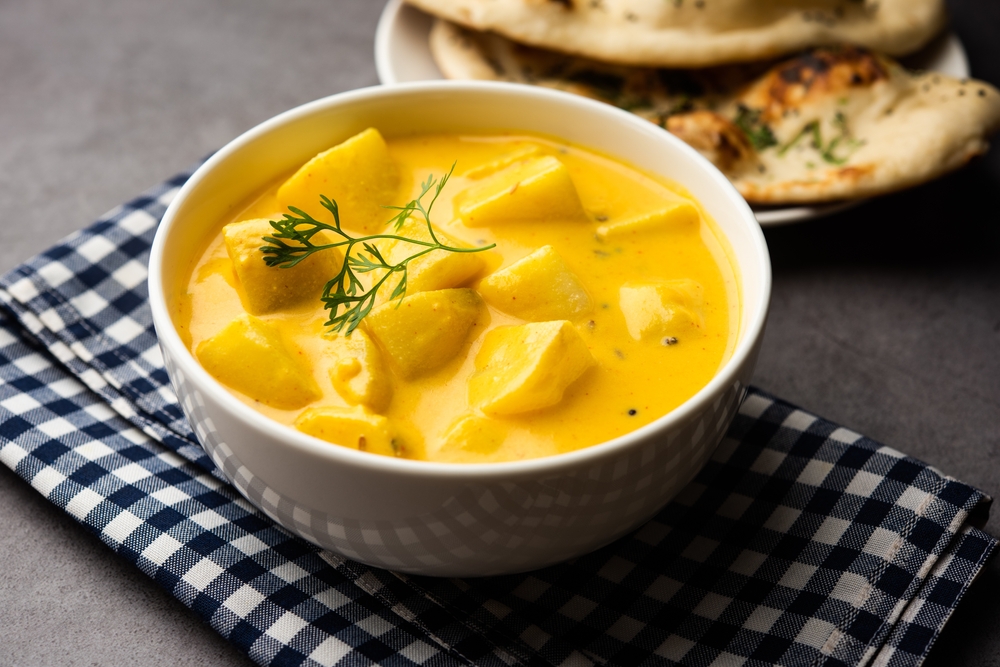
- Ingredients: 2 medium potatoes (boiled the night before and chilled), 1 cup low-fat curd, green chillies, ginger paste, and curry leaves.
- Method: Dice the cold potatoes. Whisk the curd with a little roasted cumin powder (jeera). Heat half a teaspoon of oil, add mustard seeds and curry leaves, then turn off the heat. Stir in the cold potatoes and the curd.
- Why it works: The cold potato has less impact on sugar, and the curd provides protein and probiotics.
- Aloo-Palak (Potato with Spinach)
A classic North Indian dish where the greens do the heavy lifting.
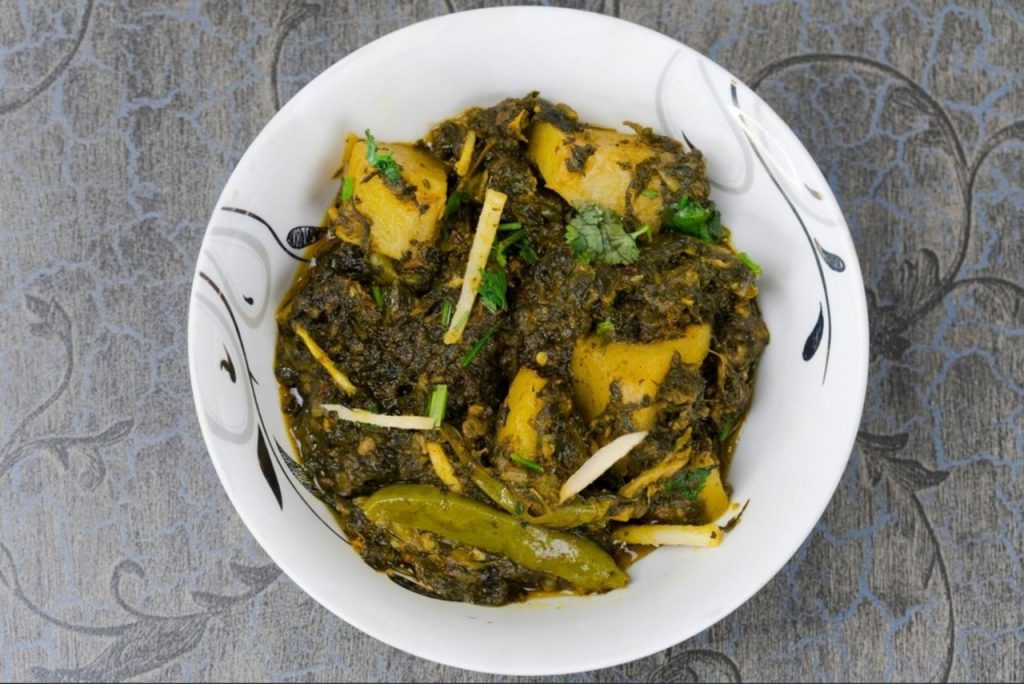
- Ingredients: 1 small potato, 2 large bunches of fresh spinach (Palak), garlic, and minimal oil.
- Method: Use a 3:1 ratio (three parts spinach to one part potato). Sauté the garlic and a little onion, add the spinach until it wilts, and then toss in small cubes of boiled potato.
- Why it works: The massive amount of fibre in the spinach acts as a “speed bump,” slowing down how quickly your body absorbs the starch from the potato.
- Bengali-Style Lau-Aloo (Bottle Gourd & Potato)
A light, “shanti” dish that is easy on the digestion and the blood sugar.
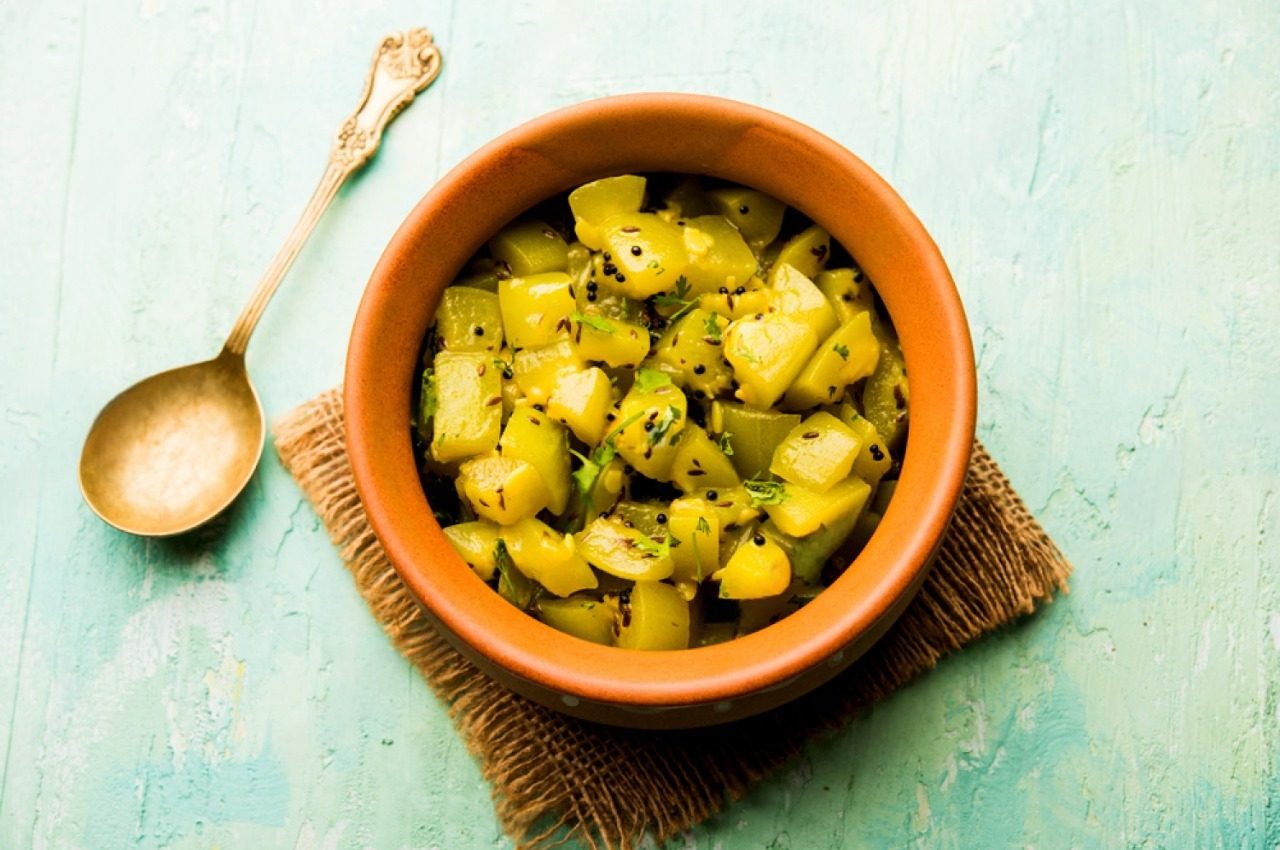
- Ingredients: 1 cup Lau (Bottle Gourd/Doodhi), half a potato, kalonji (black onion seeds), and turmeric.
- Method: Bottle gourd has a very high water content and very low calories. Stew the gourd and the potato together with minimal spices.
- Why it works: By “diluting” the potato with a high-volume, low-calorie vegetable like Lau, you get the satisfaction of eating a full bowl of sabzi with only a fraction of the carbohydrate load.