






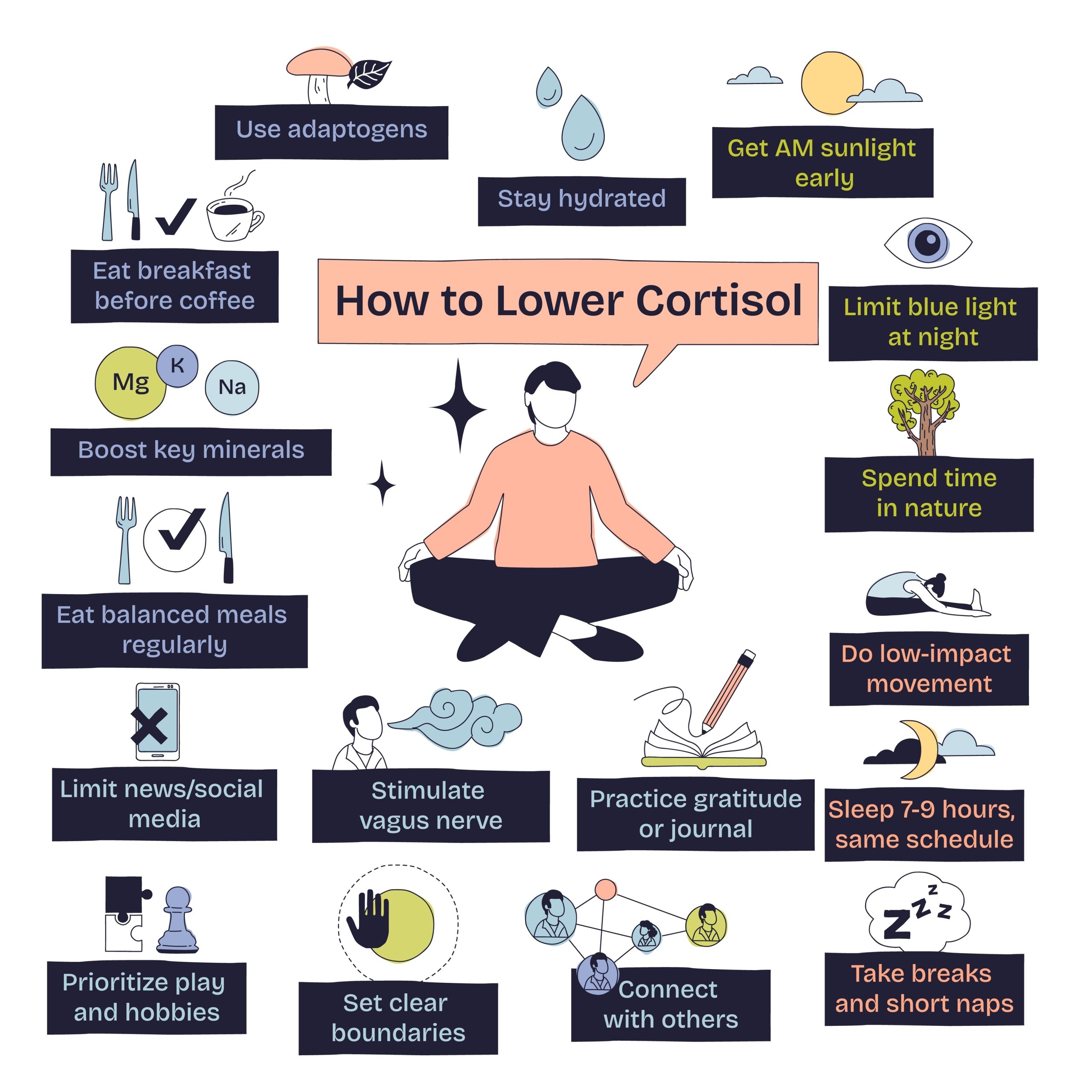
A science-backed guide to lower cortisol levels
As we grow older, our bodies become wiser—but also more sensitive. One hormone that deserves special attention in later life is cortisol, often called the stress hormone. While cortisol is essential for survival, chronically high levels can quietly undermine health, particularly in seniors.
Understanding how to manage cortisol is not about eliminating stress completely—it is about helping the body return to balance.
What Is Cortisol, and Why Do We Need It?
Cortisol is produced by the adrenal glands and plays a vital role in:
- Regulating blood sugar
- Controlling inflammation
- Supporting blood pressure
- Helping the body respond to short-term stress
In small, timely doses, cortisol is protective. The problem arises when stress becomes constant, keeping cortisol levels elevated for weeks, months, or even years.
According to guidance aligned with global ageing research highlighted by organisations such as the World Health Organization, chronic stress is a significant contributor to non-communicable diseases in older adults.
Why High Cortisol Is Especially Harmful for Seniors
Scientific studies show that prolonged high cortisol in older adults is linked to:
- Increased belly fat and insulin resistance
- Weakened immunity, leading to frequent infections
- Bone loss and muscle wasting, increasing fall risk
- Poor sleep and memory decline
- Higher blood pressure and heart disease risk
Ageing bodies recover more slowly from hormonal imbalances, which makes cortisol management not optional, but essential.
Science-Backed Ways to Lower Cortisol
- Gentle, Consistent Movement
Research shows that moderate exercise lowers cortisol, while excessive or very intense workouts may increase it.
Best options for Indian seniors:
- Morning walks in natural light
- Yoga (especially restorative or Hatha yoga)
- Tai chi or light stretching
- Household movement—gardening, sweeping, caring for plants
Even 20–30 minutes daily can reduce stress hormones and improve mood.
- Prioritise Deep, Restorative Sleep
Cortisol should naturally drop at night. Poor sleep keeps it elevated.
Evidence shows seniors sleeping fewer than six hours have higher morning cortisol.
Helpful habits:
- Early, light dinners
- Reducing evening tea or coffee
- A consistent sleep–wake routine
- Exposure to morning sunlight
Traditional practices such as oil foot massage or listening to soft devotional or classical music before bed can also support relaxation.
- Eat to Calm the Nervous System
Certain foods help stabilise blood sugar and reduce cortisol spikes.
Science supports diets that include:
- Whole grains (millets, brown rice)
- Pulses and dals
- Nuts, seeds, and coconut
- Seasonal fruits
- Spices like turmeric and cumin
Avoid frequent consumption of sugary snacks, fried foods, and late-night heavy meals, which raise cortisol and disturb sleep.
- Daily Relaxation Is Not a Luxury
Mind–body practices are proven to lower cortisol levels.
Strong evidence supports:
- Slow breathing (4–6 breaths per minute)
- Meditation or prayer
- Chanting, prayers, bhajans, or mantra repetition
- Mindful activities like knitting, reading, or journaling
Just 10–15 minutes daily can significantly lower stress hormones.
- Stay Socially Connected
Loneliness is a powerful cortisol trigger, particularly in older adults.
Studies show seniors with regular social contact have lower cortisol and better immune health.
Simple steps:
- Phone or video calls with family
- Community walks or laughter clubs
- Volunteering or mentoring younger people
Human connection is one of the most effective anti-stress medicines.
- Learn to Let Go (Emotionally and Practically)
Holding onto unresolved worries keeps cortisol elevated.
Psychological research confirms that acceptance, gratitude, and purpose reduce stress hormones.
Helpful practices include:
- Gratitude journaling
- Limiting exposure to distressing news
- Focusing on what can be controlled
- Finding meaning through service, faith, or creativity
Cortisol and Healthy Ageing
Lowering cortisol does not just reduce stress—it supports:
- Better heart health
- Sharper memory
- Stronger immunity
- Improved mobility
- Emotional resilience
In Indian culture, ageing has traditionally been associated with reflection, wisdom, and inner calm. Modern science now confirms what tradition has long known: a calmer nervous system helps us age better.