

A celebration of light, love, and renewal, let’s understand what this beloved festival means…
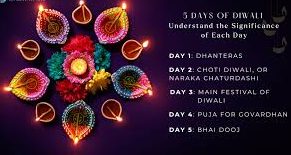
Diwali isn’t just a single day of lights — it’s a five-day festival that marks renewal, gratitude, and the triumph of good over evil. Each day carries its own significance, steeped in mythology, family traditions, and the gentle rhythm of Indian life.
Whether you celebrate quietly at home or with children and grandchildren, or whether you want to understand the story behind each day, this article will add depth and joy to the festivities around us.
Let’s walk through the five beautiful days of Diwali, one light at a time.
Day 1 – Dhanteras: Welcoming Prosperity
The festival begins with Dhanteras, a day to invite health and wealth into our homes. The word ‘Dhan’ means wealth, and ‘Teras’ refers to the thirteenth day of the lunar fortnight.
Traditionally, families buy something new — often silver coins, utensils, or even a small piece of gold — to symbolise prosperity. For seniors, it can be a lovely time to:
- Polish your old silverware or temple idols.
- Decorate the entrance with rangoli or flowers.
- Light the first diya in honour of Dhanvantari, the physician of the gods, who symbolises health and healing.
It’s a gentle reminder that wealth isn’t just money — it’s also wellbeing and togetherness.
Day 2 – Naraka Chaturdashi (Choti Diwali): The Triumph of Light Over Darkness
Known as Choti Diwali, this day commemorates Lord Krishna’s victory over the demon Narakasura, symbolising the destruction of darkness and ignorance.
Traditionally, homes are cleaned thoroughly, and oil lamps are lit early in the morning. People also apply fragrant oils or ubtan (a natural herbal paste) before bathing — a cleansing ritual to start afresh.
For seniors, this day can be a beautiful time to:
- Light scented candles or diyas in your home.
- Play soft devotional music.
- Reflect on letting go of old worries, and embracing peace.
Day 3 – Lakshmi Puja: The Main Day of Diwali
This is the heart of the festival, when homes and hearts shine brightest. Goddess Lakshmi, the bringer of wealth and good fortune, is worshipped in the evening.
Homes are lit up with diyas, string lights, and candles, and families gather for prayers, sweets, and laughter.
For many seniors, it’s a deeply nostalgic day — remembering childhood rituals, the sound of crackers (now replaced by eco-friendly lights), and the comfort of shared meals.
A few mindful touches:
- Use LED diyas or lamps for safety and easy reuse.
- Decorate your altar with marigold, mango leaves, and rice rangolis.
- End the evening with gratitude — for the light within, and around you.
Day 4 – Govardhan Puja (Annakut): Gratitude to Nature and Nourishment
The day after Diwali celebrates Lord Krishna lifting Mount Govardhan to protect the villagers of Vrindavan from torrential rains. It’s also known as Annakut, meaning ‘mountain of food’.
Traditionally, people prepare a variety of dishes to offer to the gods, symbolising gratitude for nature’s abundance.
If you’re celebrating at home:
- Cook or share a simple meal made with love — it could be khichdi, halwa, or your favourite festive dish.
- Offer it at your home temple or distribute to those in need.
- Talk to grandchildren about how this day teaches thankfulness to the earth and our farmers.
Day 5 – Bhai Dooj: A Bond Between Siblings
The festival ends on a tender note with Bhai Dooj, a day celebrating the bond between brothers and sisters. It is believed that Yama, the god of death, visited his sister Yamuna on this day — and she welcomed him with love and sweets.
Sisters pray for their brothers’ wellbeing and longevity, while brothers offer gifts and promises of protection.
Even if your siblings live far away, a simple phone call or video chat can rekindle those affectionate ties. The warmth of shared memories is the real gift.
The five days of Diwali remind us that life itself is a cycle of cleansing, renewal, and gratitude.
- Dhanteras teaches us to value health and prosperity.
- Choti Diwali reminds us to dispel darkness.
- Lakshmi Puja celebrates light and abundance.
- Govardhan Puja grounds us in gratitude.
- Bhai Dooj honours our relationships.
As lamps flicker and sweets are shared, remember — the real light of Diwali shines not in the diyas, but in the kindness we give and the joy we share.
Seniors Today wishes you and your loved ones a Diwali filled with peace, love, and glowing memories.