






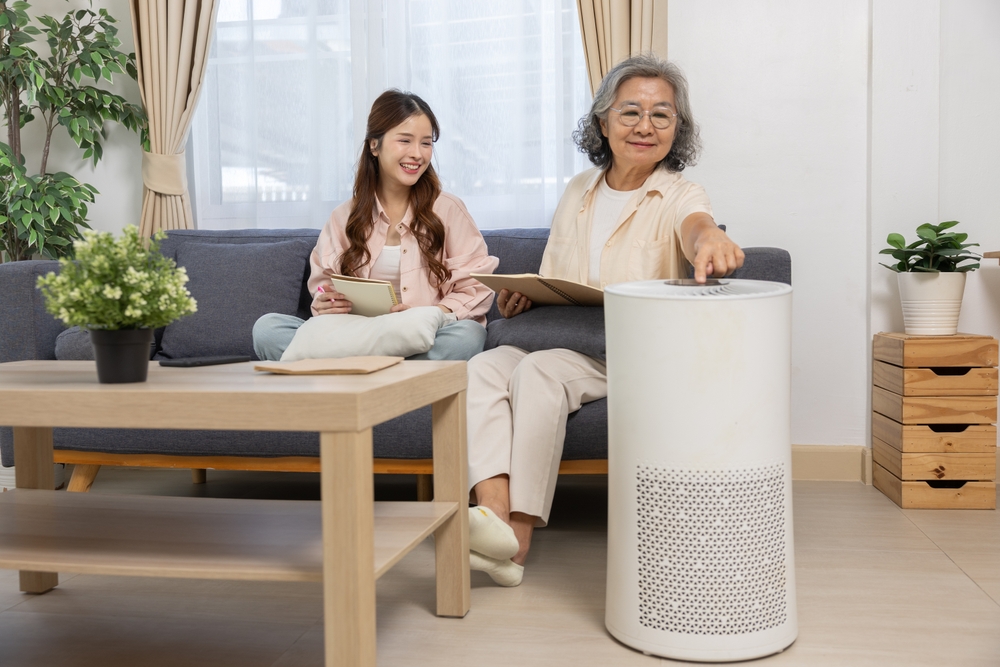
Everything you need to know about what’s becoming a necessity in certain urban areas
As winter sets in across India, so does the thick, smoggy air. For many, the haze outside is more than an eyesore — it’s a health concern. Hospitals see a spike in respiratory issues, and seniors often find themselves coughing, wheezing, or feeling breathless even indoors.
In recent years, air purifiers have moved from luxury to necessity in many urban homes. But do they really work? And how do you choose one that suits your needs? Here’s what the science — not marketing — says.
- What Exactly Does an Air Purifier Do?
An air purifier is a device that removes airborne pollutants — such as dust, pollen, smoke, and fine particulate matter (PM2.5) — from indoor air. It draws in air, passes it through a series of filters, and releases cleaner air back into the room.
The goal: to reduce your exposure to pollutants that can irritate the lungs, trigger allergies, or worsen heart and respiratory conditions.
Science says:
A 2022 review in Environmental Health Perspectives found that HEPA (High-Efficiency Particulate Air) filters can reduce indoor PM2.5 levels by up to 60–80%, significantly improving air quality in homes during pollution season.
- What Air Purifiers Can (and Can’t) Do
Let’s be realistic — an air purifier isn’t a magic wand, but it can help a great deal if used correctly.
✅ They can:
- Remove particulate pollutants such as PM2.5, pollen, and pet dander.
- Reduce symptoms of asthma, COPD, and allergies by improving air quality.
- Decrease exposure to indoor smoke, dust, and traffic-related pollutants.
❌ They can’t:
- Remove carbon monoxide, radon, or heavy gases.
- Replace the need for good ventilation.
- Fully protect you if your windows are open during high AQI days.
“Think of an air purifier as a mask for your home — it filters the air you breathe, but you still need to limit exposure,” explains Dr. Arvind Kumar, a leading chest surgeon at Medanta Hospital.
- Understanding the Types of Filters
Knowing what’s inside your air purifier helps you choose wisely.
| Filter Type | What it Does | Key Point |
|---|---|---|
| HEPA Filter | Captures 99.97% of particles ≥0.3 microns (PM2.5, dust, pollen). | Must be “True HEPA”, not “HEPA-type”. |
| Activated Carbon Filter | Absorbs odours, gases, VOCs (from paint, cleaning agents). | Important for city homes and smokers. |
| Pre-Filter | Traps large dust and hair, extending HEPA life. | Needs monthly cleaning. |
| UV or Ioniser Systems | Claim to kill germs or neutralise particles. | May release ozone — check safety certification before use. |
The HEPA filter is the heart of any good purifier. Skip fancy features; focus on the filtration quality.
- Room Size and Placement Matter
The effectiveness of an air purifier depends on room size and placement.
- Check the CADR (Clean Air Delivery Rate) — it indicates how fast the purifier cleans the air.
- For bedrooms: CADR of 150–200 m³/hr
- For living rooms: 300–400 m³/hr or more
- Place it about 6–8 inches away from walls to allow airflow.
- Keep windows and doors closed when it’s on.
- Run it continuously during high AQI days, especially early morning and late evening when pollution peaks.
- What the Research Says About Health Benefits
Multiple studies support the use of air purifiers in polluted environments:
- A 2020 study in JAMA Internal Medicine showed that older adults with heart disease had lower blood pressure after using HEPA purifiers at home for two weeks.
- A 2021 Lancet Planetary Health paper found that reducing indoor PM2.5 improved sleep quality and lung function in seniors living in high-pollution areas.
- In Delhi, researchers at IIT Kanpur found that indoor PM2.5 levels can remain 4–5 times above WHO limits even with windows closed — meaning air purifiers are not just useful, but necessary.
- Maintenance: The Hidden Cost
A purifier is only as good as its maintenance.
- Clean pre-filters every 2–3 weeks (dust builds up fast in India).
- Replace HEPA filters every 6–12 months — or sooner if your purifier runs daily.
- Change carbon filters every 3–6 months for best odour control.
- Always check for filter replacement indicators and buy from reliable brands.
A clogged filter not only stops working but may re-release pollutants into your room.
- Combine with Other Healthy Habits
Air purifiers work best as part of a wider clean-air strategy:
- Use exhaust fans in kitchens and bathrooms to reduce humidity and smoke.
- Avoid incense, candles, and mosquito coils indoors — they release fine soot.
- Grow indoor plants like snake plant, money plant, or areca palm (they don’t purify air dramatically, but they improve humidity and well-being).
- Ventilate during low-AQI hours — typically between 1–3 p.m.
- How Much Should You Spend?
Good air purifiers with genuine HEPA and carbon filters start around ₹10,000–₹20,000.
Models above ₹30,000 often include better sensors, noise control, and energy efficiency — but performance depends mainly on filter quality and CADR, not brand price.
For most senior households, a mid-range HEPA + carbon purifier is enough for one bedroom or living area.
- Signs Your Air Purifier Is Working
- Less dust settling on furniture.
- Fresher, cleaner smell indoors.
- Reduced morning throat irritation or coughing.
- The purifier’s AQI indicator (if present) shows lower PM2.5 readings after a few hours.
Worth It? Yes — If You Use It Right
For seniors, children, and anyone with heart or lung conditions, the benefits of air purifiers are scientifically proven. They reduce exposure to harmful particles, improve breathing comfort, and lower the risk of long-term respiratory issues.
But remember — they don’t replace ventilation, healthy diet, or clean habits.
They simply help you breathe a little easier, especially when the world outside is grey with smog.
“Think of an air purifier as part of your home’s winter care routine — just like a woollen blanket for your lungs,” says pulmonologist Dr. Randeep Guleria, former Director of AIIMS.
| Do | Don’t |
|---|---|
| Choose a True HEPA + Carbon purifier | Fall for ozone or ioniser-only models |
| Check CADR and room size | Keep it in a corner or behind furniture |
| Maintain filters regularly | Ignore filter-change warnings |
| Keep doors/windows closed | Expect miracles on open balconies |
| Use along with ventilation and greenery | Burn incense or candles indoors |
A Buying Guide: What to look for in an air purifier
Here are key features (with science-backing) to evaluate when buying:
- True HEPA filter + activated carbon
- Look for “True HEPA” filters (also called H13/H14) which can trap ≈ 99.97% of particles ≥0.3 µm.
- A carbon filter is important for odours, gases and VOCs (volatile organic compounds) common in urban Indian homes.
- Avoid units labelled just “HEPA‐type” or “HEPA-like” — these are often less efficient.
- CADR (Clean Air Delivery Rate) matching your room size
- CADR is a measure of how much “clean air” a purifier delivers per unit time.
- A rule of thumb: CADR (for smoke/dust) should be at least two-thirds of the room area in square feet (for rooms up to standard ceiling height).
- For example: For a room 12 ft × 15 ft (~180 sq ft), aim for CADR ≥ ~120.
- Be cautious: marketing may exaggerate room size.
- Coverage / Room size & placement
- Ensure the purifier covers the correct room size (bedroom vs lounge) given your ceiling height and layout.
- Place it where airflow is unblocked, not stuck behind furniture or curtains.
- Keep doors/windows closed when running on high (especially in high-AQI days) to allow the unit to do its job effectively.
- Noise level
- Seniors may prefer quieter operation (especially in bedrooms at night). Some high settings can be audible.
- “Sleep mode” can reduce speed/noise but then check whether the CADR is still sufficient at that lower setting.
- Filter replacement & maintenance cost
- Filters need cleaning (pre-filter) and replacement (HEPA + carbon) periodically. This is an ongoing cost.
- Easy access, indicator lights for filter change, availability of spare filters locally are benefits.
- Some purifiers may only perform well if filters are changed on schedule — clogged filters reduce efficiency or may even re-release pollutants.
- Energy consumption & modes
- Because many units will run almost continuously (especially during high pollution seasons), energy consumption matters.
- Auto or “eco” mode (which adjusts fan speed based on air-quality sensor) may save power and reduce noise.
- Avoid ozone-producing/ioniser-only purifiers
- Some cheap units use ionisers or produce ozone; ozone itself is a lung irritant.
- Ensure the model you buy is safe for continuous use in homes, especially for seniors with lung/heart issues.
- Additional features (nice to have but not essential)
- Real-time air quality display (PM2.5 sensor)
- Smart connectivity / app control
- Child lock, filter change indicator, quiet night mode
- Multiple fan speeds
Recommended Models for Indian Conditions
Here are eight models to consider (available in India) that span budget to higher end. They are suggestions, not endorsements — always check current local specs/pricing.
-
Philips 1000i Series Smart Air Purifier
- ₹13,499
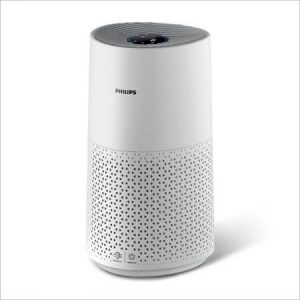
- bigbasket.com + others
2. Xiaomi Smart Air Purifier 4
- ₹17,999
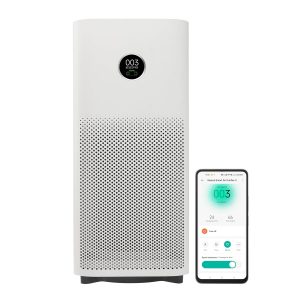
- Flipkart + others
3. Havells Meditate AP 250 Smart Air Purifier
- ₹18,999
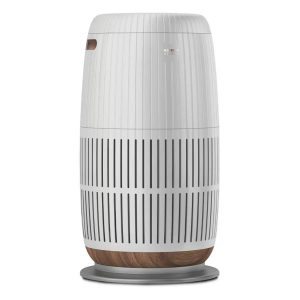
- Amazon.in + others
4. Philips Smart Air Purifier
- ₹10,249
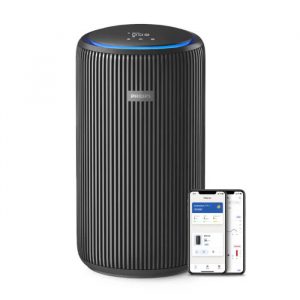
- Reliance Digital + others
5. Eureka Forbes 270 Air Purifier
- ₹7,599
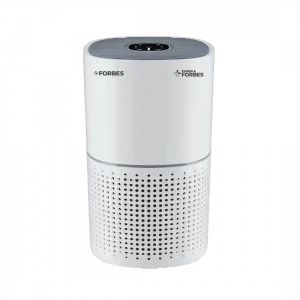
- JioMart Electronics + others
6. Eureka Forbes Air Purifier 150
- ₹4,999
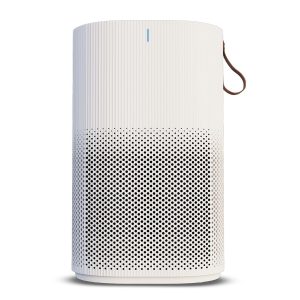
- Amazon.in + others
Here’s a breakdown of each:
- Philips 1000i Series Smart Air Purifier: A strong mid-premium model with smart features, good for bedroom + living room in Indian city apartments.
- Xiaomi Smart Air Purifier 4: Mid-range smart option, suited for tech-savvy seniors/families, decent room size coverage.
- Havells Meditate AP 250 Smart Air Purifier: Higher mid-range, likely better for larger living area; smart features + brand support in India.
- Philips Smart Air Purifier: Budget smart option — good for single room or bedroom.
- Eureka Forbes 270 Air Purifier: Value budget, simpler features but likely still with HEPA+carbon and decent coverage.
- Eureka Forbes Air Purifier 150: Entry budget model — suitable for small bedroom or if budget is tight.
- [Placeholder – large room high CADR]: (You would insert a model here that has very high CADR and is meant for large room/hall).
- [Placeholder – premium high CADR model]: (Another premium unit for larger space, high budget).
How to pick among these:
- If you have a single bedroom and budget is limited → go for entry/ budget (Air Purifier 150 / Eureka Forbes 270).
- If you use purifier in living + bedroom, or have older senior (= stronger need) → invest in mid-premium (Philips 1000i, Xiaomi 4).
- If your home has large open plan living room (20′×15′+), or multiple seniors/visitors, or heavy pollution nearby (busy road) → choose large-room high CADR model.
- Always check the specs for your room size (CADR vs area) before buying.
For Seniors: Specific Tips and Considerations
- Choose a model with quiet operation or “sleep mode” so it doesn’t disturb night-rest.
- Choose a unit that’s easy to maintain — low filter replacement complexity, good service support in your city.
- Since many seniors spend lots of time indoors, run the purifier continuously (especially during high pollution/winter).
- Keep purifier in the room where senior spends most time (bedroom + living area) rather than scattering small units everywhere — one good unit used properly beats many under-powered ones.
- Ensure the device has easy controls, or remote/app control if convenient.
- Combine with other habits: keep windows/doors closed when purifier is running at high fan; avoid indoor smoke/incense; ventilate when outdoor AQI is low.