






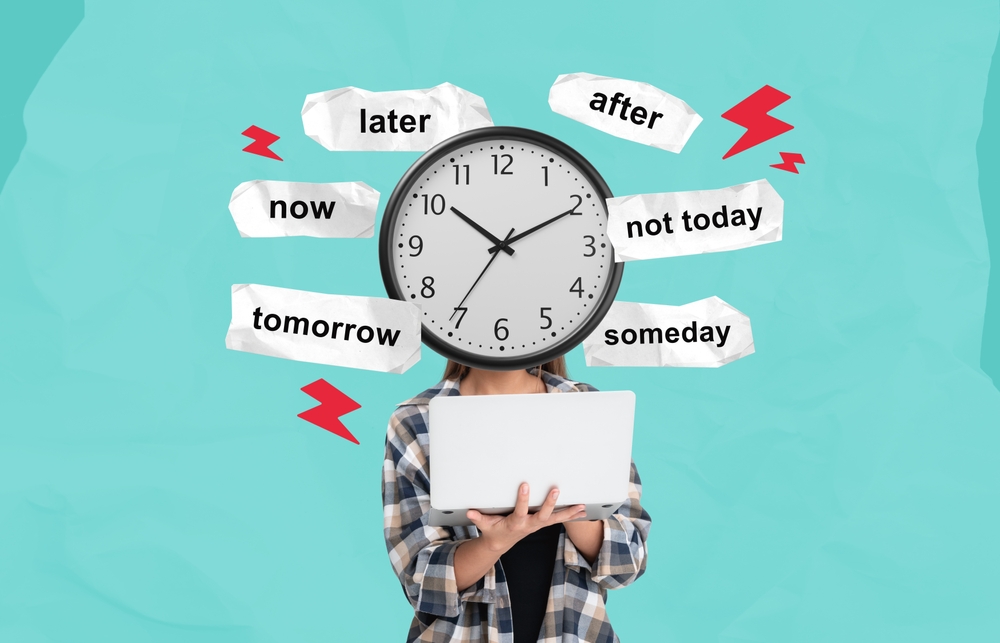
The hidden psychology of procrastination after 60
You know you should do it.
Make the doctor’s appointment. Sort out the paperwork. Call an old friend. Clear the cupboard. Start exercising again. Learn how to use that new phone. Write the memoir you have been talking about for years. Have the conversation you know you need to have.
Yet somehow, tomorrow seems like a perfectly reasonable time to begin.
And then tomorrow becomes next week.
Next week becomes next month.
This is procrastination — and it is remarkably human.
We often describe procrastination as laziness, lack of discipline or poor time management. But psychology tells a more interesting story. Procrastination is generally understood as voluntarily delaying an intended action despite knowing that the delay may have negative consequences. It is closely connected with self-regulation and, importantly, with how we manage uncomfortable emotions.
So when you repeatedly postpone something, the more useful question may not be “Why am I so lazy?”
It may be:
“What feeling am I trying not to experience?”
Procrastination is not necessarily an age problem
There is an interesting paradox here.
Research suggests that procrastination tends to decline with age. In other words, older adults, on average, may procrastinate less than younger people.
That makes sense. With experience often comes a better understanding of priorities, consequences and the value of time.
But later life can also introduce circumstances that make certain tasks emotionally difficult.
Retirement can challenge your sense of identity.
The death of a spouse or friend can make socialising painful.
Children moving away can change the structure of everyday life.
Physical changes can make previously simple activities feel daunting.
Financial decisions can suddenly carry greater emotional weight.
Technology can make you feel that the world is moving faster than you are.
And some decisions — moving house, downsizing, giving away possessions, changing a relationship, starting something new — can feel as though they represent the closing of one chapter.
You may therefore find yourself avoiding not the task itself, but what the task represents.
What if procrastination is protecting you?
Imagine that you have been meaning to organise your photographs for three years.
It sounds like an organisational problem.
But perhaps every photograph brings back someone who is no longer alive.
So you postpone.
Or you have been thinking about joining a dance class.
You tell yourself you are too busy.
But underneath that may be a fear of being the oldest person in the room, of looking awkward, or of discovering that your body cannot do what it once could.
You keep saying you will start “when you feel ready”.
Perhaps you are not waiting for time.
Perhaps you are waiting for fear to disappear.
It rarely does.
Psychologists recognise avoidance as an important way people manage uncomfortable emotions. Research into emotion regulation has consistently linked maladaptive strategies such as avoidance and rumination with poorer psychological outcomes.
This does not mean that every act of procrastination conceals a deep unresolved trauma. Sometimes you simply do not want to fill in the form.
But persistent procrastination can occasionally be a useful psychological clue.
The fears hiding underneath “I’ll do it later”
Fear of failure
You may think:
What if I try and cannot do it?
After a lifetime of achievement, admitting that you might struggle can be surprisingly uncomfortable.
So not starting protects you from the possibility of failing.
The problem is that it also protects you from succeeding.
Fear of losing control
Some decisions become more complicated as you grow older.
Moving house, changing financial arrangements, accepting help or discussing future care can all involve uncertainty.
Putting off the decision creates the temporary illusion that nothing has to change.
But postponement is also a decision — just one that you have not consciously made.
Fear of change
You may have spent decades creating routines that make life comfortable.
Then someone suggests learning something new, travelling alone, taking up a hobby or changing your living arrangements.
Your first reaction may be:
Why bother at my age?
But sometimes “why bother?” is simply fear wearing the clothes of practicality.
Perfectionism
Procrastination does not always come from not caring.
Sometimes it comes from caring too much.
If you believe something must be done perfectly, beginning can become intimidating.
You do not write the article because you cannot find the perfect opening.
You do not paint because you are afraid the first attempt will be amateurish.
You do not organise the photographs because you cannot decide how to organise all of them.
The solution may be to replace “perfect” with “started”.
Fear of confronting reality
Some tasks carry information you would rather not know.
You postpone checking your finances.
You avoid making an appointment.
You do not open a difficult letter.
You delay having a conversation about your marriage, your health, your home or your future.
Sometimes procrastination gives you a little more time inside a comforting uncertainty.
But uncertainty can eventually become heavier than the truth.
And then there is grief
Later life can contain many forms of loss — not only the death of people you love.
There can be the loss of a profession, status, physical ability, independence, familiar surroundings or a particular version of yourself.
Sometimes you procrastinate because completing a task forces you to acknowledge that something has changed.
Packing up a child’s old room can mean admitting that the child has truly grown up.
Clearing a spouse’s belongings can make bereavement painfully real.
Moving home can mean acknowledging that the house in which you raised your family is no longer necessary.
In such situations, “I’ll do it tomorrow” may actually mean:
“I’m not emotionally ready to let this go.”
That is very different from laziness.
Procrastination can also be about energy
There is another, much simpler explanation.
Sometimes you are tired.
Physical illness, poor sleep, pain, medication effects, low mood or simply reduced energy can make tasks feel disproportionately difficult.
This matters because you should not automatically interpret every change in motivation as a psychological problem.
If you suddenly find yourself unable to initiate ordinary activities that you previously managed comfortably, especially if this is accompanied by persistent sadness, anxiety, sleep changes, loss of interest or difficulty concentrating, it is worth discussing with a healthcare professional.
Are older people better at managing emotions?
Interestingly, research does not support the stereotype that ageing necessarily means becoming emotionally fragile.
A systematic review of 44 studies found that older adults generally reported greater use of adaptive emotion-regulation strategies and fewer difficulties with emotion regulation than younger adults. However, maladaptive strategies could still be associated with psychological distress and difficulties adapting to negative health outcomes.
Other research suggests that older adults may sometimes place greater emphasis on avoiding negative experiences rather than actively seeking positive ones.
That distinction is fascinating.
You may not be thinking:
“I want to avoid this.”
You may simply be thinking:
“I don’t need this stress.”
And so you don’t go.
You don’t ask.
You don’t begin.
You don’t decide.
The desire for peace can gradually become a habit of avoidance.
Try asking yourself one uncomfortable question
The next time you catch yourself saying “I’ll do it tomorrow”, pause before judging yourself.
Ask:
“What am I afraid I will feel if I do this today?”
The answer may surprise you.
Perhaps:
I might fail.
I might look foolish.
I might discover I cannot do it anymore.
I might have to make a difficult decision.
I might upset someone.
I might have to let go.
I might discover that I actually want something different.
I might succeed — and then have to change my life.
That last one is particularly interesting.
We tend to think of fear of failure as a reason for procrastination. But success can also bring responsibility, visibility and change.
The five-minute beginning
Once you understand the emotion behind procrastination, do not respond by demanding enormous discipline from yourself.
Make the task smaller — and make it immediate
When you are procrastinating, telling yourself “I will do it” can sometimes keep the task safely in the future.
Instead, bring the action into the present.
If you have been avoiding your paperwork, don’t say:
“Today I will organise everything.”
Say:
“I am opening the file.”
If exercise has been on your list for weeks, replace:
“I will go for a walk.”
with:
“I am putting on my walking shoes.”
If you want to write, don’t tell yourself:
“I will write one paragraph.”
Say:
“I am writing one paragraph.”
If you have been avoiding a difficult phone call:
“I am finding the number.”
The difference may seem tiny, but it changes the psychological framing. You are no longer negotiating with a future version of yourself. You are identifying the next action and beginning it now.
You don’t have to finish the whole task.
You only have to start the next small step.
And once you begin, the task often feels considerably less intimidating than it did when it existed only in your head, because starting somewhere reduces the emotional size of the task.
And once you begin, the brain no longer has to react to an imagined problem. It is dealing with a real one — often much less frightening than the one you had constructed in your mind.
Don’t wait to feel motivated
One of the great misconceptions about procrastination is that motivation must come first.
Often it doesn’t.
Action can create motivation.
You begin before you feel completely ready.
You take one small step.
That step creates a little confidence.
Confidence makes the next step easier.
And gradually, avoidance loses its power.
Perhaps procrastination is sometimes a message
Not every postponed task requires psychological excavation.
Sometimes you simply need a calendar, a reminder and a little discipline.
But persistent procrastination can occasionally be worth listening to.
It may be telling you:
“This scares me.”
“This matters to me.”
“I don’t know how to begin.”
“I am grieving.”
“I don’t want my life to change.”
Or perhaps:
“I have spent so much of my life doing things for everyone else that I am no longer sure what I want for myself.”
That is not a reason for self-blame.
It is an invitation to become curious.
Because later life is not simply about completing everything on your to-do list.
It is also about understanding why some things remain on it.
And sometimes the most important thing you can finally stop postponing is your own life.