






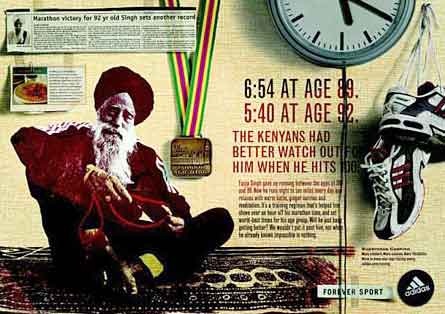
He was the poster boy for active seniorhood.
Fauja Singh, fondly known as the ‘Turbaned Tornado; and celebrated as Britain’s oldest marathon runner, passed away on July 14, 2025 after being struck by an unidentified vehicle in his birth village of Beas Pind in Punjab. He was 114. He died later that evening in a hospital in Jalandhar. The news has left many across the world saddened, but it has also brought with it a flood of memories of a man who inspired generations simply by putting one foot in front of the other, again and again.
Running to Heal
Fauja’s life was a lesson in never giving up, no matter the odds. Born on April 1, 1911 (age and date unverified), he was a frail child who could barely walk until he was five. His legs were thin and weak, and few would have imagined that he would one day become a symbol of endurance. As he grew, he worked on his family’s farm in Punjab, where he built the strength and rhythm that would later serve him so well. He moved to Ilford in East London in 1992, following personal tragedies that included the loss of his wife, Gian Kaur. Most men of his age might have chosen a quiet life, but Fauja Singh decided to take up running at 89. It was his way of healing. In 2000, he ran his first marathon, finishing in 6 hours and 54 minutes and breaking the over-90 world record by almost an hour. That was only the beginning.
Over the next decade, he ran nine full marathons, including those in London, Toronto and New York. In Toronto in 2003, he completed the race in 5 hours and 40 minutes, his personal best, achieved when he was already in his nineties. At 100, he became the oldest known person to finish a marathon, an achievement that made headlines worldwide.
But his story was never just about records. His bright orange turban, his beaming smile and his quiet humility turned him into a symbol of hope. He carried the Olympic torch in London in 2012, and a few years earlier, he had been awarded the British Empire Medal. He also used his fame to support charities, including causes for children and disaster relief.
He starred in an Adidas ad, and in many ways became the poster boy for active seniorhood.
A Lessons for all Seniors
For all his fame, Fauja remained a simple man. His daily routine, even in his later years, reflected this simplicity. In Punjab, he loved walking on the farm, eating home-cooked food like dal-based laddus and fresh curd. His faith kept him grounded, and his humour and warmth won him friends across the globe. Even at 113, he was still active in social causes. In December 2024, he joined a march against drug abuse in Punjab, encouraging young people to stay away from addiction. His coach, Harmander Singh, once called him a “powerhouse of positivity,” and anyone who met Fauja would have agreed.
So what can we learn from Fauja Singh? First, that age is never a barrier to starting something new. He began running at 89 and kept going past 100. Second, that resilience is born out of struggle. Fauja turned every setback into strength. And third, that one can inspire without seeking attention. Fauja was never loud or showy, yet he inspired millions simply by staying true to himself.
Fond Farewell
His passing has drawn tributes from around the world. Punjab governor GC Kataria described him as a man who inspired generations with his strength and commitment.
As senior citizens, many of us know the weight of years, the aches and the tiredness. Fauja showed us that while we may not run marathons, we can keep our spirits alive by staying engaged, walking a little every day, and holding on to hope. His story is not just for athletes, but for anyone who believes life has more to offer, no matter their age.