






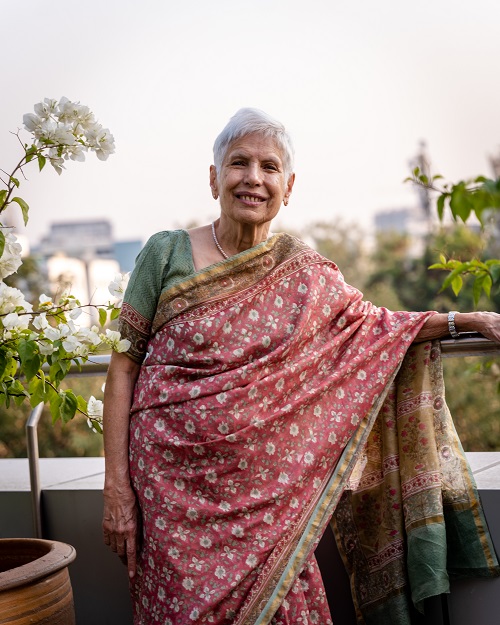
Anu Aga is a very meticulous lady. She gives me the time for our meeting. 11.30 am at her office. In the next 5 minutes her assistant calls and confirms. She even gives me a detailed address. The next day her assistant calls again to let me know that she will meet me at 11.45 instead of 11.30. Wow! I think to myself. No Indian Stretchable Time here.
Her office is on the topmost floor. All neat, spic and span. A cool calm pervades the space, much like the lady. I knock and enter. She gets up to greet me with a hug. Feels good. There is warmth too in the calm. As we settle down, she points out to her feet. “See what I’ve done.” I look down. She’s wearing one leather slipper on her left foot and on the right, she has worn the left side of a rubber slipper! I burst out laughing. But before I can realise that it’s impolite, she too has a hearty laugh. “I was wondering what’s wrong with my feet till I noticed this.” she says, still laughing. But can you walk with the wrong slipper? “Well, I will have to manage till I get home. I have never done something like this, it looks like I’m getting old.”
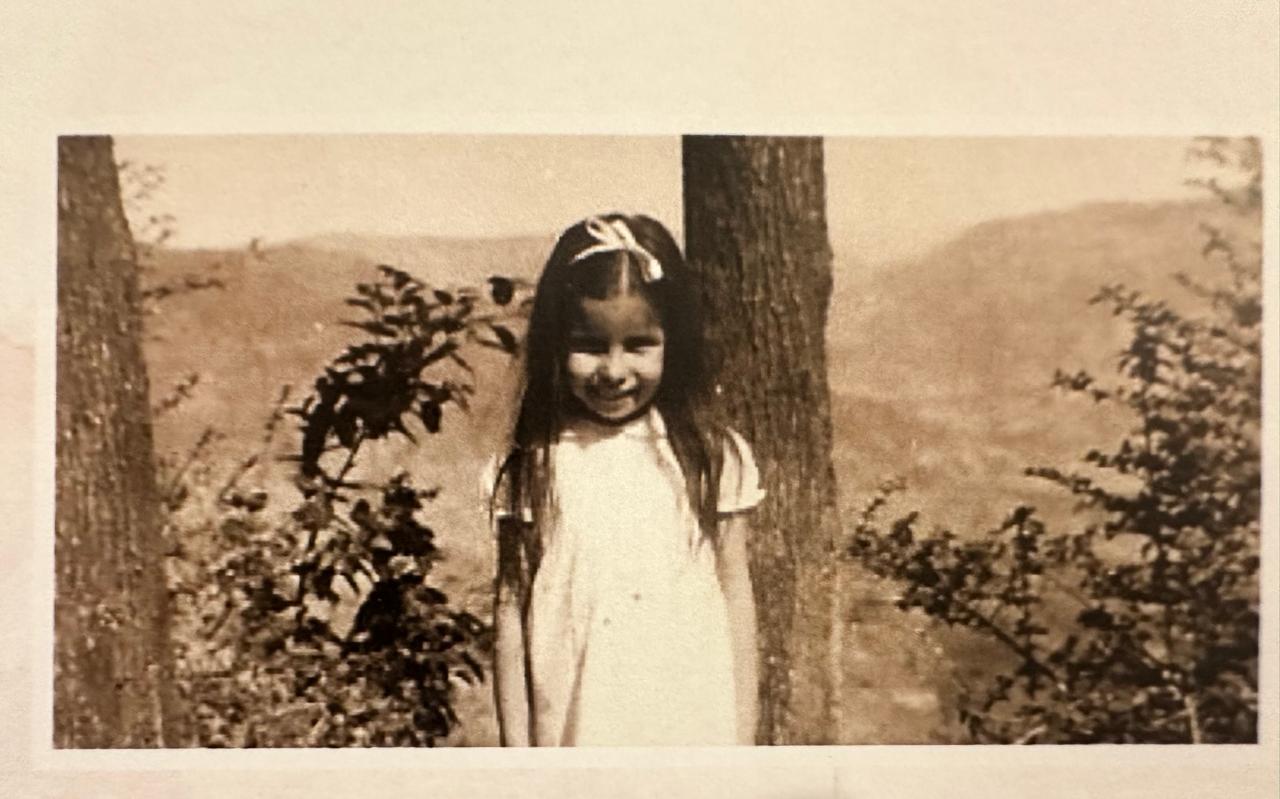
Anu starts her interview by walking down memory lane. “I was the youngest of three siblings, the older two were my brothers. My father would always tell my brothers that they would have to take over the business. Not even once he said that to me. In those days, I had never known a woman heading a company and I assumed it was only men who were heads of corporates!!
My father was not happy with Parsis aping the British by learning English well but not being good at their mother tongue. He was willing to experiment with me and sent me to a bilingual school where Gujarati and English were being taught. I went to Wadia Vachha School at Dadar, with the result that I was not fluent in English nor Gujarati. Since I had good people skills and was very active in the Social Service League of St Xavier’s where I did my B. A. I joined TISS to become a social worker and came first in both the years.
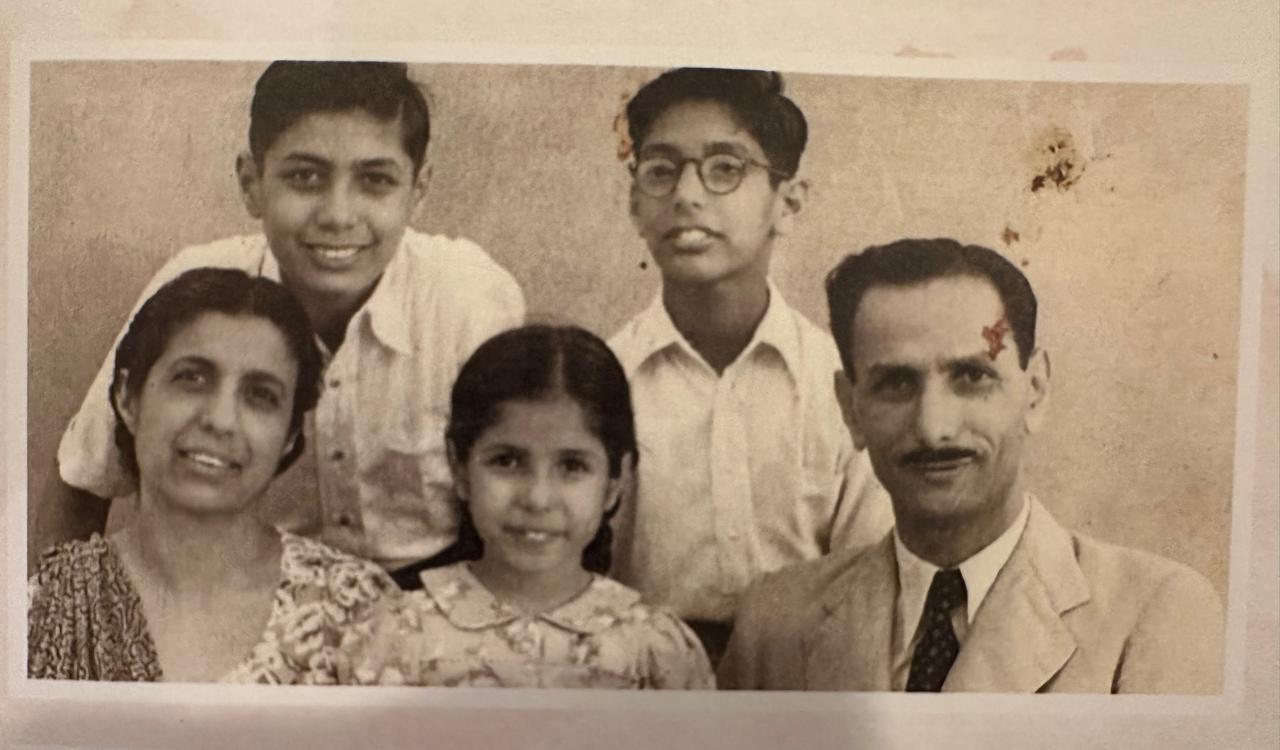

Anu recalls how when she went to Xavier’s College her not being familiar with English idioms at times caused her embarrassment. At a party someone remarked “Farida lost her shirt” and I said “but she wasn’t wearing a shirt, how did she lose it? “In those early days I did feel small, but soon came to terms with it. As I grew up, I realised that one should never let language or the colour of your skin define you as a person. But sadly, we were still carrying the British legacy of English and ‘fair’ being something superior.
When I married my husband Rohinton who was extremely erudite, having studied at Cambridge, never made me feel small or gave importance to knowing English well” Though it has been decades since she lost him, Anu remembers the love and respect the two of them shared. “We met because he was my older brother’s best friend. My brother who wanted to migrate to the US asked my father to interview Rohinton to join the business, since he knew how capable Rohinton was”.

“I was studying at TISS and his house was just behind the college. I’d visit him at times for dinner. His father, who was a wonderful person and was blind had a great sense of humour and would tell me- “she came to have dinner, but ate up my son.” Soon Anu and Rohinton were married. Her younger brother took over the business of sterilising medical equipment and her father along with Rohinton set up the business of manufacturing boilers. They started a new life in Pune.

“In those days I was completely petrified of death. If we were driving to Mumbai on the old highway and someone even spoke of death casually, I would make them stop the car near a tree and touch wood. My fear of death was unbelievable. But later I realised that even if I carried a forest with me, I cannot change my destiny.”
“At the age of 60 Rohinton died of a massive heart attack. On the third day, the Thermax Board asked me to be the Executive Chairperson. I was not at all ready to assume this responsibility and as I was terrible with things technical and finance and missed my husband terribly. For years I had heard of a Buddhist Meditation Programme called Vipassana. It was residential where for 10 days you were not allowed to talk, read or distract yourself in any way. You had to go within yourself and I discovered that death is inevitable for every human being and hence cannot be called a tragedy. Tragedy is when we do not invest and get along with the living who we care for. I also realised that constantly comparing myself with my late husband and feeling small and inadequate was a meaningless game. I had to give out my best”.

“Today if I have to answer what is my greatest accomplishment, I’d say it is my ability to overcome my paranoia about death and accepting that death is inevitable and there is nothing we can do about it. This great realisation helped me to cope with the death of my son Kurush in a car accident 14 months after the death of Rohinton. He was 25 years old with his entire life ahead of him… Vipassana has helped me to not only accept death as inevitable but to take life with equanimity. So far I have attended 4 Vipassana programmes and meditate daily for about an hour”.
“In 1999-2000 for the first time, Thermax made an operational loss. As the Chairperson it was my responsibility to make it profitable. We engaged a consulting company and with their help took many tough decisions. For example, during my husband’s time there was a practise that if a senior executive consistently did well, he was asked to join the board. But when our performance went down it was difficult for the executive who was on the board to objectively evaluate his own performance. The consultant suggested that the Board should have Independent Directors and I had to ask the 9 executive directors to resign. Be it said to their credit not one of them resigned. My daughter Meher and her husband Pheroz were heads of businesses and were on the board. They were upset with me for asking them to choose. They decided to be on the Board and gave up their executive roles. But today they think it is the best decision for the company and for themselves”.
Anu hand-picked all the new independent directors. “Since I was active at CII, I knew many people and I on-boarded them as independent directors with one mandate. They should clearly and fearlessly give the family feedback when we are wrong.” The lady with the soft heart can use an iron fist when the need arises.
While she was at the helm, Anu put out a ‘fatwa’. No corruption will be tolerated. Over time, people understood and now even our customers, vendors tell us that our company is clean”.
The other thing Anu was very particular about was safety. “Though people pay a customary nod to issues of safety, not much is really done. I insisted that we have safety measures for not just our own employees, but even the contract workers at site. We employed many safety officers, trained everyone and reviewed our safety record at each board meeting. Our safety record has greatly improved.
Anu decided to retire at 61 and the board selected Meher to take over as the Chairperson. Anu believes that Meher being a Chemical Engineer from Imperial College, and having a very good grasp of finance and having imbibed the family values, is far suited as the Chairperson.
Why did Anu decide to retire at 61, her reply was: “I was a caretaker Chairperson and having accomplished the turnaround of Thermax, I felt like retiring and spending more time with social work. I am very involved with the NGOs Akanksha, Teach For India and more recently, The Circle – all involved in the education sector. My days are full even though I have retired.
Being from the HR background, I wanted to retire because all employees of Thermax retire at 60. I also did not want to disgrace myself by holding on to my position (as I have seen many men staying on beyond their 70’s and 80’s) while their younger family members are waiting for the “older men to retire”.
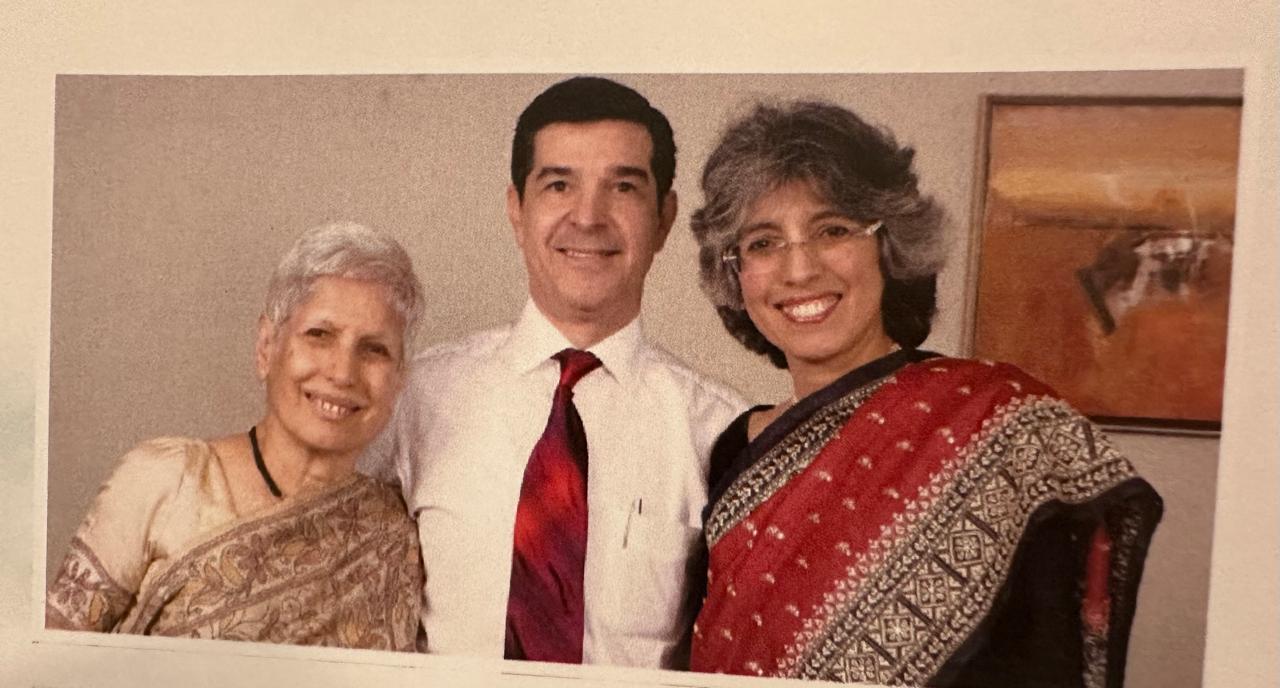
It has been more than 2 decades since Anu retired and handed over the baton to her daughter Meher. She enjoys time with her favourite NGOs, travelling, reading and spending time with family and friends because she likes to nurture relationships that matter to her. She adds “in any case I need more than 3 hours each day to meditate, walk and exercise”.
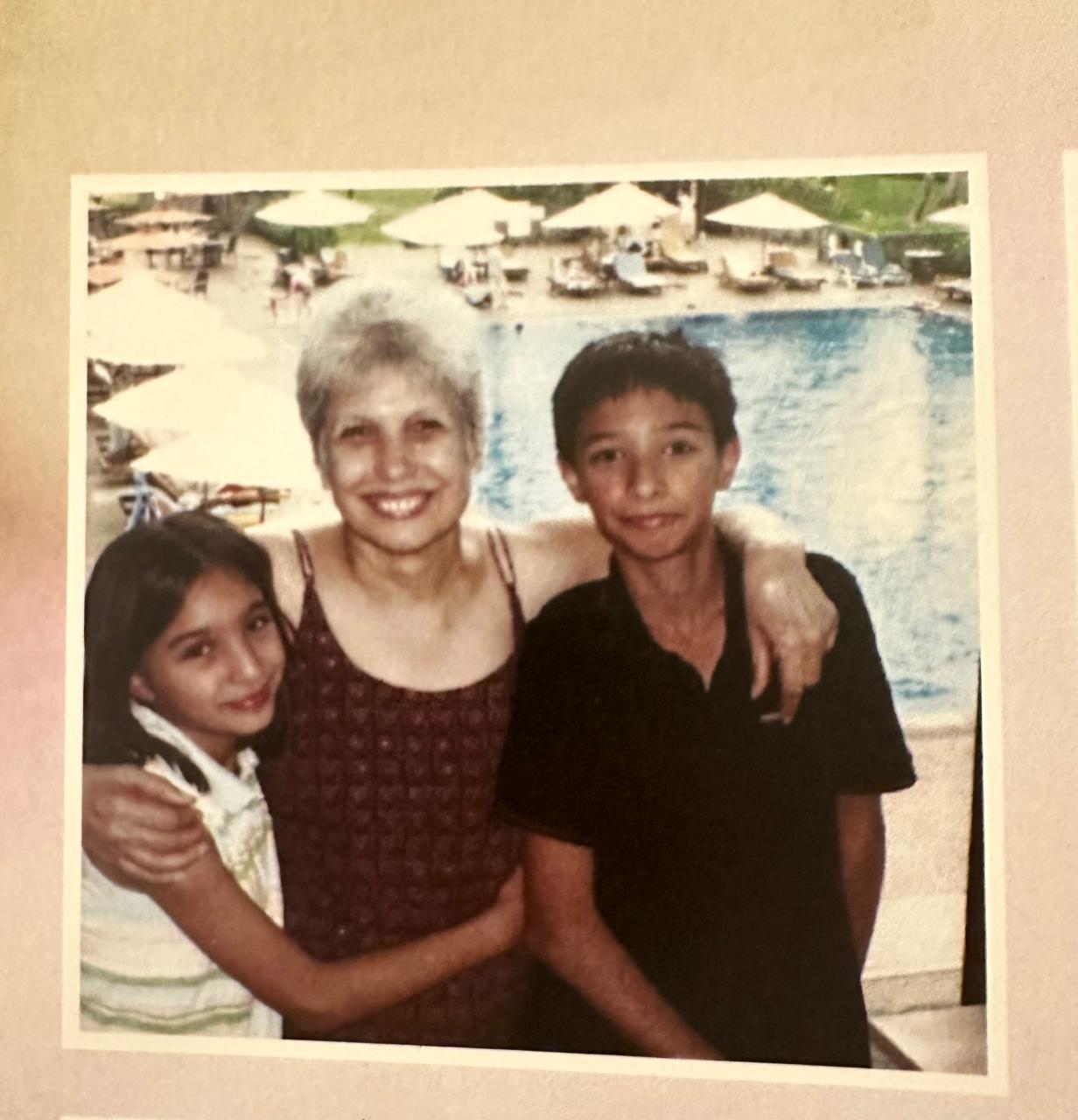

She does not believe in repenting or feeling guilty when someone close to her dies because she did not give them enough time. “My daughter lives close by and we meet very often. My grandson is 30 and my grand-daughter is 26 and I enjoy spending time with them”.
 Of course, there are times when she does not have a very busy agenda but Anu likes time for self-reflection and being by herself. “One must learn to be comfortable with oneself”. I am often alone but never lonely. I have lost 5 close friends and my brother and I have accepted their death. I at times wonder what it must be like after death. Is the body discarded and the soul wanders or comes back as rebirth? Do we meet our loved ones? She says that she is not petrified of dying but hopes that she should not suffer and that death should be quick and easy. She does not need to touch wood any more.
Life’s lessons have been learnt well.