






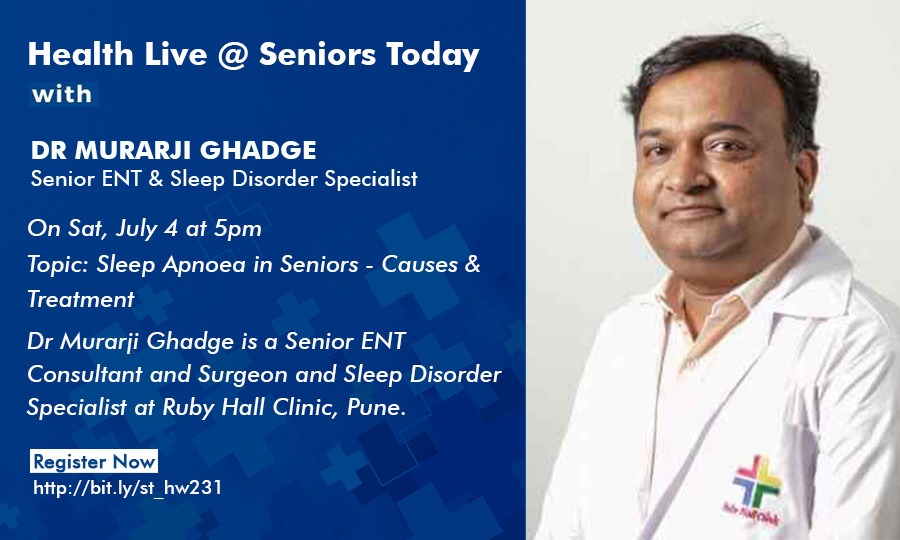
On Saturday, July 4, 2026, HealthLive@ Seniors Today hosted Senior ENT & Sleep Disorder Specialist, Dr Murarji Ghadge. He spoke on – Sleep Apnoea in Seniors – Causes & Treatment
Dr Murarji Ghadge is a senior ENT consultant, surgeon, and sleep medicine specialist at the Ruby Hall Clinic, Pune, with more than 25 years of clinical experience. He holds a Diploma in Otorhinolaryngology (DLO), an MS in ENT, and a certification in Sleep Medicine from the American Board. He is widely recognised for his precise diagnostic approach, advanced surgical skills, and his specialised work in managing complex sleep-related breathing disorders and snoring.
Here are some of the key points discussed in the webinar:
- Core Presentation: Understanding Sleep Apnoea
Dr. Ghadge opened by noting that while hearing loss and vertigo are the most frequently discussed ENT topics among seniors, sleep disorders like Obstructive Sleep Apnoea (OSA) are deeply underdiagnosed and carry severe health risks.
- What is OSA? It is an intermittent reduction or complete cessation of airflow at the nose and mouth during sleep (hypopnoea or apnoea) lasting for 10 seconds or more.
- The Mechanism: When a person falls asleep, muscle tone decreases. In seniors, the pharyngeal (throat) muscles can become loose or floppy. Combined with negative breathing pressure, this causes the airway behind the tongue and uvula to narrow or completely collapse, resulting in choking or heavy snoring.
- How Severity is Measured: It is tracked via the Apnoea-Hypopnoea Index (AHI) based on the number of breathing pause events per hour:
- Normal: Less than 5 events/hour
- Mild: 6 to 15 events/hour
- Moderate: 16 to 30 events/hour
- Severe: Greater than 31 events/hour
Risk Factors & Systemic Health Impact
When airflow stops, carbon dioxide (CO2) levels rise sharply and oxygen (O2) levels drop. This triggers an immediate arousal response from the brain, causing a surge in heart rate and blood pressure to restart breathing. Because of this persistent nightly strain, OSA acts as an independent risk factor for:
- Uncontrolled hypertension (high blood pressure)
- Cardiovascular diseases, nocturnal arrhythmias (heart rhythm abnormalities), and stroke
- Metabolic syndromes and poorly managed type-2 diabetes
- Neurocognitive deficits (short/long-term memory loss, daytime fatigue, and high risks during motor driving)
- Diagnosis and Treatment Framework
Dr. Ghadge mapped out a progressive path from initial screening to long-term care management.
Screening & Diagnostic Tools
- Questionnaires: Standard tools like the Epworth Sleepiness Scale, Berlin Questionnaire, and STOP-BANG Assessment help identify high-risk individuals in clinical waiting areas.
- Home Sleep Test (HST / Level 3 Polygraphy): A highly portable, cost-effective 4-channel device that monitors airflow, respiratory efforts via a chest belt, pulse rate, and oxygen saturation right from the comfort of the patient’s bedroom.
- Polysomnography (Lab Study / Level 1): Done overnight in a specialized hospital sleep lab with full EEG leads and video/audio monitoring. This remains necessary for complex, non-respiratory issues like insomnia, parasomnias, or dream-enactment behaviors.
Treatment Modalities
- Conservative Therapy: Includes intentional weight loss, postural management (avoiding sleeping flat on the back), strict avoidance of alcohol or unmonitored sedatives before bed, and utilising nasal decongestants/steam for allergy-related blockages.
- Positive Airway Pressure (Gold Standard):
- CPAP (Continuous Positive Airway Pressure): Keeps the airway mechanically splinted open with a fixed or automatic stream of filtered air.
- BiPAP (Bilevel Positive Airway Pressure): Offers dual pressures (higher for inhalation, lower for exhalation). It is ideal for seniors with overlapping conditions like severe obesity or chronic obstructive pulmonary disease (COPD) who struggle to breathe out against static CPAP pressure.
- Surgical Options: Soft-tissue modifications (such as uvulopalatopharyngoplasty, coblation, or radiofrequency ablation) or skeletal advancement therapies can be considered. However, Dr. Ghadge emphasized that conservative and positive airway devices are always prioritised for senior patients to mitigate surgical risks.
- Key Q&A Highlights
The interactive segment addressed practical concerns raised by the senior audience members:
- Exercises and Posture: For non-invasive relief, Dr. Ghadge recommended using a three-ball spirometer to condition and build tone in the respiratory muscles. He also praised Pranayam (specifically Anulom Vilom) for preserving stable nasal airflow. For positional therapy, he suggested a classic home remedy: fastening a tennis ball to the back of a nightshirt to naturally discourage sleeping flat on one’s back.
- Sleep Initiation vs. Sleep Apnoea: Responding to a participant struggling to sleep even after taking sleeping medication, he clarified that trouble initiating sleep is often bound to poor sleep hygiene. He advised keeping bedrooms entirely dark, removing digital screens, avoiding long afternoon naps, and restricting fluids after 7:00 PM or 8:00 PM to prevent frequent waking caused by an enlarged prostate.
- Can You Have OSA Without Snoring? Yes, though rare, it is possible—especially if the primary driver leans toward central sleep apnoea rather than physical airway obstruction. However, if an individual wakes up feeling deeply refreshed, maintains high daytime energy, and does not experience morning headaches, their risk for significant apnoea is relatively low.
- The Sleeping Pill Risk: Dr. Ghadge issued a firm warning regarding the unmonitored use of sedatives/sleeping aids (like Alprazolam). In patients with undiagnosed sleep apnoea, these pills can overly relax the upper airway muscles, profoundly worsening airway collapse and increasing midnight oxygen drops.
- Link to Dementia: He confirmed a definitive correlation. Because untreated apnoea systematically fragments sleep and deprives the brain of deeper REM and non-REM restorative cycles, it severely impairs neurocognitive pathways, fracturing memory retention over time.