






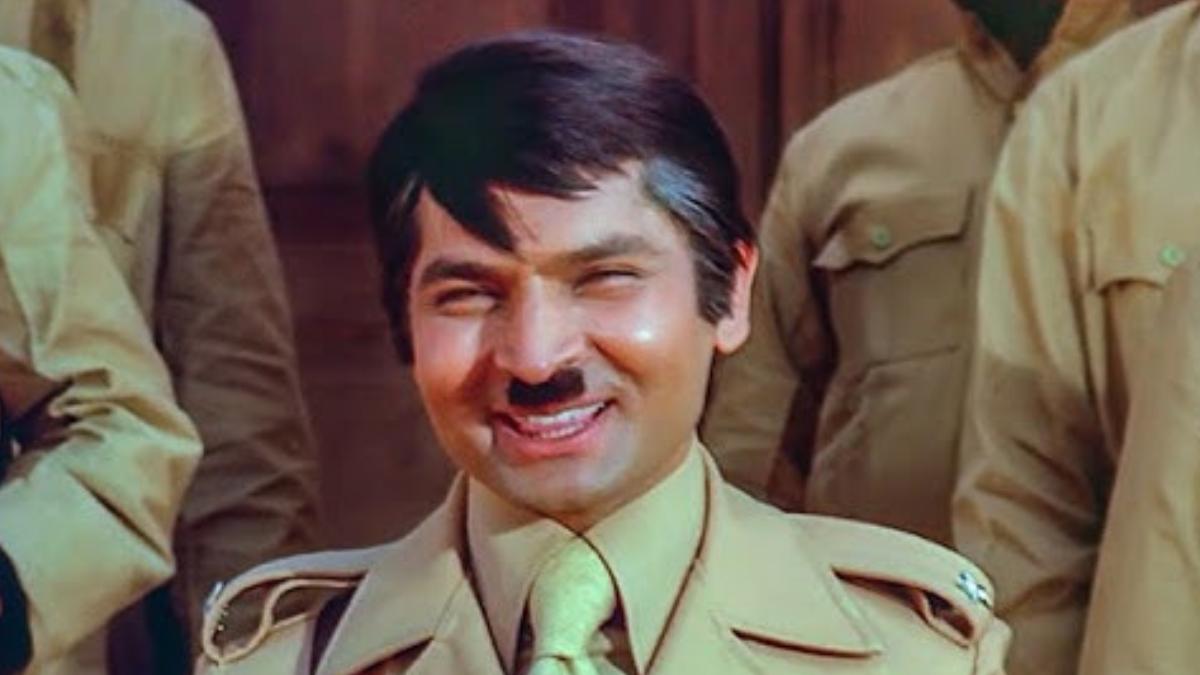
Veteran actor Govardhan Asrani, fondly known simply as Asrani, passed away on October 20, 2025, aged 84.
Across a career spanning more than five decades and over 350 films, Asrani embodied a kind of laughter that was never cruel, never forced—laughter that felt recognisably human.
Born in Jaipur in 1941, Asrani trained at the Film and Television Institute of India before moving to Mumbai in 1963. His journey from the pink city to the dream city was not without its struggles, but he persevered with a twinkle in his eye. By the 1970s, he had become a fixture in films by Hrishikesh Mukherjee, Gulzar and Basu Chatterjee—directors who trusted his timing, restraint and innate charm.
In films like Bawarchi, Chhoti Si Baat, Aaj Ki Taaza Khabar and many more, Asrani played the everyman—ordinary yet unforgettable. He was the flustered clerk, the hesitant friend, the officious official—roles modest in scope but rich in heart.
The Jailer who Stole the Show: Of all his performances, one image remains etched in the collective memory of Indian audiences: the self-important, Hitler-moustached jailer in Sholay (1975).
As writer Nanda Singh described in Seniors Today, “Asrani played the hilarious ‘Angrezon ke zamaane ka jailor’ with a Hitler moustache and staccato speech. His dialogue in which he orders half his men right, half left and the remaining after him, still cracks up audiences.”
The scene lasts mere minutes, yet it has endured for half a century—a miracle of comic economy. Asrani took a minor role and turned it into a national catchphrase. His line, “Hum Angrezon ke zamaane ke jailor hain,” became shorthand for pompous self-importance and bureaucratic absurdity.
Film historians often interpret the jailer as a sly commentary on colonial hangovers. That Asrani managed to suggest all this while making people laugh uncontrollably was testament to his intelligence as a performer.
Off-screen, Asrani was known for the same warmth he exuded on camera. Colleagues recall his gentleness, his refusal to mock others for a cheap laugh, and his unfailing professionalism. “He never made fun of anyone to get a laugh,” one co-actor said. “He made fun of himself, and that made him beloved.”
Through the 1980s and ’90s, as comedy in Hindi cinema grew louder and brasher, Asrani’s humour remained rooted in observation and timing. He moved effortlessly from middle-class comedies like Khatta Meetha and Dil Hi To Hai to the madcap chaos of Hera Pheri and Hulchul. Few actors have bridged as many eras or audiences.
Even in his later years, he remained an affectionate presence—the familiar uncle in the background of countless family comedies, his face instantly evoking nostalgia.
Asrani’s passing marks the end of a particular kind of comic acting… one driven not by noise, but by nuance. He represented an era when comedy was written with affection, when punchlines had personality, and when supporting actors could shape the soul of a film.
The legendary “Angrezon ke zamaane ka jailor”; brief but unforgettable.
Chhoti Si Baat (1976)
Classic Hrishikesh Mukherjee humour; Asrani’s gentle wit enriches every scene.
Aaj Ki Taaza Khabar (1973)
A double role that remains a textbook example of comic precision.
Bawarchi (1972)
As part of an ensemble, he lent warmth and authenticity to Hrishikesh Mukherjee’s social satire.
Hera Pheri (2000)
His cameo bridged generations, proving that Asrani’s timing never aged.